










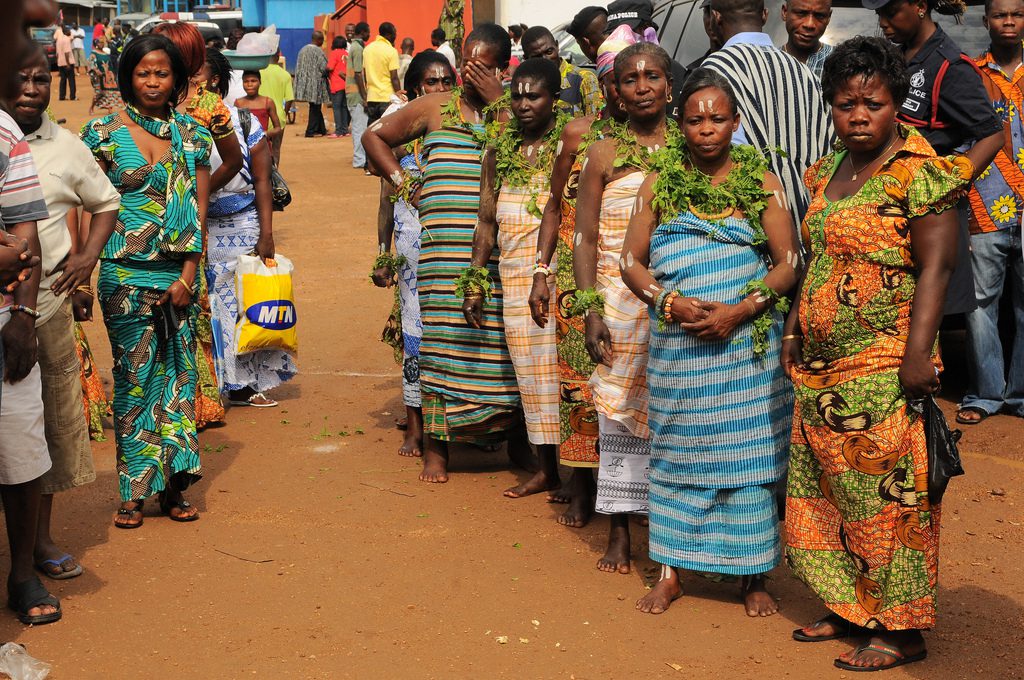
Introduction: A City with a Deeper Past
Before the glass towers of Airport City, before the traffic jams of the Spintex Road, before the name “Accra” ever appeared on a map, there was a kingdom. There were warriors, traders, and priests who built a civilisation on the plains between the Atlantic Ocean and the Akuapem hills. There was Ayawaso, the fortified capital of the Ga people, where kings ruled and armies marched.
The story of Accra did not begin in 1877 when the British moved their colonial headquarters from Cape Coast . It did not begin with the construction of the three European trading forts in the 17th century . It began centuries earlier, with the migration of a people who would shape the destiny of a region.

This is the story of Accra before Accra—the rise of the La Kingdom and the Ga people who built the foundation of Ghana’s capital.
📢 GET A DETAILED ARTICLES + JOBS
Join ASJ's WhatsApp Channel and never miss a post or opportunity.

Part 1: The Origins of the Ga People
The Migration from the East
The Ga peoples who inhabited Accra and the surrounding area when the Europeans arrived were not the first residents of the region, nor did they originate from a single ethnic enclave with a homogeneous set of traditions . Rather, various Ga-speaking immigrants emerged from eastern areas of the interior Gold Coast and settled in family or other groups among the aboriginal Kpeshi peoples of the southern coastal region beginning in the fifteenth century, arriving in different areas at different times .
Over time, the Ga gradually achieved demographic, linguistic, and political ascendancy over the neighbouring Guang-speaking peoples . As Ga groups travelled along the coast searching for places to settle, they mingled and formed a fraternal base . The descendants of the original migrants are known collectively as Ga Mashi, thereby distinguishing them as “true” Ga .

The Meaning of “Accra”
The name “Accra” itself is a corruption of the Akan word “nkran” —a term that refers to the black ants that abounded in the vicinity . The name came to be applied to the inhabitants of this part of the Accra plains. But before the Akan word took hold, before the Portuguese arrived and gave European names to African places, the Ga people had their own names for their towns and territories.
The Seven Quarters of Central Accra
By the sixteenth century, the Ga had moved into the plains south of the Akuapem escarpment, and within another hundred years they had moved farther toward the coast . Archaeological evidence dates the origins of settlement in the area known as Greater Accra to the late 1500s .
Over time, the original settlements united but retained customs associated with their distinct origins and evolved into the seven quarters of Central Accra :
| Quarter | Status | Notes |
|---|---|---|
| Asere | Among the oldest | Considered one of the original Ga settlements |
| Abola | Among the oldest | Inhabited by a mixture of Fante fishermen, Ga, and free and enslaved individuals who worked for Dutch companies |
| Gbese | Among the oldest | One of the foundational quarters |
| Alata | Later quarter | Known as the “slave quarter,” dominated by the British trading company; comprised free and enslaved individuals from coastal areas of present-day Nigeria, plus indigenous Fante groups and Ga |
| Sempe | Later quarter | Part of the second set of quarters |
| Akumaji | Later quarter | Part of the second set of quarters |
| Otublohun | Emerged 1680-1730 | Emerged when the Akwamu controlled the Ga government at Accra |
The formation of these quarters resulted from both conflict and accommodation. Political disputes led to cleavages between lineage and factional groups and to the incorporation of a diverse range of settlers . Each quarter comprised subdivisions known as akutsei (sing., akutso), and each akutso encompassed households (we) that were patrilocal and patrilineal corporate bodies in which membership was based on real or putative descent from a founding ancestor .
Part 2: The Capital at Ayawaso
The Seat of the Ga Kingdom
Before the coastal settlements of Jamestown, Usshertown, and Osu became the nuclei of modern Accra, the Ga people had their capital inland. Ayaso (Ayawaso) was the parent settlement of the Ga tribe, located about 15 miles (24 kilometres) north of the present site of Accra .
When the Portuguese first settled on the coast in 1482, the present site of Accra was occupied by several villages of the Ga tribe, ruled from this parent settlement at Ayaso . The town was well-developed, with extensive interior and exterior trade connections. Merchants in Accra acted as middlepersons in the trade of slaves, gold, and other commodities between the Europeans and the Asante kingdom to the north .
A Prosperous Trading Centre
By the beginning of the nineteenth century, Accra had a population of approximately 7,500 to 10,000 and was well developed . The town was strategically positioned for trade, with access to both coastal and inland markets. The Ga people became skilled intermediaries in the growing Atlantic trade, leveraging their position between European merchants on the coast and Akan kingdoms in the interior.
But the prosperity of Ayawaso also made it a target. And the target would soon be struck.
Part 3: The Destruction of Ayawaso and the Migration to the Coast
The Akwamu Invasion
The growth of the Ga settlements along the coast received a decisive impetus from the destruction of the original capital, Ayawaso, by the Akwamu kingdom in 1677 . The Akwamu, a powerful Akan state from the eastern regions, swept down from the interior and laid waste to the Ga capital.

The destruction was total. The population of Ayawaso, together with that of other major Ga towns on the Accra plains, was drawn to the coast by the prospect of profitable trade with the Europeans—and by the need for safety .
The Birth of the Coastal Villages
While the European posts were being constructed between 1650 and 1680, Ayaso was destroyed in a tribal war, and its population, together with that of the other major Ga towns on the Accra plains, was drawn to the coast by the prospect of profitable trade with the Europeans . As a result, three coastal villages sprang up, becoming the hearts of what was to be Accra :
-
Osu (Christiansborg) – Centred around the Danish fort
-
Dutch Accra (later called Ussher Town) – Centred around the Dutch fort
-
James Town – Centred around the English fort
These three villages became the nuclei of what was to become Accra .
The Akwamu Tributary Period (1680-1730)
After being in a tributary relationship with the Akwamu until 1730, Accra regained and largely maintained its independence until it was occupied by the British in 1874 . During this period, Akan overlords (Akwamu, Akyem, and Asante) exercised suzerainty over the Ga . The Otublohun quarter of Accra emerged between 1680 and 1730, precisely when the Akwamu controlled the Ga government at Accra .
Part 4: The Three Forts – European Encroachment
The Portuguese Arrival (1482)
When the Portuguese first settled on the coast of what is now Ghana in 1482, the present site of Accra was occupied by several villages of the Ga tribe, ruled from Ayaso . The Portuguese were primarily interested in gold, and they established trading relationships with coastal peoples.
The Three Forts (1650-1680)
Between 1650 and 1680, the Europeans built three fortified trading posts along the coast in the Accra locality:
| Fort | Builder | Year Established | Modern Name |
|---|---|---|---|
| Fort James | English | 1672-73 | James Fort |
| Fort Crevecoeur | Dutch | 1649 | Ussher Fort |
| Christiansborg Castle | Danish | 1661 | Osu Castle |
The Danes and the Dutch left the region in 1850 and 1872, respectively . Fort Crevecoeur was renamed after H. T. Ussher, administrator of the Gold Coast (1867–1872), giving Ussher Town its name . In 1868, the British purchased the Dutch fort at Accra and commenced growing their colonial project .
Christiansborg Castle
Christiansborg Castle, the finest of the three forts, became the official residence of the governor of the colony . Today, Christiansborg Castle (Osu Castle) is the seat of the Government of Ghana, though the presidency has since moved to Jubilee House.
Part 5: The Rise of the La Kingdom
The La People
Among the Ga-Dangme peoples, the La (also known as Labadi) emerged as a distinct and powerful group. The La people inhabit the coastal area east of Osu, known today as Labadi. Their kingdom developed its own chieftaincy traditions and maintained a degree of autonomy even as the British consolidated control over the coast.
A common saying at Asere is, “There is no such thing as a pure Ga” . Not only were many European and inland African ethnicities represented in Accra over hundreds of years, but also the lateral coastal connections produced migrations of Brazilian, Sierra Leonean, and Nigerian families, who formed clans and assumed Ga identity .
The La Mantse
The chief of the La people, known as the La Mantse, is a significant figure in Ga chieftaincy. Alongside the Ga Mantse (the paramount chief of the Ga people), the La Mantse and other paramount chiefs symbolise the pomp and pageantry of the culture of the Ga people and the institution of chieftaincy in Ghana .
The La Mantse traditionally claims authority over the coastal area from Labadi to Teshie, an area that has become some of Accra’s most valuable real estate.
The Seven Quarters Revisited
The seven quarters of Central Accra—Asere, Abola, Gbese, Alata, Sempe, Akumaji, and Otublohun—remained the foundational political units of Ga society. Each quarter maintained its own chieftaincy, its own lineage traditions, and its own relationship with the European trading companies .
Part 6: The Transformation of Accra
From Villages to Town (17th-19th Centuries)
The three coastal villages—James Town, Ussher Town, and Osu—grew steadily through the 18th and 19th centuries. The town of Accra developed from a series of contiguous settlements formed at different times by different peoples who developed a coherent but flexible sense of Ga identity .
By the early 19th century, Accra had a population of approximately 7,500 to 10,000 and was well developed, with extensive interior and exterior trade connections . Merchants in Accra acted as middlepersons in the trade of slaves, gold, and other commodities between the Europeans and the Asante kingdom to the north .
The British Takeover (1874)
Accra was occupied by the British in 1874 . In 1877, the British colonial administration formally moved its headquarters from Cape Coast to Accra, setting the stage for the city’s transformation into Ghana’s capital .
The choice of Accra was due to several factors: its dry coastal climate was deemed healthier than the humid environment of Cape Coast; it was a strategic trading hub with access to both coastal and inland markets; and the construction of railways linking Accra to the interior—especially to the cocoa- and gold-producing regions—strengthened its economic importance .
The Municipality (1896)
Accra, the first town in the Gold Coast colony to be raised to the rank of a municipality, was governed by a town council with power to raise and spend money . The council consisted in equal proportions of nominated and elected members, no racial distinctions being made .
The Great Fire of 1894
A great fire in 1894 destroyed large parts of James Town and Ussher Town . The fire led to the construction of more substantial buildings, replacing the earlier mud hovels. The disaster, while tragic, accelerated the modernisation of Accra’s core districts.
The Earthquake of 1939
A severe earthquake in 1939 destroyed much of Central Accra and gave added impetus to settle in new suburban settlements such as Kaneshie and Adabraka . The earthquake reshaped Accra’s urban geography, pushing development northward and creating the sprawl that characterises the modern city.
Part 7: The Ga People Today
The Ga Mantse and Chieftaincy
The institution of chieftaincy remains central to Ga identity. The Ga Mantse (paramount chief of the Ga people) and other paramount chiefs of the region symbolise the pomp and pageantry of the culture of the Ga people and the institution of chieftaincy in the country .
The previous chief, Oblempong Nii Kojo Ababio V, had been chief for thirty-nine years . His death was officially announced in February 2018 . The current Ga Mantse is Nii Tackie Adama Latse II.
The Homowo Festival
The Ga people celebrate the Homowo festival in August/September to mark their traditional calendar and to commemorate their past migration events . Homowo is a harvest festival and means “hooting at hunger” .
The festival commemorates a period of severe famine in Ga history. When the rains finally came and the harvest was bountiful, the Ga people “hooted at hunger”—mocking the famine that had nearly destroyed them. Today, Homowo is celebrated with rituals, drumming, dancing, and the sprinkling of “kpokpoi” (prepared cornmeal) as a form of spiritual offering.
Jamestown Today
Today, both Jamestown and Usshertown remain fishing communities inhabited primarily by the Ga . Although in a state of decay in some areas, the districts are significant in the history of Accra . The original lighthouse, built at James Fort in 1871, was replaced in the 1930s by the current tower, which is 28 metres (92 feet) tall .
Areas of Jamestown and Usshertown include :
-
Bukom – known for its boxing gyms
-
Adedainkpo – former home of the wealthiest African residents of Accra
-
Swalaba
-
Korle Woko (formerly also known as Ripponville)
-
Akoto Lante
Jamestown hosts the annual Chale Wote Street Art Festival, which has become one of Ghana’s most celebrated cultural events . The festival transforms the historic district into an open-air gallery, celebrating the resilience and creativity of the Ga people.
Key Takeaways at a Glance
| Period | Event | Significance |
|---|---|---|
| 15th Century | Ga migration to Accra plains; Portuguese arrive | Beginning of Ga coastal settlement; first European contact |
| c. 1500s | Ayawaso established as Ga capital | Inland capital of the Ga people |
| 1482 | Portuguese first settle on Gold Coast coast | European presence begins |
| 1649 | Dutch build Fort Crevecoeur | First of three forts |
| 1661 | Danes build Christiansborg Castle | Second fort established |
| 1672-73 | English build James Fort | Third fort established |
| 1677 | Akwamu destroy Ayawaso | Forced migration of Ga to coast |
| c. 1680-1730 | Akwamu tributary period; Otublohun quarter emerges | Akan influence on Ga governance |
| 1680s | Three coastal villages form (James Town, Ussher Town, Osu) | Nuclei of modern Accra |
| 1850 | Danes leave region | European consolidation begins |
| 1872 | Dutch leave region | European consolidation continues |
| 1874 | British occupy Accra | Colonial rule established |
| 1877 | Capital moved from Cape Coast to Accra | Accra becomes colonial capital |
| 1894 | Great fire destroys parts of James Town and Ussher Town | Reconstruction with more substantial buildings |
| 1896 | Accra raised to municipality | First town in Gold Coast colony to achieve municipal status |
| 1939 | Severe earthquake destroys much of Central Accra | Urban expansion northward |
| 1957 | Ghana independence; Accra remains capital | Accra becomes capital of independent Ghana |
Frequently Asked Questions (FAQs)
1. What was Accra called before it was named Accra?
Before the name “Accra” (derived from the Akan word “nkran” meaning black ants) became standard, the area was known by various Ga names associated with its different settlements. The inland capital was called Ayawaso (or Ayaso). The coastal settlements were known as James Town, Ussher Town, and Osu, which were the nuclei of what would become Accra .
2. Who were the original inhabitants of the Accra area?
The original inhabitants of the Accra area were the Kpeshi people, an aboriginal Guang-speaking group. The Ga people migrated from eastern areas of the interior Gold Coast beginning in the fifteenth century and gradually achieved ascendancy over the Kpeshi .
3. When was Ayawaso destroyed and by whom?
Ayawaso, the original Ga capital located about 15 miles north of present-day Accra, was destroyed by the Akwamu kingdom in 1677 . The destruction forced the Ga population to migrate to the coast.
4. What are the three original coastal settlements of Accra?
The three original coastal settlements that formed the nuclei of modern Accra are: James Town (around the English fort), Ussher Town (around the Dutch fort, originally called Crevecoeur), and Osu (Christiansborg, around the Danish castle) .
5. What is the meaning of “Accra”?
The name “Accra” is a corruption of the Akan word “nkran,” which refers to black ants that were abundant in the vicinity. The name was applied to the inhabitants of this part of the Accra plains .
6. What are the seven quarters of Central Accra?
The seven quarters of Central Accra are Asere, Abola, Gbese, Alata, Sempe, Akumaji, and Otublohun. Asere, Abola, and Gbese are considered the oldest. Otublohun emerged between 1680 and 1730 when the Akwamu controlled the Ga government .
7. What is the Homowo festival?
Homowo is a harvest festival celebrated by the Ga people in August/September. The name means “hooting at hunger” and commemorates a period of severe famine in Ga history. The festival is marked by rituals, drumming, dancing, and the sprinkling of “kpokpoi” (prepared cornmeal) .
8. Who is the Ga Mantse?
The Ga Mantse is the paramount chief of the Ga people. The current Ga Mantse is Nii Tackie Adama Latse II. The institution of chieftaincy remains central to Ga identity and cultural preservation .
9. Why did the British move the capital from Cape Coast to Accra in 1877?
The British moved the capital due to several factors: Accra’s dry coastal climate was deemed healthier than Cape Coast’s humid environment; it was a strategic trading hub; and railway construction linking Accra to cocoa- and gold-producing regions strengthened its economic importance .
10. What is the Chale Wote Street Art Festival?
The Chale Wote Street Art Festival is an annual cultural event hosted in Jamestown. It transforms the historic district into an open-air art gallery and has become one of Ghana’s most celebrated cultural events, attracting local and international artists .
Conclusion: A Legacy That Endures
Before Accra had a name, before the glass towers and the traffic jams, there was a kingdom. The Ga people built a civilisation on the Accra plains, with a capital at Ayawaso, a system of governance through the seven quarters, and a cultural identity that has survived centuries of upheaval.
The destruction of Ayawaso in 1677 was a tragedy, but it was also a beginning. The migration to the coast brought the Ga people into direct contact with European traders, transforming the three fishing villages into a thriving commercial centre. The three forts—English, Dutch, and Danish—became the anchors around which modern Accra would grow.
Today, the names remain: James Town, Ussher Town, Osu. The forts still stand: Christiansborg Castle is the seat of government; James Fort is a prison and lighthouse. The Ga people still celebrate Homowo, still honour their chiefs, still maintain the institutions that have defined them for centuries.
Accra at 148 years as a capital is a young city by global standards . But the civilisation that gave birth to it is ancient. The story of Accra before Accra is the story of the Ga people—their migrations, their wars, their resilience, and their enduring legacy.
When you walk through the streets of Jamestown today, past the colonial-era buildings and the fishing boats pulled up on the beach, you are walking through history. You are walking where the Ga people built their first coastal settlements after fleeing the destruction of Ayawaso. You are walking where European merchants traded goods with African intermediaries. You are walking where a kingdom fell, and a city was born.
Before Accra had a name, the La Kingdom rose. And its legacy lives on in every corner of Ghana’s capital.
Frequently Asked Questions (FAQs)
1. What was Accra called before it was named Accra?
The area was known by various Ga names associated with its different settlements. The inland capital was Ayawaso (or Ayaso). The coastal settlements were James Town, Ussher Town, and Osu .
2. Who were the original inhabitants of the Accra area?
The Kpeshi people, an aboriginal Guang-speaking group. The Ga migrated later and gradually achieved ascendancy .
3. When was Ayawaso destroyed and by whom?
Ayawaso was destroyed by the Akwamu kingdom in 1677 .
4. What are the three original coastal settlements of Accra?
James Town, Ussher Town, and Osu .
5. What is the meaning of “Accra”?
A corruption of the Akan word “nkran,” referring to black ants abundant in the vicinity .
6. What are the seven quarters of Central Accra?
Asere, Abola, Gbese, Alata, Sempe, Akumaji, and Otublohun .
7. What is the Homowo festival?
A harvest festival celebrated by the Ga people in August/September meaning “hooting at hunger” .
8. Who is the Ga Mantse?
The paramount chief of the Ga people. The current Ga Mantse is Nii Tackie Adama Latse II .
9. Why did the British move the capital from Cape Coast to Accra in 1877?
Healthier climate, strategic trading location, and railway connections to cocoa- and gold-producing regions .
10. What is the Chale Wote Street Art Festival?
An annual cultural event hosted in Jamestown that transforms the historic district into an open-air art gallery
Source: Accra Street Journal
Last Updated on April 11, 2026 by Samuel Kwame Boadu
Disclaimer: Some content on Accra Street Journal may be aggregated, summarized, or edited from third-party sources for informational purposes. Images and media are used under fair use or royalty-free licenses. Accra Street Journal is a subsidiary of SamBoad Publishing Hub under SamBoad Business Group Ltd, registered in Ghana since 2014.
For concerns or inquiries, please visit our Privacy Policy or Contact Page.

Samuel Kwame Boadu is a Ghanaian media entrepreneur and storyteller with a passion for amplifying urban voices and uncovering everyday truths. He is the Editor-in-Chief and Founder of Accra Street Journal, a dynamic digital platform dedicated to capturing the pulse of Ghana’s capital—its people, culture, challenges, business, sports and innovations.





