








18 min read
From nkate cake vendors making GHS 30 a day to the plantain supply chain that feeds a city—the hidden mechanics of Accra’s most accessible industry
Executive Introduction
On a busy afternoon at Circle, Juliana Obeng sells nkate (groundnut) cake to commuters. Her product is popular, demand is steady, and customers buy regularly. Yet after selling more than 100 pieces at GHS 2 each, her profit for the day is about GHS 30—barely enough to cover transportation and food for herself .
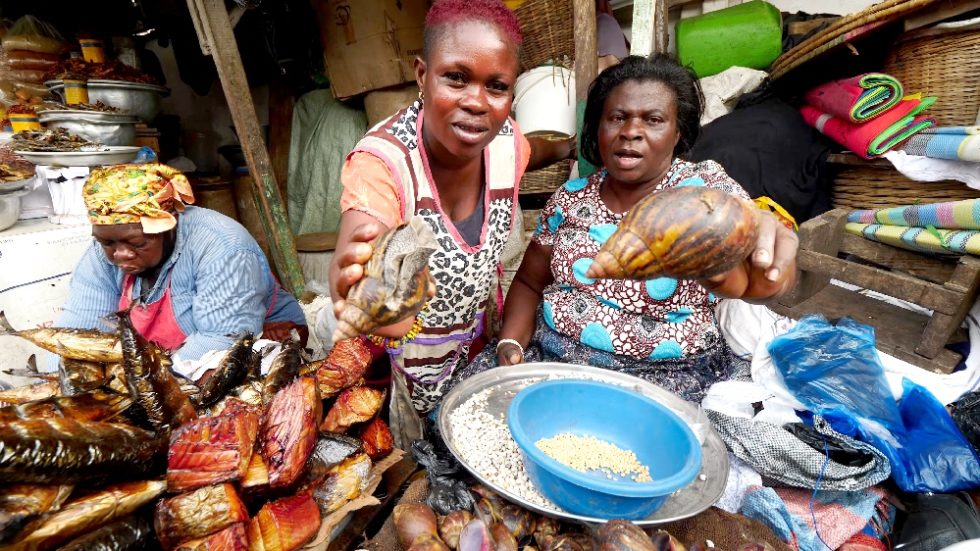
She is not alone. Across Accra, tens of thousands of street food vendors operate in plain sight, feeding an estimated 85 percent of the city’s population daily . They form the backbone of urban food security, providing affordable meals to office workers, students, traders, and drivers. They are also among the most economically vulnerable entrepreneurs in the city—squeezed between rising ingredient costs, fixed selling prices, and the relentless pressure of informal competition.
Key Takeaways
- Across Accra, tens of thousands of street food vendors operate in plain sight, feeding an estimated 85 percent of the city's population daily .
- In March 2026, a wave of unverified social media posts alleging contamination of popular street foods caused measurable economic damage to roadside vendors across Accra .
- Street food vendors operate at the intersection of rising input costs and fixed selling prices.
This ASJ report examines the economics of street food in Accra: the profit margins that vendors actually earn, the supply chains that deliver raw ingredients, the inflationary pressures that eat into earnings, and the regulatory and reputational risks that threaten livelihoods. We draw on vendor interviews, inflation data from the Ghana Statistical Service, academic research, and industry analysis to answer a question every Accra resident should understand: What does it really take to sell that GHS 5 plate of jollof?
Part 1: The Scale—Why Street Food Matters
Street food is not a niche sector in Accra. It is the city’s primary food distribution system.
The Numbers That Define the Sector
| Metric | Value | Source |
|---|---|---|
| Urban population that patronises street food | ~85% | Academic research |
| Vendors surveyed in Accra (IFPRI study) | 474 | FAO/IFPRI (2026) |
| Markets covered in Accra | 4-7 | FAO/IFPRI (2026) |
| Primary demographic | Predominantly women | Industry observation |
| Start-up capital required | Low (“a pot, cooking utensils, water, pepper, yam”) | GTCA interview |
Sources: The High Street Business
Why Street Food Dominates
Street food thrives in Accra for several structural reasons:
Affordability: A plate of kenkey with fried fish, a bowl of fufu with soup, or a pack of jollof rice costs significantly less than a meal at a formal restaurant. For the majority of Accra’s workforce, street food is not a choice—it is the only economically viable option.
Accessibility: Vendors are everywhere—transport terminals, office districts, market entrances, residential corners. The transaction cost (in time and travel) of finding a meal is near zero.
Low barriers to entry: As Mr. Ansong, Public Relations Officer of the Ghana Traditional Caterers Association (GTCA), explained: “The cheapest way to make money, is to cook food. You are a secretary, or you have a shop, and the shop collapses. You can buy a pot, buy silver, cooking utensils, buy water, the pepper, yam and you cook and you’ll get people to buy. Very, very cheap. So day in day out people have been coming into the system” .

Employment creation: Street food vending provides income for tens of thousands of urban dwellers, particularly women with limited formal education or capital. It is an employer of first and last resort .
Cultural embeddedness: Street food is not merely functional. Dishes like kelewele (spicy fried plantain), red-red (fried plantain with black-eyed peas), and fufu are central to Ghanaian identity. The street food network sustains traditional recipes and cooking methods across generations .

Part 2: The Profit Margin Problem—Why Active Vendors Earn So Little
The gap between revenue and profit is the central economic reality of street food vending.
The Nkate Cake Case Study
The most detailed recent data comes from nkate (groundnut) cake vendors interviewed at Circle and other Accra locations .
| Metric | Value |
|---|---|
| Selling price per piece | GHS 2 |
| Pieces needed to sell for meaningful profit | 100+ |
| Average profit from selling 100 pieces | ~GHS 30 |
| Profit margin (approx.) | 15% |
Source: The High Street Business
Vendor Juliana Obeng explained the arithmetic: “Although customers bought regularly, the proceeds left after purchasing the product at wholesale prices, paying for packaging, food, and transport were little or nothing in terms of profit” .
The profit margin problem: At GHS 2 per piece, 100 pieces generate GHS 200 in revenue. If profit is GHS 30, the margin is approximately 15 percent—significantly below the 50-100 percent margin typical for food and beverage in Accra’s formal sector . But nkate vendors are not earning 15 percent on each sale. The 15 percent is after paying for their own food and transport, meaning their true operating margin is even thinner.
The Vendor Response
Faced with razor-thin margins, vendors are considering two strategies:
Strategy 1: Vertical integration. Several vendors told The Mirror they were considering abandoning wholesale purchases and learning to prepare nkate cake themselves. While preparing the snack is “tedious and time-consuming,” vendors maintained it was a better option than selling all day and earning very little .
Strategy 2: Volume expansion. Vendor Mena Esi noted that “to make more profit, you have to trek the whole day or get a very good spot to make the business easier” . But even volume expansion has limits: “It’s not every day that you sell everything.”
The Profit Margin Benchmark
Industry analysis suggests that formal food and beverage businesses in Accra typically achieve profit margins of 50-100 percent . Street food vendors operate at a fraction of that range. The difference reflects:
-
Pricing power: Formal restaurants can charge premium prices for ambiance, service, and perceived hygiene. Street vendors cannot.
-
Scale: Formal businesses benefit from bulk purchasing and supply chain efficiencies.
-
Overhead structure: While street vendors have lower fixed costs (no rent, no formal utilities), their variable costs (ingredients, fuel, packaging) consume a larger share of revenue.
-
Price sensitivity: Street food customers are the most price-sensitive segment. Raising prices risks losing customers to the next vendor.
Part 3: The Supply Chain—From Farm to Frying Pan
Street food vendors do not operate in isolation. They are the final link in a value chain that begins with farmers, passes through market traders (“market queens”), and depends on transporters, processors, and wholesalers.

The Plantain Value Chain
Plantain is a critical ingredient for popular street foods including kelewele, kaklo (overripe mashed-spiced plantain balls), and fried plantain paired with red-red .
The supply chain in action:
| Link | Role |
|---|---|
| Farmers | Grow plantains; face seasonal variations, post-harvest losses |
| Transporter | Moves plantains from farming regions to Accra markets |
| Market queens | Purchase truckloads, distribute to smaller traders and processors |
| Processors | Convert raw plantains into chips, powder, or ready-to-cook forms |
| Street vendors | Prepare and sell final products to consumers |
The Plantain Entrepreneur Story
Mary Gyamfia, a trader in Ashaiman and Tema Community One markets, switched from fresh tomatoes to plantain selling after incurring significant losses due to tomatoes’ short shelf life and poor handling during transportation.
“The plantain business is far better than the tomatoes,” Gyamfia revealed. “When I started, I shared space with other traders to get a truck full, but I’m now able to buy a truck full of plantains alone to distribute to my customers” .
Her growth was driven by increased demand from:
-
Processors making plantain chips
-
Roasted plantain vendors (a popular street food)
-
Kelewele sellers
The lesson: Street food demand directly shapes upstream supply chains. When street food vendors prosper, they create stable markets for farmers and processors.
The Cost Constraints Upstream
Despite the growth opportunity, plantain traders face significant cost pressures:
Transportation costs: “Whether plantains are in season or not, the drivers charge according to fuel prices,” Gyamfia explained . Fluctuating fuel prices directly affect the cost of getting plantains from farms to Accra.
Oil prices: Plantain chips producers struggle with high oil prices, which affects their ability to buy plantains in large quantities. This ripples back to fresh plantain traders.
Competition from neighbouring countries: Ghanaian traders compete with buyers from Togo, Côte d’Ivoire, and Burkina Faso. “The farmers claim they offer better pricing,” noted Augustina Avinu, another trader .
Post-harvest losses: Despite demand, heaps of overripe plantains still go to waste in markets because the capital to purchase and process them is insufficient .
The Post-Harvest Loss Solution
Agness Bekoe, a small-scale plantain chips producer, packages her products in eco-friendly paper pouches and targets Ghanaians travelling abroad and university students.
“Because of the airtight paper pouches I use to package it, people travelling abroad buy it a lot,” Bekoe said .
Charity Adupong, founder of Meannan Foods, takes value addition further. Her company produces about 50 metric tons of plantains annually during both peak and lean seasons, with 80-90 percent sold locally and the rest exported.
“When plantain is in season, we do not have too much waste as was the case a few years ago,” Adupong noted. “Plantain is seasonal, so if we do not take advantage of processing to extend the shelf life, then we’re doomed” .
Part 4: The Inflation Squeeze—What the Numbers Say
Street food vendors are acutely sensitive to inflation because their key inputs—plantains, oil, charcoal, fish, tomatoes—are precisely the items driving Ghana’s price pressures.
The February 2026 Inflation Data
| Item | Year-on-Year Price Increase | Rank |
|---|---|---|
| Charcoal | 53.1% | Top driver |
| Green plantain | 67.9% | Second driver |
| River fish | Double-digit | Major contributor |
| Smoked herring | Double-digit | Major contributor |
| Vegetable oil | Notable | Contributor |
| Tomato paste | Notable | Contributor |
| Yam | Notable | Contributor |
Why This Matters for Street Vendors
Energy costs (charcoal): Charcoal is the primary cooking fuel for most street vendors. A 53 percent year-on-year increase directly raises the cost of preparing every meal. Vendors cannot absorb this indefinitely, but they cannot easily pass it to price-sensitive customers.
Staple ingredients (plantain, yam): Plantain prices increased by 67.9 percent year-on-year—the second-largest driver of inflation. For vendors selling kelewele, fried plantain, or plantain chips, this is existential.
Protein sources (fish, herring): Double-digit increases in fish and smoked herring prices affect vendors selling kenkey with fried fish, banku with tilapia, and other fish-based dishes.
Cooking oil: Vegetable oil prices remain elevated, affecting everything from frying to stew preparation.
The Operational Reality
Vendors operate on cash flow so tight that a single day of reduced sales can mean not having enough to restock. When input prices rise faster than selling prices—which they often do, because customers resist paying more for street food—margins compress further.
The Response: Value Addition
Some vendors are responding by moving up the value chain. Agness Bekoe’s packaged plantain chips, sold to travellers and students, achieves higher margins than fresh plantain sales . Charity Adupong’s investment in modern processing equipment (electric slicers, blanchers, dryers) allows her to maintain product quality and reduce waste .
But these strategies require capital—precisely what most street vendors lack.
Part 5: The Regulatory Landscape—FDA Enforcement and the Social Media Threat
Vendors face not only economic pressures but also regulatory and reputational risks beyond their control.
The FDA Crackdown
The Food and Drugs Authority (FDA) is in the middle of its most aggressive enforcement period in recent memory . The Authority shut down 16 food service establishments in Accra earlier in 2026, in its first major crackdown under a February 2026 directive requiring all food businesses to hold valid Food Hygiene Permits or face immediate closure.
The directive applies across:
-
Restaurants
-
Chop bars
-
Snack bars
-
Food vans
-
Bakeries
-
Online food vendors
For street vendors, the requirement to obtain formal permits creates a compliance burden that many cannot meet—not because they are unsafe, but because the process is inaccessible.
The Social Media Rumour Crisis
In March 2026, a wave of unverified social media posts alleging contamination of popular street foods caused measurable economic damage to roadside vendors across Accra .
The allegations:
| Claim | Status |
|---|---|
| Yam vendors adding unidentified substances during frying | Unverified |
| Plantain chip sellers mixing rubber into frying oil | Unverified |
| Insecticides sprayed on meat products | Unverified |
No official body—FDA, Ghana Health Service, or any regulatory agency—confirmed any of the claims.
Despite the absence of official confirmation, consumer confidence dropped sharply. A plantain chip vendor in Madina reported that her daily sales had declined significantly within days of the posts going viral .
The Economic Impact
Street food vendors operate on margins so thin that even a temporary drop in sales can be catastrophic. A week of reduced patronage means:
-
Inability to purchase full inventory
-
Reduced variety (customers see empty tables, assume quality has dropped)
-
Potential exit from the market
The social media rumour crisis also highlights a structural vulnerability: vendors have no mechanism to counter false claims. They cannot afford lawyers, public relations firms, or mass media campaigns. They can only wait—and hope customers return.
The FDA’s Response
In February, the FDA moved quickly to debunk a viral video claiming to show beans being preserved with cement, clarifying that the footage was not Ghanaian in origin . That response was widely praised, and consumer groups are now calling on the FDA to respond with similar urgency to the current wave of claims.
Regulatory experts have consistently identified the need for stronger collaboration between the FDA, Environmental Health Management and Sanitation Units, and district assemblies to improve routine monitoring, training programmes, and clearer safety guidelines .
Part 6: The Government Interventions—Farmers’ Markets and Supply Chain Reform
The government is not blind to the challenges facing food vendors and the broader food supply chain.
The Greater Accra Regional Monthly Farmers’ Market
Launched in April 2026 by Regional Minister Linda Akweley Ocloo, the monthly farmers’ market aims to improve market access for farmers and ensure a steady supply of affordable food .
Key objectives:
| Objective | Mechanism |
|---|---|
| Reduce role of middlemen | Farmers sell directly to consumers |
| Lower food prices | Eliminate intermediary markups |
| Minimise post-harvest losses | Reliable platform for fresh produce |
Implementation: The market will be held on the last Friday and Saturday of every month, creating a consistent outlet for fresh farm produce across the Greater Accra Region .
The Feed Ghana Programme
The Minister highlighted ongoing government efforts under the Feed Ghana Programme, which has seen:
-
Over 1,500 farmers receive fertiliser support
-
Thousands of broiler chickens raised and distributed to households
-
Engagement of schools to promote interest in agriculture among young people
The Irrigation Infrastructure
Greater Accra currently benefits from eight irrigation schemes that support the year-round production of crops such as rice, maize, vegetables, and fruits, helping to maintain food security .
For street food vendors: These interventions aim to stabilise food supply and prices. Lower and more predictable input costs would directly improve vendor margins. However, the impact will take time to materialise, and market-based solutions (farmers’ markets) depend on consumer awareness and adoption.
Part 7: The Cultural Resilience—Why Street Food Endures
Despite the economic pressures, street food in Accra is not disappearing. It is adapting.
The GTCA’s Role
The Ghana Traditional Caterers Association (GTCA) represents and advocates for traditional caterers, including street food vendors. As Mr. Ansong, PRO of GTCA, explained, the association helps members navigate the challenges of the trade .
The Quality Response to Competition
Plantain chips producers like Meannan Foods invest in modern equipment and packaging to differentiate their products. By producing 50 metric tons annually and exporting 10-20 percent of production, they demonstrate that value addition can create sustainable businesses .
The Consumer Loyalty Factor
Street food customers are price-sensitive, but they are also loyal to vendors they trust. A vendor who consistently provides clean, tasty food at fair prices builds a repeat customer base that is less responsive to short-term price fluctuations.
The Innovation Pathway
Some vendors are moving from informal to formal operations—registering businesses, obtaining permits, and investing in packaging and branding. This transition, while costly, opens access to new customers (including corporate events and export markets) and higher margins.
The progression from “a pot and cooking utensils” to a registered food business with export capability is the trajectory that policymakers should encourage. It transforms street food from a survival activity into a genuine SME growth sector.
ASJ’s Conclusion
The economics of street food in Accra are defined by a single, inescapable tension: high demand meets ultra-low margins.
Vendors feed 85 percent of the city’s population, providing affordable, accessible, culturally authentic meals. Yet nkate cake vendors at Circle earn GHS 30 profit after selling 100 pieces . Plantain traders compete with buyers from neighbouring countries and absorb volatile fuel prices . Kelewele sellers watch plantain prices rise 67.9 percent year-on-year and have no room to pass the increase to customers .
The supply chain—from farmers to market queens to transporters to vendors—is efficient but fragile. Post-harvest losses persist. Fuel price fluctuations disrupt logistics. And when unverified social media rumours circulate, vendors have no defence .
The government is intervening. Farmers’ markets aim to reduce middlemen markups and lower food prices . Irrigation schemes support year-round production. The FDA enforces hygiene standards (though the compliance burden remains challenging for informal vendors). And the Feed Ghana Programme supports farmers directly.
But the fundamental arithmetic has not changed. Street food vendors operate at the intersection of rising input costs and fixed selling prices. Their margins are determined by forces they cannot control: global fuel prices, weather patterns affecting harvests, exchange rates affecting imported cooking oil, and social media algorithms distributing unverified claims.
The resilience of Accra’s street food sector is not a sign that the economics are healthy. It is a sign that vendors have no alternatives. They continue because stopping is not an option—not because the business is profitable, but because the barriers to entry are low and the need for income is immediate.
For policymakers, the implication is clear: street food is not a problem to be regulated out of existence. It is an essential economic and nutritional pillar that requires targeted support. Affordable credit, simplified licensing, food safety training, and market access programmes would do more to improve public health and vendor livelihoods than enforcement campaigns alone.
For consumers, the next GHS 5 plate of jollof or GHS 2 piece of nkate cake represents not just a meal, but the labour of a vendor operating on margins most formal businesses would not survive. The transaction is economic, but it is also, in a very real sense, solidarity.
Quick Facts Box
| Metric | Value | Source |
|---|---|---|
| Urban population that patronises street food | ~85% | Academic research |
| Vendors surveyed in Accra (IFPRI study) | 474 | FAO/IFPRI (2026) |
| Nkate cake selling price | GHS 2 | Vendor interview |
| Nkate cake profit per 100 pieces | ~GHS 30 | Vendor interview |
| Plantain year-on-year inflation (Feb 2026) | 67.9% | Ghana Statistical Service |
| Charcoal year-on-year inflation (Feb 2026) | 53.1% | Ghana Statistical Service |
| Meannan Foods annual plantain production | 50 metric tons | Company interview |
| FDA establishments shut down (2026) | 16 | News report |
| Greater Accra irrigation schemes | 8 | Regional Minister announcement |
| Farmers receiving fertiliser support (Feed Ghana) | 1,500+ | Regional Minister announcement |
FAQ Section
Q1: How much profit do street food vendors in Accra actually make?
A: Profit margins are razor-thin. Nkate cake vendors selling at GHS 2 per piece earn approximately GHS 30 profit after selling 100 pieces—a margin of about 15 percent, but this is after covering the vendor’s own food and transport costs .
Q2: Why are street food profit margins so low?
A: Vendors operate at the intersection of rising input costs (plantain up 67.9%, charcoal up 53.1% year-on-year) and fixed selling prices. Customers are highly price-sensitive, so vendors cannot easily pass cost increases forward .
Q3: What percentage of Accra’s population eats street food?
A: Approximately 85 percent of the urban population in Ghana patronises street food, cutting across socio-economic boundaries .
Q4: How many street food vendors operate in Accra?
A: An IFPRI study surveyed 474 informal food vendors in Accra across 4-7 markets, providing a baseline. The actual number is likely much higher, as the study was a sample, not a census .
Q5: What are the biggest cost pressures for street food vendors?
A: The biggest pressures are energy costs (charcoal, up 53.1% year-on-year), staple ingredients (plantain, up 67.9% year-on-year), protein sources (fish, double-digit increases), and cooking oil .
Q6: How does the FDA regulate street food vendors?
A: The FDA is enforcing a February 2026 directive requiring all food businesses to hold valid Food Hygiene Permits. It shut down 16 establishments in Accra in early 2026 as part of this crackdown .
Q7: What is the Ghana Traditional Caterers Association (GTCA)?
A: The GTCA represents traditional caterers, including street food vendors, and helps members navigate the challenges of the trade. It advocates for the sector and provides support to members .
Q8: How does social media affect street food vendors?
A: Unverified social media posts alleging food contamination have caused measurable economic damage to vendors. A wave of rumours in March 2026 led to sharp drops in sales, even though no official body confirmed any of the claims .
Q9: What is the government doing to help food vendors and the supply chain?
A: The Greater Accra Regional Monthly Farmers’ Market (launched April 2026) aims to reduce middlemen markups and lower food prices. The Feed Ghana Programme supports over 1,500 farmers with fertiliser. Eight irrigation schemes support year-round crop production .
Q10: Can street food vendors move into formal processing?
A: Yes. Entrepreneurs like Charity Adupong (Meannan Foods) have transitioned from informal trading to formal processing, producing 50 metric tons of plantain products annually and exporting 10-20 percent of production. However, this requires capital that most street vendors lack
Source: Accra Street Journal
Last Updated on May 17, 2026 by Samuel Kwame Boadu
Disclaimer: Some content on Accra Street Journal may be aggregated, summarized, or edited from third-party sources for informational purposes. Images and media are used under fair use or royalty-free licenses. Accra Street Journal is a subsidiary of SamBoad Publishing Hub under SamBoad Business Group Ltd, registered in Ghana since 2014.
For concerns or inquiries, please visit our Privacy Policy or Contact Page.

Samuel Kwame Boadu is a Ghanaian media entrepreneur and storyteller with a passion for amplifying urban voices and uncovering everyday truths. He is the Editor-in-Chief and Founder of Accra Street Journal, a dynamic digital platform dedicated to capturing the pulse of Ghana’s capital—its people, culture, challenges, business, sports and innovations.
Use the following reference when citing or referencing this article.
Your feedback helps us improve our journalism.
Report an Error
Help us maintain accuracy. Let our editorial team know if you spot an issue in this article.
Report a problem with this article