


Introduction: The Foundation Years Matter Most
There is a reason the old Ghanaian saying warns, “As you make your bed, so you lie on it.” Nowhere is this truer than in education.
The primary school years—from nursery through to class six—are not merely a warm-up for secondary school. They are the period when a child learns how to learn. They discover whether books are friends or enemies. They decide, often unconsciously, whether school is a place of joy or a daily dread.

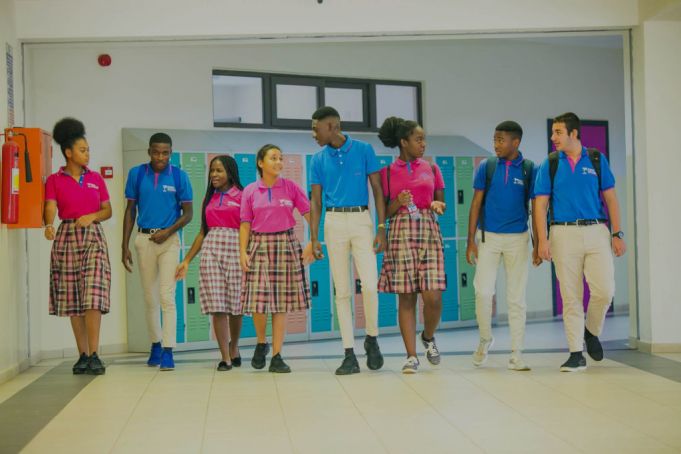
For parents in Accra, the stakes feel higher than ever. The city now boasts everything from bamboo-fenced community basic schools to multi-million dollar international campuses with robotics labs and heated swimming pools. The range of choices is dizzying. The price tags are even more so.
📢 GET A DETAILED ARTICLES + JOBS
Join ASJ's WhatsApp Channel and never miss a post or opportunity.
But here is the question that keeps parents awake: Does expensive always mean excellent? And can a mid-priced school with passionate teachers outperform a luxury campus with bored instructors?
The answer, as our investigation reveals, is complicated.
This ASJ feature examines Accra’s primary school landscape—public and private, Ghanaian and international, budget and premium. We name the schools that are genuinely delivering for young learners, explain what makes them different, and give parents the tools to evaluate any school, regardless of the brochure.
Accra’s Primary Education Landscape: A Market Overview
The first thing parents need to understand is that Accra’s primary school market is segmented into three distinct tiers.
The Public School System: Free, but Uneven
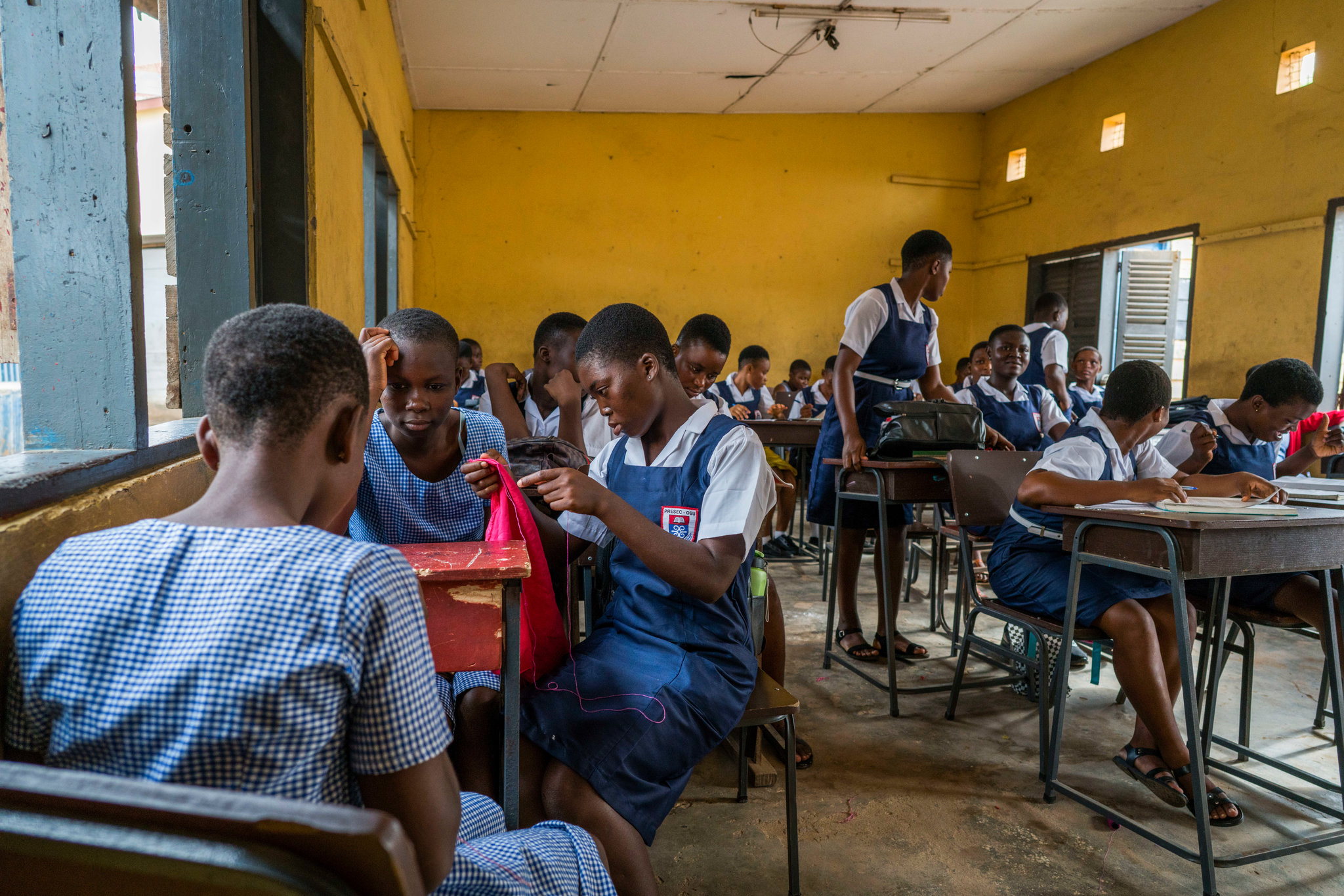
Government-run primary schools are the backbone of Ghanaian education. They serve the majority of children, and they are constitutionally free. The government provides qualified teachers (though class sizes can be enormous), textbooks, and in many cases, free meals .
The strength: Accessibility. Any child in Accra has a public primary school within walking distance.
The weakness: Quality varies wildly. A public school in East Legon, supplemented by a wealthy PTA, may have computers and a library. A public school in a poorer neighbourhood may have no running water and fifty children to a single teacher.
The 2025–2026 reality: The government has launched the Early Childhood Education Policy, which aims to standardise quality across all KG and primary institutions. The policy focuses on six areas: planning, curriculum development, teacher training, family engagement, safe environments, and quality assurance . UNICEF has praised Ghana as a “leader in pre-primary education in Sub-Saharan Africa”
One shining example is Achimota Primary School. In November 2025, former First Lady Rebecca Akufo-Addo inaugurated a modern library at the school—her alma mater—featuring computers, a child-friendly reading space, and a wide collection of books . This is the standard that all public primaries should aspire to. Most are not there yet.
The Mid-Tier Private Schools: Value for Money
This is the fastest-growing segment of Accra’s education market. These schools charge moderate fees (roughly 2,000–8,000 cedis per term, depending on facilities) and offer smaller class sizes, better-maintained buildings, and more engaged teaching than most public alternatives.
Examples include Primus Hybrid School on Spintex Road and The Shepherd Reigns Academy in Dome, both of which offer nursery and primary education with a Ghanaian curriculum focus .
The strength: Balanced quality and affordability. These schools are often started by experienced educators who genuinely care.
The weakness: They lack the international accreditations and facilities of premium schools. A parent who wants a guaranteed pathway to a top international secondary school may find these schools insufficiently rigorous.
The Premium International Schools: The Full Package (At a Price)
At the top end are schools like Alpha Beta Education Centres, The Victoria Grammar School (VGS), Cradle International School, and the newly launched TechTots International School. These institutions offer international curricula (typically Cambridge or Montessori), modern facilities, small class sizes, and a range of extracurricular activities.
Fees at this level can exceed $5,000–10,000 per year .
The strength: Unquestionable quality. Your child will learn in a safe, well-resourced environment with trained teachers and a clear academic progression.
The weakness: The cost is prohibitive for most Ghanaian families. Also, not every child needs—or benefits from—a hyper-structured international curriculum. Some children thrive better in the relative simplicity of a well-run Ghanaian curriculum school.
The editorial observation: Do not assume that “international” automatically means “better.” Some international schools in Accra are excellent. Others are expensive daycares with nice buildings. The curriculum is less important than the teacher in the classroom. A passionate Ghanaian curriculum teacher is worth ten disengaged Cambridge instructors.
The Schools That Stand Out: Accra’s Finest Elementary Institutions
After extensive research, visiting campuses where possible, and speaking to parents and educators, here are the primary schools in Accra that deserve serious consideration.
Alpha Beta Education Centres (Dansoman): The Entrepreneurial Pioneer
Founded: 1988 (as a Montessori pre-school under a carport in Dansoman)
Curriculum: British (enriched with entrepreneurial leadership focus)
Ages: 18 months to 18 years
Location: Dansoman High Street
Alpha Beta has a story that should inspire every parent. It began with six children, ages two to three, under a carport. Reverend Samuel and Florence Adjepong had relocated from the UK and simply started teaching. Today, it is one of the top private schools in Ghana, with over 800 students and a landmark campus on the Dansoman High Street .
What makes it special: The school has maintained its founder’s vision of “entrepreneurial leadership” from the primary level upwards. This is not a school that merely prepares children for exams. It prepares them to think like problem-solvers and creators.
The parent perspective: One mother whose child attends Alpha Beta told us, “The difference is in the confidence. My daughter speaks up. She asks questions. She is not afraid to be wrong. That is what I pay for.”
Catchment: Dansoman and surrounding areas. The campus is centrally located on the High Street, making it accessible from much of western Accra.
The Victoria Grammar School (Abelemkpe): The Seamless Journey
Founded: 2009 (as the primary/secondary division of Toddlers’ Inn Nursery School)
Curriculum: Cambridge Primary
Ages: 4–11 years (Primary), with secondary continuing to university preparation
Location: Abelemkpe, Accra
VGS offers what many parents desperately want: a seamless educational journey. Children can start at Toddlers’ Inn (ages 1–5), move to VGS for primary (ages 4–11), and continue through secondary to sit for international examinations and university admission .
What makes it special: The Cambridge Primary Curriculum is rigorous and internationally recognised. VGS limits class sizes to 20 seats, which means your child is not lost in a crowd . The focus on “critical thinking and study skills” is not marketing fluff—it is a deliberate pedagogical choice that pays off when students transition to the demands of secondary school.
The caution: At just 20 seats per class, spaces fill quickly. Parents should apply at least a year in advance for popular year groups.
Catchment: Abelemkpe and surrounding areas of northern Accra.
TechTots International School (Pokuase): The Future-Ready Newcomer
Opened: September 2025
Curriculum: Cambridge Early Years and Primary, blended with Reggio Emilia approach
Ages: Crèche, Early Years, and Primary 1 (expanding)
Location: Near ACP Estate, Pokuase
This is the most exciting new entrant in Accra’s primary education space. TechTots is not trying to be another traditional international school. It is building something different.
What makes it special: Two things.
First, the enrichment model. Coding, robotics, football, basketball, golf, tennis, water play, cycling, music, and piano are all included in tuition—at no additional cost . For parents tired of paying school fees plus extracurricular fees plus transport to activities, this is a revelation.
Second, the security infrastructure. TechTots has deployed facial recognition entry systems for parents and escorts, plus a comprehensive surveillance network . In a city where school security is a growing concern, this matters.
Director Portia Adwoa Siaw put it simply: “Parents today want more than academics—they want assurance of safety, innovation, and a nurturing environment” .
The editorial observation: TechTots is new. It does not have a decade of exam results to prove its model. But the combination of Cambridge curriculum, Reggio Emilia pedagogy, built-in enrichment, and cutting-edge security makes it a compelling option for parents in the Pokuase area who want premium education without sending their child across the city.
Catchment: Pokuase, Kwabenya, and the developing northern suburbs of Accra.
Cradle International School (Mango Street): Cambridge from Six Months
Curriculum: Cambridge Early Years and Cambridge Primary
Ages: 6 months to 11 years
Location: 59 Mango Street, Accra
Cradle International School is a Cambridge-accredited institution that takes children as young as six months . For working parents who need early years provision that is genuinely educational—not merely custodial—this is significant.
What makes it special: The “ultra-modern colourful story building” and “wide and convenient play area” are not just aesthetic choices . Cradle has designed its physical environment to support the Cambridge holistic curriculum, which balances physical development, cognitive development, and communication development.
The parent perspective: A parent we spoke to noted, “The e-library and IT lab are real—not just a room with two old computers. My five-year-old is already comfortable with technology as a learning tool, not just a toy.
Catchment: Mango Street and surrounding areas of Accra.
Achimota Primary School (Achimota): The Historic Public Option
Location: Achimota, Accra
Status: Public (government-funded)
Claim to fame: Alma mater of former First Lady Rebecca Akufo-Addo
Do not overlook the public sector, especially this school. Achimota Primary has just received a major infrastructure upgrade: a modern library with computers and a child-friendly reading space, inaugurated in November 2025 .
What makes it special: Legacy and location. Achimota Primary is part of the legendary Achimota School complex, which has produced four Ghanaian heads of state and generations of leaders. The primary school benefits from this ecosystem—and now, from the Rebecca Foundation’s investment.
The caution: It is still a public school. Class sizes are larger than private alternatives. Facilities, while improving, are not at international school levels. But for parents who want a Ghanaian curriculum, strong values, and a historic institution at an affordable price, Achimota Primary is a serious contender.
Catchment: Achimota and surrounding areas.
What Parents Actually Need to Look For
Any journalist can list schools. A useful journalist gives parents the tools to evaluate schools themselves.
Here is what matters in a primary school, regardless of the brochure.
Teacher Quality Over Curriculum
A Cambridge curriculum taught by a burnt-out teacher is worse than a Ghanaian curriculum taught by a passionate one. When you visit a school, ask to sit in on a class. Watch the teacher. Are they smiling? Do the children look engaged? Is there a sense of order without fear?
The red flag: A school that refuses classroom visits. If they hide the teaching, they are hiding something.
Class Size
The research is unambiguous: smaller classes benefit younger learners the most. A primary class with more than 25 students is a crowd. With more than 30, it is a crisis.
The question to ask: “What is the average class size for my child’s year group?” If the answer is vague (“usually around 25–30”), assume the higher number.
Safety and Security
This is no longer optional. TechTots has set a new standard with facial recognition and comprehensive surveillance . Other premium schools are following.
For mid-tier schools, look for: a secure perimeter (locked gates, visible security personnel), a visitor check-in system, and clear protocols for pickup (no releasing a child to an unauthorised adult).
The non-negotiable: Your child should not be able to walk off the premises unnoticed. If they can, choose another school.
The Library
A primary school without a library is a primary school that does not take literacy seriously. The new library at Achimota Primary is the gold standard for public schools . For private schools, ask: “How many books? How often are new books added? Is there a librarian or just a shelf in the corner?”
Outdoor Space
Young children need to move. A school that keeps children indoors all day is not “disciplined”—it is developmentally inappropriate. Look for a playground, a field, or at minimum, a courtyard where children can run.
The Inclusive Education Factor
Not every child learns the same way. The Chance for Childhood (CfC) Inclusive Early Child Education project screened 132 pupils in ten Greater Accra schools and identified learning difficulties ranging from visual impairments to intellectual challenges . The project trained 900 parents and 40 teachers to support these learners.
The question for schools: “How do you support children who learn differently? Do you screen for learning difficulties? What training have your teachers received on inclusive education?”
The best schools have answers. The worst schools pretend every child is the same.
The Policy Context: Where the Government Stands
Parents should understand the broader policy environment, because it affects every school—public and private.
In June 2025 (or thereabouts), the government launched the Early Childhood Education Policy. The Deputy Minister of Education-designate, Reverend John Ntim Fordjour, announced measures including teacher specialisation in early childhood education, an award system for parents who ensure regular attendance, and the identification of “Centre of Excellence” KG model schools .
Why this matters: The government is signalling that early years and primary education are a priority. Over the next few years, expect to see:
-
More trained early childhood teachers in public schools
-
Increased accountability for KG and primary performance
-
Potential subsidies or partnerships for private schools that meet quality standards
The journalist’s observation: Government policy moves slowly. Do not wait for the system to improve before enrolling your child. But do pay attention to which schools are already meeting the standards the government is aiming for. Those schools will be the winners in the long run.
A Parental Decision Framework
With so many options, how do you choose? Here is a four-step framework.
Step One: Define Your Budget
Be honest. Do not stretch yourself to the breaking point for a brand name. A child who attends a mid-tier school with parents who are present, engaged, and financially stable will outperform a child at a premium school with stressed, absent parents.
Step Two: Define Your Educational Philosophy
Do you want play-based learning (Reggio Emilia, Montessori) or structured academic instruction (Cambridge, Ghanaian National)? Do you want faith-based education or secular? Do you want a school that emphasises entrepreneurship (Alpha Beta) or technology (TechTots, Cradle)?
There is no right answer—only the right answer for your child.
Step Three: Shortlist Three to Five Schools
Based on budget and philosophy, identify a shortlist. Include at least one public school (to establish a baseline) and one mid-tier private (to understand what you get for the extra money).
Step Four: Visit Unannounced
Do not rely on scheduled tours. Schools clean up for tours. Instead, arrive on a normal school day, ask for a brief visit, and observe:
-
The mood in the corridors (calm or chaotic?)
-
The condition of the toilets (clean or crisis?)
-
The engagement in classrooms (children working or staring into space?)
Trust your gut. If something feels wrong, it probably is.
FAQ Section: Parents’ Top Questions Answered
1. What is the best primary school in Accra for young learners?
There is no single “best”—only the best fit for your child. However, based on facilities, teacher quality, and curriculum, Alpha Beta Education Centres (Dansoman), The Victoria Grammar School (Abelemkpe), and TechTots International School (Pokuase) are consistently rated among the top premium options. For public schools, Achimota Primary School is a standout after its recent library upgrade .
2. Are international primary schools worth the high fees?
It depends. If you plan to send your child to an international secondary school and then to university abroad, the Cambridge or IB pathway at a school like Cradle International School or The Victoria Grammar School provides continuity . If you are targeting Ghanaian secondary schools and universities, a well-run Ghanaian curriculum school may be equally effective at half the cost.
3. What is the difference between Montessori and Cambridge primary curricula?
Montessori is child-led and play-based. Children choose their activities from a prepared environment. Cambridge Primary is more structured, with defined learning objectives and assessments at the end of each stage. Alpha Beta started as a Montessori school but has evolved into an enriched British curriculum . TechTots blends Cambridge with Reggio Emilia (similar to Montessori but with more emphasis on collaboration and documentation) . Choose based on your child’s temperament—active explorers may thrive in Montessori; structured learners may prefer Cambridge.
4. How much do private primary schools in Accra cost?
Fees vary widely. Mid-tier private schools like Primus Hybrid School and The Shepherd Reigns Academy charge approximately 2,000–8,000 cedis per term . Premium international schools like Alpha Beta and The Victoria Grammar School can exceed the equivalent of $5,000–10,000 per year, depending on the grade level. TechTots has not publicly disclosed fees, but given its premium positioning (facial recognition security, golf, tennis, robotics), expect it to be at the higher end .
5. Is my child too young for coding and robotics?
Not at all. TechTots includes coding and robotics from the early years, not as an optional extra but as a built-in enrichment . Research shows that computational thinking can be introduced as early as age five, through unplugged activities (no screens) and simple programming concepts. The key is age-appropriate delivery—a six-year-old should be programming a Bee-Bot robot, not writing Python.
6. Which primary schools in Accra are best for children with learning difficulties?
This is a gap in the market. The Chance for Childhood (CfC) project identified significant learning difficulties among pupils in ten public schools across Accra and provided screening and support . However, most private schools are not well-equipped for special educational needs. Parents should ask schools directly about their inclusive education policies, teacher training, and access to assessment services. The government’s new Early Childhood Education Policy includes “inclusive education” as a pillar , but implementation is slow.
7. How important is security in choosing a primary school?
Increasingly critical. TechTots has raised the bar with facial recognition entry and comprehensive surveillance . For schools without such technology, look for a secure perimeter, a single locked entry point, visible security personnel, and a clear visitor check-in process. A school that allows anyone to walk onto the campus is not safe.
8. Can my child switch from a Ghanaian curriculum school to a Cambridge school later?
Yes, but the transition is easier the earlier it happens. The Cambridge Primary curriculum is broadly aligned with international standards but differs in pacing and content. A child who completes Ghanaian curriculum up to class four can typically transfer to a Cambridge school with some catch-up support. Transferring after class six is more difficult and may require repeating a year. If you anticipate an eventual switch, make it by class three at the latest.
9. What is the student-to-teacher ratio in Accra’s public primary schools?
Officially, the government targets a ratio of 35:1. In practice, especially in densely populated areas like Mamprobi, Nima, and Maamobi, ratios often exceed 45:1 or even 50:1 . Private schools typically offer ratios between 15:1 and 25:1. For young learners, smaller is almost always better.
10. How do I know if a primary school is registered and accredited?
Ask to see their registration certificate from the Ghana Education Service (GES). Every legitimate private school must be registered. For international curricula, look for accreditation from Cambridge Assessment International Education or the International Baccalaureate Organisation. Cradle International School lists Cambridge accreditation on its LinkedIn profile . If a school cannot produce documentation, walk away.
Conclusion: The Bed You Are Making
Let us return to the proverb. As you make your bed, so you lie on it.
The primary school years are the bed-making years. The habits formed here—curiosity, discipline, resilience, kindness—will determine the shape of your child’s life. The academic content matters, of course. But the culture of the school matters more.
Is it a place where children are seen or merely counted? Where teachers are respected or feared? Where mistakes are punished or learned from?
These are not questions you can answer from a website. They require visits. They require conversations. They require trusting your eyes and your gut over the marketing brochure.
Accra has schools at every price point and pedagogical flavour. The public system, for all its challenges, is improving. The private sector is innovative and competitive. The new entrants like TechTots are raising standards in safety and enrichment.
Your job, as a parent, is not to find the “best” school in Accra. It is to find the school where your child will wake up excited to learn. Where your child will feel safe enough to take risks. Where your child will be seen, not just processed.
That school exists. Go find it.
And when you do, you will have made a bed that your child can lie in comfortably for the rest of their educational journey.
Source: Accra Street Journal
Last Updated on May 21, 2026 by Samuel Kwame Boadu
Disclaimer: Some content on Accra Street Journal may be aggregated, summarized, or edited from third-party sources for informational purposes. Images and media are used under fair use or royalty-free licenses. Accra Street Journal is a subsidiary of SamBoad Publishing Hub under SamBoad Business Group Ltd, registered in Ghana since 2014.
For concerns or inquiries, please visit our Privacy Policy or Contact Page.

Samuel Kwame Boadu is a Ghanaian media entrepreneur and storyteller with a passion for amplifying urban voices and uncovering everyday truths. He is the Editor-in-Chief and Founder of Accra Street Journal, a dynamic digital platform dedicated to capturing the pulse of Ghana’s capital—its people, culture, challenges, business, sports and innovations.