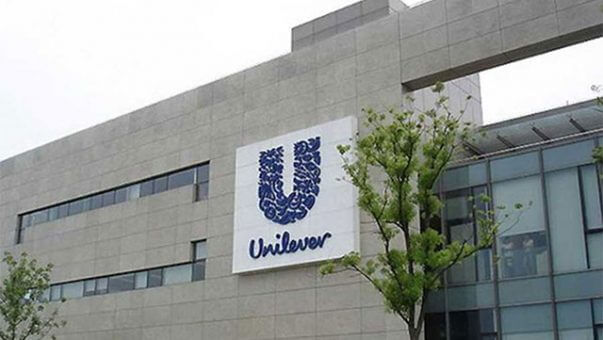
With a commanding presence in laundry care (over 50% market share), a portfolio of iconic brands from Key Soap to Omo and Royco, and a Tema manufacturing complex that has operated for over three decades, Unilever Ghana is the largest quoted manufacturing and marketing company in the nation‘s consumer goods sector. Now, under the leadership of CEO Chris Wulff-Caesar, the company is navigating a post-2023 profit surge (GH¢141 million to GH¢96.5 million in 2025) and seeking to sustain its 13% revenue growth while defending its shelf space against aggressive local and regional competitors. The question is whether the multinational‘s global supply chain advantages can outweigh the headwinds of currency depreciation and inflationary pressure on the Ghanaian consumer.
Executive Introduction
In the hierarchy of Ghanaian consumer goods, few names carry the weight—or the shelf space—of Unilever Ghana PLC. From the red and white of Omo laundry detergent to the deep blue of Geisha soap, from the trusted taste of Royco soups to the fluoride protection of Pepsodent, the company‘s products are staples in the vast majority of Ghanaian homes. It is the largest quoted manufacturing and marketing company in the country‘s consumer goods sector .

But Unilever Ghana is not merely a collection of brands; it is a listed public company (GHSE: UNIL) with a 33-year history on the Ghana Stock Exchange, a multinational parent (Unilever PLC, holding approximately 66.7%), and a public float of about 33% held by approximately 11,000–12,000 Ghanaian shareholders . Its factory in Tema‘s Heavy Industrial Area has been the manufacturing backbone of the company‘s operations for decades.
📢 GET A DETAILED ARTICLES + JOBS
Join ASJ's WhatsApp Channel and never miss a post or opportunity.

The 2023 financial year was a standout, with revenue surging 44% to GH¢908 million and profit skyrocketing from GH¢15 million to GH¢141 million . The company also swung from a negative cash position to a positive GH¢109 million . This performance was driven by post-pandemic volume recovery, pricing adjustments, and a renewed focus on core categories.
However, the 2025 results have tempered expectations. Revenue grew a more modest 11.6% to GH¢1.04 billion, while net income declined to GH¢96.5 million . The gross margin, while healthy at 37%, remains below the peak achieved in 2023. Profitability metrics—return on equity of 114.7% and return on assets of 33.3%—are still exceptional by any standard . But the trajectory suggests that the post-COVID rebound has matured and that the company must now fight harder for each percentage point of growth.

For investors, policymakers, and business analysts, Unilever Ghana represents a case study in multinational-local hybrid governance. It is simultaneously a subsidiary of a global giant and a public company accountable to thousands of Ghanaian shareholders. It benefits from global supply chains and R&D, but its manufacturing and distribution are deeply local.
This ASJ profile examines the company‘s 1992 founding, its 2023 profit surge and subsequent stabilisation, its dominant market position (over 50% in laundry care), its brand portfolio, the Tema factory and distribution network, the leadership of CEO Chris Wulff-Caesar, and the critical question: Can Unilever Ghana sustain its market dominance in the face of currency volatility, rising local competition, and the ever-present threat of consumer downtrading?
Company Overview: The 1992 Merger and the Tema Industrial Anchor
The Genesis: UAC + Lever Brothers
Unilever Ghana PLC was founded in 1992 through the merger of two long-standing Ghanaian subsidiaries of Unilever PLC: UAC Ghana Limited and Lever Brothers Ghana Limited . The merger consolidated the companies‘ manufacturing, distribution, and brand portfolios under a single entity.
-
UAC Ghana Limited had roots in the United Africa Company, a trading firm with deep colonial-era presence in West Africa.
-
Lever Brothers Ghana Limited brought the soap and detergent expertise of the British parent.
The merged entity was listed on the Ghana Stock Exchange in the early 1990s (the exchange itself had been founded in 1990). For over three decades, Unilever Ghana has been a bellwether stock for the consumer goods sector.
Ownership Structure: A Multinational with a Local Float
| Shareholder | Approximate Stake | Nature |
|---|---|---|
| Unilever Overseas Holdings Limited | 66.7% | Multinational parent (Unilever PLC) |
| Public Investors | ~33% | ~11,000–12,000 Ghanaian shareholders |
Source: The High Street Business
This hybrid structure is distinctive. Unlike wholly-owned subsidiaries (e.g., Nestlé Ghana is also listed but with a similar structure), Unilever Ghana has a significant local shareholder base. The public float provides liquidity and ensures that the company is subject to GSE disclosure and governance requirements, while the majority parent provides capital, R&D, and supply chain advantages.
Operations and Footprint
Headquarters and Factory:
| Detail | Information |
|---|---|
| Address | Tema Factory, Heavy Industrial Area, Plot No. IND/A/2/3A-4, Publishing Road, P. O. Box 721, Tema, Ghana |
| Phone | 233 59 692 1447 |
| Website | unileverghana.com |
The Tema factory is the company‘s primary manufacturing hub, producing a wide range of products across its three core segments: Nutrition, Home Care, and Beauty & Personal Care .
Employees:

| Metric | Value |
|---|---|
| Total Employees | 165 |
| Fiscal Year End | December |
While the direct employee count is modest (165), Unilever Ghana supports thousands more indirectly through its distribution network, supply chain, and local suppliers.
Distribution Network:
-
46 key distributors serving as primary intermediaries .
-
Over 100,000 retail, wholesale, and other outlets across Ghana, including supermarkets, corner shops, kiosks, and open markets .
-
Online presence through the Unilever Official Store on Jumia Ghana, offering home delivery of products like Vaseline, Geisha soap, and Pepsodent .
-
Regional exports to Nigeria, Kenya, South Africa, and Côte d‘Ivoire .
Leadership: Chris Wulff-Caesar and the Executive Team
Mr. Chris Wulff-Caesar – Managing Director & CEO
Chris Wulff-Caesar has served as Managing Director and Chief Executive Officer of Unilever Ghana PLC since April 1, 2024 . He also serves as a Director on the Board.
Professional Background:
Prior to his appointment at Unilever Ghana, Wulff-Caesar was the Marketing Director of Friesland Campina WAMCO Nigeria PLC . His career has focused on marketing, brand management, and commercial strategy in the West African consumer goods sector.
Leadership at Unilever Ghana:
Wulff-Caesar assumed leadership shortly after the 2023 profit surge, tasked with sustaining the company‘s momentum. His tenure has been characterised by a focus on:
-
Core category growth: Strengthening the company‘s positions in laundry, personal care, and nutrition.
-
Distribution efficiency: Leveraging the network of 46 distributors to reach over 100,000 outlets.
-
Digital and e-commerce expansion: The Jumia partnership is one element of this strategy.
Executive Committee:
| Name | Position | Tenure |
|---|---|---|
| Chris Wulff-Caesar | Managing Director, CEO & Director | Since April 2024 |
| Priyadharshana Ekanayake | Chief Financial Officer & Director | Since June 2020 |
| Ama Adadzewa Agyemang | General Counsel & Company Secretary | Since ~2016 |
Management Experience:
The management team has an average tenure of 5.6 years, indicating a stable and experienced leadership cadre .

Board of Directors
The Board is chaired by Edward Effah, who has served as Chairman since 2017 . The board includes several long-serving independent and non-executive directors, though the average board tenure is relatively short (1.1 years), reflecting recent changes .
Key Board Members:
| Name | Position | Since |
|---|---|---|
| Edward Effah | Chairman, Independent Director | 2017 |
| Chris Wulff-Caesar | MD & Director | 2024 |
| Priyadharshana Ekanayake | Executive Director | 2020 |
| Joel Boateng | Non-Executive Director | 2023 |
| Carl Raymond Cruz | Non-Executive Director | 2020 |
| George Owusu-Ansah | Non-Executive Director | 2020 |
| Angela Peasah | Independent Director | 2017 |
| Philip Odotei Sowah | Independent Director | 2016 |
| Edith Dankwa | Independent Director | 2016 |
Source: The High Street Business
The Financial Engine: Revenue, Profitability, and the 2023 Surge
Recent Financial Performance (2023–2026)
Unilever Ghana‘s financial results over the past four years reveal a company that has experienced a dramatic recovery, followed by stabilisation and moderated growth.
Income Statement (GHS Millions):
| Metric | FY 2023 | FY 2024 | FY 2025 | TTM (Mar 2026) | 2025 vs 2023 |
|---|---|---|---|---|---|
| Revenue | 908.65 | 930.81 | 1,039.2 | 1,075 | +14.4% |
| Revenue Growth | +43.9% | +2.4% | +11.6% | +13.0% | — |
| Gross Profit | 358.14 | 351.9 | 407.04 | 470.43 | +13.6% |
| Gross Margin | 39.4% | 37.8% | 39.2% | 37.0%* | — |
| Operating Income | 246.3 | 112.3 | 144.6 | — | -41.3% |
| Net Income | 141.4 | 58.1 | 96.5 | 137.4 | -31.8% |
| Net Margin | 15.6% | 6.2% | 9.3% | 12.8% | — |
Sources: The High Street Business
*Gross margin for TTM March 2026 calculated from TTM gross profit and revenue.
Key Observations:
1. The 2023 Profit Surge (The Outlier Year):
The 2023 financial year was exceptional. Revenue grew 44% to GH¢908 million, and net income exploded from GH¢15 million (2022) to GH¢141 million . This was driven by:
-
Post-pandemic volume recovery: As supply chains normalised and consumer activity resumed, sales volumes rebounded.
-
Pricing adjustments: Unilever, like all consumer goods companies, raised prices in response to input cost inflation. The combination of volume recovery and price increases created a “double benefit” in 2023.
-
Foreign exchange effects: Unilever Ghana imports raw materials. The cedi‘s depreciation increased the local currency value of sales (though it also increased input costs).
2. The 2024–2025 Normalisation:
The 2024 results (net income GH¢58 million) and 2025 results (GH¢96.5 million) represent a return to more sustainable profitability levels. The 2024 dip was significant (operating income halved from GH¢246 million to GH¢112 million), but the 2025 recovery indicates that management adjusted to the new normal.
3. Gross Margin Stability:
Gross margins have remained in the 37-39% range, indicating that Unilever has been able to pass on cost increases to consumers without sacrificing profitability. The slight decline to 37% in TTM March 2026 bears watching.
4. Profitability Metrics (TTM March 2026):
| Metric | Value | Interpretation |
|---|---|---|
| Return on Equity (ROE) | 114.7% | Exceptional; reflects high leverage and strong earnings |
| Return on Assets (ROA) | 33.3% | Very strong; efficient asset utilisation |
| Return on Invested Capital | 106.8% | Excellent capital efficiency |
These metrics, while impressive, are inflated by the company‘s relatively low equity base (due to consistent dividend payouts). A ROE above 100% is mathematically possible but indicates that the company is generating more net income than its book equity.
Cash Flow and Balance Sheet
| Metric | 2023 | 2024 | Change |
|---|---|---|---|
| Cash Position | GH¢109 million (positive) | — | Recovered from deficit |
In 2022, Unilever Ghana was in a negative cash position. By the end of 2023, the company had swung to a positive GH¢109 million cash balance, a remarkable turnaround that provided liquidity for operations and investment .
Valuation Metrics (as of March–May 2026)
| Metric | Value |
|---|---|
| P/E Ratio (w/o extraordinary items) | 3.58 |
| Price-to-Sales Ratio | 0.56 |
| Price-to-Book Ratio | 2.62 |
| Price-to-Cash Flow Ratio | 2.51 |
| EV/EBITDA | 7.03 |
| Gross Margin | 37.01% |
| Operating Margin | 23.81% |
| Net Margin | 15.57% |
Interpretation:
-
P/E of 3.58 is exceptionally low, suggesting that the market is pricing in significant risk or that the 2023 profit surge was seen as non-recurring. The 2025 net income of GH¢96.5 million implies a P/E of approximately 10-12 at current market prices, still reasonable for a consumer goods company.
-
P/S of 0.56 indicates the market is valuing Unilever Ghana at just over half its annual revenue—conservative for a company with dominant market share.
-
P/B of 2.62 reflects the intangible value of the Unilever brand portfolio, which is not fully captured on the balance sheet.
-
Operating margin of 23.8% is strong, indicating efficient cost management and pricing power.
Forecasts (2026–2030)
Analysts project continued revenue growth, albeit at a slower pace than the 2023 outlier:
| Year | Projected Revenue (GHS Millions) | Projected EBIT (GHS Millions) |
|---|---|---|
| 2026 | 1,181 | 172 |
| 2027 | 1,389 | 215 |
| 2028 | 1,659 | 228 |
Source: The High Street Business
These projections imply a 5-year CAGR of approximately 10%, reflecting sustained demand for consumer staples despite economic headwinds.
The Brand Portfolio: Icons of Ghanaian Daily Life
Unilever Ghana‘s product portfolio is organised into three segments: Nutrition, Home Care, and Beauty & Personal Care .
Segment 1: Nutrition (Foods)
This segment includes the company‘s food products, which are staples in Ghanaian kitchens.
| Brand | Category | Market Position |
|---|---|---|
| Royco | Soups, stocks, seasonings | Market leader |
| Annapurna | Iodised salt | Widely distributed |
| Blue Band | Margarine and spreads | Strong competitor |
| Lipton | Tea | Established brand |
Sources: The High Street Business
Royco seasoning cubes are a staple in Ghanaian cooking; the brand‘s yellow and red packaging is ubiquitous in markets and kitchens across the country.
Segment 2: Home Care (Laundry & Household Cleaning)
This is Unilever‘s most dominant segment in Ghana.
| Brand | Category | Market Position |
|---|---|---|
| Omo | Laundry detergent | Market leader (part of >50% share) |
| Surf Excel | Laundry detergent | Market leader (part of >50% share) |
| Sunlight | Dishwashing liquid | Leading brand |
Dominant Market Share:
According to industry research, Unilever‘s Omo and Surf Excel brands together account for more than 50% of the sales value share of Ghana‘s laundry care products market . This is an extraordinary concentration.
Market Context:
The Ghana laundry care market was valued at approximately USD 144 million (GHS 825 million) in 2019, with an anticipated CAGR of 4% . Unilever‘s dominance in this category is a significant competitive moat.
Segment 3: Beauty & Personal Care (Soaps, Oral Care, Skin Care)
This segment includes the company‘s extensive range of personal care products.
| Brand | Category | Market Position |
|---|---|---|
| Key Soap | Antiseptic soap | Iconic Ghanaian brand; market leader in its segment |
| Lux | Beauty soap | International brand with strong local presence |
| Geisha | Toilet soap | Affordable mass-market brand |
| Sunlight (Bar) | Multipurpose soap | Versatile household product |
| Pepsodent | Toothpaste | Leading oral care brand |
| CloseUp | Toothpaste | Strong competitor |
| Vaseline | Skin care lotion | Market leader in body lotions |
| Dove | Premium soap/body wash | Premium segment leader |
Sources: The High Street Business
Key Soap: A Ghanaian Icon
Key Soap is arguably Unilever Ghana‘s most beloved local brand. The antiseptic soap, with its distinctive green packaging and medicinal positioning, has been a household name for generations. It is manufactured at the Tema factory and has a loyal following across West Africa.
Unilever Ghana vs. Competitors
| Category | Unilever Brand | Key Competitor | Unilever‘s Position |
|---|---|---|---|
| Laundry Detergent | Omo, Surf Excel | PZ Cussons (Elephant), local brands | >50% market share |
| Dishwashing | Sunlight | PZ Cussons | Leading |
| Soap (Antiseptic) | Key Soap | Local producers | Dominant |
| Soap (Beauty) | Lux, Dove, Geisha | Various | Leading portfolio |
| Toothpaste | Pepsodent, CloseUp | Unilever‘s own brands | Duopoly with other multinational |
| Seasoning | Royco | Promasidor (Cowbell), others | Leading |
The most significant competitive threat comes from local manufacturers who can offer lower prices by avoiding the cost structure of a multinational and from regional competitors like Promasidor (which has its own seasoning and dairy products).
The Tema Factory and Distribution Moat
The Tema Manufacturing Complex
Unilever Ghana‘s factory in the Tema Heavy Industrial Area is the manufacturing hub for products consumed across Ghana and exported to neighbouring countries.
Products Manufactured at Tema:
-
Geisha soap
-
Key Soap
-
Other soaps and personal care products
-
Royco seasonings
-
Blue Band spreads
-
Laundry detergents (Omo, Surf Excel)
Factory Tour Experience:
In February 2024, the University of Ghana Business School (UGBS) Executive MBA class toured the Unilever Ghana factory . The visit included:
-
A safety induction conducted by the company‘s security team .
-
A guided tour of the Geisha soap and Key Soap production lines, showing the preparation and packaging processes .
-
A presentation by then-Managing Director George Owusu-Ansah (now a board member) on the company‘s five-year financial and business performance (2019–2023) .
The tour highlighted Unilever‘s commitment to transparency and stakeholder engagement.
The 46-Distributor Network
Unilever‘s distribution network is a strategic asset. The company works through 46 key distributors .
| Distribution Channel | Scale |
|---|---|
| Key Distributors | 46 |
| Retail, Wholesale, and Other Outlets | Over 100,000 |
| Online | Unilever Official Store on Jumia Ghana |
Why the distribution network is a moat:
-
Reach: Over 100,000 outlets means Unilever products are available in every corner of the country, from major supermarkets in Accra to remote village kiosks.
-
Efficiency: The 46-distributor model consolidates logistics, reducing the complexity of serving 100,000 endpoints directly.
-
Barriers to entry: Building a distribution network of this scale would take years and significant capital.
Exports: A Regional Hub
Unilever Ghana is not merely a domestic manufacturer; it is a regional export hub. The company exports products to:
-
Nigeria
-
Kenya
-
South Africa
-
Côte d‘Ivoire
This export activity generates foreign exchange for Ghana and reduces the country‘s reliance on imports of finished consumer goods.
Unilever and the Oil Palm Industry
Historically, Unilever had interests in oil palm plantations in Ghana. While the company streamlined its operations in the late 1990s to focus on consumer goods manufacturing and shed non-core assets like textiles and plantations, it retains interests in oil palm plantations such as:
-
Twifo Oil Palm Plantation
-
Benso Oil Palm Plantation
These investments support the local vegetable oil supply chain, which is essential for soap manufacturing.
Market Position: The “Largest Quoted Manufacturer”
Industry Standing
Unilever Ghana is the largest quoted manufacturing and marketing company in Ghana‘s consumer goods sector . This position is supported by:
| Dimension | Unilever‘s Position |
|---|---|
| Market Capitalisation | One of the largest on the GSE (consumer goods sector) |
| Revenue (2025) | GH¢1.04 billion |
| Distribution Reach | Over 100,000 outlets nationwide |
| Export Markets | Nigeria, Kenya, South Africa, Côte d‘Ivoire |
| Market Share (Laundry) | >50% of sales value |
| Employee Count | 165 direct; thousands indirect |
The Herfindahl Index Context
The Ghana laundry care products market has a Herfindahl-Hirschman Index (HHI) of 1718 (as of 2023), indicating a moderately competitive market . Unilever‘s >50% share means it is the dominant player, but not a monopoly.
Competitive Threats
| Competitor | Category | Threat Level |
|---|---|---|
| PZ Cussons Ghana Ltd | Laundry (Elephant brand), personal care | Moderate |
| Godrej Consumer Products Ltd | Soaps, toiletries | Moderate |
| Promasidor Ghana | Seasoning, dairy | Moderate |
| Local manufacturers | Various | Rising (price competition) |
| Henkel Corporation | Laundry | Low (primarily institutional) |
Source: The High Street Business
The Local Manufacturer Threat:
Local manufacturers have lower overheads, do not face the same corporate governance costs, and can be more agile in responding to price changes. As Ghanaian consumers face inflationary pressure, the risk of downtrading—switching from Unilever‘s premium brands to cheaper local alternatives—is significant.
The Regional Competitor Threat:
Promasidor, the parent company of Cowbell milk powder, has its own seasoning products that compete directly with Royco. The company has deep roots in West Africa and is a formidable competitor in the nutrition segment.
The CEO‘s Mandate: Chris Wulff-Caesar‘s Agenda
The 2024 Leadership Transition
Chris Wulff-Caesar assumed leadership on April 1, 2024, succeeding a leadership team that had overseen the remarkable 2023 results . His mandate includes:
1. Sustaining Revenue Growth:
After the 44% surge in 2023, revenue growth moderated to 2.4% in 2024 before recovering to 11.6% in 2025 . The target for 2026–2027 is to maintain double-digit growth while protecting margins.
2. Defending Market Share:
The >50% share in laundry care is a fortress, but it requires constant defence. Wulff-Caesar must ensure that Omo and Surf Excel remain competitive against lower-priced alternatives.
3. Expanding the Premium Portfolio:
Dove, CloseUp, and other premium brands offer higher margins. Shifting the product mix toward premium categories can protect profitability even if volume growth slows.
4. E-commerce and Digital Distribution:
The Jumia partnership is a start, but Unilever Ghana may need to invest further in direct-to-consumer channels and digital marketing to reach younger, urban consumers.
5. Managing Currency Risk:
Unilever Ghana imports raw materials. The cedi‘s depreciation is a persistent headwind. Wulff-Caesar must work with the parent company‘s treasury function to hedge currency exposure and optimise sourcing.
Leadership Tenure and Stability
The management team has an average tenure of 5.6 years, providing stability and institutional knowledge . The board is newer (average tenure 1.1 years), reflecting recent changes in the non-executive ranks .
Economic and Industry Impact
Employment and Livelihoods
While Unilever Ghana directly employs only 165 people , its economic impact is much broader:
-
Distribution network: The 46 distributors employ staff; the 100,000+ retail outlets that stock Unilever products depend on them for inventory.
-
Local suppliers: Unilever sources raw materials locally (e.g., palm oil from Twifo and Benso plantations), supporting agricultural employment.
-
Indirect jobs: Transporters, logistics providers, and marketing agencies all benefit from Unilever‘s operations.
Tax Contribution
As the largest quoted manufacturer, Unilever Ghana is a significant taxpayer. The company‘s 2023 effective tax rate was approximately 42% (GH¢100 million tax on GH¢141 million profit). These taxes fund public services.
Export Earnings
Unilever Ghana‘s exports to Nigeria, Kenya, South Africa, and Côte d‘Ivoire generate foreign exchange for the country, supporting the cedi and reducing the trade deficit.
Supply Chain Development
Unilever‘s local sourcing initiatives (e.g., palm oil from Ghanaian plantations) support the development of domestic agricultural supply chains. The company‘s quality standards encourage local suppliers to improve their practices.
Consumer Welfare
Unilever‘s products are affordable staples. The company‘s scale allows it to offer competitive prices. A reduction in Unilever‘s market share due to import constraints or currency volatility would leave consumers with fewer choices and potentially higher prices.
Challenges and Risks
No analysis of Unilever Ghana is complete without acknowledging the headwinds it faces.
Risk 1: Currency Depreciation (The Cedi Risk)
Unilever Ghana imports raw materials—milk powder, palm oil derivatives, packaging materials, chemical inputs—denominated in US dollars and euros. It sells in Ghanaian cedis. The cedi‘s historic depreciation compresses margins when local currencies weaken.
Mitigation: Hedging through the parent company‘s treasury operations; local sourcing where possible (e.g., palm oil from Ghanaian plantations); pricing adjustments (though consumer sensitivity limits this).
Risk 2: Inflation and Consumer Downtrading
Ghana‘s inflation, while moderating from its 2023 peak, remains elevated. Consumers facing higher food and fuel prices may trade down from Unilever‘s premium brands to cheaper local alternatives.
Mitigation: Unilever‘s brand loyalty is strong. Consumers may reduce frequency but rarely switch entirely. The company‘s portfolio includes economy brands (Geisha, Sunlight) that serve as a buffer against downtrading.
Risk 3: Competition from Local Manufacturers
Local manufacturers have lower overheads, do not face the same corporate governance costs, and can be more agile in responding to price changes.
Mitigation: Unilever‘s scale, distribution network, and brand equity create a moat. The >50% market share in laundry care is not easily dislodged.
Risk 4: Supply Chain Disruptions
Global supply chain disruptions (shipping, raw material availability) affect all manufacturers. Unilever‘s global parent provides some insulation, but local shortages can still occur.
Mitigation: Diversified sourcing; inventory holding; close relationships with key suppliers.
Risk 5: Regulatory and Tax Environment
Changes in import duties, value-added tax, or corporate tax rates could affect profitability.
Mitigation: Proactive engagement with government through industry associations.
Risk 6: ESG Scrutiny
Unilever, as a global multinational, faces intense scrutiny on environmental, social, and governance issues—plastic waste, water usage, supply chain labour practices.
Mitigation: Unilever‘s global “Unilever Sustainable Living Plan” provides a framework; local initiatives (e.g., palm oil sourcing) are part of this.
Risk 7: Parent Company Strategy Shifts
Unilever PLC‘s global strategy—including portfolio rationalisation, brand divestitures, and geographic focus—could affect the Ghana subsidiary.
Mitigation: Unilever Ghana‘s strong performance makes it a valued part of the global portfolio; but central decisions (e.g., exiting low-margin categories) could still impact the local operations.
Future Outlook
As of June 2026, Unilever Ghana is executing a strategy of market share defence, premium portfolio expansion, and digital distribution.
The Immediate Agenda (2026-2027)
-
Sustain Revenue Growth: Maintain 10%+ annual revenue growth through a combination of volume and price.
-
Protect Laundry Market Share: Defend the >50% share in laundry care against local and regional competitors.
-
Expand Premium Brands: Increase penetration of Dove, CloseUp, and other premium products in urban centres.
-
Grow E-commerce Sales: Expand the Unilever Official Store on Jumia and explore other online channels.
-
Manage Currency Risk: Work with the parent company to hedge exposure and optimise sourcing.
-
Invest in Distribution: Continue to support the 46-distributor network to reach the 100,000+ outlets.
The Bull Case (Optimistic)
-
Margin Expansion: Gross margin returns to 40%+ as the product mix shifts to premium brands. Operating margin exceeds 25%.
-
Export Growth: Unilever Ghana becomes a manufacturing hub for West Africa, with exports growing to $50 million+ annually.
-
Digital Leadership: The Unilever Official Store captures 10%+ of urban e-commerce sales, reducing reliance on traditional trade.
-
Local Sourcing Increases: Ghanaian suppliers provide a larger share of raw materials, reducing import dependence and stabilising costs.
-
Parent Company Support: Unilever PLC invests in expanding the Tema factory, adding production lines for new categories.
-
Dividend Growth: The payout ratio increases, rewarding the ~11,000 Ghanaian shareholders with higher dividends.
The Bear Case (Pessimistic)
-
Currency Crisis: The cedi depreciates sharply. Input costs spike. Unilever raises prices, losing volume to cheaper competitors.
-
Market Share Erosion: Local competitors gain share in laundry care. Unilever‘s >50% share falls to 40-45%.
-
Consumer Downtrading: Inflation persists. Consumers switch to cheaper alternatives. Revenue growth slows to low single digits.
-
Regulatory Headwinds: New taxes or import restrictions increase costs.
-
Parent Company Divestment: Unilever PLC decides to exit certain categories or reduce its stake, creating uncertainty.
-
ESG Backlash: Campaigns against plastic packaging or palm oil sourcing damage the brand‘s reputation.
The Verdict
Unilever Ghana PLC is the undisputed heavyweight of Ghana‘s consumer goods manufacturing sector. It is the largest quoted manufacturer, with a 33-year history on the Ghana Stock Exchange, a portfolio of iconic brands, and a distribution network that reaches over 100,000 outlets nationwide .
The 2023 financial results—revenue up 44%, profit up 840%, cash position recovered from deficit—demonstrated the company‘s resilience and pricing power . The 2025 results, while more modest, showed that the company can sustain growth (11.6% revenue increase) even after the post-pandemic rebound .
The company‘s dominant market share in laundry care (over 50%) is a competitive fortress . The >100,000-outlet distribution network is a moat that local competitors cannot easily replicate. The Tema factory is a manufacturing asset that has served the company for three decades.
However, the risks are substantial. Currency depreciation, inflation, and consumer downtrading are persistent threats. Local manufacturers are gaining ground, offering lower-priced alternatives. The company‘s direct employee count of 165 suggests a highly capital-intensive operation, but also one that may be less flexible than smaller, nimbler competitors.
For the Ghanaian consumer, Unilever products are daily staples—from the soap they use to wash their hands to the seasoning they add to their soup. For the Ghanaian economy, Unilever is a significant taxpayer, employer (indirectly), and export earner. For the investor, Unilever Ghana offers exposure to a dominant consumer goods company with a multinational parent and a long history on the GSE.
Unilever Ghana is not trying to be the fastest-growing consumer goods company in Ghana—it is already the largest. It is trying to be the most resilient, the most trusted, and the most profitable. With a >50% market share in its core category, a 33-year track record, and a portfolio of brands that Ghanaians have trusted for generations, it is well-positioned to defend its title.
Last Updated on June 7, 2026 by Samuel Kwame Boadu
Disclaimer: Some content on Accra Street Journal may be aggregated, summarized, or edited from third-party sources for informational purposes. Images and media are used under fair use or royalty-free licenses. Accra Street Journal is a subsidiary of SamBoad Publishing Hub under SamBoad Business Group Ltd, registered in Ghana since 2014.
For concerns or inquiries, please visit our Privacy Policy or Contact Page.

Samuel Kwame Boadu is a Ghanaian media entrepreneur and storyteller with a passion for amplifying urban voices and uncovering everyday truths. He is the Editor-in-Chief and Founder of Accra Street Journal, a dynamic digital platform dedicated to capturing the pulse of Ghana’s capital—its people, culture, challenges, business, sports and innovations.