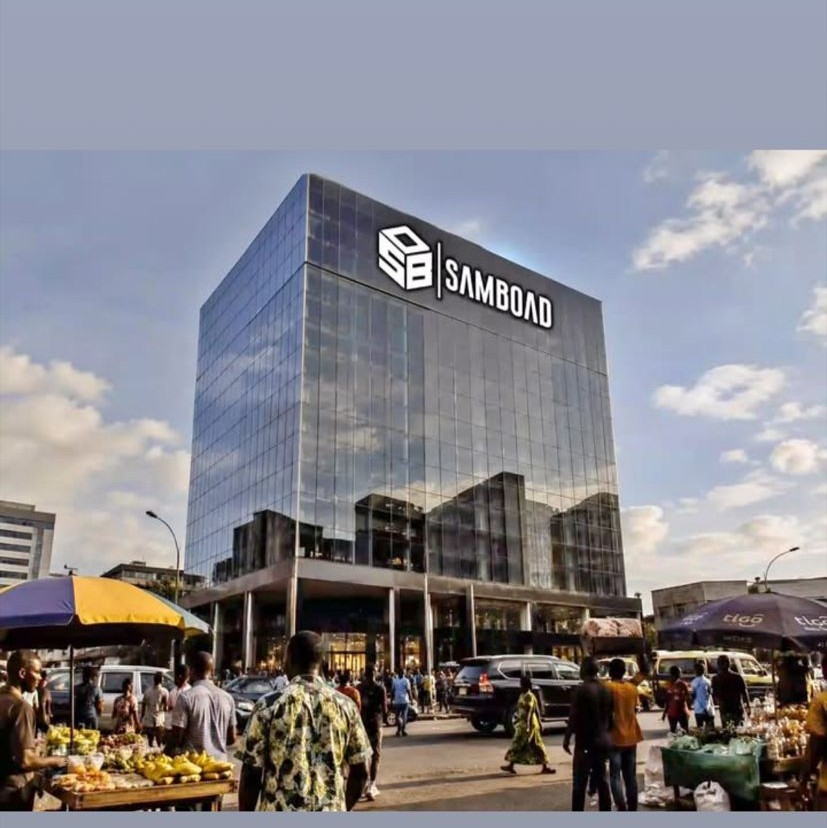
From a single desk in Koforidua leveraging a father‘s property to a diversified holding company with interests in logistics, media, risk management, and publishing, SamBoad Business Group Ltd represents the archetype of the modern Ghanaian entrepreneur: lean, digitally native, and structurally complex. Having raised $20,000 in seed funding, survived a brutal restructuring that saw two subsidiaries shuttered, and now preparing to triple its valuation, founder Samuel Kwame Boadu is betting that a decentralized, partnership-driven model—spanning editorial influence (Accra Street Journal, The High Street Business), logistical muscle (DHL/Bolt partnerships), and grassroots youth development (Football Academy)—can build a multi-million dollar empire without surrendering control to traditional venture capital.
Executive Introduction
In the landscape of Ghanaian enterprise, the narrative of the “self-made CEO” is often dominated by established industrialists—the Togbes, the Nduoms, the Kesserwanis—who built their empires over decades. Yet, quietly operating from a head office in Accra, with a lean team of fewer than 50 core employees but a network of over 20 logistics riders and dozens of freelance creatives, is a new breed of entrepreneur: Samuel Kwame Boadu. His vehicle is SamBoad Business Group Ltd, a holding company that defies easy categorization.

Is it a media house? It publishes the influential Accra Street Journal and The High Street Business, occupying a unique space where business intelligence meets public journalism . Is it a logistics firm? Its subsidiary, SamBoad Express, is an authorized partner of DHL Africa and Bolt Food, putting dozens of riders on the streets of Accra . Is it a marketing agency? It has executed strategies for major brands like Priority Insurance, Rokmer Pharma, and the Ghana National Chamber of Pharmacy .
📢 GET A DETAILED ARTICLES + JOBS
Join ASJ's WhatsApp Channel and never miss a post or opportunity.

The answer is that it is all of these things—a holding company structured to capture value across the fragmented value chain of the Ghanaian service economy.
Founded in 2014 as a mobile money vendor under the name SamBoad Ventures, the company has undergone a radical transformation. A brutal restructuring in late 2025 saw the closure of its micro-credit and travel subsidiaries due to shifting market dynamics, a move that could have destroyed a lesser enterprise . Instead, founder Samuel Boadu pivoted aggressively. By January 2026, the group was announcing its integration into the Meridian Industrial Park and preparing to unveil a substantial transport business aimed at redefining employee commuting in Accra

For investors, analysts, and competitors, SamBoad Business Group represents a case study in decentralized growth. It is not a traditional hierarchical conglomerate; it is a portfolio of brands (SamBoad Express, SamBoad Media Consult, SamBoad Risk Management, SamBoad Football Academy, and the SamBoad Publishing stable) operated with lean teams and high execution capacity . It has raised $1 million in seed capital , but founder Boadu remains the controlling shareholder (90%), signaling a fierce desire to build a legacy, not just sell out.
This ASJ profile examines the company’s 2014 founding, its evolution from sole proprietorship to holding group, the controversial 2025 restructuring, the launch of the SamBoad Football Academy, the strategic partnerships with DHL and Bolt, the influential role of its publishing arm in Ghanaian business discourse, and the founder‘s vision to transform the company into a $5-10 million enterprise by 2030. It poses the critical question: Can a lean, founder-led holding company successfully compete in capital-intensive sectors like logistics and transport without diluting the founder‘s equity—or is this a house of cards built on hustle and hope?
Company Overview: The 2014 Founding and the $1 Million Bet
The Genesis: From a Corner in Koforidua
SamBoad Business Group Ltd began its journey in 2014 as SamBoad Ventures, a sole proprietorship founded by Samuel Kwame Boadu . The origin story is quintessential Ghanaian hustle. After completing his national service at the Driver and Vehicle Licensing Authority (DVLA) in Koforidua, Boadu convinced his father to allocate a portion of their family property to construct a small office space, saving the rental costs that cripple most startups .
With his modest savings from the National Service Scheme, he launched services including mobile money, printing, secretarial services, and educational consulting. The venture was “survival-driven,” but it quickly established trust. Crucially, Boadu adopted a philosophy of aggressive reinvestment. Unlike peers who might stash profits in a bank or spend on personal luxuries, he channeled earnings back into the business, expanding into micro-credit services and media consulting .
This lean, reinvestment-heavy approach allowed SamBoad Ventures to punch above its weight, securing contracts with firms like Beige Capital, MTN Ghana (for sales and recruitment), and Dalex Finance .
The Restructuring (2020-2021): The Birth of the Holding Company
By 2020, the business had outgrown its sole proprietorship structure. Boadu restructured the entity, registering SamBoad Business Group Ltd as a private limited liability company. In this transition, he maintained 90% ownership, while his brother acquired a 10% share, consolidating the various service lines under a formal corporate umbrella .
The group was organized into distinct subsidiaries:
-
SamBoad Express (Logistics)
-
SamBoad Media Consult (Digital Marketing/PR)
-
SamBoad Micro-credit Services (Lending)
-
SamBoad Travel & Educational Consult (Agency services)
-
JamBoad (Specific venture)
By 2021, SamBoad Business Group had formalized its status as a “multifaceted Holding company like with a corporate structure and four distinct subsidiaries” .
The “Brutal” 2025 Pivot: Shuttering Ventures
The year 2025 was a period of painful consolidation. According to detailed accounts of the company’s evolution, the micro-credit arm (SamBoad Micro-credit Services) and the travel arm (SamBoad Travel & Educational Consult) were shuttered due to “evolving market dynamics and a strategic refocusing” .

While the sources do not specify the exact financial losses incurred, the restructuring was described as “brutal.” However, this allowed the group to concentrate resources on its three strongest pillars: Logistics (SamBoad Express), Media & Marketing (SamBoad Media Consult / Publishing), and the newly formalized Risk Management division.
By early 2026, the group was reporting an integration into the Meridian Industrial Park, signaling a move toward formal industrial infrastructure and B2B service consolidation .
The $20,000 Million Seed Round
Contrary to the “bootstrapped” narrative, the company has disclosed external funding. SamBoad Business Group raised a total of $20,000 in a Seed round . The round closed approximately 3-5 years ago, with investors including Samuel Kwame B0adu and Jamil Yaw B0adu .
This injection provided the capital necessary for the 2021 restructuring and the expansion of SamBoad Express. However, the fact that no subsequent rounds have been announced suggests that the group is currently relying on operational revenue to fund its next phase—or is preparing for a larger Series A round that has not yet been made public.
Current Operations and Footprint
Headquarters: Accra, Greater Accra Region, Ghana .
Workforce: Estimates vary. Official data suggests a core team of 10-50 employees at the holding and subsidiary management level . However, this does not account for the 20+ active motorcycle riders employed under SamBoad Express, nor the network of freelance creatives and journalists working under the publishing and media arms.
Key Operational Metrics (2026):
| Metric | Value |
|---|---|
| Founded | 2014 |
| Legal Status | Private Limited Liability Company |
| Founding CEO | Samuel Kwame Boadu |
| Ownership | Founder (90%), Family (10%) |
| Total Funding | $20,000 (Seed) |
| Headquarters | Accra, Greater Accra Region, Ghana |
| Subsidiaries (Active) | 4 (Express, Media Consult, Risk Management, Publishing, Academy) |
| Publishing Titles | 2 Active (Accra Street Journal, The High Street Business) |
| Logistics Fleet | 20+ Motorcycle Riders |
| Key Partnerships | DHL Africa, Bolt Food |
| Estimated Valuation (Target 2030) | $5 – 10 Million |
Leadership:
| Name | Position | Background |
|---|---|---|
| Samuel Kwame Boadu | Founder & CEO | Entrepreneur, Digital Marketing Strategist, Publisher |
| Jamil Yaw B0adu | Minority Shareholder & Director | Holds 10% equity |
The Decentralized Empire: The Four Subsidiaries of SamBoad
The genius of SamBoad‘s corporate structure is its decentralization. Rather than a monolithic corporation, it operates as a federation of brands, each managed with a lean team but sharing the parent company’s overhead, legal protection, and strategic direction.
1. SamBoad Express: The Logistics Engine
SamBoad Express is arguably the most visible of the subsidiaries. It operates as a courier and logistics service, leveraging partnerships with global giants to build credibility.
Key Partnerships:

-
DHL Africa: SamBoad Express is an authorized partner, delivering parcels across Ghana and the continent .
-
Bolt Food: The company serves as a delivery partner for the online food ordering platform .
The Fleet:
The company employs over 20 motorcycle riders, positioning itself as a significant player in the “last mile” delivery sector. Founder Boadu has emphasized a unique model where riders are “empowered to develop individual businesses,” moving beyond the exploitative gig economy model .
Strategic Significance:
Logistics is the cash-flow engine. The partnership with DHL provides a high-margin revenue stream (corporate parcel delivery), while Bolt Food provides high-volume, low-margin revenue (consumer food delivery). This diversification stabilizes revenue.
2. SamBoad Media Consult & SamBoad Publishing: The Influence Arm
This is the founder‘s original passion and the group’s most influential asset.
SamBoad Media Consult offers traditional agency services: branding, SEO, web development, PR, content production, and strategic communications. Its client list is impressive and diverse, including:
-
Insurance: Priority Insurance Ltd, Apex Insurance Brokers .
-
Pharma: Kofikrom Pharmacy, Rokmer Pharma, Ghana National Chamber of Pharmacy .
-
Hospitality: Coco Vanilla Restaurant, Alora Beach Resort, Luxe Lounge .
-
Sports: Berry Ladies FC, Lady Strikers FC, Bofoakwa United .
SamBoad Publishing is the media arm. It oversees several digital news platforms:
| Publication | Focus | Status |
|---|---|---|
| Accra Street Journal (ASJ) | General Business & Finance | Active |
| The High Street Business (THSB) | Premium Business Intelligence | Active |
| SKB Journal | Personal / Founder Media | Active |
| Accra Sports News | Sports | Merged |
| Accra Business News | General Business | Merged |
Samuel Kwame Boadu serves as Editor-in-Chief of both ASJ and THSB . This dual role is a significant source of “Founder-Media” risk but also a powerful amplification mechanism. He can use these publications to shape the narrative around his own businesses and his clients.
The Intellectual Property Strategy:
The group owns a portfolio of “business names.” In a 2026 interview, Boadu urged CEOs to strengthen their digital presence, noting that “people do not just connect with companies—they connect with the people behind them” . This is a direct reflection of his own strategy: SamBoad is Samuel Boadu.
3. SamBoad Risk Management: The Insurance Play
SamBoad Risk Management is a commission-based risk advisory service offering insurance brokerage and compliance consulting . This subsidiary leverages the founder‘s network in the insurance sector (garnered from servicing clients like Priority Insurance) to generate referral revenue. It is a “capital light” model—no inventory, no heavy assets, just relationships and expertise.
4. SamBoad Football Academy: The ESG Engine
The SamBoad Football Academy is a hybrid sports and mental health foundation . It is the “heart” of the group’s ESG (Environmental, Social, and Governance) strategy. Unlike traditional CSR, which is often a cost center, the Academy serves multiple business functions:
-
It provides a pipeline of potential future delivery riders (fit, disciplined young men).
-
It builds brand loyalty among the youth demographic.
-
It provides authentic content for the media publishing arm (Accra Sports News).
The Upcoming Transport Business: The $5 Million Valuation Bet
Founder Samuel Boadu is currently working on a “substantial transport business” projected to expand in 2025-2026 . This is the most ambitious—and risky—venture yet.
The Concept:
While specifics are scarce, the transport business is rumored to focus on employee shuttles and intra-city logistics, targeting the severe Accra traffic problem.
The Financial Target:
Boadu has publicly stated that if this venture succeeds, combined with increased investor involvement, the group‘s net worth could reach $5–10 million by 2030 .
The Risk:
Transport is asset-heavy (requiring buses/vehicles), operationally complex (licensing, driver management, fuel hedging), and subject to intense price competition. It is a significant departure from the “capital light” service model that defined SamBoad‘s success. This move requires substantial external capital, likely diluting founder equity.
The Founder: Samuel Kwame Boadu
Samuel Kwame Boadu is not just a CEO; he is the brand. His personal story—from a financially challenged family to a multi-company CEO—is the marketing engine of the group.
Philosophy:
“Unlike others who stash their money in banks, SamBoad Business Group Limited invests fully in its operations and expands across different sectors… I prioritize business growth and job creation over indulgent personal luxuries.”
Style:
He is a “Millionaires Consultant,” a digital native, and a media publisher. He is a rare hybrid of the scrappy startup founder and the sophisticated holding company strategist.
Challenges and Risks
1. The Founder-Centric Keyman Risk
The group is inextricably linked to Samuel Boadu. If his personal brand is damaged, or if he suffers burnout, the entire holding company—especially the media and publishing arms—would be at risk.
2. The Transport Venture Execution Risk
The transport business is a massive leap. Moving from outsourcing delivery to DHL to operating a fleet of buses requires operational discipline that has not yet been demonstrated.
3. Lean vs. Overleveraged
With a core team of only 10-50 employees , the holding company is exceptionally lean. If several subsidiaries land major contracts simultaneously, the group may lack the human capacity to execute, leading to client churn.
4. Media Credibility vs. Commercial Interests
As a publisher (Accra Street Journal) and a PR agency (SamBoad Media Consult), there is an inherent conflict of interest. Will ASJ publish negative news about a client of the media consultancy? Managing this ethical tightrope is crucial for long-term reputation.
5. Capital Constraints
The $20,000 seed round was raised years ago. To fund the transport business, the group needs a Series A round. In the current global venture capital climate, raising funds for a Ghanaian holding company with interests in logistics and media is challenging.
6. Dependence on Partnerships
The logistics arm is heavily reliant on DHL and Bolt. A termination of either contract would cripple SamBoad Express.
Future Outlook
SamBoad Business Group Ltd is at a precipice. It has successfully navigated the “scrappy startup” phase and the “restructuring crisis.” Now, it must prove it can handle “scale.”
The Immediate Agenda (2026-2027)
-
Launch Transport Business: Successfully execute the employee shuttle service.
-
Monetize Publishing: Convert the traffic from Accra Street Journal and THSB into a tangible revenue stream (advertising, subscriptions, lead generation for the Risk Management arm).
-
Expand DHL Partnership: Move beyond parcel delivery into freight or warehousing.
-
Board Formation: As the company eyes a $5-10 million valuation, formalizing the Board of Directors with independent members is necessary.
The Verdict
SamBoad Business Group Ltd is a testament to the power of reinvestment and structural creativity in the Ghanaian economy. Founder Samuel Boadu has taken a survival-side hustle and built a legitimate holding company with assets in logistics, media, risk, and now sports development.
The genius is in the portfolio. If logistics margins compress, the media arm still makes money. If advertising revenue dries up, the logistics arm pays the bills.
However, the upcoming transport business is the defining test. It is a capital-intensive bet that will determine whether SamBoad remains a “lean” holding company or graduates to a “major” industrial player.
For the Ghanaian entrepreneur, SamBoad offers a blueprint: start small, structure strategically, and reinvest relentlessly. For the investor, it offers a opportunity to back a founder who has skin in the game (90% ownership) and a proven ability to pivot. But the risks of founder dependency and execution on the new transport venture remain high.
SamBoad Business Group Ltd is not trying to be the biggest conglomerate in Ghana. It is trying to be the most resilient. With a 10-year track record, a $1 million funding history, and a visionary founder at the helm, it is the one to watch.
FAQ SECTION
1. Is SamBoad Business Group a publicly traded company?
No. SamBoad Business Group Ltd is a privately held company. It is registered in Ghana as a private limited liability company .
2. Who is the owner of SamBoad Business Group?
The founder and majority owner is Samuel Kwame Boadu, who holds 90% equity. His brother holds the remaining 10% .
3. What services does SamBoad Business Group offer?
The group offers a diversified range of services through its subsidiaries: logistics and courier (SamBoad Express), digital marketing and PR (SamBoad Media Consult), insurance brokerage (SamBoad Risk Management), and digital publishing (Accra Street Journal, The High Street Business) .
4. How many people does SamBoad Business Group employ?
The core management team consists of approximately 10-51 employees . However, the group also employs over 20 motorcycle delivery riders under SamBoad Express and numerous freelance creatives under its media and publishing arms.
5. What is the SamBoad Football Academy?
It is a hybrid sports and mental health foundation owned by SamBoad Business Group, focused on youth empowerment through football .
6. Does SamBoad Business Group have a mobile app?
The group has previously announced the development of an “All-in-One App” to integrate its logistics and publishing services, although as of 2026, primary operations continue through its website and partner platforms (DHL, Bolt).
7. What is The High Street Business?
The High Street Business (THSB) is a premium business intelligence publication owned by SamBoad Publishing, focusing on corporate and market analysis in Ghana .
8. How much is SamBoad Business Group worth?
Current valuation is not publicly disclosed. Founder Samuel Boadu has set a target of reaching a net worth of $5-10 million by 2030 .
9. Is SamBoad Express affiliated with DHL?
Yes. SamBoad Express is an authorized partner of DHL Africa, handling parcel deliveries within Ghana .
10. Who founded Accra Street Journal?
Accra Street Journal was founded by Samuel Kwame Boadu, who serves as its Editor-in-Chief .
11. How can I contact SamBoad Business Group?
The company is headquartered in Accra, Ghana. Contact can be made through its website at samboadbusinessgroup.org or via its professional network pages .
QUICK FACTS BOX
| Item | Details |
|---|---|
| Company Name | SamBoad Business Group Ltd |
| Founded | 2014 (as SamBoad Ventures) |
| Founder & CEO | Samuel Kwame Boadu |
| Ownership | Private / Founder-led (90% equity) |
| Headquarters | Accra, Greater Accra Region, Ghana |
| Industry | Holding Company (Conglomerate) |
| Sectors | Logistics, Media, Publishing, Risk Management, Sports |
| Key Subsidiaries | SamBoad Express, SamBoad Media Consult, SamBoad Publishing, SamBoad Risk Management, SamBoad Football Academy |
| Key Publications | Accra Street Journal (ASJ), The High Street Business (THSB) |
| Key Partnerships | DHL Africa, Bolt Food |
| Total Funding Raised | $20,000 (Seed) |
| Employees (Core) | 10–51 |
| Logistics Fleet | 20+ Motorcycle Riders |
| Target Valuation (2030) | $5–10 Million |
| Regulator (Publishing) | Registrar General, NCA (Digital Media) |
| Regulator (Logistics) | DHL Franchise / Private |
| Website | samboadbusinessgroup.org |
Source: Accra Street Journal
Last Updated on June 7, 2026 by Samuel Kwame Boadu
Disclaimer: Some content on Accra Street Journal may be aggregated, summarized, or edited from third-party sources for informational purposes. Images and media are used under fair use or royalty-free licenses. Accra Street Journal is a subsidiary of SamBoad Publishing Hub under SamBoad Business Group Ltd, registered in Ghana since 2014.
For concerns or inquiries, please visit our Privacy Policy or Contact Page.

Samuel Kwame Boadu is a Ghanaian media entrepreneur and storyteller with a passion for amplifying urban voices and uncovering everyday truths. He is the Editor-in-Chief and Founder of Accra Street Journal, a dynamic digital platform dedicated to capturing the pulse of Ghana’s capital—its people, culture, challenges, business, sports and innovations.