










3 min read
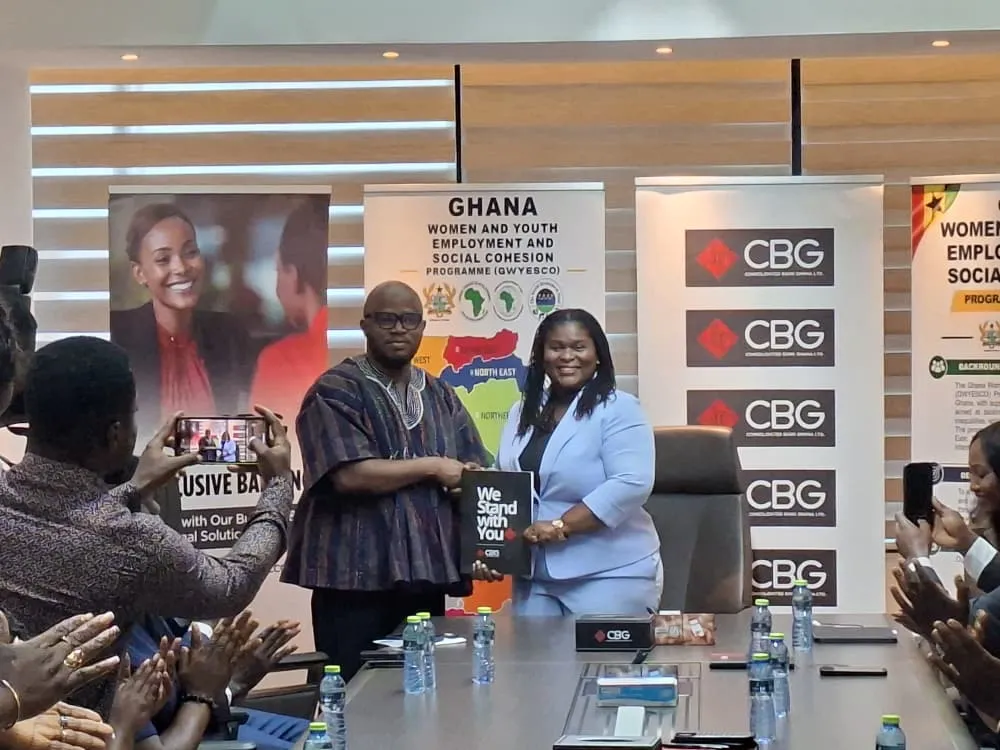
Consolidated Bank Ghana and the Social Investment Fund have signed a US$5 million agreement to finance women, youth and micro, small and medium-sized enterprises (MSMEs), providing credit, business training and financial literacy support to promote entrepreneurship and job creation.
Consolidated Bank Ghana Limited and the Social Investment Fund have signed an agreement to provide US$5 million in financing to women, youth and micro, small and medium-sized enterprises.
The financing is being provided under the Ghana Women and Youth Employment and Social Cohesion Programme, aimed at expanding access to affordable finance and promoting entrepreneurship and sustainable job creation. The programme will also provide beneficiaries with business development services and financial literacy training to strengthen their capacity to manage financing and build sustainable enterprises.
Key Takeaways
- Consolidated Bank Ghana Limited and the Social Investment Fund have signed an agreement to provide US$5 million in financing to women, youth and micro, small and medium-sized enterprises.
- The financing is being provided under the Ghana Women and Youth Employment and Social Cohesion Programme, aimed at expanding access to affordable finance and promoting entrepreneurship and sustainable job creation.
- The programme will also provide beneficiaries with business development services and financial literacy training to strengthen their capacity to manage financing and build sustainable enterprises.
Speaking at the signing ceremony in Accra, Dr Naomi Wolali Kwetey, Managing Director of CBG, said the partnership demonstrated the commitment of both institutions to empowering women and young people through inclusive financial services. She said the US$5 million facility, equivalent to about GH¢55 million, would be deployed over 36 months to support approximately 3,000 beneficiaries, with the first tranche expected to benefit about 800 individuals and businesses.
Dr Kwetey said CBG would ensure a transparent beneficiary selection process, sound credit assessments, timely disbursement and effective monitoring to enhance the success of the programme. She added that beneficiaries would also receive business development support and financial literacy training to improve their ability to manage the financing responsibly and grow their enterprises.
Today we open a pathway for thousands of Ghanaian women and young people to grow their businesses, create jobs and improve their livelihoods,” she said.
Mr Abass Adam Nurudeen, Chief Executive Officer of SIF, described the agreement as a significant milestone in implementing the microcredit component of the programme. He expressed confidence in CBG’s capacity to achieve the programme’s objectives, ensure timely disbursement and recover the funds to support a revolving credit scheme.
Mr Nurudeen said the broader microcredit programme was expected to provide financing to about 8,000 beneficiaries, particularly women and youth-led SMEs in the northern, central and eastern regions. He said the intervention targeted communities with high levels of poverty and unemployment, particularly in northern Ghana, where economic empowerment could help address some drivers of fragility and strengthen social cohesion.
The SIF Chief Executive said the initiative went beyond access to credit, with beneficiaries receiving training in bookkeeping, basic accounting and enterprise management to improve their prospects for business success. He said the programme would employ group lending, input financing and equipment financing mechanisms, depending on beneficiaries’ needs, to promote prudent use of resources and improve loan recovery.
Women account for a significant proportion of businesses in Ghana’s informal economy, particularly in trade, agro-processing and services. However, many women-led enterprises continue to face challenges in accessing affordable credit, markets, technology and business advisory services. MSMEs, which form a major part of Ghana’s economy, also face constraints including high borrowing costs, inadequate collateral, limited financial literacy, weak record-keeping practices and restricted access to long-term capital
Source: Accra Street Journal

Last Updated on September 17, 2026 by Samuel Kwame Boadu
Ghana Market Watch
Track Ghana’s economy and financial markets with exchange rates, bank rates, fuel prices, food and commodity prices, economic indicators and financial market updates.

Disclaimer: Some content on Accra Street Journal may be aggregated, summarized, or edited from third-party sources for informational purposes. Images and media are used under fair use or royalty-free licenses. Accra Street Journal is a subsidiary of SamBoad Publishing Hub under SamBoad Business Group Ltd, registered in Ghana since 2014.
For concerns or inquiries, please visit our Privacy Policy or Contact Page.

Samuel Kwame Boadu is a Ghanaian media entrepreneur and storyteller with a passion for amplifying urban voices and uncovering everyday truths. He is the Editor-in-Chief and Founder of Accra Street Journal, a dynamic digital platform dedicated to capturing the pulse of Ghana’s capital—its people, culture, challenges, business, sports and innovations.
Use the following reference when citing or referencing this article.
Your feedback helps us improve our journalism.
Report an Error
Help us maintain accuracy. Let our editorial team know if you spot an issue in this article.
Report a problem with this article





