










3 min read
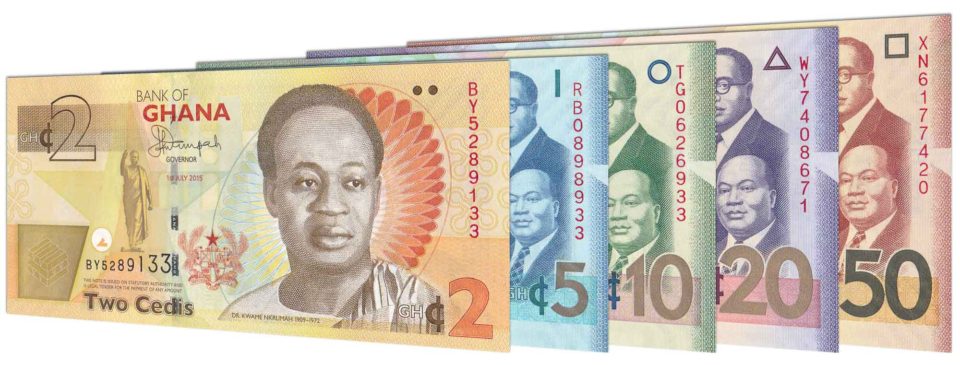
In a moment ripe for both reflection and recalibration, the Bank of Ghana (BoG) has launched its ambitious “Cedi@60” campaign, a five-month national program commemorating six decades of Ghana’s independent currency. Billed as a celebration of the cedi’s legacy and resilience, the campaign is positioned as more than just a ceremonial nod to history—it is a soft-power exercise in reinforcing monetary stability, institutional memory, and public confidence.
The Accra Street Journal welcomes this initiative, not merely for its symbolism, but for its potential to re-anchor the cedi in the national consciousness at a time of economic fragility and policy recalibration.
Key Takeaways
- In a moment ripe for both reflection and recalibration, the Bank of Ghana (BoG) has launched its ambitious “Cedi@60” campaign, a five-month national program commemorating six decades of Ghana’s independent currency.
- First issued on July 19, 1965, the cedi replaced the Ghanaian pound in what was then a bold assertion of post-colonial sovereignty.
- In its 60-year journey, the cedi has survived inflationary shocks, redenominations, currency black markets, and multiple economic restructurings.
🇬🇭 A Currency, A Sovereign Story
First issued on July 19, 1965, the cedi replaced the Ghanaian pound in what was then a bold assertion of post-colonial sovereignty. In its 60-year journey, the cedi has survived inflationary shocks, redenominations, currency black markets, and multiple economic restructurings. And yet, it remains one of the most tangible expressions of Ghana’s statehood—a sovereign symbol that lives in the pockets and palms of 33 million citizens daily.
In celebrating the cedi, the BoG isn’t just looking backward. From launching a Currency Museum in partnership with the National Museum of Science and Technology to hosting global conferences on currency innovation, the “Cedi@60” calendar aspires to connect history to present-day policy imperatives. It attempts, if only subtly, to position the central bank as a cultural custodian and not merely a monetary regulator.
🏛️ What Makes This Moment Matter
This campaign arrives at a pivotal moment. Ghana is just emerging from a protracted economic crisis. External debt restructuring, cedi depreciation, and an ongoing IMF program continue to test institutional resilience and public trust.
That’s what makes this campaign particularly loaded.
Yes, the essay competitions and public education drives are laudable. But there’s also an unspoken subtext: restoring belief—in the cedi, in the BoG, and in the idea that Ghana’s monetary future can be charted by Ghanaian hands.
🧩 Trust, Not Trophies
For the cedi to thrive beyond commemorative events, policy and perception must align. Public confidence is not built with banners and branded folders; it is earned through prudent fiscal-monetary coordination, transparency in forex interventions, and clear communication during economic turbulence.
In this regard, we urge the BoG to use “Cedi@60” not just as a retrospective but as a strategic trust-building opportunity.
Let it be a campaign that explains—not just celebrates. Let it demystify currency depreciation, clarify the role of gold-for-oil deals, and open the vaults of transparency around inflation targeting.
🔍 Looking Ahead
In a world where currencies are going digital and inflation is increasingly a political issue, the future of the cedi may well depend on how well it adapts—not just how long it has lasted.

As the “Cedi@60” campaign unfolds, Accra Street Journal will follow with measured interest, not just on the pageantry of the moment, but on the ideas it births: What should the next 60 years of the cedi look like? Will Ghana explore central bank digital currencies? How does the cedi fare in the broader AfCFTA landscape?
Let this celebration not be an end in itself but a starting point—one that defines the next phase of the cedi not just as a note or coin, but as an evolving promise of Ghanaian economic agency.

Last Updated on July 15, 2025 by Samuel Kwame Boadu
Disclaimer: Some content on Accra Street Journal may be aggregated, summarized, or edited from third-party sources for informational purposes. Images and media are used under fair use or royalty-free licenses. Accra Street Journal is a subsidiary of SamBoad Publishing Hub under SamBoad Business Group Ltd, registered in Ghana since 2014.
For concerns or inquiries, please visit our Privacy Policy or Contact Page.

Samuel Kwame Boadu is a Ghanaian media entrepreneur and storyteller with a passion for amplifying urban voices and uncovering everyday truths. He is the Editor-in-Chief and Founder of Accra Street Journal, a dynamic digital platform dedicated to capturing the pulse of Ghana’s capital—its people, culture, challenges, business, sports and innovations.
Use the following reference when citing or referencing this article.
Your feedback helps us improve our journalism.
Report an Error
Help us maintain accuracy. Let our editorial team know if you spot an issue in this article.
Report a problem with this article




