









The Bank of Ghana has ordered an external audit into its controversial Gold-for-Oil programme after revealing cumulative losses of about GH¢2.2 billion between 2022 and 2024, a move that lays bare the financial and policy risks embedded in Ghana’s experiment with gold-backed economic interventions.

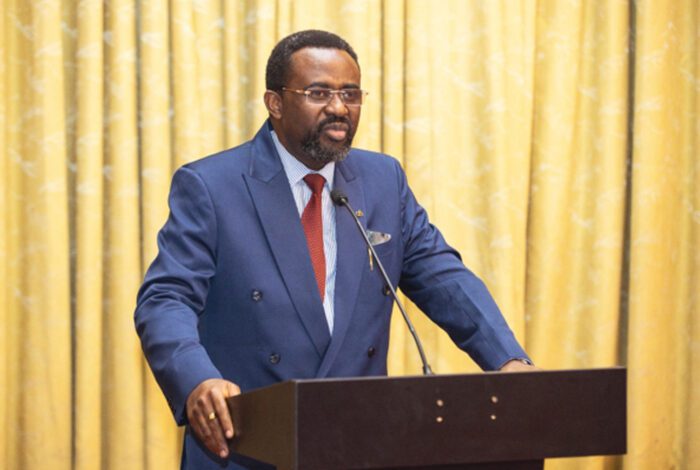
Governor Dr. Johnson Pandit Asiama disclosed the decision on Monday during hearings before Parliament’s Public Accounts Committee, telling lawmakers that unresolved operational and transactional concerns made an independent review unavoidable.
“There were quite too many issues under the Gold-for-Oil programme that we needed to unearth, and the Board therefore authorised an external audit,” Asiama said, signalling a shift from political defence of the scheme to institutional damage control.
📢 GET A DETAILED ARTICLES + JOBS
Join ASJ's WhatsApp Channel and never miss a post or opportunity.
From Currency Shield to Fiscal Exposure
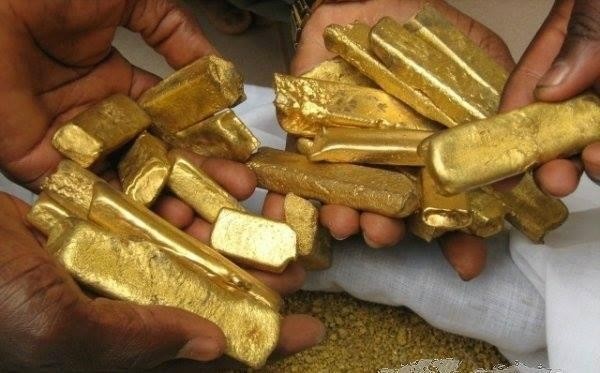
The Gold-for-Oil programme was introduced at a moment of acute economic stress. With foreign exchange reserves under pressure and the cedi facing persistent depreciation, the initiative was designed to reduce Ghana’s dependence on dollars by using domestically purchased gold to pay for petroleum imports.
In theory, the programme promised relief: stabilise fuel supply, ease pressure on reserves, and insulate the economy from volatile currency markets. In practice, the numbers now tell a far less flattering story.
According to data presented by the central bank, the programme recorded net losses of GH¢74 million in 2022, GH¢317.69 million in 2023, and a sharp escalation to roughly GH¢1.8 billion in 2024. While the BoG stressed that the figures remain subject to independent verification, the trend alone has raised red flags across both Parliament and the financial community.
Why the Losses Matter
The scale of the losses goes beyond accounting embarrassment. Gold-backed schemes were meant to conserve scarce foreign exchange and stabilise macroeconomic conditions. Instead, the Gold-for-Oil programme appears to have transferred commodity price risk directly onto the central bank’s balance sheet.
Critics argue that the scheme exposed Ghana to multiple layers of vulnerability: fluctuations in global gold prices, movements in oil prices, exchange-rate mismatches, and weak risk-management frameworks. Rather than acting as a hedge, gold became another channel through which volatility entered public finances.
In effect, the central bank found itself speculating—however unintentionally—on global commodity markets at a time when its primary mandate was monetary stability.
Audit as an Admission of Structural Weakness
Governor Asiama confirmed that the external audit was authorised by the BoG Board and approved by the Public Procurement Authority, with work already underway. The decision reflects growing recognition that internal reviews are insufficient to restore confidence in the programme.
For analysts, the audit is more than a technical exercise. It represents an implicit admission that governance, pricing mechanisms, and transaction structures under the Gold-for-Oil framework were not robust enough to withstand market shocks.
Transparency, in this context, is not optional. It is the minimum requirement for rebuilding institutional credibility.
Gold-for-Reserves: Reform, Not Abandonment
Asiama also addressed the Gold-for-Reserves component of Ghana’s broader Domestic Gold Purchase Programme. While this segment did not record losses in 2022, it also encountered financial setbacks in later years.
Unlike the oil-linked scheme, however, the Governor signalled that Gold-for-Reserves will not be scrapped. Instead, it will be restructured to improve efficiency and risk controls. This distinction suggests that the central bank still sees strategic value in gold accumulation—provided it is decoupled from complex barter arrangements and exposed trading risks.
Official BoG figures show that the Domestic Gold Purchase Programme as a whole recorded net losses rising from GH¢74 million in 2022 to a staggering GH¢5.66 billion in 2024. Results for 2025 remain pending, subject to external audit confirmation.
A Broader Policy Lesson
The Gold-for-Oil episode offers a sobering lesson for policymakers. In periods of crisis, unconventional tools often gain political appeal. Yet financial engineering cannot substitute for fundamentals. When commodity-backed schemes are poorly structured, they can amplify rather than absorb economic shocks.
For Ghana, the audit may help establish accountability, but it also raises deeper questions about how far central banks should go in assuming quasi-fiscal roles traditionally handled by governments.
As the country seeks to rebuild credibility, stabilise the cedi, and attract long-term investment, the outcome of this audit will matter—not just for the past, but for how future policy experiments are designed and governed.
Source: Accra Street Journal
Last Updated on January 12, 2026 by Samuel Kwame Boadu
Disclaimer: Some content on Accra Street Journal may be aggregated, summarized, or edited from third-party sources for informational purposes. Images and media are used under fair use or royalty-free licenses. Accra Street Journal is a subsidiary of SamBoad Publishing Hub under SamBoad Business Group Ltd, registered in Ghana since 2014.
For concerns or inquiries, please visit our Privacy Policy or Contact Page.

Samuel Kwame Boadu is a Ghanaian media entrepreneur and storyteller with a passion for amplifying urban voices and uncovering everyday truths. He is the Editor-in-Chief and Founder of Accra Street Journal, a dynamic digital platform dedicated to capturing the pulse of Ghana’s capital—its people, culture, challenges, business, sports and innovations.