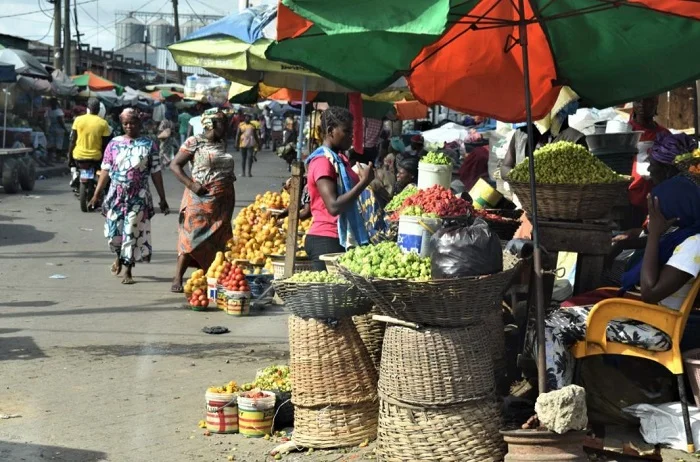
In Accra’s markets, pricing is never static. From Makola and Kantamanto to Madina, Mallam Atta, and roadside stalls across the city, traders wake up each morning unsure whether today’s prices will rise, fall, or swing unpredictably. For many, price volatility is not a seasonal inconvenience—it is a daily reality that defines survival.
Fuel costs, exchange-rate movements, transport fares, import duties, weather conditions, and supply disruptions all collide to influence prices within hours. Yet Accra’s traders continue to operate, adapt, and survive. Their resilience is not accidental. It is built on informal systems, experience-based pricing, flexible sourcing, and community trust developed over decades.

This editorial by Accra Street Journal examines how Accra traders survive daily price fluctuations, revealing the coping strategies, risks, and quiet innovations that keep Ghana’s urban economy functioning.
📢 GET A DETAILED ARTICLES + JOBS
Join ASJ's WhatsApp Channel and never miss a post or opportunity.

Why Prices Change Daily in Accra’s Markets
Price volatility in Accra is driven by a complex mix of structural and immediate factors.
1. Exchange Rate Movements
A significant portion of goods sold in Accra—rice, cooking oil, spare parts, textiles, electronics, and even packaging materials—are imported. When the cedi weakens against major currencies, import costs rise almost immediately. Traders often adjust prices the same day they restock.

2. Transport and Fuel Costs
Fuel price adjustments ripple through the supply chain quickly. Higher fuel prices increase transport fares from farms, ports, and warehouses into the city. For traders operating on thin margins, these increases cannot be absorbed for long.
3. Seasonal Supply Variations
Fresh food traders are especially vulnerable. Tomatoes, onions, pepper, and plantain prices can change daily depending on harvest levels, rainfall, road conditions, and availability from producing regions.
4. Wholesale Market Instability
Retail traders depend heavily on wholesalers. When wholesale prices shift overnight, retailers must follow—or risk selling at a loss.
5. Inflation Expectations
Even before official inflation figures are released, traders react to expectations. Rumours of fuel hikes, tax changes, or port fee adjustments can trigger price increases ahead of time.
How Traders Cope with Constant Price Changes
Despite these pressures, Accra traders have developed survival strategies rooted in flexibility, experience, and social networks.
1. Flexible Pricing Models
Unlike fixed-price retail systems, market pricing in Accra is dynamic. Traders adjust prices incrementally rather than dramatically, testing customer reactions throughout the day.
Many traders:
-
Change prices subtly instead of using price tags
-
Adjust quantity rather than headline price
This elasticity allows traders to protect margins while maintaining customer relationships.
2. Daily Market Intelligence
Information is currency in Accra’s markets. Traders gather intelligence constantly.

Sources include:
-
Early-morning wholesale market visits
-
WhatsApp trader groups
-
Phone calls to suppliers and transporters
-
Informal conversations with neighbouring sellers
By 7 a.m., many traders already know whether prices are likely to rise or fall before midday.
3. Diversifying Product Lines
To reduce risk, traders rarely rely on a single product.
For example:
-
A tomato seller may also stock onions and pepper
-
A fabric trader may sell accessories alongside cloth
-
A provisions seller may mix imported and local goods
Diversification cushions losses when one product becomes unprofitable.
4. Buying in Small Batches
Rather than stocking heavily, many traders now buy smaller quantities more frequently. This limits exposure when prices drop suddenly or goods spoil before sale.
While bulk buying used to be a key advantage, volatility has shifted preference toward controlled restocking, even if it means higher per-unit costs.
5. Strong Supplier Relationships
Trust between traders and suppliers is critical.
Long-term relationships allow traders to:
-
Buy on credit during difficult periods
-
Lock in prices temporarily
-
Receive advance notice of price increases
In many cases, personal trust replaces formal contracts.
6. Adjusting Profit Margins Strategically
When costs rise suddenly, traders may accept lower margins temporarily rather than risk losing customers.

Common tactics include:
-
Reducing profit per unit but increasing turnover
-
Selling premium items alongside lower-margin staples
-
Offering discounts only to regular customers
Survival often depends on volume, not margin.
7. Rotating Capital Quickly
Fast turnover is a survival strategy. Traders aim to convert stock into cash as quickly as possible to avoid holding goods purchased at higher prices when market rates fall.
This explains why many traders prefer:
-
Fast-moving essentials
-
Daily restocking cycles
-
Early-morning sales peaks
Cash flow matters more than inventory size.
8. Informal Savings and Emergency Funds
Many traders rely on:
-
Susu schemes
-
Daily contribution groups
-
Personal savings set aside for shocks
These buffers help absorb sudden losses caused by price crashes, spoilage, or unsold stock.
The Emotional Cost of Price Volatility
Behind every price adjustment is emotional pressure. Traders face:
-
Customer accusations of “cheating”
-
Stress from unpredictable profits
-
Daily fear of losses wiping out working capital
Many traders report mental exhaustion from constantly recalculating prices, negotiating with customers, and managing uncertainty.
Yet most continue because trading remains one of the few accessible income paths in Accra’s urban economy.
Customer Relations in a Volatile Market
Traders understand that survival depends on trust.
To maintain customer loyalty, many:
-
Explain price changes openly
-
Maintain consistent quality even when prices rise
-
Offer flexible quantities rather than rigid pricing
Customers, in turn, often accept fluctuations when communication is honest.
Digital Tools and Modern Adaptation
Technology is quietly changing how traders respond to volatility.
Increasingly, traders use:
-
WhatsApp groups for price updates
While adoption varies, digital tools are becoming an important buffer against uncertainty.
Why Accra’s Markets Continue to Function
Despite constant shocks, Accra’s markets remain resilient because:
-
Pricing is adaptive, not fixed
-
Traders respond quickly to information
-
Social networks reduce individual risk
-
Customers understand volatility as part of daily life
This informal flexibility is something formal retail systems often lack.
What This Means for Ghana’s Urban Economy
Accra traders play a stabilising role in the economy. They:
-
Absorb shocks before they reach consumers fully
-
Keep goods moving despite uncertainty
-
Provide employment across supply chains
Their survival strategies are not just personal—they are structural pillars of urban commerce.
Frequently Asked Questions (FAQs)
Why do prices change daily in Accra markets?
Prices change due to exchange-rate movements, fuel costs, supply availability, transport expenses, and wholesale price shifts that occur frequently.
Do traders set prices arbitrarily?
No. Most prices are based on replacement cost—what it will cost to restock goods—rather than on profit alone.
Why do prices differ between stalls selling the same product?
Differences reflect purchase timing, supplier relationships, transport costs, and individual profit strategies.
How do traders avoid losses during sudden price drops?
They buy smaller quantities, rotate stock quickly, diversify products, and rely on savings or credit when needed.
Are traders affected by inflation more than consumers?
Yes. Traders face inflation upfront when restocking, often before they can pass costs on to customers.
Conclusion of ASJ
Daily price fluctuations are not a sign of chaos in Accra’s markets—they are evidence of adaptation. Traders survive by staying informed, flexible, and connected. Their strategies may be informal, but they are highly sophisticated, shaped by years of experience in one of West Africa’s most dynamic urban economies.
Understanding how Accra traders survive daily price changes offers a clearer picture of how the city itself endures economic uncertainty—one transaction at a time.
Source: Accra Street Journal
Last Updated on March 13, 2026 by Samuel Kwame Boadu
Disclaimer: Some content on Accra Street Journal may be aggregated, summarized, or edited from third-party sources for informational purposes. Images and media are used under fair use or royalty-free licenses. Accra Street Journal is a subsidiary of SamBoad Publishing Hub under SamBoad Business Group Ltd, registered in Ghana since 2014.
For concerns or inquiries, please visit our Privacy Policy or Contact Page.

Samuel Kwame Boadu is a Ghanaian media entrepreneur and storyteller with a passion for amplifying urban voices and uncovering everyday truths. He is the Editor-in-Chief and Founder of Accra Street Journal, a dynamic digital platform dedicated to capturing the pulse of Ghana’s capital—its people, culture, challenges, business, sports and innovations.