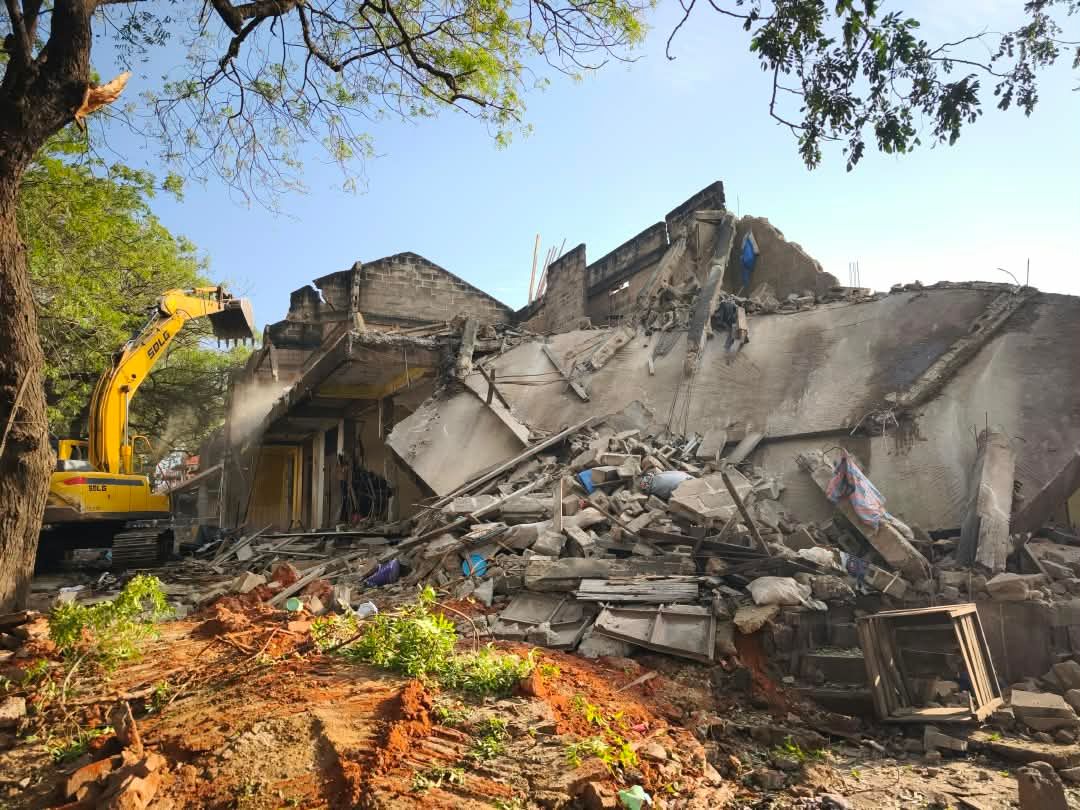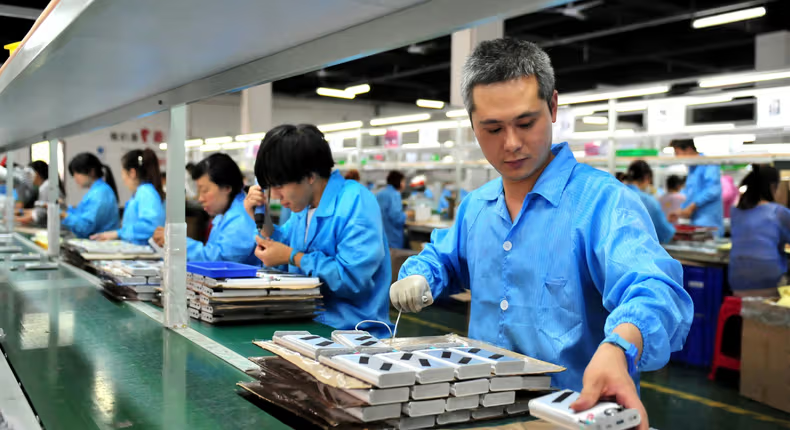
China’s battery manufacturers are grappling with fresh supply uncertainty after Zimbabwe abruptly suspended all lithium concentrate exports, a move that has sent tremors through global commodity markets and tightened pressure across the electric-vehicle supply chain.
On February 25, the government of Zimbabwe ordered an immediate halt to lithium concentrate shipments—including cargo already in transit—signaling a decisive shift toward domestic processing and value addition. The policy is part of Harare’s broader effort to capture more revenue from its mineral wealth rather than exporting raw materials.

The shock has landed squarely on the doorstep of China’s battery ecosystem, which relies heavily on Zimbabwean spodumene feedstock to power its vast lithium refining and battery manufacturing capacity.
📢 GET A DETAILED ARTICLES + JOBS
Join ASJ's WhatsApp Channel and never miss a post or opportunity.

A Critical Supplier Goes Dark
Zimbabwe has rapidly emerged as a key upstream partner for China’s lithium industry. Recent trade data show that nearly one-fifth of China’s lithium concentrate imports originated from Zimbabwe in the latest reported year. In some months, Zimbabwe’s share ranged between 10% and 15%, underscoring its growing role in Beijing’s resource network.
That level of exposure is substantial for an industry dependent on steady raw material flows. Despite dominating global lithium conversion and battery production, China remains reliant on imported hard-rock concentrate—primarily from Africa and Australia—to sustain its refining throughput.

By halting exports, Zimbabwe has effectively delivered a direct supply shock to Chinese refiners.
Prices React Swiftly
Markets moved quickly. Lithium carbonate prices surged on futures exchanges following the announcement, reflecting immediate concerns over tighter raw material availability. Traders began repricing contracts to account for potential feedstock shortages, while analysts warned that short-term supply strains could ripple across battery production lines.
For Chinese battery manufacturers—already navigating volatile input prices and moderating electric vehicle demand growth—the disruption introduces a new layer of cost uncertainty. Higher lithium prices threaten to compress margins, particularly for smaller refiners with limited inventory buffers or alternative supply channels.
The broader EV ecosystem could also feel the impact if prolonged supply tightness pushes up battery pack costs, potentially slowing price declines that have been critical to electric vehicle adoption.
Investments in the Crosshairs
Major Chinese firms have invested aggressively in Zimbabwe’s lithium sector in recent years. Among them are Zhejiang Huayou Cobalt and Sinomine Resource Group, both of which have committed significant capital to upstream projects.
In 2024, Zhejiang Huayou Cobalt partnered with Tsingshan Holding Group and a Zimbabwean state entity to advance a lithium project valued at an estimated $250–300 million. The facility was projected to produce roughly 500,000 tons of lithium concentrate annually.
Those investments may now require recalibration. Zimbabwe’s export suspension is widely interpreted as a push to compel investors to accelerate in-country refining and beneficiation. Companies that fail to align with the new policy direction risk operational bottlenecks or regulatory friction.
In effect, Harare is leveraging its mineral endowment to shift from raw exporter to industrial participant—a strategy increasingly common among resource-rich nations seeking greater participation in the energy transition value chain.
Resource Nationalism Meets Energy Transition
Zimbabwe’s move reflects a broader structural trend: critical minerals are becoming instruments of national industrial policy. Governments holding strategic resources are asserting greater control over how and where value is created.

For China, the episode underscores a paradox. The country commands a dominant share of global lithium refining and battery manufacturing, yet remains vulnerable at the upstream extraction stage. Vertical integration offers resilience, but it does not eliminate geopolitical and regulatory exposure.
If Zimbabwe’s export suspension persists, Chinese firms may be forced to accelerate construction of domestic processing facilities within Zimbabwe to secure continued access to feedstock. Alternatively, refiners could scramble to source additional concentrate from Australia or other African producers—though such adjustments take time and may come at higher cost.
Temporary Disruption or Structural Shift?
The ultimate impact will hinge on the duration of the suspension and the speed at which local processing capacity can be developed. A short-term pause may tighten markets briefly before stabilizing. A prolonged policy stance, however, could reshape trade flows and deepen the global competition for critical minerals.
Lithium remains central to the electrification agenda, powering batteries used in electric vehicles, grid storage systems and consumer electronics. Any constraint on upstream supply reverberates quickly through midstream refiners and downstream manufacturers.
For China’s battery industry, Zimbabwe’s decision is both a logistical challenge and a strategic reminder: even the world’s most vertically integrated supply chains remain exposed when resource holders recalibrate national priorities.
As the global race for critical minerals intensifies, the balance of power between resource-rich nations and industrial processors may continue to evolve—reshaping the architecture of the energy transition in the process.
Source: Accra Street Journal
Last Updated on March 9, 2026 by Samuel Kwame Boadu
Disclaimer: Some content on Accra Street Journal may be aggregated, summarized, or edited from third-party sources for informational purposes. Images and media are used under fair use or royalty-free licenses. Accra Street Journal is a subsidiary of SamBoad Publishing Hub under SamBoad Business Group Ltd, registered in Ghana since 2014.
For concerns or inquiries, please visit our Privacy Policy or Contact Page.


Samuel Kwame Boadu is a Ghanaian media entrepreneur and storyteller with a passion for amplifying urban voices and uncovering everyday truths. He is the Editor-in-Chief and Founder of Accra Street Journal, a dynamic digital platform dedicated to capturing the pulse of Ghana’s capital—its people, culture, challenges, business, sports and innovations.