





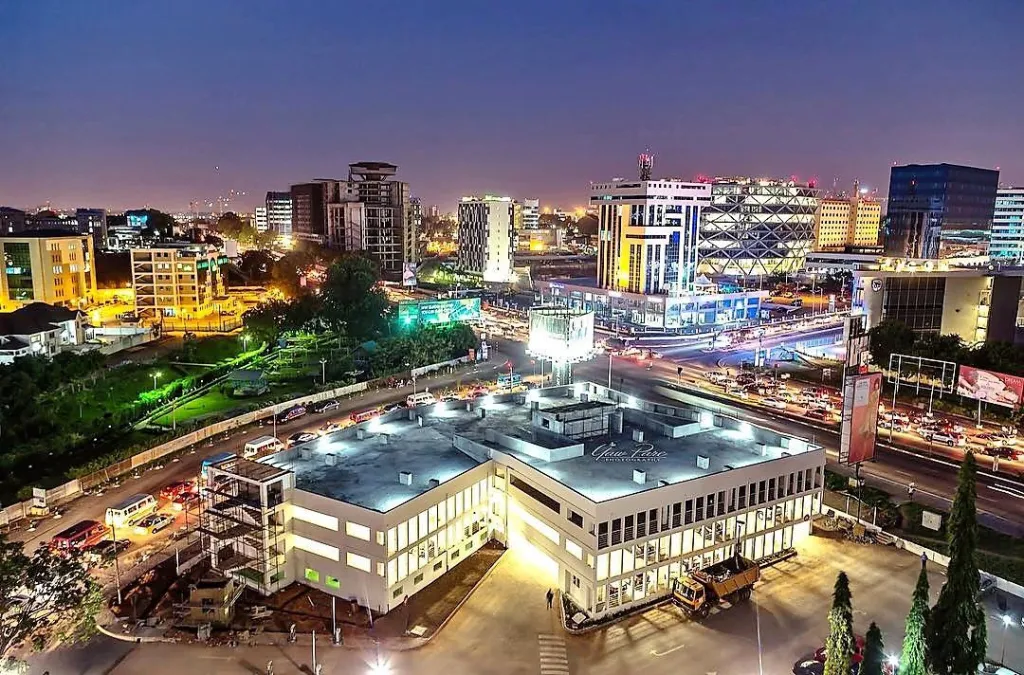
In the competitive landscape of African investment, Accra stands out not merely as a capital city, but as a compelling destination where global capital, policy innovation, and entrepreneurial energy converge. Despite global economic headwinds, the flow of investment into Ghana’s largest city shows no sign of abating.
The evidence is overwhelming. In late 2025, Ghana and the UAE signed a $1 billion strategic partnership to develop Africa’s largest integrated innovation and artificial intelligence hub in Ningo-Prampram, Greater Accra Region . In early 2026, the Ghana Investment Promotion Centre (GIPC) announced major reforms to eliminate minimum foreign capital requirements, opening the door to diaspora investors and venture capital . The inaugural London–Accra Economic Growth Summit convened 200 leaders to chart strategies for diaspora-led investment . And in the real estate sector, Nigerian investors are increasingly targeting Accra’s prime properties, attracted by projected rental yields of 5–10% .

What makes Accra such a persistent magnet for investors? This ASJ guide explores the multifaceted reasons—from macroeconomic stability and pro-investor policy reforms to strategic location, sector-specific opportunities, and the growing power of the diaspora.
📢 GET A DETAILED ARTICLES + JOBS
Join ASJ's WhatsApp Channel and never miss a post or opportunity.

The Macroeconomic Foundation: Stability Restored
From Crisis to Confidence
The foundation of Accra’s investment appeal rests on restored macroeconomic stability. After a period of strain that saw inflation spiral to over 50 per cent in late 2022, Ghana’s economic stabilisation programme has delivered measurable results.
Simon Madjie, Chief Executive Officer of the Ghana Investment Promotion Centre (GIPC), highlighted key indicators at the Ghana–Korea Business Forum in February 2026:
-
Inflation stabilised at approximately 5.4 per cent
-
Debt restructuring efforts have strengthened economic stability
-
Renewed investor confidence positioning the country for sustained growth
This stability provides the predictability that investors require. When inflation is contained and debt sustainable, businesses can plan, price, and project with confidence.
Growth Projections and Continental Standing
The International Monetary Fund projects Ghana’s GDP will reach $113.49 billion in 2026, ranking as the eighth largest economy in Africa . This economic weight, combined with Accra’s role as the commercial and administrative capital, ensures that investment in the city offers exposure to one of the continent’s most significant markets.
Policy Innovation: Creating an Investor-Friendly Environment
GIPC Reforms: Opening Doors to Smaller Investors
One of the most significant developments in Ghana’s investment landscape is the GIPC’s championing of reforms to the GIPC Act. Deputy CEO Abdul-Razak Baba, speaking at the Africa Prosperity Dialogues (2026) in Accra, explained the rationale:
“These laws were well-intentioned but minimum foreign capital thresholds have closed Ghana’s doors to smaller-scale investors who want to back our SMEs. When these reforms pass, they will signal that Ghana is open for inclusive, SME-focused investment. We expect a wave of patient, impact-oriented capital to flow into Ghana” .
This shift recognises a critical reality: the future of investment in Africa is not solely about large multinationals, but about diaspora investors, impact funds, and venture capital firms seeking opportunities in the continent’s vibrant small and medium enterprise sector.
The InvestGhana Portal: Digital Facilitation
Complementing the policy reforms is the development of the InvestGhana Portal, GIPC’s new digital investment facilitation platform built on the Centre’s ongoing Investment Opportunity Mapping Project .
The most innovative feature will be a Marketplace for Service Providers—a curated listing of Ghanaian transaction advisors, legal experts, tax consultants, and accountants essential for turning investor interest into executable deals .
Mr. Baba explained the philosophy: “This is what we call full-cycle facilitation. It is not enough to show the opportunity. We must also connect investors to the right Ghanaian professionals who can structure, de-risk, and close those deals” .
The 24-Hour Economy and Big Push
President Mahama’s flagship initiatives—the 24-Hour Economy Authority (established February 2026) and the Big Push infrastructure agenda—signal a government committed to creating the conditions for private sector growth .
GIPC CEO Simon Madjie outlined three priority growth areas for 2026:
-
The 24-Hour Economy and Accelerated Export Development Programme (24H+) – aiming to industrialise and cultivate about two million hectares of agricultural land
-
Large-scale infrastructure development under the Big Push initiative – including a 360-kilometre expressway linking Accra to the country’s second capital
-
Agriculture-led economic transformation, supported by renewable energy investments
These initiatives create tangible opportunities for investors across multiple sectors.
Strategic Location: Gateway to West Africa
AfCFTA: The Continent as Market
Accra’s status as the host city of the African Continental Free Trade Area (AfCFTA) Secretariat is perhaps its single most significant strategic advantage. The world’s largest free trade area by number of participating countries, AfCFTA creates a market of over 400 million people in West Africa through ECOWAS, and 1.4 billion across the continent .
As Mr. Abdul-Razak Baba noted, Ghana is positioning itself as a “launchpad for SMEs looking to scale under the African Continental Free Trade Area” . For investors, this means that a presence in Accra offers not just access to Ghana’s economy, but a platform for expansion across the region.
The Ghana–Korea Business Forum
The strategic value of Accra’s location was evident at the Ghana–Korea Business Forum in February 2026, where a seven-member Korean business delegation explored opportunities in healthcare, cosmetics, packaging, industrial machinery, and solar power .
KOTRA Director General Hong Koohwang reaffirmed South Korea’s commitment to deepening economic cooperation with Ghana after over 14 years of presence in the country, noting that Korean expertise aligns with Ghana’s development priorities .
Indian Investment Interest
In March 2026, the GIPC hosted an Indian business delegation comprising firms exploring partnerships and market entry strategies. Deputy CEO Abdul Razak Baba encouraged the delegation to leverage Ghana’s strategic location and access to regional markets through ECOWAS and AfCFTA .
Several delegates expressed interest in joint ventures, distributorship arrangements, local manufacturing, and technology partnerships, with proposals including smart infrastructure solutions, energy-efficient technologies, and agri-tech applications .
Sector-Specific Opportunities: Where Capital Is Flowing
Technology and Innovation: The $1 Billion AI Hub
The most transformative investment announcement of recent months is the $1 billion strategic partnership between Ghana and the United Arab Emirates to develop Africa’s largest integrated innovation and artificial intelligence hub in Ningo–Prampram, Greater Accra Region .
Investment Breakdown:
| Allocation | Purpose |
|---|---|
| $400 million | High-performance AI infrastructure (including $180m for an AI Compute Hub by G42) |
| $350 million | Digital infrastructure (5G networks, Tier IV hyperscale data centre, renewable power) |
| $250 million | Ecosystem development (AI campus, startup fund, innovation summit) |
The facility will use renewable energy and liquid-cooling systems, attract multinational technology companies such as Microsoft, Meta, Oracle, IBM, and Alphabet, and aims to scale up to 100 AI startups by 2030 .
For Accra, this project represents a quantum leap in positioning the city as a regional technology powerhouse.
Real Estate: Nigerian Capital and 5–10% Yields
Ghana’s prime real estate market is increasingly attracting regional investors, particularly from Nigeria. Developers like Devtraco Group have opened flagship developments—including The Address, Arlo Cantonments, and The Pelican—to Nigerian buyers seeking structured entry into Accra’s most prestigious neighbourhoods .
The appeal is grounded in fundamentals rather than speculation. Projected rental yields between 5–10% in prime zones reflect sustained demand from expatriates, diplomats, and corporate tenants .
Derek Jason Bossman of Devtraco Group emphasized the importance of “location discipline and long-term positioning”—principles that underpin developments combining architectural quality with professional estate management and payment flexibility .
Water and Sanitation: Building Investable Enterprises
The 2026 Beyond the Pipe Forum, hosted by Safe Water Network in Accra, brought together stakeholders to explore how Safe Water Enterprises (SWEs) can transition from pilot initiatives to investment-ready models .
Key developments include:
-
Presentation of market mapping findings to reduce duplication and improve operational efficiency
-
Extension of Aqua for All’s Making Water Count programme through 2029, providing funding to eligible water and sanitation SMEs
-
Strong government commitment to private sector participation
Minister for Works, Housing and Water Resources, Kenneth Gilbert Adjei, affirmed: “As we work to achieve universal access to safe water, it is essential that we create the right conditions for private sector participation” .
Safe Water Network Global CEO Chris Williams underscored the vision: “The next phase of this work is about building strong, coordinated markets where enterprises can thrive. That means aligning policy, strengthening operational performance, and ensuring that capital can flow to enterprises that are ready to grow and deliver impact” .
Manufacturing and Renewables
Both the Korean and Indian investment delegations highlighted strong interest in Ghana’s manufacturing and renewable energy sectors. The government’s focus on agriculture-led transformation, supported by renewable energy investments, creates opportunities for:
-
Solar power and energy solutions
-
Industrial machinery and equipment
-
Food processing and packaging
-
Smart agriculture technologies
The Diaspora: A Bridge for Investment
The London–Accra Economic Growth Summit
January 2026 marked a milestone in diaspora engagement with the inaugural London–Accra Economic Growth Summit, hosted by the British High Commission in partnership with the Bank of Ghana .
The summit brought together 200 leaders—policymakers, investors, innovators, and creatives—to chart strategies for long-term, inclusive economic growth driven by diaspora engagement .
British High Commissioner Dr. Christian Rogg explained the significance: “The 2026 engagement differs from previous diaspora gatherings by deliberately focusing on economic opportunities that connect both countries. The British Ghanaian diaspora is more than a connector, it is the backbone of our shared vision for growth” .
From Remittances to Investment
A central theme of the summit was transitioning remittance-driven support into tangible opportunities for trade, investment, and cultural exchange. Remittances, including those from the UK-Ghana diaspora, continue to serve as a vital source of external financing for Ghana’s development, supporting entrepreneurship, education, housing, and innovation .
Bank of Ghana Governor Dr. Johnson Pandit Asiamah reaffirmed the central bank’s commitment: “At the Bank of Ghana, we are committed to building the policy and regulatory environment to support diaspora investment from foreign exchange reforms to digital financial services and securing low-cost remittance channels” .
The Creative Economy
The summit also shone a spotlight on the rapidly growing creative industries—music, fashion, design, film, and digital culture—showcasing how cultural capital is shaping international markets and transforming economic narratives .
For investors, this represents an emerging asset class with significant growth potential and global reach.
UK Government Support
Dr. Rogg highlighted concrete UK support for Ghana’s economic development:
-
Jobs and Economic Transformation Project – mobilised over $117 million in investment and supported creation of more than 8,000 jobs
-
British International Investment – portfolio exceeding $220 million in Ghana
-
Growth Investment Partners programme – provides local-currency financing to SMEs
-
Bilateral debt restructuring agreement – expected to unlock $256 million for critical infrastructure projects
Mayor of Accra’s Endorsement
Mayor of Accra, Hon. Michael Kpakpo Allotey, lauded the London–Accra initiative, describing it as a platform to deepen city-to-city collaboration and unlock trade, investment, innovation, and creative exchange between Accra and London through diaspora networks .
He stated that the London–Accra corridor had the potential to unlock shared growth, deepen people-to-people ties, and position both cities as leaders in inclusive urban development through sustained partnership and co-created solutions .
Why Investors Choose Accra: A Summary
| Factor | Key Indicators |
|---|---|
| Macroeconomic Stability | Inflation at 5.4%, debt restructuring, renewed investor confidence |
| Pro-Investor Policy Reforms | GIPC Act reform (removing minimum capital requirements), InvestGhana Portal |
| Strategic Location | Host of AfCFTA Secretariat, gateway to ECOWAS market of 400m+ |
| Flagship Government Initiatives | 24-Hour Economy, Big Push infrastructure, Accelerated Export Development |
| Technology & Innovation | $1bn UAE AI hub, 100 startups target by 2030, AI Compute Hub, 5G deployment |
| Real Estate | 5–10% rental yields, Nigerian capital inflow, professional management |
| SME Sector | $331bn African financing gap, diaspora and impact investor interest |
| Diaspora Engagement | London–Accra Summit, remittance-to-investment transition, creative industries |
| Sectoral Opportunities | Manufacturing, renewables, water/sanitation, agribusiness, healthcare, packaging |
| International Partnerships | UK, UAE, Korea, India – diverse sources of capital and expertise |
The GIPC’s Vision: Ghana International Investment Summit
Later in 2026, the GIPC will host its flagship investor matchmaking event, the Ghana International Investment Summit (GIIS) . Mr. Abdul-Razak Baba described it as “Ghana’s premier platform for investors to meet real SME opportunities, not just in Accra, but from across all 16 regions” .
The summit, combined with policy reforms, digital platforms, and sustained diaspora engagement, positions Ghana to set “a new benchmark for SME investment facilitation in Africa” .
As Mr. Baba concluded: “AfCFTA provides the market. Ghana provides the launchpad. These reforms give us the tools. The next frontier is connecting the right capital to the right entrepreneurs. Ghana is ready to lead that charge” .
Conclusion: The Accra Advantage
Accra’s continued ability to attract investors is not accidental. It is the result of deliberate policy choices, strategic positioning, and a recognition that in a competitive global environment, cities must actively cultivate the conditions that capital seeks.
The evidence of success is accumulating:
-
A $1 billion UAE partnership to build Africa’s largest AI hub
-
Pro-investor GIPC reforms opening doors to diaspora and impact capital
-
The London–Accra Summit translating cultural ties into investment flows
-
Nigerian capital flowing into prime real estate at yields of 5–10%
-
Korean and Indian delegations exploring manufacturing and renewable energy opportunities
-
Water enterprises being prepared for investment through ecosystem building
Underpinning these developments is a restored macroeconomic foundation—inflation at 5.4%, debt restructuring progressing, and investor confidence returning . And providing strategic depth is Accra’s role as host of the AfCFTA Secretariat, offering investors a platform to reach markets across West Africa and the continent .
For investors seeking a combination of stability, opportunity, and strategic positioning, Accra presents a compelling case. The city is not merely open for business—it is actively building the infrastructure, policy environment, and ecosystem partnerships that enable investment to thrive.
As the GIPC’s Abdul-Razak Baba noted, the next frontier is connecting the right capital to the right entrepreneurs . With the reforms underway, the digital platforms being developed, and the summit approaching, Accra is positioning itself to lead that charge.
Frequently Asked Questions (FAQs)
1. Why is Accra attracting so much new investment?
Accra’s investment appeal is driven by restored macroeconomic stability (inflation at 5.4%), pro-investor policy reforms (GIPC Act changes removing minimum capital requirements), strategic location hosting the AfCFTA Secretariat, and major sectoral opportunities in technology, real estate, manufacturing, and renewables .
2. What is the $1 billion UAE investment in Ghana?
In December 2025, Ghana and the UAE signed a $1 billion strategic partnership to develop Africa’s largest integrated innovation and AI hub in Ningo-Prampram, Greater Accra Region. It includes AI infrastructure, 5G deployment, a hyperscale data centre, and a startup fund aiming to scale 100 AI companies by 2030 .
3. What changes is the GIPC making to attract investors?
The GIPC is championing reforms to eliminate minimum foreign capital requirements from the GIPC Act, making it easier for diaspora investors, impact funds, and venture capital to invest in Ghanaian SMEs. They are also developing the InvestGhana Portal with a Marketplace for Service Providers to facilitate deal-making .
4. How is the diaspora contributing to investment in Accra?
The January 2026 London–Accra Economic Growth Summit highlighted the British-Ghanaian diaspora’s role as a bridge for trade and investment. The focus is on transitioning remittance-driven support into tangible investment opportunities across sectors including creative industries, financial services, and technology .
5. What are the investment opportunities in Accra’s real estate market?
Prime real estate in Accra offers projected rental yields of 5–10%, driven by sustained demand from expatriates, diplomats, and corporate tenants. Nigerian investors are increasingly active, attracted by structured entry points into prestigious neighbourhoods through developments like The Address, Arlo Cantonments, and The Pelican .
6. What is the 24-Hour Economy and how does it relate to investment?
The 24-Hour Economy Authority, established in February 2026, aims to enable factories and key industries to operate three shifts daily, maximising use of machinery, labour, and infrastructure. It targets industrialisation of two million hectares of agricultural land and is a priority area for investment .
7. What opportunities exist in Ghana’s water and sanitation sector?
The 2026 Beyond the Pipe Forum highlighted efforts to make Safe Water Enterprises investment-ready. The Aqua for All Making Water Count programme has been extended through 2029, providing funding to eligible water and sanitation SMEs. Strong government commitment to private sector participation creates attractive conditions .
8. How are Korean and Indian investors engaging with Ghana?
Recent delegations from Korea and India have explored opportunities in manufacturing, renewable energy, healthcare, packaging, industrial machinery, and smart agriculture. Both delegations expressed interest in joint ventures, local manufacturing, and technology partnerships, leveraging Ghana’s strategic access to ECOWAS and AfCFTA markets .
9. What is the Ghana International Investment Summit?
The GIIS is GIPC’s flagship investor matchmaking event scheduled for later in 2026. It will be Ghana’s premier platform for investors to meet real SME opportunities from across all 16 regions, connecting capital with bankable deals .
10. How does hosting the AfCFTA Secretariat benefit investors in Accra?
Hosting the AfCFTA Secretariat positions Accra as the commercial gateway to a market of over 400 million people in West Africa and 1.4 billion across the continent. This strategic advantage makes Accra an ideal base for companies seeking regional expansion.
Last Updated on March 19, 2026 by Samuel Kwame Boadu
Disclaimer: Some content on Accra Street Journal may be aggregated, summarized, or edited from third-party sources for informational purposes. Images and media are used under fair use or royalty-free licenses. Accra Street Journal is a subsidiary of SamBoad Publishing Hub under SamBoad Business Group Ltd, registered in Ghana since 2014.
For concerns or inquiries, please visit our Privacy Policy or Contact Page.

Samuel Kwame Boadu is a Ghanaian media entrepreneur and storyteller with a passion for amplifying urban voices and uncovering everyday truths. He is the Editor-in-Chief and Founder of Accra Street Journal, a dynamic digital platform dedicated to capturing the pulse of Ghana’s capital—its people, culture, challenges, business, sports and innovations.