








7 min read
October ends. The pink ribbons are packed away. The banners come down. But breast cancer does not check the calendar. In Ghana, women are diagnosed in November, in March, in July—and the awareness that could have saved them often fades with the month.
The Month Ends. The Disease Does Not.
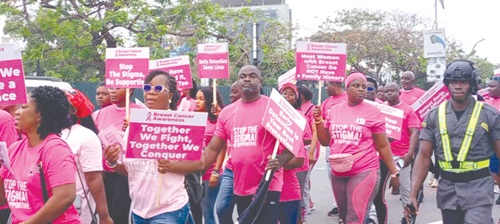
Every October, Ghana joins the global campaign. The Ministry of Gender, Children and Social Protection launches the national commemoration. Free screenings are offered. Survivors share their stories. The Vice President urges women to embrace regular self-examination. The message is clear and urgent: “Catch it Early; Treat it Right; Survive it” .
Key Takeaways
- The Ghana Health Service estimates about 4,650 new breast cancer cases and approximately 2,060 deaths annually.
- At Komfo Anokye Teaching Hospital, only 18.5% of patients with confirmed breast cancer completed recommended treatment without abandonment.
- The Ghana Health Service's breast cancer project is working to strengthen year-round clinical breast examination and referral .
Then November arrives.
The screenings stop. The campaigns go quiet. The education that was front-page news in October becomes background noise. But the women who need that education do not stop needing it. They are the market trader in Kaneshie who noticed a lump but was too busy to act. The teacher in Ho who heard the message in October but did not follow through. The mother in Tamale who has never had a clinical breast examination and does not know she should.
The Ghana Health Service has recognized this problem. Dr Caroline Reindorf Amissah, Deputy Director-General of the GHS, has warned against limiting breast health awareness to October. Early detection really provides a good outcome for women all over,” she said, urging that breast health awareness be incorporated into routine health education throughout the year .
The Numbers That Demand Year-Round Attention
The case for year-round awareness is written in the data.
The Ghana Health Service estimates about 4,650 new breast cancer cases and approximately 2,060 deaths annually. Other health-sector reports have cited figures of more than 5,000 cases and 2,695 deaths .
Around 70% of patients seek medical care only at late stages of the disease. The average age at diagnosis is 49 .
A 2026 meta-analysis synthesizing data from 2,114 patients across Ghana found a pooled median overall survival of 4.4 years and an estimated 5-year survival rate of 46.5% .
These numbers do not change when October ends. They are the daily reality of Ghanaian women and their families, twelve months a year.

The Awareness Gap That October Cannot Close
October raises awareness. But awareness alone is not the problem. The problem is the gap between awareness and action—and that gap persists year-round.
Research conducted at a municipal hospital in Ghana found that while 87.5% of women had heard of breast cancer, only 44.4% had adequate knowledge about its risk factors, and only 46.3% had adequate knowledge about its signs and symptoms .

Only 61% of women were aware of breast cancer screening, and only 42% had ever had a clinical breast examination. The practice of breast self-examination was even lower—only 35.5% of those who knew about it had ever performed it .
These gaps are not resolved by a single month of campaigns. They require sustained, repeated, culturally tailored education that reaches women where they live and work—in markets, in churches, in mosques, in schools, and in their communities.
The Referral System That Must Work Every Day
October often brings a surge of free screenings. But screening is only the first step. When a woman is screened and something abnormal is found, she must be referred, diagnosed, and treated. That system must function every day of the year.
The evidence suggests it does not.
At Komfo Anokye Teaching Hospital, only 18.5% of patients with confirmed breast cancer completed recommended treatment without abandonment. The GBCI benchmark is over 80% .
The reported average availability of cancer medicines in Ghanaian public hospitals is just 14%, far below the WHO target of 80%. When NHIS-approved drugs run out of stock, patients must pay out-of-pocket. Up to 86% of patients with cancer at KATH are reported as unable to complete adjuvant treatment without interruption or abandonment .
A study of women presenting at district and regional hospitals in the Volta and Oti Regions found that among 102 women with malignant biopsies, only 64% initiated treatment. The median time from first visit to treatment initiation was 76 days. Thirty-seven women whose biopsies were malignant never initiated treatment at all .
October campaigns can identify women. But if the system cannot treat them, awareness becomes a cruel promise unkept.
What Year-Round Awareness Requires
The call for awareness beyond October is not a call for more pink ribbons. It is a call for structural change.
Integrate breast health into routine services. The Ghana Health Service’s breast cancer project is working to strengthen clinical breast examination, patient navigation, and referral. A project led by Jhpiego with the GHS has screened more than 80,000 people and navigated more than 1,900 for further diagnosis .

Equip primary care providers. Most women first interact with the health system at the district level. If clinical breast examination is not available there, or if providers are not trained to recognize suspicious findings, early detection cannot happen.
Address the cost barrier. The NHIA has added breast screening to the Free Primary Healthcare package, a significant step forward. But implementation gaps remain, and stakeholders note that screening tariffs are not yet fully operational .
Engage communities continuously. Religious leaders, traditional healers, market queens, and community influencers shape health-seeking behaviour. Their engagement cannot be limited to October.
Support survivors year-round. Rehabilitative care, prostheses, psychological support, and economic reintegration are needed every month, not just during the awareness campaign .
The Message That Must Not Fade
The theme of Ghana’s national commemoration—“Catch it Early; Treat it Right; Survive it”—is not a seasonal slogan. It is a daily imperative .
For Ghanaian women, the message is simple and urgent: know your body, check your breasts, and seek help early. As health experts say: “It is not spiritual. It can be cured when detected early” .
But that message must be delivered every month. It must be embedded in routine health education, in workplace wellness programmes, in community outreach, and in the daily practice of every health worker.
The month of October is a catalyst. It is not a substitute for the work that must happen in November, December, January, and beyond.
Breast cancer does not take a break. Neither should awareness.
Quick Facts
| Topic | Details |
|---|---|
| Annual New Cases (GHS Estimate) | ~4,650 |
| Annual Deaths (GHS Estimate) | ~2,060 |
| Late-Stage Presentation | ~70% of patients |
| 5-Year Survival Rate (Pooled) | 46.5% |
| Treatment Completion (KATH) | 18.5% |
| Cancer Medicine Availability | 14% in public hospitals |
| Screened by GHS/Jhpiego Project | 80,000+ |
| Navigated for Diagnosis | 1,900+ |
Frequently Asked Questions
1. Why should breast cancer awareness continue beyond October in Ghana?
Breast cancer affects women year-round. The Ghana Health Service has warned against limiting awareness to October, urging that breast health education be incorporated into routine health education throughout the year .
2. What happens to breast cancer screening after October?
Free screenings often decline after October, but the need for screening continues. The Ghana Health Service’s breast cancer project is working to strengthen year-round clinical breast examination and referral .
3. How many new breast cancer cases are recorded in Ghana annually?
The Ghana Health Service estimates about 4,650 new cases and approximately 2,060 deaths annually. Other reports cite more than 5,000 cases and 2,695 deaths .
4. Why do most Ghanaian women present late with breast cancer?
Common reasons include misconceptions about spiritual causes, fear and stigma, limited knowledge of symptoms, cost barriers, and cultural factors affecting access to screening .
5. What gaps exist in the awareness-to-action pathway?
While 87.5% of women have heard of breast cancer, only 44.4% have adequate knowledge of risk factors, and only 42% have ever had a clinical breast examination. The gap between awareness and action persists year-round .
6. What is the treatment completion rate for breast cancer in Ghana?
At KATH, only 18.5% of patients completed recommended treatment without abandonment. The GBCI benchmark is over 80% .
7. Why do patients abandon breast cancer treatment in Ghana?
The main reasons are cost and access. Cancer medicines are available in only 14% of public hospitals, forcing patients to pay out-of-pocket. Up to 86% of patients at KATH cannot complete treatment without interruption .
8. What can be done to improve year-round awareness?
Integrate breast health into routine services, equip primary care providers, address cost barriers, engage communities continuously, and support survivors year-round .
9. Does the NHIS cover breast cancer screening?
Yes. Breast screening is now part of the benefit package under the Free Primary Healthcare policy, announced in 2026. However, implementation gaps remain .
10. What is the message for Ghanaian women about breast cancer?
The message is simple: know your body, check your breasts, and seek help early. As health experts say: “It is not spiritual. It can be cured when detected early”
Source: Accra Street Journal
Last Updated on October 4, 2026 by Samuel Kwame Boadu
Disclaimer: Some content on Accra Street Journal may be aggregated, summarized, or edited from third-party sources for informational purposes. Images and media are used under fair use or royalty-free licenses. Accra Street Journal is a subsidiary of SamBoad Publishing Hub under SamBoad Business Group Ltd, registered in Ghana since 2014.
For concerns or inquiries, please visit our Privacy Policy or Contact Page.

Samuel Kwame Boadu is a Ghanaian media entrepreneur and storyteller with a passion for amplifying urban voices and uncovering everyday truths. He is the Editor-in-Chief and Founder of Accra Street Journal, a dynamic digital platform dedicated to capturing the pulse of Ghana’s capital—its people, culture, challenges, business, sports and innovations.
Use the following reference when citing or referencing this article.
Your feedback helps us improve our journalism.
Report an Error
Help us maintain accuracy. Let our editorial team know if you spot an issue in this article.
Report a problem with this article