
11 min read
Introduction: A New Chapter for Ghana’s Entrepreneurs
On a bustling weekend in Accra, two events unfolded that captured the evolving spirit of Ghana’s private sector. At the Accra Mall, Fidelity Bank hosted the third edition of its Orange Market, bringing together 40 young entrepreneurs to showcase their products and connect directly with customers . Across town, business leaders, financiers, and policymakers gathered for the launch of Fearless Fund Africa, a new initiative dedicated to dismantling the financial barriers that have long constrained women-led businesses .
These events, while distinct in their focus, share a common thread: a recognition that Ghana’s economic future depends on the success of its small and medium enterprises (SMEs), which account for over 80 per cent of private sector employment . From providing market access for startups to creating dedicated capital vehicles for women entrepreneurs, the message is clear—the old barriers are being challenged, and new opportunities are emerging.
Key Takeaways
- Across town, business leaders, financiers, and policymakers gathered for the launch of Fearless Fund Africa, a new initiative dedicated to dismantling the financial barriers that have long constrained women-led businesses .
- The Fidelity Orange Market showcased the creativity and drive of young entrepreneurs, while the Fearless Fund Africa launch addressed the structural barriers that have long constrained women-led businesses .
- Fearless Fund Africa is a new initiative launched in Accra on March 20, 2026, aimed at dismantling financial barriers for women-led businesses by providing dedicated, flexible capital and advocating for policy reforms .
This ASJ article explores these twin developments, what they mean for Ghana’s entrepreneurial ecosystem, and why supporting young and women-led businesses is essential for inclusive economic growth.
Fidelity Bank’s Orange Market: Creating Market Access for Young Entrepreneurs
The Third Edition
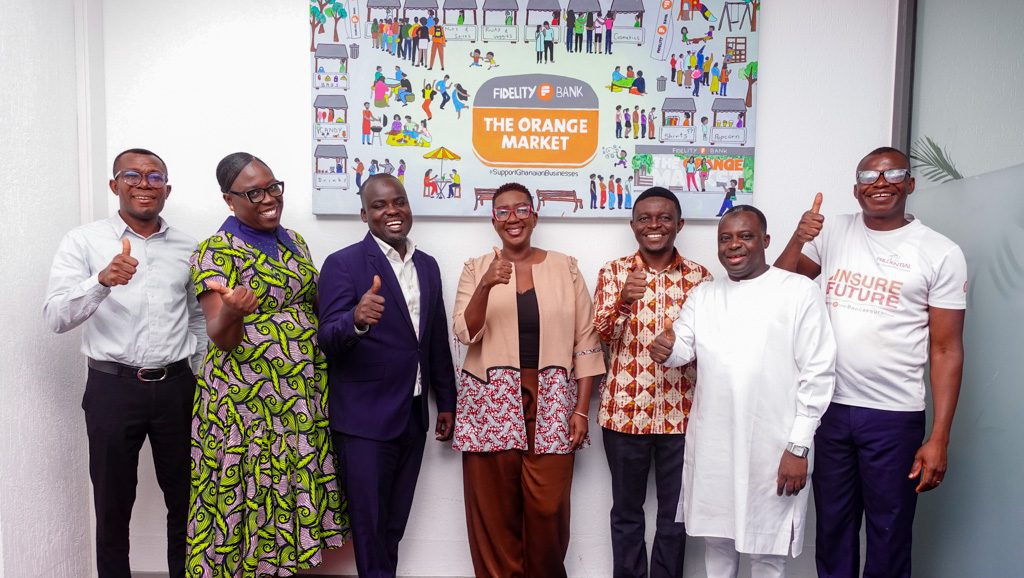
On March 21–22, 2026, Fidelity Bank Ghana, in partnership with Accra Goods Market, hosted the third edition of the Orange Market at the Accra Mall . The initiative brought together 40 young entrepreneurs and local startups, providing them with a high-traffic commercial platform to showcase their products, connect with customers, and generate direct revenue .
The 40 businesses spanned diverse sectors, including agribusiness, sustainable fashion, tech-enabled services, and the creative arts . This diversity reflects the breadth of entrepreneurial talent emerging across Ghana and the growing consumer appetite for locally made products.
From Funding to Market: The Evolution of Fidelity’s Support
The Orange Market is part of the broader Fidelity Young Entrepreneurship Initiative (FYEI) , through which entrepreneurs have already received patient capital, expert mentorship, and rigorous business training .
Nana Yaa Afriyie Ofori-Koree, Head of Partnerships, Sustainability and CSR at Fidelity Bank, explained the thinking behind the market:
“We realised early on that providing funding, capacity building, training, and certification is incredibly important, but it is simply not enough if these brilliant businesses do not have a market to sell to” .
This insight is critical. Across Africa, countless promising startups fail not because their products are substandard, but because they lack the visibility, distribution networks, and customer access needed to scale. By creating a curated marketplace in a prime location, Fidelity is addressing this gap directly.
Growth Trajectory
Since its launch in 2024, the Orange Market has scaled rapidly:
| Edition | Number of Entrepreneurs |
|---|---|
| Edition 1 (2024) | 35 |
| Edition 2 | 20 |
| Edition 3 (2026) | 40 |
| Total in Two Years | 95 market opportunities created |
Makafui Ayimey, Founder of The Accra Goods Market, emphasized the power of collaboration:

“This collaboration proves that when corporate institutions and ecosystem builders join forces, we can create an unparalleled launchpad for the next generation of Ghanaian business leaders” .
Why Market Access Matters
For young entrepreneurs, the Orange Market offers more than just a weekend of sales. It provides:
-
Customer feedback: Direct interaction with buyers helps refine products and messaging
-
Brand visibility: Exposure to Accra Mall’s high foot traffic builds awareness
-
Networking: Connections with other entrepreneurs, potential partners, and investors
-
Revenue: Immediate sales that can be reinvested into the business
As one participant noted, selling in a formal retail environment also builds confidence and legitimacy—intangible assets that are often as valuable as the revenue generated .

Fearless Fund Africa: Dismantling Barriers for Women-Led Businesses
A New Dawn for Women Entrepreneurs
On March 20, 2026, business leaders, policymakers, and financiers gathered in Accra for the launch of Fearless Fund Africa, a new initiative aimed at dismantling the financial barriers that have long constrained women-led businesses . The launch event, themed “A New Dawn for Women Entrepreneurs in Africa,” featured a high-level panel discussion on the critical role of women in driving economic growth across the continent.
Speakers at the event included:
-
Hajia Alima Mahama, Former Minister for Local Government and former Ambassador to the United States
-
Cynthia Sanders, Board Chair of WIDGET
-
Dr. Bernard Anaba, Chief Operating Officer of GIRSAL
-
Alice Darko, Country Director of IDH Ghana
-
Dr. Benjamin Darko, Head of Programme at BUSAC
The Economic Case for Investing in Women
The event underscored a fundamental truth: women-led businesses are not just a social good—they are an economic imperative. Hajia Alima Mahama emphasized that women in business are the backbone of the economy, yet they continue to face systemic barriers:
“Women in business are the backbone of the economy, and if you want economic transformation, you must empower women. These challenges are not insurmountable. We need to redesign financial products to meet the needs of women entrepreneurs and make funding accessible, not just available” .
The numbers support her argument. Across Africa, women entrepreneurs face a $42 billion financing gap , constraining their ability to start, sustain, and scale businesses . Yet when women do access capital, they reinvest up to 90 per cent of their income back into their families and communities—far higher than the reinvestment rates of their male counterparts . This multiplier effect means that investing in women is one of the most effective ways to drive inclusive economic growth.
Systemic Barriers
Cynthia Sanders, Board Chair of WIDGET, highlighted the systemic nature of the challenges women face:
“We must dismantle the systemic barriers that prevent women from accessing the financing they need. The private sector must step up and provide financing to women, and women must also support other women” .
These barriers include:
-
Collateral requirements: Traditional lending models often demand assets that women, particularly in the informal sector, do not possess
-
Financial literacy gaps: Limited access to financial education and mentorship
-
Network exclusion: Women entrepreneurs often lack access to the networks that facilitate capital-raising
-
Product mismatch: Financial products are rarely designed with women’s cash flow patterns, risk profiles, or business models in mind
The Fearless Fund Vision
The launch of Fearless Fund Africa signals a growing recognition that solving these challenges requires dedicated vehicles—not just general SME programmes. The Fund aims to:
-
Provide patient, flexible capital tailored to women-led businesses
-
Build mentorship and network support alongside financing
-
Advocate for policy reforms that enable women’s economic participation
-
Foster collaboration among financiers, government, and entrepreneurs
Dr. Bernard Anaba, Chief Operating Officer of GIRSAL, noted that successful interventions must be collaborative:
“For women-led businesses to thrive, we need a coordinated effort that brings together the private sector, government, and development partners. No single institution can solve these challenges alone” .
The Bigger Picture: Why SMEs Matter for Ghana’s Economy
The Backbone of Employment
SMEs account for over 80 per cent of private sector employment in Ghana . They are the primary source of jobs for young people entering the workforce and the engine of innovation in sectors ranging from agribusiness to technology.
The Financing Gap
Despite their importance, SMEs face a persistent financing gap. According to the International Finance Corporation (IFC), the financing gap for micro, small, and medium enterprises in Ghana is estimated at $7.8 billion . For women-led enterprises, the gap is even wider.

Policy Context
The government’s 24-Hour Economy initiative, the Accelerated Export Development Programme, and the Big Push infrastructure agenda all depend on a vibrant private sector to generate jobs and drive growth. Without SMEs—and without women-led businesses—these ambitious programmes will struggle to achieve their goals.
Alice Darko, Country Director of IDH Ghana, noted that the private sector has a critical role to play:
“Supporting women-led businesses is not just about equity. It is about unlocking the full potential of Ghana’s economy. The private sector must step up and provide the financing and market access that women entrepreneurs need” .
Key Takeaways: What These Events Tell Us
| Event | Focus | Key Takeaway |
|---|---|---|
| Fidelity Orange Market | Young entrepreneurs, market access | Funding alone is insufficient; market access and visibility are essential for scaling |
| Fearless Fund Africa Launch | Women-led businesses | Systemic barriers require dedicated solutions, flexible capital, and policy advocacy |
| Both Events | SME empowerment | Collaboration between corporate, government, and ecosystem actors is critical |
What This Means for Aspiring Entrepreneurs
For Young Entrepreneurs
If you are a young entrepreneur in Ghana, the message from the Orange Market is clear: opportunities for market access are expanding. Corporate partners like Fidelity Bank are increasingly recognising that supporting startups is not just philanthropy—it is good business. The growing number of curated markets, incubators, and accelerator programmes means that even early-stage businesses can find platforms to reach customers.
Key steps to take:
-
Seek out curated markets like the Orange Market, Accra Goods Market, and sector-specific fairs
-
Build a strong digital presence to complement physical sales
-
Engage with ecosystem builders—organisations that connect entrepreneurs to funding, mentorship, and networks
For Women Entrepreneurs
The launch of Fearless Fund Africa signals that dedicated capital for women-led businesses is becoming available. But beyond financing, women entrepreneurs should:
-
Seek out networks of other women entrepreneurs—peer support is invaluable
-
Advocate for policy reforms that address collateral requirements and other systemic barriers
-
Leverage digital platforms that bypass traditional gatekeepers
Dr. Benjamin Darko, Head of Programme at BUSAC, emphasized the importance of collective action:
“Women entrepreneurs must not wait for change to come to them. They must organize, advocate, and demand the financial products and policies that will enable their businesses to thrive” .
Conclusion: Building an Inclusive Entrepreneurial Ecosystem
The weekend of March 21–22, 2026, was a reminder that Ghana’s entrepreneurial ecosystem is maturing. The Fidelity Orange Market showcased the creativity and drive of young entrepreneurs, while the Fearless Fund Africa launch addressed the structural barriers that have long constrained women-led businesses .
These events are not isolated. They reflect a broader shift in how Ghana approaches private sector development—one that recognises that sustainable growth requires inclusive growth. When young people have access to markets, they can turn ideas into incomes. When women have access to capital, they can build businesses that lift entire communities .
As Hajia Alima Mahama noted, “These challenges are not insurmountable” . The solutions exist: flexible financial products, market access platforms, mentorship networks, and policy reforms. The question is whether the momentum generated by initiatives like the Orange Market and Fearless Fund Africa can be sustained and scaled.
For the young entrepreneur at the Accra Mall, selling her products to customers who discovered her brand for the first time, the opportunity is real. For the women business leader who has spent years navigating systems not designed for her, the promise of dedicated capital is a breakthrough. The challenge—and the opportunity—is to build on these foundations until inclusive entrepreneurship is not the exception, but the norm.
Frequently Asked Questions (FAQs)
1. What is the Fidelity Orange Market?
The Orange Market is an initiative by Fidelity Bank Ghana in partnership with Accra Goods Market that provides a high-traffic commercial platform for young entrepreneurs and local startups to showcase products, connect with customers, and generate revenue .
2. How many entrepreneurs have participated in the Orange Market?
Since its launch in 2024, the Orange Market has created market opportunities for 95 young entrepreneurs across three editions .
3. What is Fearless Fund Africa?
Fearless Fund Africa is a new initiative launched in Accra on March 20, 2026, aimed at dismantling financial barriers for women-led businesses by providing dedicated, flexible capital and advocating for policy reforms .
4. Why is supporting women-led businesses important for Ghana’s economy?
Women-led businesses are the backbone of the economy, yet face a $42 billion financing gap across Africa. When women access capital, they reinvest up to 90 per cent of their income into their families and communities, creating a powerful multiplier effect .
5. What sectors were represented at the Orange Market?
Participating businesses spanned diverse sectors including agribusiness, sustainable fashion, tech-enabled services, and the creative arts .
6. How can young entrepreneurs access opportunities like the Orange Market?
Entrepreneurs should follow Fidelity Bank and Accra Goods Market announcements, build strong business cases, and engage with ecosystem builders that connect startups to market opportunities .
7. What are the systemic barriers women entrepreneurs face in accessing finance?
Barriers include collateral requirements that disadvantage women, financial literacy gaps, exclusion from networks that facilitate capital-raising, and financial products not designed for women’s business models .
8. What role does the private sector play in supporting SMEs?
The private sector provides patient capital, mentorship, market access platforms, and can advocate for policy reforms that enable SME growth. Fidelity Bank’s Orange Market exemplifies this corporate engagement .
9. How does supporting SMEs contribute to Ghana’s economic growth?
SMEs account for over 80 per cent of private sector employment in Ghana. Supporting them creates jobs, drives innovation, and builds the foundation for sustainable, inclusive growth .
10. What is the Fidelity Young Entrepreneurship Initiative (FYEI)?
The FYEI is Fidelity Bank’s broader programme supporting young entrepreneurs through patient capital, expert mentorship, business training, and market access platforms like the Orange Market .
Source: Accra Street Journal
Last Updated on March 23, 2026 by Samuel Kwame Boadu
Disclaimer: Some content on Accra Street Journal may be aggregated, summarized, or edited from third-party sources for informational purposes. Images and media are used under fair use or royalty-free licenses. Accra Street Journal is a subsidiary of SamBoad Publishing Hub under SamBoad Business Group Ltd, registered in Ghana since 2014.
For concerns or inquiries, please visit our Privacy Policy or Contact Page.

Samuel Kwame Boadu is a Ghanaian media entrepreneur and storyteller with a passion for amplifying urban voices and uncovering everyday truths. He is the Editor-in-Chief and Founder of Accra Street Journal, a dynamic digital platform dedicated to capturing the pulse of Ghana’s capital—its people, culture, challenges, business, sports and innovations.
Use the following reference when citing or referencing this article.
Your feedback helps us improve our journalism.
Report an Error
Help us maintain accuracy. Let our editorial team know if you spot an issue in this article.
Report a problem with this article