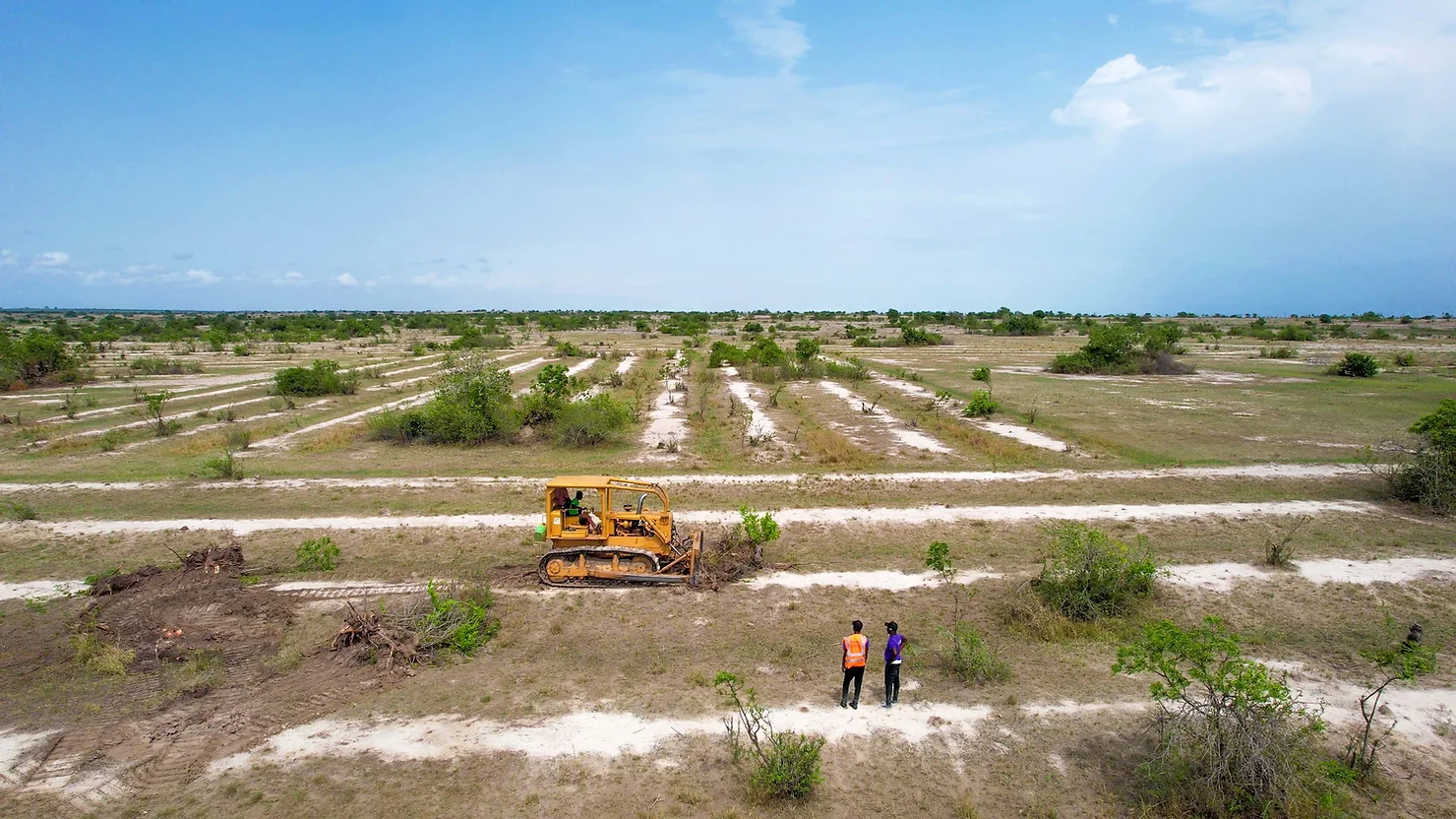
Introduction: The Purchase Is Just the Beginning
You have negotiated with the chief, signed the documents, handed over the money, and received a receipt. For many first-time land buyers in Ghana, this moment feels like the finish line. The reality, however, is that you have just completed the first—and often the easiest—step of a much longer journey.
Ghana’s land tenure system is unique, with approximately 80% of land held under customary law by stools, skins, clans, or families . This traditional system, layered with modern statutory requirements, creates a post-purchase process that many new landowners underestimate. The “site plan” in your hand is not ownership. It is an allocation—a permission slip from the traditional authorities.

This Accra Street Journal guide explains exactly what happens after you buy land in Ghana, from document verification and title registration to ongoing obligations like ground rent and property taxes. Understanding this process is essential for protecting your investment and avoiding the disputes that plague unregistered land transactions .
📢 GET A DETAILED ARTICLES + JOBS
Join ASJ's WhatsApp Channel and never miss a post or opportunity.

Part 1: The Immediate Aftermath – Verification and Documentation
Step 1: Verify Your Documents
Before proceeding with any registration, you must ensure the documents you received are legitimate. This is where many buyers make costly mistakes.
Essential Documents You Should Have:

-
Allocation letter or indenture from the landowner (chief, family head, or developer)
-
Site plan prepared by a licensed surveyor
-
Receipt for payment made
-
Consent of the appropriate customary authority (for stool/family lands)
Red Flags to Check:
-
Is the site plan signed by the licensed surveyor and the Director of the Survey and Mapping Division?
-
Does the allocation letter come from the recognised customary authority?
-
Have you received consent from the appropriate family or stool heads? For family lands, interest must be granted by the head of family with the consent of principal members .
Step 2: Conduct a Search at the Lands Commission
This is the single most critical step in protecting your investment. A search at the Lands Commission reveals whether the land has been previously sold, registered to another person, or is subject to litigation.
How to Conduct a Search:
-
Visit the Lands Commission office in your region
-
Request a search report on the property
-
Provide the site plan and any existing documentation
-
Pay the required search fee
What the Search Reveals:
-
Whether the land has been previously registered
-
Existing encumbrances or caveats on the property
-
Any ongoing litigation affecting the land
-
The legitimate registered owner
A clean search report is your green light to proceed with registration. Do not skip this step, no matter how trustworthy the seller appears.
Step 3: Engage a Licensed Legal Practitioner
In Ghana, licensed legal practitioners must endorse all land documents . This is not optional—it is a legal requirement for registration. Your solicitor will:
-
Review all sale documents for legal sufficiency
-
Verify the seller’s legitimate ownership through title searches
-
Prepare stamped instruments for registration
-
Guide you through the Land Title Registration or Deeds Registration process
Cost Expectation: Professional legal fees typically range from GHS 3,000 to GHS 8,000, depending on the complexity of the transaction .
Part 2: The Registration Process – From Indenture to Land Certificate
Ghana operates two parallel land registration systems . Understanding which applies to your property is essential.
The Two Registration Systems
| System | Geographic Coverage | Security Level | Key Feature |
|---|---|---|---|
| Land Title Registration | Greater Accra, Tema, Kumasi | High (Indefeasible Title) | Certificate provides absolute ownership protection |
| Land Deeds Registration | All other regions | Moderate | Records instruments but does not guarantee title |
Under the Land Act, 2020 (Act 1036) , the Land Title Registration system has been significantly improved, with digital reforms reducing processing times .

Step-by-Step Registration Process
Step 1: Pay Stamp Duty
Stamp duty is a mandatory tax on land transactions. The assessment of stamp duty is the function of the Land Valuation Division of the Lands Commission .
Stamp Duty Rates: Calculated between 0.25% and 1% of property value .
Deadline: If the application for registration is made within one year of the sale, the value of the land shall be determined by the amount of the purchase price. If more than one year has elapsed, the value shall be ascertained by the Land Valuation Board .
Step 2: Obtain a Barcode for the Site Plan
Your site plan must have a unique barcode to be accepted for registration. This is obtained from the Survey and Mapping Division of the Lands Commission after paying the required fees.
Site Plan Requirements:
-
Prepared by a licensed surveyor
-
Barcode affixed by the Survey and Mapping Division
-
Signed by the Director, Survey and Mapping Division
-
Back of the site plan signed by the parties and witnesses
Step 3: Lodge Documents at the Lands Commission
Submit your complete application package to the Client Service and Access Unit (CSAU) at the Lands Commission. You will receive an acknowledgment slip .
Required Documents for Registration :
-
Completed application form (Form 1A)
-
Stamped indenture or transfer document
-
Site plan with barcode
-
Search report from the Lands Commission
-
Tax clearance certificate
-
Valid identification (Ghana Card, Passport, or Driver’s License)
-
Two passport-size photographs
-
Payment receipt for applicable fees
For Stool/Family Lands (Additional Documents) :
-
Evidence of concurrence/consent from the Public and Vested Lands Management Division (PVLMD)
-
Planning comments/approval from Town and Country Planning Department
Step 4: Due Diligence and Adjudication
The Lands Commission conducts thorough due diligence on your application. This includes:
-
Public notice: A notice of the application is published to invite any competing claims
-
Site verification: Commission officials may visit the property
-
Title examination: Verification that the seller had legitimate authority to transfer
For properties in Land Title Registration districts, this process also involves adjudication of any competing claims before title is issued.
Step 5: Payment of Registration Fees
Registration Fee Structure :
-
Registration fees: GHS 1,148 – 1,178 per acre
-
Survey expenses: variable
-
Mandatory stamp duty: 0.25%-1% of property value
Total Registration Cost: Budget approximately 5-8% of your property’s value for complete registration, including all fees and professional services .
Step 6: Issuance of Land Certificate
Once the due diligence is complete and all fees are paid, the Land Registrar will issue your Land Certificate . This document is your legal proof of ownership.
Certificate Features :
-
Signed and sealed by the Director of the Land Registration Division
-
Unique serial number matching the land register
-
For joint owners, each receives a certificate indicating ownership type (joint tenants or tenants in common)
-
For married couples, both names must appear if the land was acquired during marriage
Processing Times :
-
Greater Accra Region: 4-6 months
-
Rural areas: 8-12 months
-
Streamlined applications (digital): As fast as 3 months
Provisional vs. Substantive Title
Under the Land Act, 2020, if the Land Registrar determines that you have possession of land but lack “sufficiently good or conclusive title,” they may still register you with a Provisional Title .
Provisional Title Characteristics:
-
Does not affect any existing rights or interests in the land that pre-date the registration
-
After 12 years, the holder may apply for substitution without further proof
-
At that point, the title becomes absolute
Conversion: You may apply to convert a provisional title to substantive title once the condition upon which it was granted has been satisfied .
Part 3: After Registration – Ongoing Obligations
Once you have your Land Certificate, you are officially the registered proprietor. However, ownership comes with continuing responsibilities.
1. Annual Ground Rent
With approximately 80% of land held under customary law, most properties require annual ground rent payments to traditional authorities or the state .
Ground Rent Structure:
-
Customary lands: Payments to stool or family land administrators
-
State lands: Payments to the Office of the Administrator of Stool Lands or Lands Commission
Rate: Approximately GHS 0.01 per square foot .
Consequences of Non-Payment: Non-payment constitutes breach of lease and can lead to serious legal complications, including the forfeiture of your interest in the land .
2. Property Taxes
Property taxes fund local infrastructure development and are collected by Metropolitan, Municipal, and District Assemblies (MMDAs).
Tax Rate: 0.5% – 3% of assessed value annually (Accra Metropolitan Area rates around 2.5%) .
Late Payment Penalties: Compound at 10-20% monthly, making timely compliance essential. Repeated non-payment can lead to property seizure .
3. Building Permit (If You Intend to Build)
If you plan to develop your land, you must obtain a development permit from the Physical Planning Department of your local assembly .
Building Permit Process :
| Step | Action |
|---|---|
| 1 | Submit allocation letter to Physical Planning Department |
| 2 | Prepare site plan extract |
| 3 | Obtain signatories (Physical Planner, Caretaker Chief, Paramount Chief) |
| 4 | Prepare architectural drawings |
| 5 | Submit all documents to the assembly |
| 6 | Pay building permit fee (costed by Works Department) |
| 7 | Await inspection by technical subcommittee |
| 8 | Development permit ready within 30 days |
A good landlord is defined by having a development permit from the respective MMDA .
4. Annual Maintenance
Ghana’s tropical climate demands proactive property maintenance .
Rainy Season (April-November) Priorities:
-
Monthly gutter cleaning
-
Comprehensive roof inspections
-
Foundation drainage monitoring
Harmattan Season (December-March) Priorities:
-
Frequent air filter maintenance
-
Dust infiltration prevention
-
Plumbing protection from temperature fluctuations
Annual Maintenance Budget: Allocate 2-4% of property value for routine upkeep .
Part 4: Foreign Ownership – Special Rules
Non-Ghanaians face specific restrictions on land ownership .
What Foreigners Can and Cannot Own
| Ownership Type | Permitted? | Duration |
|---|---|---|
| Freehold (Absolute Ownership) | No | N/A |
| Leasehold (Residential) | Yes | 50 years maximum |
| Leasehold (Commercial) | Yes | 99 years maximum |
Definition of “Foreign” Company: A company or corporate body with more than 40% of shareholding or ownership held by non-Ghanaian citizens .
GIPC Registration Requirements
Foreigners must also register with the Ghana Investment Promotion Centre (GIPC) and meet minimum capital thresholds:
-
Trading/General business: USD 200,000 minimum
-
Manufacturing/Export enterprises: USD 1,000,000 minimum
Part 5: Potential Post-Purchase Challenges
Boundary Disputes
Even after registration, boundary conflicts can arise. The requirement that court judgments affecting land must include site plans aims to reduce such disputes .
Multiple Claimants
The “first to register” rule in Land Title Registration districts means that the first person to properly register their interest generally has priority . This is why completing registration quickly is essential.
Land Guard Activities
The Land Act, 2020 criminalised the use of land guards to protect land developments or deny landowners access. Offenders face five to fifteen years imprisonment on summary conviction .
Lost or Destroyed Land Certificate
If your Land Certificate is lost, stolen, or destroyed, you may apply for a Substituted Certificate .
Substituted Certificate Process:
-
Apply to the Land Registrar with satisfactory indemnity
-
The Registrar publishes a 14-day notice in the Gazette and nationally circulated newspaper
-
If no objection, a substituted certificate is issued
-
The original certificate is cancelled, even if later found
Penalty for Fraudulent Procurement: Misrepresentation to obtain a substituted certificate carries fines of GHS 60,000 – 120,000 or 5-10 years imprisonment, or both .
Summary: Post-Purchase Checklist
| Phase | Action | Estimated Timeline |
|---|---|---|
| Immediate | Conduct Lands Commission search | 1-2 weeks |
| Immediate | Engage licensed solicitor | 1 week |
| Document Preparation | Pay stamp duty (0.25%-1% of value) | 1-2 weeks |
| Document Preparation | Obtain site plan barcode | 2-4 weeks |
| Registration | Lodge documents at Lands Commission | Same day |
| Registration | Due diligence and adjudication | 2-6 months |
| Registration | Payment of registration fees (5-8% of value) | Upon demand |
| Completion | Receive Land Certificate | 4-12 months total |
| Ongoing | Pay annual ground rent (GHS 0.01/sq ft) | Annually |
| Ongoing | Pay property taxes (0.5%-3% of value) | Annually |
| Before Building | Obtain building permit from MMDA | 30 days |
Frequently Asked Questions (FAQs)
1. How long does land registration take in Ghana?
Current processing times average 4-12 months, depending on location. Greater Accra Region processes fastest (4-6 months), while rural areas may require 8-12 months . The government is targeting 30-day turnaround by 2025.
2. What documents do I need to register land?
You need: site plan from licensed surveyor, proof of ownership (indenture), completed Form 1A, search report, tax clearance, valid ID, passport photos, and payment receipts .
3. Can foreigners own land in Ghana?
No. Foreigners can only obtain leasehold interests—50 years for residential, 99 years for commercial. Freehold ownership is restricted to Ghanaian citizens .
4. How much does land registration cost?
Budget 5-8% of your property’s value for complete registration, including stamp duty (0.25%-1%), registration fees (GHS 1,148-1,178 per acre), and professional fees (GHS 3,000-8,000) .
5. What is the difference between Land Title Registration and Deeds Registration?
Land Title Registration (available in Accra, Tema, Kumasi) provides an indefeasible title certificate—bulletproof ownership documentation. Land Deeds Registration (elsewhere) records instruments but does not guarantee title .
6. What happens if I don’t register my land?
Unregistered land offers no legal protection against competing claims, double sales, or fraudulent transactions. Registration is essential for secure property ownership .
7. Do I need a lawyer to register land in Ghana?
Yes. Licensed legal practitioners must endorse all land documents in Ghana. Professional guidance is essential for navigating complex local regulations .
8. What is ground rent and do I have to pay it?
Ground rent is an annual payment to traditional authorities or the state for the use of land. With 80% of land under customary tenure, most properties require these payments. Non-payment can lead to legal complications .
9. What is a Provisional Land Certificate?
If you have possession of land but lack “sufficiently good or conclusive title,” the Registrar may issue a Provisional Title. After 12 years, this can be converted to substantive title .
10. What happens if I lose my Land Certificate?
You may apply for a Substituted Certificate. The Registrar publishes a 14-day notice, and if no objection, a substituted certificate is issued. Fraudulent procurement carries fines and imprisonment .
Conclusion: From Buyer to Registered Owner
The journey from land purchase to registered owner in Ghana is not instantaneous—it is a process that demands patience, diligence, and professional guidance. The allocation letter and site plan you receive from the chief or developer are not ownership; they are entry tickets to the formal registration system.
What happens after you buy land is a structured, legally defined process: verification, search, stamp duty, survey barcoding, document lodgment, due diligence, and finally, the issuance of your Land Certificate. This certificate is your shield against disputes, double sales, and fraudulent claims.
The costs—typically 5-8% of property value—and the timelines—4 to 12 months—are significant but necessary investments in your property’s security. Unregistered land is vulnerable land. In Ghana’s complex tenure system, where 80% of land is held under customary law, registration is not a bureaucratic luxury; it is the foundation of legitimate ownership .
The Land Act, 2020 (Act 1036) has modernised this process, introducing digital conveyancing, spousal protections, and criminal penalties for land guard activities . With processing times dropping and the government targeting 30-day registration, the system is improving.
But the onus remains on you, the buyer, to complete the process. Do not stop at the handshake or the allocation paper. Take the next steps. Register your land. Pay your ground rent. Obtain your permit. These actions transform you from a purchaser into a proprietor—a status that commands respect under Ghanaian law.
Source: Accra Street Journal
Last Updated on June 14, 2026 by Samuel Kwame Boadu
Disclaimer: Some content on Accra Street Journal may be aggregated, summarized, or edited from third-party sources for informational purposes. Images and media are used under fair use or royalty-free licenses. Accra Street Journal is a subsidiary of SamBoad Publishing Hub under SamBoad Business Group Ltd, registered in Ghana since 2014.
For concerns or inquiries, please visit our Privacy Policy or Contact Page.

Samuel Kwame Boadu is a Ghanaian media entrepreneur and storyteller with a passion for amplifying urban voices and uncovering everyday truths. He is the Editor-in-Chief and Founder of Accra Street Journal, a dynamic digital platform dedicated to capturing the pulse of Ghana’s capital—its people, culture, challenges, business, sports and innovations.