Accra — The first quarter of 2026 has seen a flurry of investment activity across the African continent, with infrastructure projects attracting $16 billion in early 2026 as investors pivot toward fewer but larger-scale projects. The United Arab Emirates has emerged as the continent’s largest investor, while India is deepening its strategic partnership with Africa’s primary infrastructure lender.
Meanwhile, in the energy and commodities sector, the Dangote Refinery is expanding into the $11.5 billion chemicals market, Uganda’s central bank has begun domestic gold purchases to diversify its foreign reserves, and a recent report has listed the African countries with the highest diesel prices. In technology, recent cable failures have exposed significant weaknesses in West Africa’s $150 billion digital economy.

Here is your complete Accra Street Jurnals’ roundup of the key markets, investment, energy, tech, and regional politics developments across Africa.
📢 GET A DETAILED ARTICLES + JOBS
Join ASJ's WhatsApp Channel and never miss a post or opportunity.

Markets & Investment
Infrastructure Surge: Africa Attracts $16 Billion in Early 2026
Africa has attracted $16 billion in early 2026 as investors pivot toward fewer but larger-scale infrastructure projects, according to the latest Africa Investment Report.
The shift represents a strategic change in investor behaviour. Rather than spreading capital across numerous small projects, investors are increasingly concentrating their funds on major infrastructure developments that offer scale, predictability, and long-term returns.

Key sectors attracting investment include:
-
Transport infrastructure: Roads, railways, ports, and airports
-
Energy: Power generation, transmission, and distribution
-
Digital infrastructure: Fibre optic cables, data centres, and telecommunications networks
-
Water and sanitation: Treatment plants, distribution networks, and irrigation systems
The trend toward larger projects reflects growing investor confidence in Africa’s long-term growth trajectory, as well as improvements in project preparation, regulatory frameworks, and risk mitigation instruments.
India-Africa Ties: $100 Million to Continent’s Primary Infrastructure Lender
The continent’s primary infrastructure lender has secured $100 million from India, signaling a strengthening strategic partnership between New Delhi and African nations.
The funding will be deployed to support infrastructure development across the continent, with a focus on projects that enhance connectivity, trade, and economic integration. India has been increasingly active in African infrastructure finance, competing with China for influence in the sector.
The deal follows a series of high-level diplomatic engagements between India and African countries, including the India-Africa Forum Summit and bilateral visits by Indian officials to key African capitals.
M&A Trends: Consolidation in Fintech and Telecom Sectors
Dealmaking across Africa is shifting toward consolidation, particularly in the fintech and telecom sectors, driven by companies like MTN seeking to strengthen market positions and achieve economies of scale.
In the fintech sector, larger players are acquiring smaller competitors to expand their customer bases, product offerings, and geographic footprints. The consolidation trend reflects the maturation of the African fintech industry, which has seen rapid growth over the past decade.
In the telecom sector, companies like MTN are pursuing mergers and acquisitions to consolidate market positions, reduce competition, and achieve cost efficiencies. The trend is particularly pronounced in markets where multiple operators are competing for a limited customer base.
UAE Investment: Largest Investor in Africa with Focus on Zambia
The United Arab Emirates is currently the largest investor in Africa, with a significant focus on Zambia, according to the Africa Investment Report.

The UAE’s investment strategy in Africa is multi-faceted, encompassing:
-
Infrastructure: Ports, logistics hubs, and transport corridors
-
Energy: Renewable energy projects and oil and gas infrastructure
-
Agriculture: Large-scale farming and food processing
-
Technology: Digital infrastructure and fintech
Zambia has emerged as a particular focus of UAE investment, with deals spanning the mining, energy, and agricultural sectors. The UAE’s interest in Zambia is driven by the country’s mineral wealth, agricultural potential, and strategic location in southern Africa.
Energy & Commodities
High Diesel Costs: African Countries with the Highest Prices
A recent report has listed the 10 African countries with the highest diesel prices as of April 2026, highlighting the significant variation in fuel costs across the continent.
The countries with the highest diesel prices include:
-
Countries with limited refining capacity that rely heavily on imported refined products
-
Landlocked nations that face high transport costs for fuel imports
-
Nations with high fuel taxes or levies that increase final pump prices
The report underscores the competitive disadvantage faced by businesses in high-diesel-cost countries, where transport, manufacturing, and agricultural costs are elevated.
Uganda’s Gold Strategy: Central Bank Begins Domestic Purchases
Uganda’s central bank has begun domestic gold purchases to diversify its foreign reserves, following a model similar to Ghana’s successful gold purchase programme.
The Bank of Uganda is buying gold from domestic artisanal and small-scale miners, providing them with a formal channel to sell their production while building the country’s gold reserves.
The strategy offers multiple benefits:
-
Reserve diversification: Gold provides a hedge against currency fluctuations and geopolitical risks.
-
Support for local miners: Official purchases provide a stable market for artisanal production.
-
Reduced smuggling: Formal channels reduce the incentive to smuggle gold out of the country.
Uganda’s move follows Ghana’s example, where the Bank of Ghana’s domestic gold purchase programme has bolstered foreign exchange reserves to approximately $12.5 billion.
Dangote Refinery: Expanding into $11.5 Billion Chemicals Market
The Dangote Refinery is expanding into the $11.5 billion chemicals market to fill an import gap, according to company announcements.
The refinery, which began operations in 2024, is now diversifying beyond fuel production into petrochemicals, including:

-
Polypropylene: Used in packaging, textiles, and automotive components
-
Polyethylene: Used in plastic products, containers, and pipes
-
Other industrial chemicals: Used in manufacturing and processing industries
The expansion into chemicals is strategically significant because Nigeria currently imports the vast majority of its petrochemical requirements. By producing these products locally, Dangote aims to reduce import dependence, save foreign exchange, and capture value that currently leaves the country.
Cocoa Prices: Spot Price Around $3,269.56
Markets Insider reports that the cocoa spot price is currently around $3,269.56, down roughly 2.12 per cent intraday.
The decline follows a period of elevated prices driven by supply concerns in West Africa, the world’s primary cocoa-producing region. The price movement will be closely watched by cocoa-dependent economies, including Ghana and Côte d’Ivoire, where cocoa exports are a major source of foreign exchange and government revenue.
Tech & Connectivity
Digital Vulnerability: West Africa’s $150 Billion Digital Economy at Risk
Recent cable failures have exposed significant weaknesses in West Africa’s $150 billion digital economy, according to a new report on the region’s digital infrastructure vulnerabilities.
The region relies heavily on a small number of submarine fibre optic cables for international connectivity. When these cables fail—due to damage, accidents, or maintenance issues—the impact on digital services can be severe and widespread.
Key vulnerabilities identified include:
-
Limited redundancy: Few alternative routes for data traffic when primary cables fail
-
Concentrated landing points: Many cables land at the same locations, creating single points of failure
-
Inadequate maintenance: Ageing infrastructure and limited investment in upgrades
-
Regulatory fragmentation: Inconsistent rules and standards across countries
The report calls for investment in additional cables, alternative routing, and regional cooperation to strengthen digital resilience.
Flutterwave Rumors: Fintech Giant Addresses $75 Million Government Investment Speculation
Flutterwave, the African fintech giant, has addressed speculation regarding a $75 million government investment ahead of a potential initial public offering (IPO).
The company clarified that while it continues to engage with governments and development finance institutions across the continent, no such investment has been finalised. The speculation had been fuelled by reports suggesting that a West African government was considering a strategic investment in the company.
Flutterwave has been preparing for a potential IPO, which would be one of the largest listings by an African technology company. The company’s valuation and the timing of any public offering remain subjects of market speculation.
Regional Politics & Travel
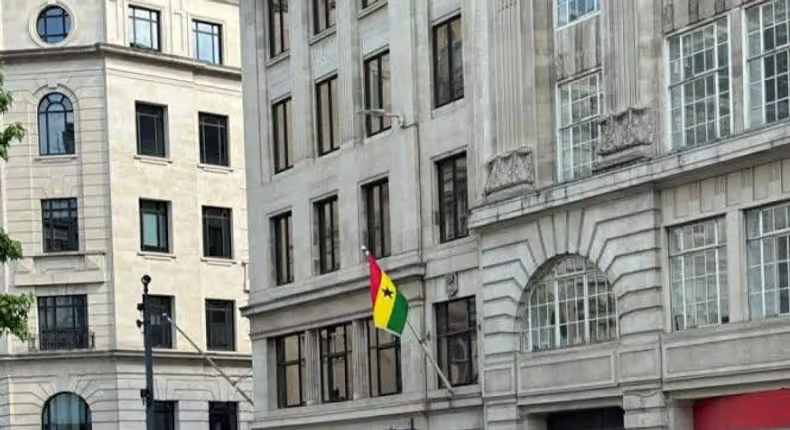
Ghana’s Visa Policy: Free Visa Regime for African Travelers Effective May 25, 2026
Effective May 25, 2026, Ghana will implement a “free visa” regime for African travelers. However, while fees are waived, applicants must still use a new e-visa platform for security screenings.
The policy, announced by President John Dramani Mahama, is designed to align with the African Union’s Agenda 2063 vision of a continent without borders. The implementation date of May 25 was chosen to coincide with Africa Day.
Under the new regime:
-
Visa fees are waived: African travelers will no longer pay for visas to enter Ghana.
-
E-visa platform required: Applicants must still complete an online application and undergo security screening.
-
Security checks maintained: The waiver of fees does not affect the security assessment process.
The policy is expected to boost tourism, trade, and people-to-people contacts across the continent, while maintaining necessary security controls.
Geopolitics: Russia Deepens Military Presence in the Sahel
Russia is deepening its military presence in the Sahel region, specifically utilizing a transit route through Guinea, according to security analysts.
The increased Russian military activity is focused on several Sahelian countries, including Mali, Burkina Faso, and Niger, where military governments have expelled French forces and turned to Moscow for security assistance.
The transit route through Guinea provides Russia with access to the region, bypassing countries that might restrict overflight or port access. The development has implications for regional security dynamics and for Western countries that have traditionally been the dominant external security partners in the Sahel.
Travel Advisories: US Issues “Level 4: Do Not Travel” for Niger
The United States has issued a “Level 4: Do Not Travel” advisory for Niger due to escalating security risks, the State Department announced.
The highest-level advisory warns US citizens not to travel to the country due to:
-
Terrorism: Ongoing threat from militant groups operating in the region
-
Kidnapping: Risk of hostage-taking by armed groups
-
Armed conflict: Continued violence involving state and non-state actors
-
Political instability: Following the military coup in 2023
The advisory follows similar warnings for other Sahelian countries and reflects the deteriorating security situation across the region. US citizens currently in Niger have been urged to depart.
Outlook From ASJ
The developments across markets, investment, energy, tech, and regional politics point to several emerging trends.
Investment concentration: Africa is attracting fewer but larger infrastructure projects, reflecting growing investor confidence and improved project preparation.
Strategic realignment: India and the UAE are deepening their engagement with Africa, while Russia is expanding its military presence in the Sahel.
Economic diversification: Dangote’s expansion into chemicals and Uganda’s gold purchase programme both reflect efforts to diversify economic activity and reduce import dependence.
Digital vulnerability: West Africa’s $150 billion digital economy is at risk from cable failures, highlighting the need for investment in resilience.
Regional integration: Ghana’s free visa regime for African travelers represents a step toward the African Union’s vision of a continent without borders.
For businesses, investors, and policymakers, these are the stories to watch.
Frequently Asked Questions (FAQs)
1. How much infrastructure investment has Africa attracted in early 2026?
Africa has attracted $16 billion in early 2026 as investors pivot toward fewer but larger-scale infrastructure projects. The shift represents a strategic change in investor behaviour, with capital increasingly concentrated on major developments offering scale, predictability, and long-term returns.
2. Which country is currently the largest investor in Africa?
The United Arab Emirates is currently the largest investor in Africa, with a significant focus on Zambia. UAE investment spans infrastructure, energy, agriculture, and technology sectors.
3. What is Ghana’s new visa policy for African travelers?
Effective May 25, 2026, Ghana will implement a “free visa” regime for African travelers. While visa fees are waived, applicants must still use a new e-visa platform for security screenings. The policy aligns with the African Union’s Agenda 2063 vision of a continent without borders.
4. What is Dangote Refinery’s latest expansion?
The Dangote Refinery is expanding into the $11.5 billion chemicals market to fill an import gap. The refinery is diversifying beyond fuel production into petrochemicals including polypropylene and polyethylene, which Nigeria currently imports.
5. Why has the US issued a “Level 4: Do Not Travel” advisory for Niger?
The US issued its highest-level travel advisory for Niger due to escalating security risks, including terrorism, kidnapping, armed conflict, and political instability following the 2023 military coup. US citizens currently in Niger have been urged to depart.
6. What vulnerabilities have been exposed in West Africa’s digital economy?
Recent cable failures have exposed significant weaknesses in West Africa’s $150 billion digital economy, including limited redundancy, concentrated landing points, inadequate maintenance, and regulatory fragmentation. The report calls for investment in additional cables, alternative routing, and regional cooperation to strengthen digital resilience.
Source: Accra Street Journal
Last Updated on April 22, 2026 by Samuel Kwame Boadu
Disclaimer: Some content on Accra Street Journal may be aggregated, summarized, or edited from third-party sources for informational purposes. Images and media are used under fair use or royalty-free licenses. Accra Street Journal is a subsidiary of SamBoad Publishing Hub under SamBoad Business Group Ltd, registered in Ghana since 2014.
For concerns or inquiries, please visit our Privacy Policy or Contact Page.

Samuel Kwame Boadu is a Ghanaian media entrepreneur and storyteller with a passion for amplifying urban voices and uncovering everyday truths. He is the Editor-in-Chief and Founder of Accra Street Journal, a dynamic digital platform dedicated to capturing the pulse of Ghana’s capital—its people, culture, challenges, business, sports and innovations.