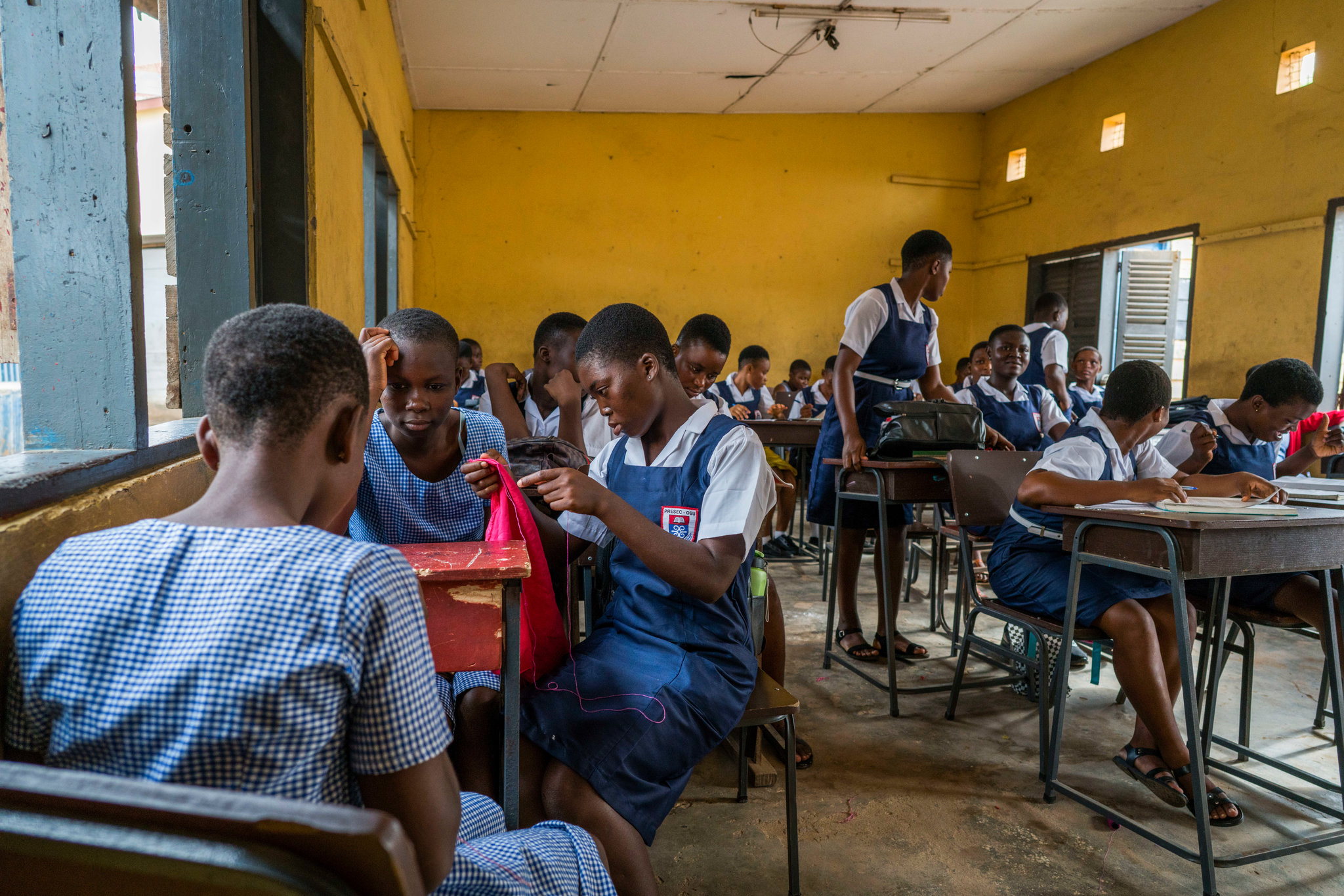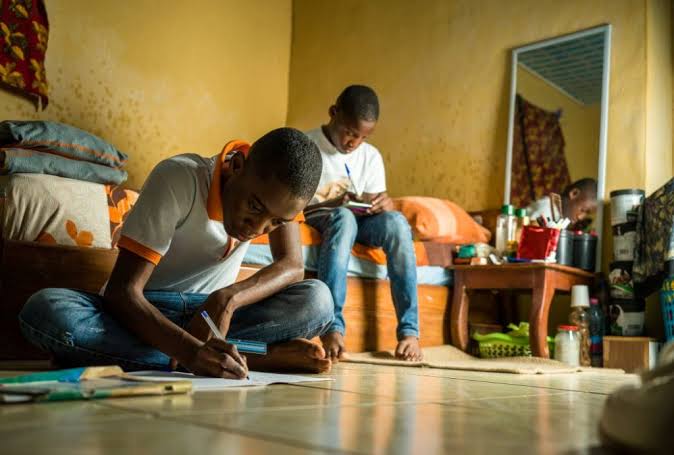






In Accra, the “school run” is a ritual of status and anxiety. From the air-conditioned SUVs idling outside Cantonments to the trotro stations feeding into Gbawe, parents are united by a singular, sleepless question: Is my child actually learning?
In the last decade, the education sector in Ghana has ballooned into a multi-million dollar industry. Yet, for all the shiny new campuses boasting “state-of-the-art facilities” and “holistic development,” the only currency that truly holds value at the University of Ghana or Ashesi’s entrance gates is raw, verifiable academic performance.

We have moved past the era where a school could rest on the laurels of a “green environment.” The modern Ghanaian parent—armed with WhatsApp group exposés and data—is looking for receipts. They want WAEC distinctions, global university placements, and hard evidence that the Cedis spent on tuition will yield a return.
📢 GET A DETAILED ARTICLES + JOBS
Join ASJ's WhatsApp Channel and never miss a post or opportunity.

But what separates the genuinely elite from the masterfully marketed? Are the expensive international schools always worth the hefty fees? And which local private schools are quietly outperforming their better-funded rivals?
In this ASJ investigative feature, we cut through the promotional noise. Using the 2025/2026 academic data, WAEC award records, and university progression metrics, we identify the institutions in Accra that aren’t just busy—they are effective.
The 2026 Honours List: Who Took the Crown?
The end of 2025 and early 2026 brought a flurry of award ceremonies, from the Ghana Business Awards to the WAEC International Excellence Awards. While every school claims to be the “best,” the data points to a shifting hierarchy.
Brain Hill International School: The New Standard Bearer
When the Ghana Business Awards announced the “Best International School in Ghana” for 2025, the trophy went to Brain Hill International School (BHIS) .
This was not a popularity contest. The judges pointed to BHIS’s “transformative learning” model, specifically its ability to hybridize the Ghanaian national standards with international best practices. For parents worried about children losing their cultural identity while studying for Cambridge exams, BHIS presented a winning formula. Their recent expansion into Gbawe—complete with temperature-regulated classrooms and, significantly, therapy services for special needs learners—signals a maturation of the private sector .
Hope College: The Science Factory
If BHIS won the business award, Hope College has conquered the examination hall. Located in Gomoa Fetteh, this institution is currently the most feared (by competitors) name in the WASSCE ecosystem.
In the 2025 WASSCE, Hope College recorded a staggering 100% pass rate in fifteen subjects, including English, Biology, Chemistry, and Physics . While national averages for Core Mathematics hover below 50%, Hope College pushed over 82% of its candidates to a pass—a statistical anomaly that speaks to exceptional pedagogy .
But the real mic-drop moment came at the WAEC 74th Annual Council Meeting in March 2026. While Huda Suglo Suleman from Legacy Girls’ College took the top spot, Hope College’s Matthea Aba Andoh was crowned the Overall Third Best Candidate in West Africa and the Best General Science Student for the second year running . This wasn’t luck; it is a system.
LFIA (Lycée Français): The Gateway to Europe
For parents looking beyond the Anglosphere, LFIA (Lycée Français International Jacques Prévert d’Accra) is operating on a different plane entirely. In 2025, LFIA achieved a 100% pass rate in the French Baccalauréat, placing it among the elite in West and Central Africa .
Simultaneously, the British Council named LFIA the Best School for IGCSE English as a Second Language . This bilingual prowess (French/English) is a strategic asset, feeding students into top universities in Canada, France, and the rest of Europe. It is a niche product, but for the diplomatic and pan-African business class, it is the most valuable ticket in town.
The Data Divide: International Brand vs. Local Brawn
One of the most significant trends in the 2026 rankings is the distinction between “Reputation Rank” and “Performance Rank.
According to the Singapore-based platform Schoolbell.net, the top reputational ranking goes to Ghana International School (GIS) , with a score of 100.0 . GIS, with its dual CIS and NEASC accreditation, remains the gold standard for the expatriate community. They are followed closely by DPS International and the American International School .
But reputation is a lagging indicator.
When we overlay the WAEC Distinction Awards (2025/2026) and NSMQ performance, a different picture emerges. The hyper-expensive international schools are brilliant at sending kids to global universities, but schools like Hope College and Legacy Girls’ College are eating their lunch when it comes to raw scientific and mathematical rigor .
Editorial Observation: There is a quiet revolution happening in the “budget-premium” segment. Parents are realizing that a school does not need a golf course to teach Calculus effectively. They need teachers who show up and principals who obsess over data.
Economic Realities: The Cost of Being “Sought-After”
Let us talk about money, because the gap between the rich and the middle class is playing out in the classroom.
The Elite Tier (5,000 – 20,000 USD per annum):
Institutions like GIS, ACS, and Tema International School (TIS) cater primarily to diplomats and top-tier executives. Their facilities are world-class, but the fees are prohibitive for 95% of Ghanaian households .
The Middle-Market Mavericks (2,000 – 5,000 USD equivalent):
Schools like Brain Hill International and Galaxy International School have found the sweet spot. They offer Cambridge curricula and modern facilities (air conditioning, security, structured sports) but remain accessible to the upper-middle-class Ghanaian family willing to make sacrifices .
The Value Performers (Under 2,000 USD):
Do not sleep on institutions like Ghana-Lebanon Islamic SHS or Lapaz Community SHS. While they lack the land mass of the international schools, their participation in the NSMQ 2025 proved that disciplined, community-driven education can yield national-level talent .
Parental Advice: Do not mortgage your retirement for “brand name” alone. Look at the WAEC value-added score. Are they taking average students and making them excellent, or are they selecting only the best and taking credit for their parents’ genetics?
Infrastructure vs. Instruction: The Real Bottleneck
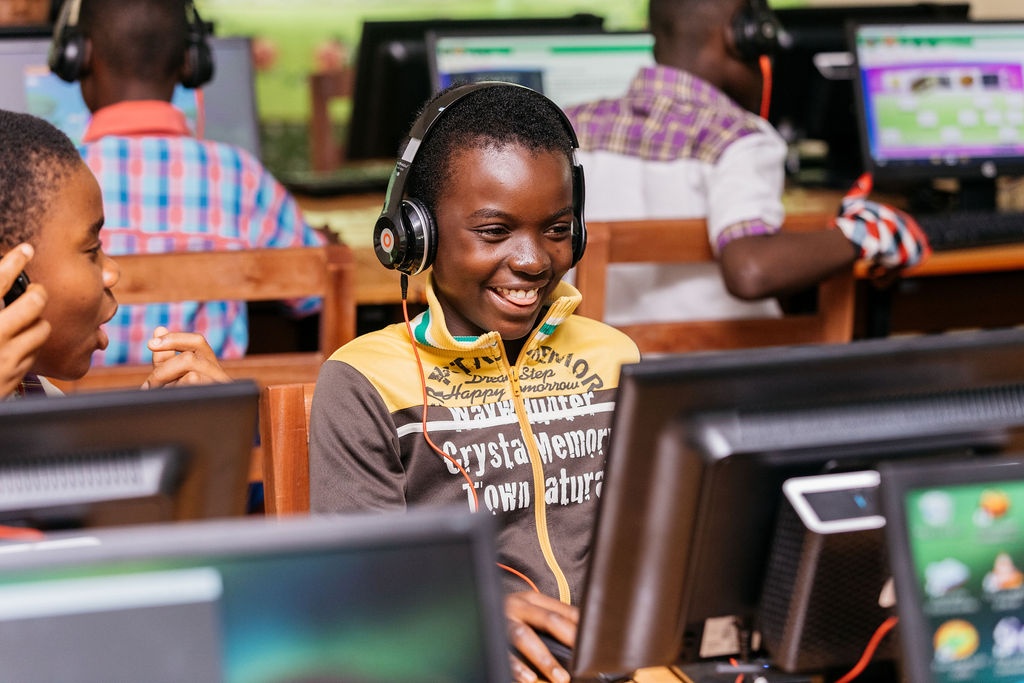
We visited several campuses during the research for this piece. There are palaces in East Legon with robotic labs gathering dust because no one knows how to program them. Conversely, there are makeshift structures in Spintex where students are earning A’s in ICT because a passionate teacher brought in his personal laptop.
The single biggest predictor of success in Accra right now is Teacher Quality.
With the brain drain hitting the education sector hard (many experienced tutors have left for the UK and US under skilled worker visas), schools that retain senior staff are winning. Brain Hill International credited their staff’s “relentless drive” . Hope College runs a tight ship where the academic calendar is a sacred text.
The Takeaway: Parents, ask about teacher retention rates. A school that changes staff every six months is a school that will fail your child, no matter how nice the library looks.
The University Pipeline: Local or Abroad?
What happens after SHS or IB?
The rankings for university placement are distinct. For parents targeting University of Ghana (Legon) or KNUST, the local private schools have a proven track record. UG remains the top-ranked university in Ghana, and their admissions tutors know exactly which feeder schools produce the most prepared students .
For parents targeting Ashesi University or global Ivies, the IB and Cambridge Advanced (A-Level) pathways at schools like ACS, TIS, or LFIA offer a smoother transition. Ashesi, ranked 5th in Ghana , looks for critical thinking—a soft skill that many exam-focused schools fail to teach.
We note a strategic shift: Ghanaian universities are raising their entry standards. Consequently, the “top schools” are those pivoting from “cramming” to “competency.”
FAQ Section: Parents’ Top Questions Answered
1. Which school in Accra has the best WASSCE results right now?
Based on the 2025 data released in early 2026, Hope College and Legacy Girls’ College have the strongest bragging rights, having produced the top science student and the Overall West African Best Candidate respectively .
2. Are the expensive international schools actually worth the money?
It depends on your exit strategy. If your child needs a globally recognized transcript for a university in the US, UK, or Canada, the accredited international schools (GIS, ACS) are safe bets. If your child is going to medical school at UG or KNUST, a top-tier local private school offering WASSCE may be the smarter financial move.
3. What makes Brain Hill International School unique in 2026?
Beyond winning “Best International School” at the Ghana Business Awards, BHIS is noted for its integration of therapy services for special needs learners and extended operating hours for working families—solving logistical problems while delivering academics .
4. How important is the NSMQ for ranking schools?
Very. The National Science and Maths Quiz (NSMQ) is the premier academic contest. While historically dominated by public schools like Presec-Legon, the entry of private schools like Bright SHS and Hope College into the competitive rounds signals a democratization of excellence .
5. What is the average tuition for a top private school in Accra?
For the Top 10 ranked private schools, annual tuition ranges from 5,000to20,000 USD, depending on grade level and boarding status . Many offer scholarships for high-performing students, so do not be afraid to ask for academic bursaries.
6. Is the French Baccalaureate recognized for entry into Ghanaian universities?
Yes, the French Baccalaureate is recognized internationally. However, students often need a conversion or equivalency certificate from WAEC or the Ghana Tertiary Education Commission to gain direct entry into local public universities.
7. What should I look for during a school tour?
Ignore the swimming pool. Look at the classroom atmosphere. Are the students awake and engaging? Look at the books—are they the most recent edition? Look at the Maths board—is it too clean (meaning no learning happened today) or full of errors?
Conclusion & The Parental Bottom Line
The education market in Accra has reached maturity. The era of the “Gentleman’s School”—where mediocre results were excused by “character building”—is over. We are now in the era of Accountability.
If you are a parent reading this, your strategy should be hyper-specific:
-
Define the Endgame: Do you want Harvard or Korle-Bu? The curriculum (IB/A-Level vs WASSCE) must match the target.
-
Follow the Data: Who won the WAEC awards last year? Which school is sending kids to the NSMQ finals? That is the school firing on all cylinders .
-
Respect the Grinders: Do not overlook schools like Hope College or Brain Hill because they are not in the most expensive zip code. They are delivering results because they focus on instruction first.
Ghana’s future leaders will come from these classrooms. The schools that understand that performance is the product, not the promise, will be the ones that survive the next decade. The rest? They are just expensive daycare.
Source: Accra Street Journal
Last Updated on May 21, 2026 by Samuel Kwame Boadu
Disclaimer: Some content on Accra Street Journal may be aggregated, summarized, or edited from third-party sources for informational purposes. Images and media are used under fair use or royalty-free licenses. Accra Street Journal is a subsidiary of SamBoad Publishing Hub under SamBoad Business Group Ltd, registered in Ghana since 2014.
For concerns or inquiries, please visit our Privacy Policy or Contact Page.

Samuel Kwame Boadu is a Ghanaian media entrepreneur and storyteller with a passion for amplifying urban voices and uncovering everyday truths. He is the Editor-in-Chief and Founder of Accra Street Journal, a dynamic digital platform dedicated to capturing the pulse of Ghana’s capital—its people, culture, challenges, business, sports and innovations.