







For decades, the Ghanaian parent’s prayer was the same: Birth, School, Work, Retirement. You got the WASSCE certificate, prayed for a posting, and clung to the government payroll until your pension matured.
That prayer is dead. Or at least, it is gasping.

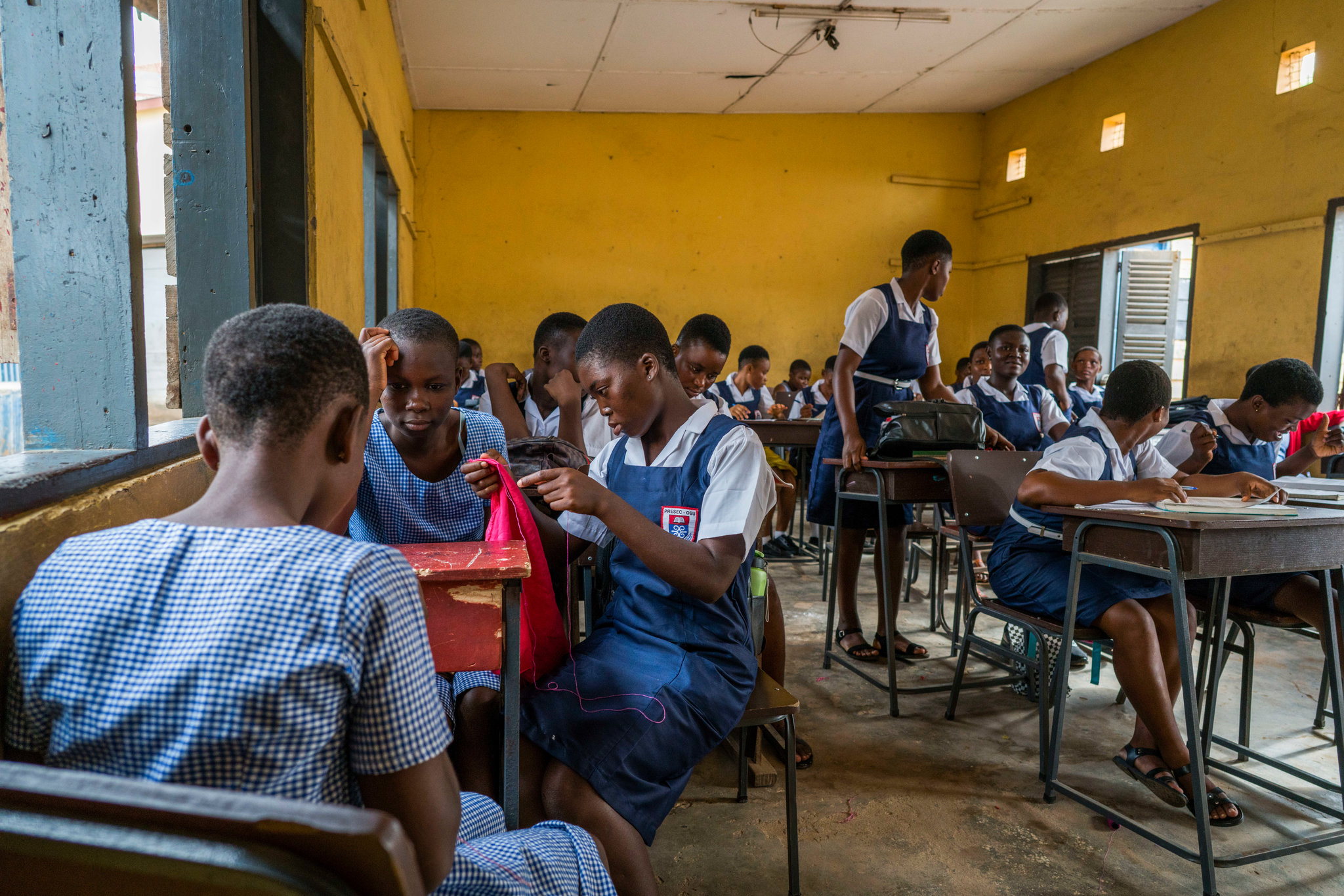
With a public sector that cannot absorb the 300,000 graduates churned out annually, and a private sector demanding skills that most high school curricula do not teach, Accra’s most forward-thinking schools have accepted a radical premise: They are no longer training employees. They are training founders.
📢 GET A DETAILED ARTICLES + JOBS
Join ASJ's WhatsApp Channel and never miss a post or opportunity.

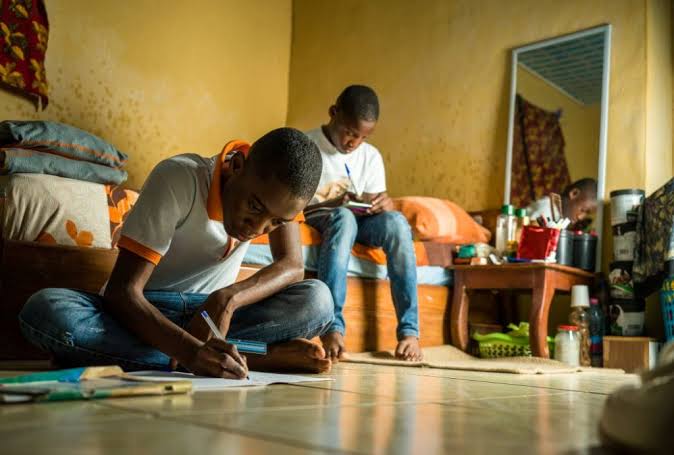
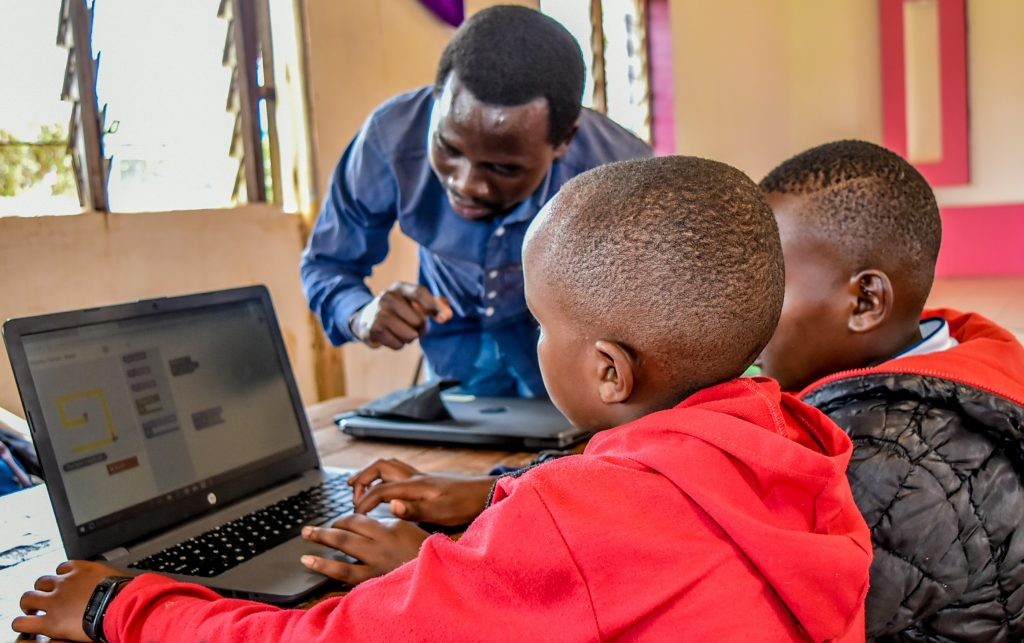
Walk into certain classrooms in Cantonments, East Legon, or even Abeka today, and you will not find students merely memorising the factors of production. You will find a sixteen-year-old calculating profit margins on a small-scale shea butter export. You will find a form two student pitching a logistics app to a panel of real investors.
This is not a fad. This is survival.
In ASJ this feature, we investigate how Accra schools are rewiring the adolescent brain for entrepreneurship, why some institutions are thriving at it while others are merely printing mission statements, and whether this shift is truly empowering children or simply outsourcing the government’s economic failures to the classroom.
The Great Pivot: Why Ghanaian Schools Are Ditching the CV
To understand the rush toward entrepreneurship education, you have to look at the numbers. The national unemployment rate among Ghanaian youth aged 15–35 hovers stubbornly above 12 percent, but the underemployment rate—those working in jobs far below their qualifications—is nearly triple that .
The university degree, once a golden ticket, has become a common good. A Bachelor’s no longer guarantees you a desk. It often guarantees you a spot in a long queue for a position that pays less than a skilled electrician earns in a week.
Accra’s school owners have read this room.
The Government’s Late Start
To be fair to the Ministry of Education, the national curriculum has technically included “entrepreneurship” since the introduction of the Standards-Based Curriculum in 2019. The National Pre-Tertiary Education Curriculum Framework speaks glowingly about “creative thinking” and “problem-solving.”
But theory and reality diverge sharply. In most public schools, “entrepreneurship” is a chapter in a social studies textbook, taught by a teacher who has never signed a payroll or calculated depreciation. It is abstract. It is boring. It is useless.
The Private Sector’s Early Lead
Where the state has been slow, private schools have been ruthless. They understand that a parent paying 15,000 cedis a year wants more than a transcript. They want a network and a mindset.
Institutions like Al-Rayan International School (ARIS) and Tema International School (TIS) have fully integrated the IB’s Creativity, Activity, Service (CAS) framework, which forces students to conceive and execute real-world projects. But even beyond the IB bubble, mid-tier private schools are launching “Junior Achievement” chapters and partnering with local incubators like MEST Africa to bring mentorship directly to teenagers.
The Schools Walking the Walk (Not Just Talking the Talk)
Let us move beyond the marketing brochures. Which Accra schools are actually building functioning little capitalists?
SOS-Hermann Gmeiner International College (SOS-HGIC)
Located in Tema, SOS-HGIC has quietly become a laboratory for social enterprise. Their students are not just writing business plans for a grade; they are competing in the Changemaker Challenge, an annual competition that funds student-led startups addressing local problems.
In 2025, a team from SOS-HGIC won seed funding for a biodegradable sanitary pad made from cassava starch—a product that solves both an environmental and a menstrual health crisis. The school does not just teach entrepreneurship; it provides the capital (however modest) to test the idea. This separates them from 99 percent of schools in West Africa.
Ghana International School (GIS)
GIS, the grand dame of Accra education, is often perceived as a factory for diplomats and doctors. But inside their walls, the Economics and Business Department has evolved into something closer to a venture studio.
GIS runs a simulated stock market challenge and partners with Standard Chartered Bank for financial literacy boot camps. Their students regularly place in the top three of the National Business Pitch Competition organized by the Ghana Enterprises Agency. The difference at GIS is exposure—a GIS student can pitch their idea to a parent who runs a multinational corporation. That network is an unfair advantage, but it is a real one.
Brain Hill International School (BHIS)
Fresh off their “Best International School” win at the Ghana Business Awards, BHIS has embedded entrepreneurship into their Weekly Intensive Programme . Every Friday, the academic schedule bends to accommodate “Innovation Hour,” where students work on self-directed projects, often with a commercial angle.
BHIS also runs a mandatory Financial Literacy and Budgeting module for all senior students. They have realised that you cannot build an entrepreneur who does not understand compound interest. It sounds basic, but in a country where many adults still struggle with saving, teaching a 14-year-old to reconcile a ledger is radical.
The Public School Exception: Accra High School
Do not assume this is only a private school phenomenon. Accra High School, with support from the Mastercard Foundation’s Scholars Program, has piloted an “Entrepreneurship Club” that operates a real canteen kiosk. Students buy stock, set prices, manage inventory, and take home a profit share at the end of the term.
It is messy. It is small. But it is real. The students learn more about supply and demand in one week of selling fried rice than a term of memorising a textbook.
What “Entrepreneurship Education” Actually Looks Like
When a school claims to teach entrepreneurship, what does that mean? We broke it down into three distinct models operating in Accra today.
Model 1: The Business Plan Competition (Most Common)
Students write a plan. A panel judges it. The winner gets a trophy. Verdict: Low risk, low reward. Teaches writing, not doing.
Model 2: The Simulation (Emerging)
Students use software or games to run virtual companies. They compete against algorithms or other students. Verdict: Safer than real failure, but lacks the emotional weight of actual profit or loss.
Model 3: The Real Venture (Rare)
Students launch a low-capital business—a car wash, a baking operation, a thrift clothing resale. Real money is spent. Real money is (hopefully) earned. If they fail, they lose actual cedis. Verdict: Terrifying for schools. Educationally irreplaceable.
The top schools in Accra are rapidly moving from Model 1 to Model 3. SOS-HGIC and Accra High School’s kiosk are examples of Model 3. Until more schools take that risk, entrepreneurship education will remain a theatrical performance.
The Parental Dilemma: Is My Child Too Young for Business?
This is the question that keeps popping up in parent WhatsApp groups. “My son is in JHS 2. Should he be worrying about profit margins?”
The answer is nuanced.
Yes, if: The entrepreneurship is grounded in problem-solving. The goal should not be to turn a 12-year-old into a hard-nosed capitalist. The goal should be to turn them into someone who sees a leaky roof and thinks, “Who can fix that and how do I organise them?”
No, if: The school is using “entrepreneurship” as an excuse to cut arts, music, or physical education. A child who cannot write a coherent sentence or work in a team will not succeed as an entrepreneur, no matter how many shark tanks they simulate.
The Editorial Observation: There is a fine line between empowerment and exploitation. We have seen schools that essentially use students as unpaid labour for school-run enterprises, calling it “experiential learning.” That is not entrepreneurship. That is cheap labour with a fancy name.
The Missing Pieces: Mentorship and Capital
Even the best school programmes hit two walls: access to real mentors and access to seed capital.
A teenager can design the best agritech app in the world. But if they have never spoken to a farmer or a coder, that app stays on paper. The schools that are succeeding are those that have built bridges to Accra’s growing tech and business ecosystem.
MEST Africa, iSpace Foundation, and the Impact Hub Accra have all launched youth programmes that partner with specific schools. A student at Galaxy International School can, through a school partnership, get a summer internship at a fintech startup. That experience is worth more than a semester of lectures.
But these partnerships are uneven. Schools in poorer neighbourhoods rarely get the knock from the venture capitalists. Consequently, entrepreneurship education remains a privilege of the wealthy, even though the economic need is greatest in lower-income communities.
This is a policy failure. The Ministry of Education should be subsidising business mentorship for public schools, not leaving it to chance.
The Cultural Shift: From “Sika Duro” to “Sika Mp3”
There is a cultural dimension here that schools are navigating carefully. Ghanaian society has long held an uneasy relationship with visible wealth. The Akan proverb “Sika duro” (money is heavy/bitter) reflects a suspicion of the wealthy.
But the young generation has rewritten the script. They have watched social media influencers, tech founders, and content creators build fortunes without a government ID card. They want Sika Mp3—money that moves fast, digitally.
Accra schools have noticed that students are more engaged in a pitch competition than a history test. This is not because history is useless. It is because the pitch competition offers agency. It offers a chance to control one’s economic destiny.
The schools that ignore this hunger will become irrelevant. The ones that feed it—carefully, ethically, with real skills—will produce the next generation of Ghanaian industry leaders.
A Practical Guide for Parents
You do not need to wait for the school to change. Here is how to supplement entrepreneurship education at home, regardless of your budget.
-
Start a Household “Venture” Fund: Give your child 50 cedis. Tell them they must turn it into 70 cedis in two weeks through a legal activity (selling water, baking, cleaning neighbours’ cars). The experience of loss is more valuable than the profit.
-
Demand Real Projects: When touring a school, ask the principal: “Show me a business a student actually launched last year, not a plan on paper.” If they cannot, you are paying for theatre.
-
Introduce Financial Vocabulary: Before age 15, a child should understand: revenue, cost, profit, loss, interest, budget, and investment. These are not maths terms. They are survival terms.
-
Model Failure: The biggest killer of young entrepreneurs is the fear of shame. If you lose money on a side hustle, tell your child. Show them you survived. Resilience is the core competency of entrepreneurship.
FAQ Section: Parents’ Top Questions Answered
1. Which Accra school has the best entrepreneurship programme right now?
SOS-Hermann Gmeiner International College stands out for its Changemaker Challenge and real seed funding for student ventures. Brain Hill International School is also highly regarded for its weekly “Innovation Hour” and mandatory financial literacy modules.
2. Is entrepreneurship taught in Ghana’s public schools?
Officially, the national curriculum includes it. In practice, it is mostly theoretical due to a lack of resources and teacher training. However, some public schools like Accra High School have successful club-based programmes supported by NGOs.
3. At what age should entrepreneurship education begin?
Financial literacy can begin as early as age 8. Formal business planning and real ventures are more appropriate from age 13 (JHS) upwards. Younger children should focus on problem-solving and basic money concepts.
4. Will learning entrepreneurship hurt my child’s WASSCE results?
Not if the school balances it properly. The best schools integrate entrepreneurial projects into existing subjects (e.g., calculating profit in Maths, writing business letters in English). Beware of schools that use entrepreneurship as a distraction from weak academic instruction.
5. Do universities care about entrepreneurship in admissions?
Increasingly, yes. Ashesi University explicitly looks for applicants who have initiated projects, even small ones. University of Ghana admissions tutors have told us that students who demonstrate initiative stand out in competitive programmes.
6. What is the difference between “entrepreneurship” and “vocational skills” in schools?
Vocational skills teach you to do a trade (sewing, carpentry). Entrepreneurship teaches you to build a business around that trade (marketing, pricing, hiring). A great school teaches both.
7. How do I know if a school’s entrepreneurship programme is real or just marketing?
Ask for specific student outcomes. Have any alumni started a registered business? Have any won a grant? If the school cannot name a single successful student venture from the last three years, the programme is likely superficial.
Conclusion: The Classroom as Launchpad
Ghana is not going to industrialise its way out of unemployment. The formal job sector is simply not growing fast enough. The future, whether we like it or not, belongs to the hustler, the creator, the small-scale manufacturer, the tech freelancer, and the agri-processor.
Accra’s best schools have stopped fighting this reality and started embracing it.
They are not producing entrepreneurs because it is trendy. They are producing them because the alternative—a generation of frustrated certificate-holders waiting for a government car that will never arrive—is unacceptable.
Does this place an unfair burden on schools? Perhaps. Should the economy be creating more formal jobs? Absolutely. But parents cannot wait for the economy to fix itself. They need schools that are honest about the future.
The school that teaches your child to build something—however small—is giving them a gift that no university can take away. It is the gift of self-determination.
The classroom is no longer just a waiting room for adulthood. It is a launchpad. And in the best schools in Accra, the rockets are already lifting off.
Source: Accra Street Journal
Last Updated on May 21, 2026 by Samuel Kwame Boadu
Disclaimer: Some content on Accra Street Journal may be aggregated, summarized, or edited from third-party sources for informational purposes. Images and media are used under fair use or royalty-free licenses. Accra Street Journal is a subsidiary of SamBoad Publishing Hub under SamBoad Business Group Ltd, registered in Ghana since 2014.
For concerns or inquiries, please visit our Privacy Policy or Contact Page.

Samuel Kwame Boadu is a Ghanaian media entrepreneur and storyteller with a passion for amplifying urban voices and uncovering everyday truths. He is the Editor-in-Chief and Founder of Accra Street Journal, a dynamic digital platform dedicated to capturing the pulse of Ghana’s capital—its people, culture, challenges, business, sports and innovations.