A 2026 Intelligence Brief from Accra Street Journal
Executive Introduction
Ghana’s energy future is no longer a debate between fossil fuels and renewables. It is a question of sequencing, capital allocation, and execution. The government’s stated goal is clear: shift from costly light crude to cleaner, locally produced natural gas, cutting generation costs by up to 75%, while simultaneously expanding renewable energy share from 4% to 10% by 2026 and reaching 30% by 2035 . Yet the companies that will win in this transition are not only the obvious solar installers. They are the gas midstream players bridging the gap to renewables, the Oil Marketing Companies (OMCs) pivoting to electric vehicle (EV) charging, the upstream gas producers supplying the fuel that makes thermal generation affordable, and the vertically integrated solar manufacturers capturing value from module production to installation.

This report identifies the companies best positioned to profit from Ghana’s energy transition across four segments: gas infrastructure and midstream (Tetracore Energy, Ghana National Gas Company), upstream gas expansion (ENI, Vitol, GNPC), utility-scale and distributed solar (First Sky Energies, Bui Power Authority, PEG Africa, Translight Solar), solar manufacturing and export (Aburi Energy, KfW-backed Kumasi facility), and EV charging infrastructure (Vivo Energy, GOIL, TotalEnergies, ZEN Petroleum). The evidence suggests that the winners will be those who execute integrated strategies — moving beyond single-technology solutions to capture value across multiple segments of the transition.
📢 GET A DETAILED ARTICLES + JOBS
Join ASJ's WhatsApp Channel and never miss a post or opportunity.

Part 1: Gas Infrastructure — The Immediate Transition Enablers
Before renewables can scale, Ghana must solve its power generation cost crisis. The 2026 Budget states that the shift from light crude to natural gas will cut generation costs by up to 75% . The companies enabling this shift are not renewable energy firms — they are gas midstream players building the infrastructure to deliver cheaper, cleaner fuel.
Tetracore Energy Group — The Virtual Gas Pipeline Pioneer
The most significant gas infrastructure development of 2026 is the commissioning of Ghana’s first Compressed Natural Gas (CNG) facility in Tema . Built by Tetracore Gas Ghana, a subsidiary of the Nigerian-led Tetracore Energy Group, the $15 million facility creates a “virtual pipeline,” using specialised trucks to deliver CNG to industries beyond the reach of physical pipeline networks.

Key metrics:
-
Initial capacity: 5.1 million standard cubic feet per day
-
Capacity expansion: Doubling to 10 MMSCFD within nine months
-
Carbon savings: Projected 1,347 metric tonnes of CO₂ per day
-
Employment: 500–600 direct and indirect jobs expected
-
Trucks served at full capacity: Up to 30 trucks daily
The venture draws attention to a growing intra-African energy collaboration. Tetracore is a registered shipper on the West Africa Gas Pipeline, and the project involved a joint venture with Nigeria’s NNPC Gas Marketing Limited . The group already operates significant CNG and gas distribution infrastructure in Edo and Ogun States, making this Ghana move a deliberate foray into regional energy integration .
Why Tetracore wins: By offering a cleaner, scalable alternative to diesel, the virtual pipeline bypasses massive infrastructure costs. The model is a calculated bet on industrial demand — providing reliable, cost-effective fuel for factories and logistics, positioning gas as a catalyst for regional industrial growth . For Ghanaian industries still dependent on expensive imported diesel, Tetracore’s CNG offering is a direct cost-reduction play.
Ghana National Gas Company — The Processing Backbone
Ghana National Gas Company (GNGC) processes raw natural gas from offshore fields at the Atuabo Gas Processing Plant, supplying thermal power plants at Aboadze and Kpone. With $39 million in revenue, GNGC is the second-largest energy company in Ghana .
The expansion catalyst: The 2026 Budget announces that the government is fast-tracking the Ghana Gas Processing Plant (GPP) 2 to process additional gas for power generation . This expansion is critical to the gas-to-power strategy, ensuring that increased upstream production (from OCTP and Jubilee partners) can be converted into electricity.
Why GNGC wins: GNGC is the state-owned bottleneck in the gas value chain. Every molecule of natural gas destined for power generation passes through its facilities. As upstream production expands — OCTP partners increasing from 240 to 270 MMscfd, new agreements adding another 150 MMscfd — GNGC’s processing revenue grows in lockstep .
Sunon Asogli — The Hybrid Transition Play
While primarily known as a thermal power generator (producing 1,077 GWh annually through 2028), Sunon Asogli is simultaneously expanding into renewables. The company announced plans to add a 200 MW wind farm in the Ada West district, alongside an 850 MW third phase of its thermal project .
Why Sunon Asogli wins: The company is not choosing between gas and wind — it is building both. Its existing thermal generation provides steady cash flow; its wind expansion positions it for the renewable future. The hybrid model reduces transition risk and captures value from both segments.
Part 2: Upstream Gas Expansion — The Fuel Suppliers
The gas-to-power strategy depends on reliable, affordable natural gas supply. The companies extracting and delivering that gas are the invisible enablers of the entire transition.

ENI Ghana — The Gas Anchor
ENI Ghana operates the Offshore Cape Three Points (OCTP) integrated oil and gas project, which supplies natural gas to Ghana’s power sector. OCTP partners have expanded capacity from 240 to 270 million standard cubic feet per day, and new agreements will add another 150 MMscfd .
The investment commitment: A US$1.5 billion Memorandum of Intent with OCTP partners to expand operations is part of the US$3.5 billion in new investment commitments secured by the government .
Why ENI wins: ENI is the dominant gas supplier to Ghana’s thermal fleet. As the government shifts from crude oil to gas for power generation, ENI’s production is strategically essential. The OCTP expansion directly enables the 1,200 MW state-owned thermal plant announced in the 2026 Budget .
Vitol Upstream Ghana — The Strategic Partner
Vitol Upstream Ghana is a key partner in the OCTP project. Vitol Ghana Services Ltd is listed as a key client of leading energy law firms, indicating continued activity in Ghana’s upstream regulatory environment .
Why Vitol wins: As a global energy trading and logistics company, Vitol brings capital and offtake certainty to the OCTP expansion. Its presence signals continued international confidence in Ghana’s upstream gas sector.
Ghana National Petroleum Corporation (GNPC) — The State’s Commercial Arm
GNPC holds carried and participating interests in all major fields, managing the state’s stake while pursuing exploration and development activities . The 2026 Budget announces that GNPC will commence drilling for oil on the offshore Voltain Basin in October 2026 .
Why GNPC wins: GNPC’s carried interests mean it benefits from every dollar invested in upstream expansion without contributing proportional capital. The Voltain Basin drilling — the first since 1974 — could open a new hydrocarbon frontier, diversifying Ghana’s production base and GNPC’s revenue streams.
Part 3: Utility-Scale and Distributed Solar — The Renewable Generation Leaders
The most visible winners of the energy transition are the companies building, installing, and operating solar generation assets.
First Sky Energies — The Utility-Scale Solar Champion
First Sky Energies completed a 50 MW solar PV plant in Yendi in March 2026 — the largest fully Ghanaian-owned utility solar project of its kind . The plant spans 140 acres and feeds directly into the national grid.
Key metrics:
-
Capacity: 50 MW (second largest solar installation in Ghana)
-
Timeline: Completed by end of March 2026
-
Jobs: Expected to create 300 additional jobs
-
Ownership: “It is a fully Ghanaian-owned utility solar project of its kind”
Strategic significance: Founder and Executive Chairman Eric Seddy Kutortse framed the project as a statement of national capability: “This project represent confident in the Ghanaian entrepreneurship and ownership” . The First Sky Group currently employs about 6,000 people across the country.

Why First Sky Energies wins: As the largest Ghanaian-owned utility-scale solar developer, First Sky is positioned to bid on future government renewable energy tenders. The Yendi plant serves as a reference project, demonstrating execution capability that smaller competitors cannot match.
Bui Power Authority — The Hydro-Solar Hybrid Innovator
Bui Power Authority operates a floating solar installation on the Bui Dam reservoir — one of the first hybrid hydro-solar projects in West Africa. The Bui Solar Project (55 MW) is the reference point against which First Sky’s Yendi plant measures itself .
Why Bui Power wins: The hybrid model — hydro and solar sharing transmission infrastructure — improves grid stability and reduces curtailment risk. As the government scales renewable energy, Bui Power’s existing hydro assets provide a natural advantage in integrating variable solar generation.
PEG Africa — The Off-Grid Solar Leader
PEG Africa is the renewable sector leader by revenue, with $33.7 million and 501–1,000 employees . The company provides off-grid solar solutions to residential and commercial customers, expanding energy access to communities not connected to the national grid.
Why PEG Africa wins: The government’s Rural Electricity Acceleration Initiative will connect unserved communities, with off-grid solar for remote areas . PEG Africa’s existing distribution network and operational track position it as a preferred partner for these public-sector deployments.
Translight Solar — The Residential and Commercial Specialist
Translight Solar Limited has installed 5 MW of solar systems to date, serving both residential and commercial clients. The company offers a 5-year minimum warranty on batteries and guarantees 10+ years of performance .
Why Translight Solar wins: The government plans to launch a national net-metering framework, allowing households and businesses with rooftop solar systems to feed excess electricity into the national grid . This policy will dramatically expand the addressable market for residential and commercial solar installers. Translight Solar’s established brand (“The Solar Experts”) and quality positioning give it a competitive advantage in capturing this demand.
Destra Energy Group — The Multi-Technology Developer
Destra Energy Group is “dedicated to developing reliable renewable energy sources, including solar, wind, hydro, and waste-to-energy projects” . Established in 2016 with 11-50 employees, Destra’s expertise across multiple renewable technologies highlights its commitment to advancing green energy in Ghana.
Why Destra wins: As the renewable energy mix diversifies beyond solar — wind projects like Sunon Asogli’s 200 MW Ada West farm come online — developers with multi-technology capabilities will be better positioned than solar-only specialists.
Part 4: Solar Manufacturing — The Localisation Winners
Ghana’s ambition to become a regional renewable energy hub depends not only on installing panels but on manufacturing them locally.
Aburi Energy — The Export Champion
Aburi Energy represents the most dramatic growth story in Ghana’s renewable energy manufacturing sector. Since starting operations in July 2025, the company has:
| Metric | Value |
|---|---|
| Employees | ~240 local workers |
| Facility size | 30,000 square meters |
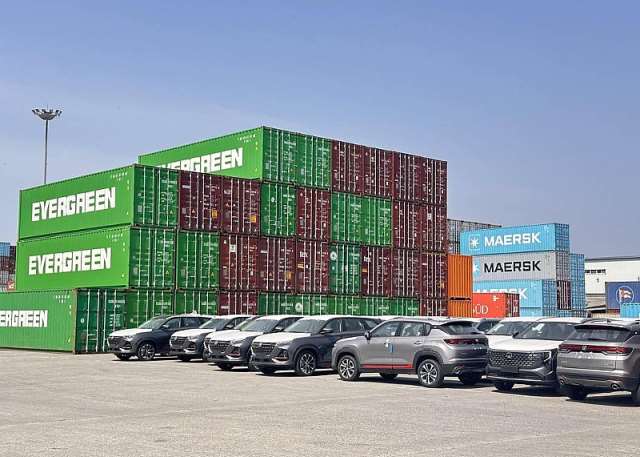
| Exports | Over 300 containers valued at ~$12 million |
| Target capacity | 4 GW by end of 2026 |
The company produces solar photovoltaic (PV) modules from its base in Tema’s Free Zones Enclave. Dr. Mary Awusi, CEO of the Ghana Free Zones Authority, praised the company’s rapid growth and its contribution to exports .
Why Aburi Energy wins: Aburi Energy’s trajectory — from zero to $12 million in exports within nine months — suggests that Ghana has the capacity to become a regional hub for solar module manufacturing, not merely an import market for Asian panels. The 4 GW capacity target would position Aburi Energy as one of the largest solar manufacturers in West Africa.
KfW-Backed Kumasi Solar Module Factory
While not yet operational, the most strategically significant renewable energy infrastructure project under development is the German-backed solar module assembly facility in Kumasi, launched by KfW in late 2025. The facility will have an annual production capacity of 75 MW .
Why this matters: If delivered on schedule between 2026 and 2027, the plant would become the first of its kind in West Africa. It would provide a platform for technology transfer, reduce dependence on Asian imports, and position Ghana as a potential supplier to ECOWAS markets .
Why KfW-backed facility wins: German involvement brings technology transfer and quality certification that could open European markets to Ghanaian-manufactured modules — a competitive advantage that Aburi Energy would need to match.
Trina Solar and JinkoSolar — The International Supply Chain
Global solar manufacturing giants Trina Solar Ltd and JinkoSolar Holding Co Ltd are active in the Ghanaian market, supplying modules for large-scale projects . Their presence indicates that Ghana is viewed as a viable market for international solar investment.
Why Trina and JinkoSolar win: As utility-scale projects grow in scale and complexity, international developers may prefer established suppliers with global track records. Trina and JinkoSolar will continue to capture a share of the large-scale market, particularly for projects financed by international development institutions.
Part 5: EV Charging Infrastructure — The OMCs’ Pivot
The energy transition extends beyond power generation to transportation. The 2026 Budget Statement announced plans to roll out electric vehicle (EV) charging stations along major highways . The companies best positioned to capture this opportunity are not new entrants — they are Ghana’s established Oil Marketing Companies (OMCs).
Why OMCs Are the Logical EV Charging Providers
OMCs already possess the assets that EV charging infrastructure requires:
-
Prime real estate at high-traffic locations
-
Existing customer relationships
-
Operational experience in fuel distribution
-
Regulatory compliance infrastructure
-
National footprint (5,000+ filling stations)
LinkedIn analysis by energy sector professionals explicitly argues that OMCs are “strategically positioned to lead the shift from petrol pumps to dual-purpose stations” and that the transition to clean mobility is “not just about technology — it’s about ecosystem leadership” .
GOIL PLC — The Largest Network
GOIL operates over 400 retail stations — the largest network in Ghana — and holds 11.93 per cent market share . As a listed company on the Ghana Stock Exchange, GOIL also has access to public capital markets for EV infrastructure investment.
Why GOIL wins: Scale. With 400+ stations, GOIL can deploy EV charging infrastructure more rapidly than any competitor. The company’s recent market leadership resurgence reflects strategic investments in supply chain efficiency and retail network expansion — capabilities directly transferable to EV charging.
Vivo Energy Ghana (Shell)
Vivo Energy, the distributor of Shell-branded products, ranked third with 92.5 million litres sold and a 6.98 per cent market share. The Shell brand retains significant consumer loyalty .
Why Vivo Energy wins: Brand trust. The Shell brand is internationally associated with energy transition initiatives. Vivo can leverage Shell’s global EV charging expertise and technology while deploying locally.
TotalEnergies Ghana
TotalEnergies sold 53.7 million litres, capturing a 4.13 per cent market share. The global brand has over 250 retail stations .
Why TotalEnergies wins: Global transition credibility. TotalEnergies has publicly committed to becoming a broad energy company, not just an oil company. Its Ghanaian subsidiary can draw on group-level investment in EV charging and solar-powered stations.
ZEN Petroleum
ZEN Petroleum sold 70.3 million litres, capturing a 5.30 per cent market share with just over 60 retail stations. The company’s relatively small retail footprint but strong sales volume suggests significant commercial and industrial sales — notably its dominant position in the mining sector, where it supplies approximately 49 per cent of fuel consumed by major mining companies .
Why ZEN Petroleum wins: Commercial segment focus. Mining companies are under pressure to decarbonise. ZEN’s existing relationships with mining clients position it to offer integrated energy solutions — including EV charging for mine site vehicles — that retail-focused OMCs cannot match.
Part 6: The Policy Enablers — Who Benefits from Government Action
The government’s policy framework determines which business models succeed. Several announced initiatives directly benefit specific company categories.
| Policy Initiative | Beneficiaries | Source |
|---|---|---|
| National net-metering framework | Residential/commercial solar installers (Translight Solar, Tino Solutions) | |
| 7% renewable target by 2026, 30% by 2035 | Utility-scale developers (First Sky Energies, Bui Power Authority) | |
| EV charging stations along major highways | OMCs with large retail networks (GOIL, Vivo Energy, TotalEnergies) | |
| Rural Electricity Acceleration Initiative (off-grid solar) | Off-grid providers (PEG Africa) | |
| Gas-to-power strategy (cost reduction up to 75%) | Gas midstream (Tetracore Energy, GNGC) | |
| KfW-backed solar module assembly facility | Local manufacturers (Aburi Energy, KfW facility) |
Part 7: The Winners Matrix — A Framework for Investors
Based on the analysis above, we categorise companies by their strategic positioning and transition readiness.
Tier 1: Best Positioned — Immediate Transition Beneficiaries
| Company | Segment | Why They Win |
|---|---|---|
| Tetracore Energy | Gas midstream (CNG) | Only virtual pipeline operator; first-mover advantage in industrial fuel substitution |
| First Sky Energies | Utility-scale solar | Largest Ghanaian-owned solar developer; reference project complete |
| Aburi Energy | Solar manufacturing | Export revenue ($12M in 9 months); 4 GW target |
| GOIL PLC | OMC / EV charging | Largest retail network (400+ stations); public market access |
Tier 2: Strong Position — Execution Dependent
| Company | Segment | Why They Win |
|---|---|---|
| ENI / Vitol | Upstream gas | OCTP expansion directly enables 1,200 MW power plant |
| GNPC | Upstream gas / state participation | Carried interests; Voltain Basin drilling |
| Sunon Asogli | Thermal + wind hybrid | Existing cash flow from thermal; 200 MW wind expansion |
| PEG Africa | Off-grid solar | Established distribution; rural electrification policy |
Tier 3: Emerging Position — Policy Dependent
| Company | Segment | Why They Win |
|---|---|---|
| Translight Solar | Residential/commercial solar | Net-metering framework will expand addressable market |
| Vivo Energy / TotalEnergies | OMC / EV charging | Global brand backing; EV charging expertise |
| ZEN Petroleum | OMC / commercial EV charging | Mining sector relationships; decarbonisation pressure |
Conclusion: The Transition Is a Sequence, Not a Single Event
The companies that will win Ghana’s energy transition are not only those building solar farms. They are the gas midstream players (Tetracore Energy, GNGC) delivering cheaper fuel to industries today. They are the upstream gas producers (ENI, Vitol) expanding production to enable the 1,200 MW state-owned thermal plant. They are the OMCs (GOIL, Vivo Energy, TotalEnergies, ZEN Petroleum) pivoting their retail networks to EV charging before electric vehicle adoption accelerates. And they are the vertically integrated solar companies (First Sky Energies, Aburi Energy) capturing value from module manufacturing through utility-scale installation.
The sequencing matters. Gas is not a competitor to renewables in Ghana’s transition — it is the enabler. The 75% cost reduction from shifting from crude oil to gas creates fiscal space for renewable investment. The CNG virtual pipeline displaces diesel in industrial applications today, while the EV charging infrastructure being built by OMCs prepares the ground for electric mobility tomorrow.
Ghana’s renewable energy target — 30% by 2035 — is ambitious but achievable. The companies that will capture the greatest value are those executing integrated strategies: gas today, renewables tomorrow, and EV charging in between. The transition is not a single event. It is a sequence. And the winners are the companies positioned at every stage.
Quick Reference: Winners of Ghana’s Energy Transition by Segment
| Segment | Winning Companies | Key Metric | Why They Win |
|---|---|---|---|
| Gas midstream (CNG) | Tetracore Energy | 5.1 MMSCFD (doubling to 10) | First-mover advantage in virtual pipeline |
| Gas processing | GNGC | $39M revenue | State-owned bottleneck in gas value chain |
| Upstream gas | ENI, Vitol, GNPC | $1.5B OCTP expansion | Enable 1,200 MW power plant |
| Thermal + wind hybrid | Sunon Asogli | 200 MW wind planned | Transition hybrid — cash flow today, renewables tomorrow |
| Utility-scale solar | First Sky Energies | 50 MW Yendi plant | Largest Ghanaian-owned utility developer |
| Off-grid solar | PEG Africa | $33.7M revenue | Established distribution for rural electrification |
| Residential/commercial solar | Translight Solar | 5 MW installed | Net-metering policy catalyst |
| Solar manufacturing | Aburi Energy | $12M exports, 4 GW target | Export revenue, local content |
| Solar manufacturing (international) | Trina Solar, JinkoSolar | Global supply chains | International project finance preference |
| EV charging | GOIL, Vivo Energy, TotalEnergies, ZEN Petroleum | GOIL: 400+ stations, 11.93% market share | Existing retail network; policy alignment |
Source: Accra Street Journal
Last Updated on June 6, 2026 by Samuel Kwame Boadu
Disclaimer: Some content on Accra Street Journal may be aggregated, summarized, or edited from third-party sources for informational purposes. Images and media are used under fair use or royalty-free licenses. Accra Street Journal is a subsidiary of SamBoad Publishing Hub under SamBoad Business Group Ltd, registered in Ghana since 2014.
For concerns or inquiries, please visit our Privacy Policy or Contact Page.

Samuel Kwame Boadu is a Ghanaian media entrepreneur and storyteller with a passion for amplifying urban voices and uncovering everyday truths. He is the Editor-in-Chief and Founder of Accra Street Journal, a dynamic digital platform dedicated to capturing the pulse of Ghana’s capital—its people, culture, challenges, business, sports and innovations.