

7 min read
From high interest rates to the trauma of debt collectors—the deep-seated reasons behind Ghana’s persistent loan aversion
Executive Summary
In Accra, loan avoidance is not a financial quirk—it is a survival strategy. The average lending rate in Ghana hovers around 25–30 percent among commercial banks, making borrowing prohibitively expensive for most households. Microfinance institutions charge even higher rates, often exceeding 40 percent. The result: a loan of GHS 1,000 can easily cost GHS 1,300 to repay within months, consuming income that could otherwise cover food, rent, or school fees.
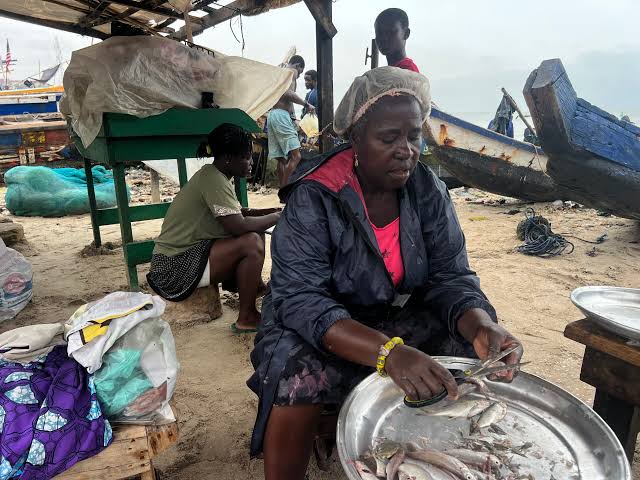
Loan products are structurally misaligned with the income patterns of most Ghanaians—particularly those in the informal sector, which employs about 80 percent of the workforce. A market woman earning GHS 150 daily cannot service a GHS 2,000 loan at 30 percent interest. The math does not work. The power dynamics between lenders and borrowers in Accra are stark—and this asymmetry is a primary driver of loan avoidance.
Key Takeaways
- Microfinance institutions charge even higher rates, often exceeding 40 percent.
- A market woman earning GHS 150 daily cannot service a GHS 2,000 loan at 30 percent interest.
- Commercial banks charge 25–30 percent annual interest on personal and business loans, while microfinance institutions and loan apps often exceed 40 percent.
Part 1: The Interest Rate Trap — Why Borrowing Is So Expensive
The Numbers That Define the Problem
Ghana’s high lending rates are the single most significant barrier to borrowing. Commercial banks charge 25–30 percent annual interest on personal and business loans, while microfinance institutions and loan apps often exceed 40 percent.
The arithmetic is sobering. A GHS 1,000 loan at 30 percent interest over 12 months means repaying GHS 1,300—GHS 300 in interest alone. For a trader earning GHS 150 daily, that GHS 300 represents two full days of work consumed by interest charges. At microfinance rates of 40 percent or higher, the burden intensifies.
Why Rates Are So High
Several structural factors keep lending rates elevated in Ghana:
| Factor | Impact on Borrowing Costs |
|---|---|
| High cost of funds | Banks borrow at high rates themselves, passing the cost to customers |
| Perceived risk | Informal sector borrowers lack collateral and formal credit histories |
| Operational costs | Manual processes, branch networks, and high compliance costs |
| Currency depreciation | Lenders price in cedi volatility, raising effective rates |
| Regulatory compliance | Capital requirements and reporting obligations add to operational costs |
The Bank of Ghana’s Response
The Bank of Ghana has attempted to moderate borrowing costs by reducing the policy rate. As of June 2026, the Ghana Reference Rate stood at 10.02 percent—down from nearly 30 percent in previous years . However, the transmission to consumer lending rates has been slow. Commercial banks continue to price loans at 25–30 percent, maintaining wide spreads that reflect persistent risk premiums and operational costs.
Part 2: The Debt Trap — The Cost of Default
The Trauma of Debt Collection
Beyond interest rates, many Accra residents avoid loans because of what happens when they cannot repay. Debt collection practices in Ghana have earned a reputation for aggressive, often humiliating tactics. Loan app borrowers, particularly those who take small emergency loans, report harassment from debt collectors. Calls at all hours, threats of public shaming, and demands for immediate repayment—often at exorbitant default rates—have created a lasting trauma around borrowing.
The Cascade Effect
Default is not an isolated event. A missed repayment on one loan can trigger cascade effects across multiple accounts. Late fees compound, interest accrues, and the debt grows faster than the borrower can manage. For informal sector workers with irregular income, a single bad week can turn a manageable loan into a crushing burden.
The Risk of Being Blacklisted
Ghana’s credit reporting system, while improving, still carries the weight of exclusion. A borrower who defaults on a loan risks being blacklisted by credit bureaus, making it impossible to access future credit—including mortgages, car loans, and business financing. For many, the long-term cost of a single default outweighs the short-term benefit of the loan.
Part 3: Misaligned Loan Products — Designed for Salaried Workers, Not the Informal Sector
The Structural Mismatch
Loan products in Accra are largely designed for formal sector workers—people with predictable monthly salaries, payslips, and bank statements. Yet 80 percent of Ghana’s workforce is in the informal sector

| Loan Feature | Designed For | Reality for Informal Workers |
|---|---|---|
| Monthly repayment | Salaried workers with fixed paydays | Market women earn daily, not monthly |
| Collateral requirement | Asset owners | Most informal workers lack formal assets |
| Credit history | Banked individuals | Many are unbanked or underbanked |
| Fixed interest rates | Predictable borrowers | Variable income makes fixed repayments risky |
The Results
A market woman earning GHS 150 daily cannot service a GHS 2,000 loan with monthly repayments of GHS 250—particularly when her income fluctuates with market conditions. The mismatch is not a failure of the borrower; it is a failure of product design.
The Rise of Digital Lending
Digital lending apps have attempted to address this gap, offering small loans with rapid approval and minimal documentation. However, many of these products charge interest rates exceeding 40–50 percent and carry aggressive default penalties. Borrowers who take emergency loans of GHS 100 can find themselves owing GHS 200 within weeks—a debt spiral that traps rather than liberates.

Part 4: The Power Dynamic — Asymmetric Information and Vulnerability
The Lender-Borrower Asymmetry
The power dynamic between lender and borrower in Accra is characterised by significant asymmetry. Lenders understand loan products, interest calculations, and default penalties. Borrowers often do not. The result is that many people avoid loans not because they do not need the money, but because they do not trust their ability to navigate the terms.
The Fear of Fine Print
A common theme in borrower complaints is the complexity of loan agreements. Interest rates are quoted in ways that obscure true annual costs. Default penalties are buried in fine print. Borrowers who rush into agreements often discover hidden charges only after signing.
The Collateral Trap
For many informal sector workers, the only collateral they can offer is their assets—mobile phones, land, or household goods. Default risks losing not just the loan but the productive assets that generate income. The stakes are existential.
Part 5: Cultural and Psychological Factors
The Stigma of Debt
In many Ghanaian communities, debt carries a social stigma. A borrower is seen as someone who could not manage their finances, who succumbed to temptation, or who made poor decisions. This stigma extends to families—a borrower’s default can bring shame to the entire household.
The Preference for Informal Lending
Many Accra residents prefer informal lending networks over formal loans. Susu groups, family lending circles, and community savings associations offer loans without interest, without paperwork, and without the stigma of formal debt. The trade-off is limited loan sizes, but the absence of interest and debt collectors is a powerful inducement.
A Study of the Unbanked
Research from Stanford University on Ghana’s underbanked population found that even after financial literacy training, individuals often prefer less efficient but more trusted financial tools than formal banking products. Trust, transparency, and cultural familiarity are often more valuable than lower interest rates.
Conclusion: The Barriers Are Structural, Not Individual
The decision to avoid loans in Accra is not irrational—it is rational. High interest rates, aggressive debt collectors, and loan products designed for salaried workers create an environment where borrowing feels like a trap, not an opportunity. The informal sector worker who says “I don’t take loans” is not missing an opportunity; they are protecting themselves from predation.
Banks and lenders have a choice. They can continue offering products that exclude 80 percent of the workforce, or they can design products that align with how most Ghanaians earn and spend. The future of lending in Accra will likely involve smaller, more flexible loan products, digital-first delivery channels, and repayment schedules tied to daily income flows rather than monthly salaries. But until that future arrives, loan avoidance will remain a rational response to an unforgiving system.
Quick Reference: Why Accra Avoids Loans
| Barrier | Impact |
|---|---|
| High interest rates (25-30%) | Borrowing costs consume 2+ days of income |
| Aggressive debt collection | Harassment, public shaming, and trauma |
| Misaligned loan products | Designed for salaried workers, not the informal sector |
| Collateral requirements | Informal workers lack formal assets |
| Credit blacklisting | Default closes future access |
| Social stigma | Debt carries shame |
| Preference for informal lending | Susu and family loans are interest-free |
Source: Accra Street Journal
Last Updated on July 10, 2026 by Samuel Kwame Boadu

Disclaimer: Some content on Accra Street Journal may be aggregated, summarized, or edited from third-party sources for informational purposes. Images and media are used under fair use or royalty-free licenses. Accra Street Journal is a subsidiary of SamBoad Publishing Hub under SamBoad Business Group Ltd, registered in Ghana since 2014.
For concerns or inquiries, please visit our Privacy Policy or Contact Page.

Samuel Kwame Boadu is a Ghanaian media entrepreneur and storyteller with a passion for amplifying urban voices and uncovering everyday truths. He is the Editor-in-Chief and Founder of Accra Street Journal, a dynamic digital platform dedicated to capturing the pulse of Ghana’s capital—its people, culture, challenges, business, sports and innovations.
Use the following reference when citing or referencing this article.
Your feedback helps us improve our journalism.
Report an Error
Help us maintain accuracy. Let our editorial team know if you spot an issue in this article.
Report a problem with this article