




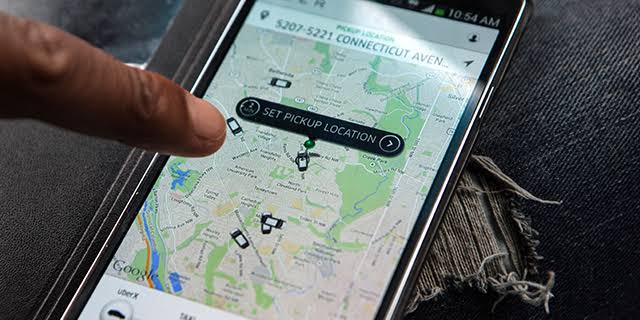
From novelty to necessity — how Uber, Bolt, and a new wave of local apps reshaped Ghana’s capital
Executive Introduction
In 2016, a quiet revolution began on Accra’s streets. Uber, a foreign app unknown to most Ghanaians, offered a simple proposition: tap your phone, and a car arrives. No bargaining. No waiting in the sun. No wondering if the driver knows where you are going.
Eight years later, that revolution has become the new normal. An estimated 42% of urban Ghanaians had used a ride-hailing app in the previous four weeks by early 2024 . The market is projected to reach approximately 6.6 million users by 2030 . What started as a niche service for the tech-savvy and affluent has become a mainstream element of Accra’s urban life .

This ASJ report examines how ride-hailing apps changed movement in Accra: the factors driving adoption, the user experience that sustained it, the tensions with traditional transport, the rise of local alternatives, and the policy challenges that remain.
📢 GET A DETAILED ARTICLES + JOBS
Join ASJ's WhatsApp Channel and never miss a post or opportunity.

Part 1: The Adoption Curve — From Innovators to Mainstream
The diffusion of ride-hailing in Accra followed a classic pattern of technological adoption .
The Innovator Phase (2016–2017)
Uber’s entry in 2016 marked the beginning. Early users were affluent, tech-savvy, and willing to experiment with a new mobility service . By 2018, Uber had amassed approximately 180,000 active riders in Ghana — a figure that signalled the transition from niche innovation to mainstream recognition.

The Pandemic Accelerant (2020–2022)
The COVID-19 pandemic dramatically accelerated adoption. As health concerns deterred public transport use, the percentage of commuters willing to use ride-hailing rose from 30% to 59% . For many commuters, ride-hailing emerged as a preferred alternative to crowded tro-tros and buses .
The Late Majority Phase (2022–2025)
The market matured with multiple players — Bolt, Uber, Yango, and local platforms like Shaxi. Many users now have more than one ride-hailing app on their phones . By early 2024, an estimated 42% of urban Ghanaians had used a ride-hailing app in the previous four weeks . The ecosystem in Accra has reached maturity .
The Local Wave (2024–2026)
A new wave of indigenous platforms has emerged:
| Platform | Launch | Key Differentiator |
|---|---|---|
| GoRide | October 2024 | 10% commission (vs 20% on foreign apps); GPRTU partnership |
| OkadaMotto | May 2025 | Motorcycle transport; locally owned; profits retained in Ghana |
| Mijo | May 2026 | Integrated with GhanaPost GPS; driver-first model |
These platforms are positioning themselves not just as alternatives, but as corrections to the perceived failures of foreign apps: high commissions, profit repatriation, and limited local investment .
Part 2: The User Experience — Convenience, Cost, and Control
The academic literature identifies specific drivers of ride-hailing adoption in Accra.
What Users Value Most
A study of 513 respondents found that convenience and cost-effectiveness are the predominant factors shaping preferences for ride-hailing in Accra . Users reported positive experiences regarding comfort, driver professionalism, and the flexibility of route adjustments .
The ride-hailing experience:
-
Request a ride from anywhere, at any time
-
Track the driver’s location in real time
-
Receive upfront fare estimates
-
Payment processed automatically through the app
-
Rate drivers and be rated in return
This represents a “notable deviation from Accra’s conventional norms of intra-city transportation access” . Traditional tro-tros and shared taxis require passengers to wait at designated stops; ride-hailing puts control in the passenger’s hands.
Who Uses Ride-Hailing?
A study of 400 e-hailing riders in Accra found the typical user profile to be young male adults aged 24-34 with higher education and middle-income earnings . Age, higher income, tertiary education, and perceptions of security significantly contributed to frequent e-hailing usage .

The Persistent Problems
Despite the positive experiences, users also identified persistent challenges :
| Challenge | User Impact |
|---|---|
| Inaccuracies in pickup location data | Passengers and drivers struggle to find each other |
| Frequent driver cancellations | Unreliable; wasted time and effort |
| Unregulated fare structures | Price surges during peak hours, lack of predictability |
| Discrepancies in driver identity verification | Safety concerns |
Urgent targeted policies on fare pricing and driver screening are essential .
Part 3: The Systemic Impact — Competition and Congestion
The Traditional Taxi “Turf War”
The arrival of ride-hailing disrupted Accra’s taxi market. Traditional taxi drivers, who had been serving Ghanaians long before digital platforms, found themselves “losing out on the business as they were overshadowed by the convenience of digital ride requests” . Higher commissions, a shrinking share of the market, and the inability to compete on convenience left many struggling .
Academic research confirms that ride-hailing has heightened competition with traditional taxis, leading to decreased patronage of conventional taxi services and encouraging operators to improve service quality
The Congestion Question
Ride-hailing has also contributed to Accra’s congestion. The same study identified “systemic impacts, such as traffic congestion” as a consequence of ride-hailing’s growth . The proliferation of ride-hailing vehicles, many of which circle without passengers between rides, adds to the growing volume of cars on Accra’s already strained roads.
The Complementarity Debate
The relationship between ride-hailing and public transport is complex. Some studies suggest ride-hailing complements public transport by filling service gaps; others suggest it substitutes for existing modes, potentially reducing the use of more efficient public transport options . The lesson for Accra is that ride-hailing cannot be viewed in isolation. It is part of the city’s mobility ecosystem, and its integration with public transport—through multi-modal trip planning, integrated ticketing, and last-mile connectivity—is essential for a more efficient urban transportation system .
Part 4: The Indigenous Response — Local Apps, Local Priorities
The GoRide Model
The launch of GoRide in October 2024 marked a deliberate intervention in the ride-hailing market. Vice President Dr Mahamudu Bawumia described it as a “revolutionary ride-hailing app born from a strategic public-private partnership to transform the country’s transport sector for the better” .
The driver-first proposition:
-
10% commission rate far lower than the 20% typical on other apps
-
Integrated digital payments through Tap ’n Go
-
Designed for local taxi drivers, particularly those associated with the GPRTU
Dr Bawumia argued that high commissions on foreign platforms had “not only strain[ed] their earnings but also threatened their livelihoods” . GoRide was designed to “restore dignity to our drivers and ensure that they thrive” .
OkadaMotto — Motorcycles Enter the Ecosystem
In May 2025, the OkadaMotto app was launched, targeting motorcycle transport . Ras Mubarak, a founding partner, framed it as a matter of economic sovereignty: “When [foreign apps] generate profits, they send them back to their home countries. Ask them: how many of them have even invested in Ghana?” .
The app is already operational in Liberia and Sierra Leone and is headquartered in Ghana, positioning itself as a local solution to a growing transportation need . The platform aims to bring professionalism to the Okada sector, providing uniforms, helmets, and licensing to riders .

Mijo — Leveraging Digital Public Infrastructure
In May 2026, the indigenous platform Mijo officially launched, integrated with the GhanaPost GPS App . With over 4 million downloads and more than 100,000 active users at any given time, the GhanaPost GPS platform provides a strong foundation for Mijo’s growth .
Key differentiators:
-
Driver-first model with favourable commission rates
-
Executive service option for premium vehicles
-
Free and discounted rides during pilot for students and healthcare workers
Part 5: The Policy Gap — What Regulation Must Address
The academic research is clear: ride-hailing’s benefits are real, but its challenges require regulatory response.
Fare Structure Regulation
Users have raised concerns about “unregulated fare structures” . The lack of price predictability, particularly during peak hours, remains a barrier for many potential users.
Driver Screening and Safety
Discrepancies in driver identity verification represent a significant safety concern . Users have reported experiences where the driver who arrived did not match the driver profile in the app.
Integration with Public Transport
The Ministry of Transport should explore partnerships between ride-hailing services and public transportation systems, including multi-modal trip planning, integrated ticketing, and last-mile connectivity solutions .
Fair Competition
The entry of local platforms with lower commissions is a market correction, but regulation must ensure a level playing field. Unregulated fare structures and driver screening issues affect all platforms, local and foreign.
Conclusion: From Novelty to Necessity
Ride-hailing has fundamentally changed movement in Accra. What started as a novelty for the tech-savvy has become a mainstream element of urban life, used by 42% of urban Ghanaians in the previous four weeks . The market is expected to grow to 6.6 million users by 2030 .
The benefits are clear: convenience, comfort, price transparency, and the ability to request a ride from anywhere at any time. Users consistently rate ride-hailing higher than traditional taxis on these dimensions .
The challenges are equally clear: traffic congestion, tensions with traditional transport operators, and regulatory gaps that leave users vulnerable to safety issues and unpredictable pricing .
The emergence of local platforms — GoRide, OkadaMotto, Mijo — is part of a broader shift toward digital sovereignty. These platforms are not just alternatives; they are corrections to a market seen as favouring foreign profits over local livelihoods .
The next phase of Accra’s ride-hailing story will be determined by policy. As one study concluded, “urgent targeted policies on fare pricing and driver screening are essential” . Without them, ride-hailing’s transformation of movement in Accra will remain incomplete — convenient for some, but unsafe, costly, and unsustainable for many.
Quick Reference: Ride-Hailing in Accra
| Metric | Value |
|---|---|
| Urban Ghanaians using ride-hailing (early 2024) | 42% |
| Projected users by 2030 | 6.6 million |
| Uber active riders (2018) | 180,000 |
| Ride-hailing adoption increase (pandemic) | 30% → 59% |
| Typical user profile | Young male adults (24-34), higher education, middle-income |
| Most used platform (2024 study) | Bolt |
| Local commission rate (GoRide) | 10% |
| Foreign app commission rate | ~20% |
| Key challenges | Fare regulation, driver screening, traffic congestion, integration with public transport |
Source: Accra Street Journal
Last Updated on July 19, 2026 by Samuel Kwame Boadu
Disclaimer: Some content on Accra Street Journal may be aggregated, summarized, or edited from third-party sources for informational purposes. Images and media are used under fair use or royalty-free licenses. Accra Street Journal is a subsidiary of SamBoad Publishing Hub under SamBoad Business Group Ltd, registered in Ghana since 2014.
For concerns or inquiries, please visit our Privacy Policy or Contact Page.

Samuel Kwame Boadu is a Ghanaian media entrepreneur and storyteller with a passion for amplifying urban voices and uncovering everyday truths. He is the Editor-in-Chief and Founder of Accra Street Journal, a dynamic digital platform dedicated to capturing the pulse of Ghana’s capital—its people, culture, challenges, business, sports and innovations.