EXECUTIVE INTRODUCTION
The fixed retail shop, with its long-term lease, its heavy signage, its permanent staff, and its punishing overhead, was once the unquestioned symbol of a serious business in Accra. To have a shop was to have arrived. Today, a quiet but profound counter-movement is reshaping the city’s retail geography. The pop-up shop—the temporary, deliberate, and strategically short-lived retail activation—has emerged from the experimental fringe to become a mainstream, economically rational strategy for a remarkably diverse range of Ghanaian businesses, from the solo fashion designer to the multinational bank.
This Accra Street Journal analysis examines the deep structural reasons for the pop-up surge in the capital. This is not a superficial trend piece. It is a forensic investigation of the economic mathematics, the social media dynamics, the consumer psychology, and the real estate logic that have converged to make the temporary shopfront a more intelligent commercial move than the permanent lease for a growing segment of the market. We argue that the pop-up is not a gimmick. It is a rational, capital-efficient response to the specific, brutal cost structure of Accra’s commercial real estate, the power of digital community mobilisation, the consumer’s hunger for novelty and experience, and the prudent entrepreneur’s need to test a market before committing to the life-threatening burden of a long-term lease. The pop-up shop is the physical manifestation of a new, agile, and deeply strategic approach to commerce in the capital.

THE REAL ESTATE MATHEMATICS: ESCAPING THE LEASE TRAP
The foundational driver of the pop-up economy in Accra is the cold, unforgiving arithmetic of the city’s commercial real estate market. Securing a fixed retail location in a prime, high-footfall area—Osu, East Legon, Airport Residential—requires a formidable upfront capital commitment. The landlord typically demands a multi-year lease, with two to three years of rent payable in advance. This single payment can run into the hundreds of thousands of cedis for even a modest space. This vast, upfront, sunk cost is a life-threatening barrier for a small brand, a first-time entrepreneur, or an established business testing a new product line or geographic market.
📢 GET A DETAILED ARTICLES + JOBS
Join ASJ's WhatsApp Channel and never miss a post or opportunity.

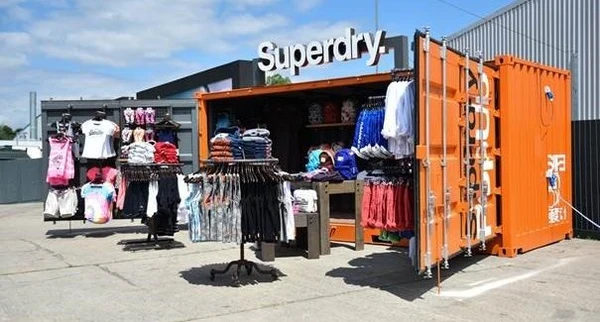
The pop-up shop model elegantly, and legally, circumvents this trap. The pop-up entrepreneur negotiates a fundamentally different contract: a short-term, often daily or weekend, rental of a space. The landlord of a gallery, a café with a private room, a boutique hotel lobby, or an underutilised event centre receives a premium daily rate for a space that would otherwise be idle. The entrepreneur gains a prime, branded physical presence for a tiny fraction of the cost of a permanent lease. The risk is contained to the duration of the pop-up. If the activation is a roaring success, the business has generated revenue, built a customer list, and gathered invaluable market intelligence, all without the anchor of a long-term rent obligation. If it fails, the financial loss is the cost of a weekend’s rent and some decor, not a multi-year commitment that could bankrupt the founder. The pop-up is not just a marketing tactic; it is a sophisticated financial instrument for managing the extreme upfront cost and risk of Accra’s commercial property market.
THE SOCIAL MEDIA FLASH MOB: THE DIGITAL MOBILISATION OF A PHYSICAL CROWD
The pop-up shop model is perfectly engineered for the dynamics of the contemporary Ghanaian social media landscape. The traditional shop relies on a permanent signboard and the slow, cumulative passing footfall of the street. The pop-up relies on the intense, concentrated, and digitally orchestrated gathering of a pre-existing community into a specific place at a specific time. The pop-up is a physical flash mob for commerce.

The promotional cycle is a masterclass in digital urgency. The brand announces the pop-up—”One Weekend Only. Secret Location Revealed Thursday. Limited Stock.”—across its Instagram, WhatsApp, and TikTok channels. The short, sharp timeline creates a powerful Fear Of Missing Out (FOMO). The curated, influencer-seeded content builds anticipation. The community, already warm and engaged from the brand’s online presence, is activated and mobilised. The physical pop-up becomes a gathering of the tribe, a social event as much as a shopping trip. Customers come not just to buy, but to see and be seen, to meet the founder, to touch the products they have only seen on a screen, and to consume the experiential content that they will, in turn, share on their own channels, amplifying the brand’s reach far beyond the physical event. This digitally-mobilised, time-limited, experience-rich model generates a per-square-foot sales intensity during the pop-up weekend that a permanent shop, with its slow, steady, and passive footfall, can only dream of. The pop-up leverages the digital community to create a profitable, temporary physical density that the permanent shop cannot replicate.
THE BRAND EXPERIENCE LABORATORY: DATA, FEEDBACK, AND THE ELIMINATION OF GUESSWORK
For the established Ghanaian brand, and increasingly for the sophisticated multinational, the pop-up shop serves a distinct, high-value strategic function: it is a low-cost, high-fidelity brand experience laboratory. Before committing to a permanent retail location, a significant new product line, or a major rebranding exercise, the company uses the pop-up to gather real, empirical data on customer behaviour in a controlled environment.
The pop-up allows the brand to test a new geographic catchment area. Does the new, aspirational demographic in East Legon respond to our product in the same way as our established customer base in Osu? It allows the brand to test a new product concept directly against the paying customer, gathering immediate, face-to-face, qualitative feedback that an online survey could never capture. Is the new fragrance line too subtle? Is the new packaging confusing? The founder, present in the pop-up, hears the unfiltered customer reaction and can adapt. It allows the brand to test the effectiveness of different pricing strategies, promotional offers, and visual merchandising setups. The data generated from a single, well-executed pop-up—sales per hour, conversion rates, customer demographics, product feedback, average basket size—is market intelligence of a quality that would cost a fortune to acquire through a formal consultancy. The permanent shop is a bet; the pop-up is an experiment. And in a volatile market, the business that experiments before it commits is the business that survives.
THE COLLABORATIVE AND THE CURATED: THE COMMUNAL ECONOMICS OF THE GROUP POP-UP
A particularly powerful and distinctly Accra variant of the pop-up phenomenon is the curated group pop-up market. This is not a single brand activating a temporary space, but a deliberate, thematic gathering of multiple, complementary, and carefully selected small brands in a shared venue for a single weekend. The “Sip and Shop” event, the curated fashion and accessories bazaar, the natural hair and skincare expo, the artisan food and craft fair—these are the collective, communal expression of the pop-up economy.
The economic logic is compelling. The cost of the venue, the security, the music, and the promotional campaign is shared among the participating vendors, bringing the individual cost of participation down to an accessible level, often a few hundred cedis for a stall. The event organiser, who is often a brand founder or a small media influencer, curates the vendor list to ensure a mix of quality, complementarity, and audience appeal, creating a bundled shopping destination that a single pop-up could not offer. The curated market solves the most difficult problem for the solo pop-up: footfall. Each vendor brings their own social media following, and the collective promotional power of fifteen or twenty small brands, combined with the event organiser’s campaign, generates a critical mass of digital noise and physical attendance that is far greater than the sum of its parts. For the consumer, the curated market is a high-density, high-variety, high-experience shopping trip, a conscious, pleasurable alternative to the chaotic, undifferentiated browsing of the traditional market or the sterile aisles of the supermarket. This model is a sophisticated, collaborative entrepreneurial strategy, a form of collective retail power that allows the smallest brand to access a high-quality, high-footfall retail moment.
THE EXPERIENCE HUNGER: WHY THE ACCRA CONSUMER WILL LEAVE THE SCREEN
The final, crucial piece of the pop-up puzzle is the evolving psychology of the Accra consumer, particularly the young, digitally native, and aspirational demographic. This consumer has been staring at a screen, shopping via Instagram DM and WhatsApp status, and receiving packages from delivery riders for years. The digital transaction, once a novelty, has become mundane, functional, and isolating. The consumer has developed a profound, and increasingly valuable, hunger for the physical, the sensory, and the communal. The pop-up shop is the commercial answer to this hunger.
The pop-up is designed to be an experience, not just a transaction. It has music, curated by a DJ or a playlist that matches the brand’s aesthetic. It has an Instagrammable, deliberately designed visual moment—the flower wall, the neon sign, the artistic product display—that functions as free, user-generated content for the brand. It offers the opportunity to meet the founder, the designer, the person behind the brand, and to hear the story of the product from the source. It offers the sensory experience of touching the fabric, smelling the shea butter, tasting the artisanal gin, an irreplaceable dimension of product evaluation that the screen cannot provide. The consumer pays a slight premium for this total experience, and the pop-up price point often comfortably exceeds what the same product could command on a crowded shop shelf or a generic online listing. The pop-up is not competing with the digital store; it is providing the premium, physical, experiential complement to it, and the modern Accra consumer is demonstrably willing to leave the house, and to pay, for this richer, more human form of commerce.
CONCLUSION: THE STRATEGIC IMPERMANENCE
The pop-up shop in Accra is not a fleeting fashion. It is a permanent, strategic addition to the retail toolkit, a necessary adaptation to the specific economic, digital, and psychological realities of the contemporary market. It is the rational response to a real estate market that punishes long-term commitment. It is the physical extension of a social media strategy that thrives on urgency and community. It is the lean method for testing business hypotheses in a volatile economy. And it is the experiential bridge that reconnects the digital consumer with the physical, sensory, and social dimensions of a brand.
The serious business in Accra today is not defined by whether it has a permanent shop. It is defined by its agility, its understanding of the new consumer, and its intelligent, disciplined use of the full spectrum of commercial spaces—the permanent, the temporary, the digital, and the collaborative. The pop-up is the strategic tool of the agile, the prudent, and the creative. In a city as expensive, as competitive, and as rapidly changing as Accra, the ability to appear, to create a moment of intense commercial value, and to disappear cleanly is not a sign of impermanence. It is a mark of profound strategic intelligence.

QUICK FACTS BOX: POP-UP SHOPS IN ACCRA
-
Primary Driver: The prohibitive upfront cost of long-term commercial leases (multi-year rent advance), which the short-term, daily/weekend pop-up model elegantly circumvents.
-
Key Sectors: Fashion and accessories, beauty and skincare, artisanal food and beverages, art and home decor, fintech and service activations.
-
Promotional Engine: The orchestrated, time-limited FOMO (Fear Of Missing Out) campaign on Instagram, WhatsApp, and TikTok, mobilising a pre-existing digital community to a physical location.
-
Strategic Functions: A low-cost laboratory for testing new products, markets, and pricing; a physical trust-building and experiential touchpoint for brands born online; a data-gathering exercise on real customer behaviour.
-
Group Pop-Up Model: The curated market, where multiple complementary small brands share venue, promotional, and operational costs, solving the footfall problem collectively.
-
Consumer Appeal: Satiates the growing hunger for a physical, sensory, and communal brand experience that complements the functional, isolating nature of the purely digital transaction.
-
Core Strategic Insight: The pop-up is a rational, capital-efficient financial instrument for managing the extreme risk and cost of Accra’s commercial real estate, enabling market testing and intense, profitable brand moments without the anchor of a permanent lease.

Last Updated on July 27, 2026 by Samuel Kwame Boadu
Disclaimer: Some content on Accra Street Journal may be aggregated, summarized, or edited from third-party sources for informational purposes. Images and media are used under fair use or royalty-free licenses. Accra Street Journal is a subsidiary of SamBoad Publishing Hub under SamBoad Business Group Ltd, registered in Ghana since 2014.
For concerns or inquiries, please visit our Privacy Policy or Contact Page.

Samuel Kwame Boadu is a Ghanaian media entrepreneur and storyteller with a passion for amplifying urban voices and uncovering everyday truths. He is the Editor-in-Chief and Founder of Accra Street Journal, a dynamic digital platform dedicated to capturing the pulse of Ghana’s capital—its people, culture, challenges, business, sports and innovations.