









13 min read
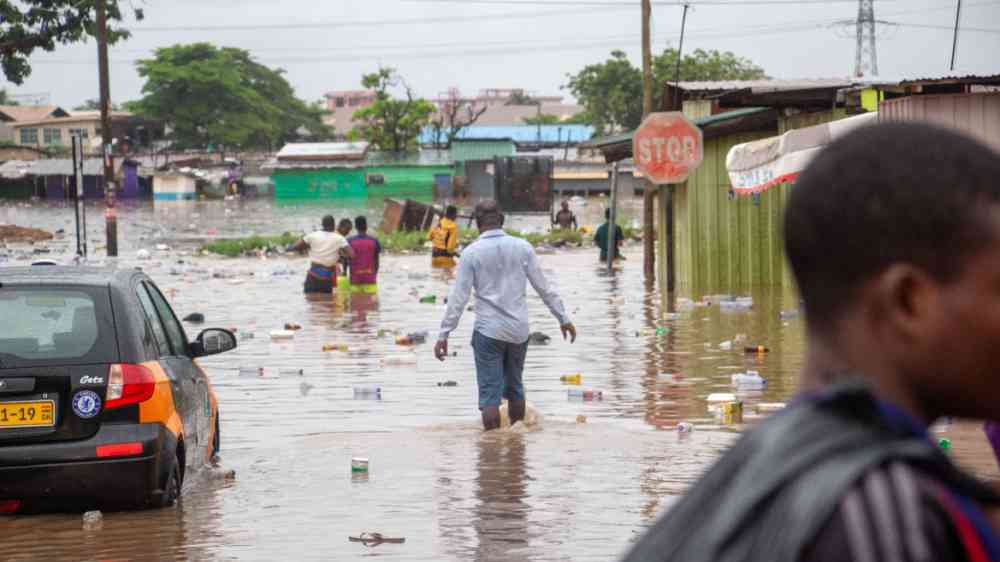
The recent floods in Accra that killed at least 13 people and submerged hundreds of homes and vehicles have once again exposed a painful truth: most Ghanaians are not financially protected when disaster strikes. This ASJ article explains why weather disasters are making insurance not just important but necessary.
Introduction
On June 29, 2026, torrential rains swept across large parts of southern Ghana . Flooding in Accra disrupted businesses, submerged vehicles and homes, and made it difficult for emergency responders to reach a major fire outbreak at Odawna . At least 13 people lost their lives . The National Fire Service rescued more than 470 people .
Key Takeaways
- The Ghana Agricultural Insurance Pool (GAIP), under the GIA, is rolling out weather-indexed insurance products for farmers .
- Parametric insurance pays out based on pre-defined triggers, such as rainfall levels or flood severity, rather than assessing individual damage .
- Insurance companies paid more than GH¢235 million in claims following the June 3, 2015, twin flood and fire disaster in Accra .
For insurance companies, this disaster is expected to trigger one of the busiest claims periods for Ghana’s non-life insurance industry this year . Industry experts have estimated flood-related claims at almost GH¢500 million .
But here is the problem. Around 70% of Ghanaians lack access to insurance . This means that when floods, fires, or other weather disasters strike, most people have to rebuild their lives with their own money—or not rebuild at all.
This ASJ article explains why weather disasters are highlighting the urgent need for insurance in Ghana, what types of insurance cover weather-related damage, and what is being done to make insurance more accessible to ordinary Ghanaians.
The Scale of the Problem
Ghana’s Flood Problem
Flooding is not new to Ghana. Over the past three decades, Ghana has experienced more than 27 major floods, 15 of which hit Accra . The capital’s rapid expansion, combined with poor drainage and climate change, has made the problem worse.
The cost is enormous. Flooding costs the Ghanaian economy more than US$100 million every year . This includes loss of lives, damage to property, loss of man-hours, and medical expenses.
The most devastating example in recent memory is the June 3, 2015, twin flood and fire disaster in Accra. Insurance companies operating in Ghana paid more than GH¢235 million in claims to victims and affected businesses . At the current exchange rate, this would translate to about GH¢675 million .
The Insurance Gap
Despite these recurring disasters, most Ghanaians are not insured. The United Nations Development Programme (UNDP) found that about seven out of ten Ghanaians lack access to insurance .
Ghana’s insurance penetration—the amount of insurance people buy compared to the size of the economy—is less than 1% of GDP . This is far below the African average of about 3% and the global average of roughly 6% .

What does this mean in practice? When floods hit, people must use their savings, borrow money, or depend on government relief. For many families, this means years of hardship.
What Weather Disasters Can Destroy
Weather disasters in Ghana damage many different things. Understanding what can be destroyed helps explain why insurance is needed.

Homes
Floodwaters can damage buildings, furniture, household appliances, and personal effects . In low-lying areas, homes can be completely destroyed. Many families lose everything they own.
Vehicles
Submerged vehicles suffer engine damage, electrical failures, and interior destruction . For many Ghanaians, a car is not just transport—it is how they earn a living. Tro tro drivers, Uber drivers, and other commercial drivers lose their income when their vehicles are destroyed.
Businesses
Businesses operating in low-lying industrial and commercial districts suffer damage to inventory, office equipment, machinery, and finished goods . A flood can close a business for weeks or months. Some never reopen.
Farms
Farmers face drought, excessive rainfall, and flooding. In Northern Ghana, erratic rainfall patterns can destroy crops at critical growth stages . This affects not just farmers but the entire country’s food supply.
Public Infrastructure
Schools, hospitals, roads, and government buildings can also be damaged. Estimates suggest that approximately 40% of all assets managed by the Accra Metropolitan Assembly have reported flooding in previous years, with about GH¢90 million in material damage .
Types of Insurance That Cover Weather Disasters
There are several types of insurance that can protect against weather-related losses. Here is how they work.
Property Insurance
Commercial and domestic property insurance covers buildings and their contents against damage from storms, floods, and other natural hazards .
Who buys it: Banks, manufacturing companies, shopping malls, hotels, office complexes, warehouses, schools, hospitals, supermarkets, and fuel stations . Increasingly, high-income homeowners in flood-prone areas also buy comprehensive household insurance that includes flood protection .
How it works: If a flood damages your building or property, the insurance company pays for repairs or replacement, subject to the policy terms.
Important point: Some basic fire policies do not automatically include flood cover. You must specifically add it .

Motor Insurance
Comprehensive motor insurance typically covers flood damage to vehicles
What this means: If you have third-party insurance and your car is destroyed by floods, you get nothing for your vehicle. If you have comprehensive insurance, you can make a claim.
Business Interruption Insurance
This is an extension to property cover that compensates a business for lost income when it cannot operate because of a disaster .
Why it matters: A flood might not just damage your building. It can force you to close for weeks. During that time, you still have to pay salaries, rent, and other expenses. Business interruption insurance covers this lost income.
Agricultural Insurance
This is insurance for farmers. Traditional agricultural insurance requires assessors to visit farms and check damage before paying claims. But this is expensive and slow.
Innovative solution: Index-based insurance uses weather data—such as rainfall amounts—to determine payouts . If the weather data shows that rainfall was too low or too high, the insurance pays out automatically. No need for farm visits.
Example: The Germination Index Insurance (GII) product being piloted in Northern Ghana covers farmers if seeds do not germinate within 21 days of planting due to insufficient or excessive rainfall .
Parametric Flood Insurance
This is a new type of insurance being introduced in Ghana. Instead of assessing individual damage, it pays out based on pre-defined triggers, such as rainfall levels or flood severity .
Why it is different: Traditional insurance can take weeks to assess and pay claims. Parametric insurance pays quickly because it uses data, not inspections. This is crucial after a disaster when people need money immediately.
What is happening in Ghana: The UNDP, Ghana Ministry of Finance, and partners have developed two parametric insurance products for the Greater Accra Metropolitan Area . These products cover vulnerable households and communities in low-income areas.
The Cost of Not Having Insurance
When people do not have insurance, disasters have lasting effects.
Personal Financial Ruin
When a family loses their home and belongings, they must start over. This can take years. Many never fully recover. Children’s education is disrupted. Families go without medical care. Debt can become crushing.
Business Collapse
Small businesses are especially vulnerable. A flood that destroys inventory or equipment can force a business to close. This means job losses and lost income for employees.
Government Burden
When people are uninsured, they turn to the government for help. But government budgets are limited. The National Disaster Management Organisation (NADMO) cannot replace everything people lose. The government is forced to spend money on relief rather than development.
Economic Impact
Disasters affect the whole economy. When businesses close and farms fail, there is less economic activity. The government collects less tax revenue. The country becomes more dependent on foreign aid.
The Challenges of Insurance in Ghana
If insurance is so important, why do so few Ghanaians have it?
Lack of Awareness
Many Ghanaians simply do not know about insurance or do not understand how it works . A study on agricultural insurance found that 64% of farmers cited “inadequate knowledge” as the main reason they had not bought insurance .
Affordability
Insurance premiums can be expensive . Even modest premiums can be a challenge for low-income families and small businesses. There is an ongoing debate about how to make premiums affordable while keeping insurance companies viable.
Lack of Trust
Some Ghanaians do not trust insurance companies. They fear that if they make a claim, the company will find a reason not to pay. The insurance industry has worked to build trust, but this remains a challenge . The Ghana Insurers Association (GIA) has emphasised the need for improved customer education and service delivery .
Data Gaps
Insurance companies need reliable data to price policies correctly. In Ghana, there are gaps in historical loss data and incomplete records of assets . This makes it harder for insurers to assess risk and set premiums.
Limited Products
Insurance products are often designed for large companies or wealthy individuals. There are fewer products for small-scale farmers, informal sector workers, and low-income families. This is changing, but progress is slow.
What Is Being Done to Improve the Situation
The Ghana Insurers Association
The Ghana Insurers Association (GIA) is the umbrella body for insurance companies in Ghana. It has identified four strategic priorities for the industry :
-
Embracing technology responsibly
-
Expanding insurance access to underserved populations
-
Strengthening ethical conduct to build trust
-
Deepening collaboration with the National Insurance Commission (NIC)
The GIA has also organised training seminars to equip insurers to respond more effectively to customers, particularly during disasters .
Parametric Insurance Initiatives
The UNDP and its partners have developed parametric insurance products for flood protection in the Greater Accra area . These are expected to protect vulnerable households and businesses that face persistent flood risks.
Agricultural Insurance
The Ghana Agricultural Insurance Pool (GAIP), under the GIA, is rolling out weather-indexed insurance products for farmers . About 10 insurance companies have formed a consortium to underwrite the risk and pay claims.
Regulatory Support
The National Insurance Commission (NIC) has been working to strengthen the insurance sector. This includes guidelines on claims management and the “No Premium No Cover” policy to ensure that insurance companies pay claims promptly .
Calls for Government Action
Some insurance experts have called on the government to remove VAT on insurance products to make them more affordable . They have also suggested corporate tax waivers for insurance companies to help them recover from major claims events.
What Ordinary Ghanaians Should Do
Here are practical steps for individuals and small businesses.
1. Understand Your Risks
If you live in a flood-prone area, recognise that a disaster could happen to you. It is not a matter of “if” but “when.”
2. Get Informed
Ask your insurance company or broker what your policy covers. Does your motor policy cover flood damage? Does your property policy include flood cover? If not, consider adding it.
3. Buy Comprehensive When Possible
Third-party insurance is cheaper, but comprehensive insurance offers much better protection. For vehicles in flood-prone areas, the extra cost may be worth it.
4. Consider Property Insurance
If you own a home or a business, consider property insurance. Even if you rent, contents insurance can protect your belongings.
5. Ask About New Products
Ask your insurer about newer products like agricultural insurance or microinsurance. These may be more affordable than traditional policies.
6. Keep Good Records
If a disaster strikes, photograph the damage and keep receipts for repairs. This will make the claims process smoother.
ASJ Conclusion
The June 2026 floods are a reminder that weather disasters are a fact of life in Ghana. They will continue to happen. Climate change is making them more frequent and more severe.
The question is not whether disasters will happen. The question is whether Ghanaians will be prepared when they do.
Insurance is one of the most important tools for preparation. It allows people to rebuild their lives after disaster. It helps businesses survive. It reduces the burden on government. And it protects the wider economy.
But for insurance to work, more people need to buy it. This means insurers must develop affordable and understandable products. The government must create a supportive environment. And ordinary Ghanaians must take the step of protecting themselves.
As Ghana Insurers Association President Boatemaa Barfour-Awuah said: “The world is safer when insurance leads” . In a country facing frequent weather disasters, this has never been more true.
Quick Facts
| Topic | Details |
|---|---|
| Major Floods in 30 Years | Over 27, with 15 hitting Accra |
| Annual Flood Cost to Economy | Over US$100 million |
| June 3, 2015 Claims | GH¢235 million (approx. US$60 million at 2015 rate) |
| Estimated June 2026 Claims | Nearly GH¢500 million |
| Ghanaians Without Insurance | About 70% |
| Insurance Penetration | Less than 1% of GDP vs African avg 3%, Global avg 6% |
| Key Products | Property, Motor Comprehensive, Business Interruption, Agricultural, Parametric Flood |
| Main Industry Body | Ghana Insurers Association (GIA) |
| Regulator | National Insurance Commission (NIC) |
Frequently Asked Questions
1. What types of insurance cover weather disasters in Ghana?
Property insurance, comprehensive motor insurance, business interruption insurance, agricultural insurance, and parametric flood insurance all cover weather-related losses. Each covers different things, so you need to check your policy carefully .
2. Does my motor insurance cover flood damage?
Only if you have comprehensive motor insurance. Third-party insurance does not cover damage to your own vehicle. Check your policy to be sure .
3. What is parametric flood insurance?
Parametric insurance pays out based on pre-defined triggers, such as rainfall levels or flood severity, rather than assessing individual damage . This means faster payouts after a disaster.
4. Why is insurance penetration so low in Ghana?
The main reasons are lack of awareness, affordability issues, lack of trust in insurers, limited products for low-income people, and data gaps that make it hard to price policies .
5. What is the Germination Index Insurance (GII)?
This is an agricultural insurance product being piloted in Northern Ghana. It uses rainfall data to determine if seeds have germinated. If not, it pays out automatically .
6. How much did the June 3, 2015, disaster cost insurers?
Insurance companies paid more than GH¢235 million in claims following the June 3, 2015, twin flood and fire disaster in Accra .
7. How can farmers get weather insurance?
Farmers can approach insurance companies that offer agricultural insurance, particularly weather-indexed products. The Ghana Agricultural Insurance Pool (GAIP) is rolling out products for farmers across the country .
8. Does property insurance automatically cover floods?
Not always. Some basic fire policies do not automatically include flood cover. You need to check your policy and add flood cover if it is not included .
9. What happens if I have insurance and a flood damages my home?
You should notify your insurer immediately, photograph the damage before cleaning up, compile an inventory of damaged items, and keep receipts for repairs. The insurer will assess the claim and pay according to your policy terms .
10. What is the government doing about disaster insurance?
The government, through the Ministry of Finance and UNDP, has developed parametric flood insurance products for vulnerable communities. The National Insurance Commission also regulates the industry to ensure fair practices
Source: Accra Street Journal
Last Updated on August 15, 2026 by Samuel Kwame Boadu
Disclaimer: Some content on Accra Street Journal may be aggregated, summarized, or edited from third-party sources for informational purposes. Images and media are used under fair use or royalty-free licenses. Accra Street Journal is a subsidiary of SamBoad Publishing Hub under SamBoad Business Group Ltd, registered in Ghana since 2014.
For concerns or inquiries, please visit our Privacy Policy or Contact Page.

Samuel Kwame Boadu is a Ghanaian media entrepreneur and storyteller with a passion for amplifying urban voices and uncovering everyday truths. He is the Editor-in-Chief and Founder of Accra Street Journal, a dynamic digital platform dedicated to capturing the pulse of Ghana’s capital—its people, culture, challenges, business, sports and innovations.
Use the following reference when citing or referencing this article.
Your feedback helps us improve our journalism.
Report an Error
Help us maintain accuracy. Let our editorial team know if you spot an issue in this article.
Report a problem with this article