




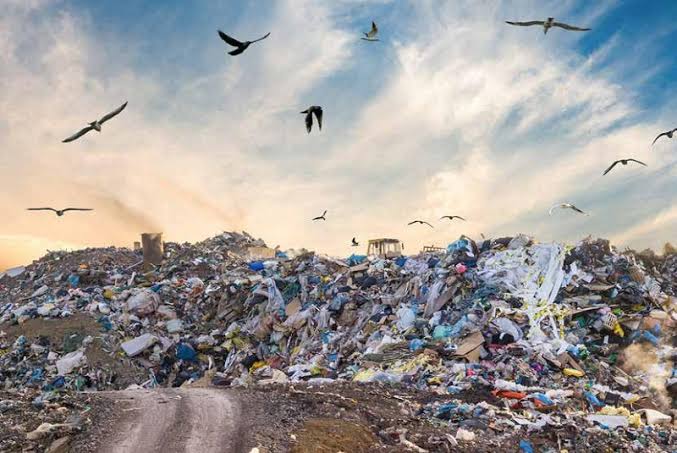
The narrative around waste in Africa has long been one of failure: uncollected refuse, choked drains, burning dumpsites, and the creeping expansion of plastic into oceans and waterways. That narrative is accurate. But it is only half the story. The other half is that waste has become a market—one valued at nearly $47 billion in 2026—and the continent’s economic future will be shaped by who learns to profit from it.
The Scale of the Problem
The numbers are enormous and they are growing. Africa generates about 174 million tonnes of waste annually, and that figure is projected to triple to over 500 million tonnes by 2050 . Globally, waste volumes are expected to rise by 50% by 2050 compared to 2022, driven by population growth, urbanisation, and economic expansion .

But the collection and disposal systems have not kept pace. Only about 55% of waste in Africa is collected, and of that, roughly 90% is dumped or burned in uncontrolled sites . More than 90% of East Africa’s waste still ends up in open dumps, releasing methane and leachate that threaten groundwater . In Lagos, which generates 13,000 to 14,000 tonnes of refuse daily, formal recycling diverts just 0.37% .
📢 GET A DETAILED ARTICLES + JOBS
Join ASJ's WhatsApp Channel and never miss a post or opportunity.

The economic cost of this failure is borne by municipalities and households. In low-income countries, waste management consumes about 9% of city budgets . In some African cities, the figure is even higher, with municipal governments spending over 30% of their revenues on waste services . Yet only about 4% of municipal solid waste is recycled, even though roughly 70% is recyclable .
The environmental and health consequences are severe. Poor waste management is linked to between 400,000 and 1 million deaths annually . It contributes to urban flooding, marine plastic pollution, and greenhouse gas emissions—solid waste is responsible for about 20% of man-made methane . And 80% of the plastics in the global ocean originate from unmanaged or poorly managed municipal solid waste .

The Market That Is Emerging
Despite these failures, or perhaps because of them, waste has become a significant industry. The Africa waste management market was valued at approximately $44.11 billion in 2025** and is estimated at **$46.77 billion in 2026, with projections reaching $62.73 billion by 2031—a compound annual growth rate of about 6.04% .
The composition of this market is revealing. Residential streams accounted for 60.45% of the market share in 2025, driven by household consumption and urban migration. But commercial volumes are projected to grow at 8.52% CAGR, fuelled by mall and office expansion that increases demand for scheduled pickups and secure document destruction . Retail chains are signing multi-year contracts to meet Extended Producer Responsibility obligations, adding predictable tonnage for integrated service providers .
The market is also being shaped by regulation. Kenya’s 2024 EPR regulations oblige producers to finance end-of-life collection and recycling, mirroring South Africa’s mandatory schemes. Egypt has rolled out a sustainable recycling initiative that links informal pickers to licensed processors . These mandates are shifting recycling from voluntary programmes to legally enforced obligations, pushing brand owners to sign long-term contracts with certified operators. That, in turn, creates the predictable revenue streams that make recycling infrastructure investable.
The Informal Economy That Does the Work
The formal market numbers tell only part of the story. Much of Africa’s recycling is done by informal waste pickers, who collect, sort, and sell recyclable materials.
In South Africa alone, an estimated 200,000 waste pickers recover up to 90% of plastic and packaging waste, saving municipalities up to R750 million in landfill costs annually . These workers pull trolleys weighing up to 200 kilograms across cities, yet they remain outside formal labour protections .
The economics of their work are precarious. Earnings are low and inconsistent, subject to fluctuating market prices for recyclables and increasing competition . In Ghana, waste pickers’ earnings are described as low and inconsistent due to competition and a lack of cooperation from the formal waste management sector . In Kenya and Tanzania, waste pickers depend on intermediaries who take a significant cut of their profits, leaving them with little bargaining power .
Social stigma compounds the economic vulnerability. Waste picking is often viewed as dirty and degrading, a perception reinforced by stereotypes of waste pickers as criminals or vagrants . In cities like Nakuru, Durban, and Bogotá, waste pickers face harassment, confiscation of recyclables, and even physical abuse from authorities . This stigma isolates them, prevents them from accessing education, housing, and healthcare, and limits their ability to invest in equipment that could increase their productivity .
Yet these workers are indispensable. They are the backbone of the recycling economy, and any serious attempt to formalise waste management must engage with them, not bypass them.
The Entrepreneurial Response
Where the formal system has failed, entrepreneurs have stepped in.

The circular economy in Africa is being built by small businesses turning waste into value. Plastic waste is being converted into construction materials, furniture, bricks, and textiles. Organic waste is being turned into biogas and compost. The SpringerLink review of plastic waste entrepreneurship in Africa identifies three broad business models: construction-material upcycling, consumer product manufacturing, and circular logistics .
The review finds that success in these ventures is driven by specialised technical expertise—particularly in STEM and engineering disciplines—and strategic networking through international incubators. But it also identifies a “systemic recycling trap”: high production costs, inadequate technological infrastructure, and the complexity of polymer processing remain significant barriers to scale .
Financial hurdles are exacerbated by socio-cultural biases. Female entrepreneurs in the waste sector often face a deficit of stakeholder confidence, which restricts their access to investor capital. The credibility gap is rooted in patriarchal norms that view manufacturing as a male-dominated field . The review recommends that policymakers mandate minimum quotas for recycled materials in public infrastructure, establish industrial zones with stable energy grids and shared processing machinery, and formalise the informal sector by integrating waste pickers into EPR frameworks with legal recognition, training, and micro-health insurance.
The market is also seeing the emergence of formalised aggregators who absorb informal networks through franchise schemes, delivering standardised safety training and mobile-payment transparency . This is a model worth watching. It preserves the livelihoods of waste pickers while bringing them into a more structured, safer, and better-paid system.
The Financing Gap
The waste sector’s biggest constraint is not technology or demand. It is finance.
The World Bank’s active portfolio in solid waste management includes projects in Ghana, Côte d’Ivoire, the Democratic Republic of Congo, Egypt, Madagascar, Mali, Mauritania, Morocco, Mozambique, Senegal, Seychelles, Somalia, South Africa, Tanzania, and Chad . But the financing gap remains large.
In Ghana, the World Bank is supporting the Greater Accra Resilient and Integrated Development (GARID) Project, a $350 million initiative that includes solid waste management improvements alongside flood mitigation. The project is designing an engineered landfill at Ayidan, capping old dumpsites, developing transfer stations and material recovery facilities, and supporting community-based waste management in low-income communities .
The financing models being deployed are varied. Public finance—central government and municipal own-source revenue—remains the foundation. User charges, including pay-as-you-throw and differentiated tariffs, are being explored. Environmental levies and EPR are creating new revenue streams. Climate and results-based finance, including outcome bonds and carbon credits, are emerging. And private capital, through public-private partnerships and blended finance, is being mobilised .
But the Gap Fund’s experience with African cities reveals a persistent tension. Many financiers prioritise large-scale projects or set minimum funding thresholds. Smaller cities, with low collection rates and inconsistent feedstock supply, struggle to meet these thresholds. The technical assistance provided by the Gap Fund helped cities refine project concepts, build stakeholder coalitions, and navigate the complexities of project preparation, but the underlying challenge remains: waste projects are capital-intensive, revenue streams are uncertain, and the institutional capacity to structure bankable projects is limited .
The Governance Problem
The technical and financial barriers are real, but the governance barriers may be more fundamental.
Responsibility for waste management is often fragmented across multiple ministries—environment, local government, health, industry—with unclear mandates . Outdated laws and weak enforcement undermine compliance. Data on waste quantities and composition is often absent or outdated, limiting informed decision-making .

The technology mismatch is another recurring problem. Imported energy-intensive solutions, such as incinerators, are often unsuitable for local waste streams and difficult to maintain . The Gap Fund’s experience suggests that technology choice is secondary to the enabling environment. Cities embedded in larger regional economies are better positioned to access markets, attract private actors, and benefit from inter-municipal integration .
The most successful interventions appear to be those that combine technical assistance with institutional strengthening. The World Bank’s Program-for-Results instrument, which links disbursements directly to results achieved—collection coverage, diversion rates, controlled disposal, data reporting—is one model. Development Policy Financing, which supports policy and institutional reforms such as EPR regulations and tariff frameworks, is another .
ASJ Bottom Line
Africa’s waste crisis is real, and it is worsening. The volumes are growing, the collection systems are inadequate, and the environmental and health consequences are severe.
But the crisis has also created a market. The waste management sector is valued at nearly $47 billion and growing at over 6% annually. The commercial segment is expanding faster than residential. Regulation is creating predictable revenue streams. And entrepreneurs are building businesses that turn waste into construction materials, consumer products, and energy.
The informal waste pickers who do much of the work remain precarious and stigmatised. Any serious attempt to build a sustainable waste economy must include them—not as an afterthought, but as partners with legal recognition, training, and access to finance.
The financing gap is significant. The governance fragmentation is real. The data gaps are a constraint. But the direction of travel is clear. Waste is no longer just a problem to be managed. It is an economy to be built.
The question for African cities is not whether they can afford to invest in waste management. It is whether they can afford not to.
Quick Facts
| Topic | Details |
|---|---|
| Africa Waste Market Size (2026) | ~$46.77 billion |
| Projected Market Size (2031) | $62.73 billion |
| Waste Generation (Africa) | 174 million tonnes/year, tripling by 2050 |
| Collection Rate | ~55% |
| Recycling Rate | ~4% (vs ~70% recyclable) |
| Waste Budget Share (Low-Income Cities) | ~9% of city expenditures |
| South Africa Waste Pickers | ~200,000, recovering up to 90% of plastic/packaging |
| Ghana GARID Project | $350 million, includes waste and flood management |
Frequently Asked Questions
1. How big is Africa’s waste management market?
The market was valued at approximately $44.11 billion in 2025** and is estimated at **$46.77 billion in 2026, with projections reaching $62.73 billion by 2031 .
2. What percentage of waste is collected in Africa?
Only about 55% of waste is collected, and roughly 90% of that is dumped or burned in uncontrolled sites .
3. How much waste does Africa generate?
Africa generates about 174 million tonnes annually, a figure projected to triple to over 500 million tonnes by 2050 .
4. What role do waste pickers play?
In South Africa alone, an estimated 200,000 waste pickers recover up to 90% of plastic and packaging waste, saving municipalities up to R750 million in landfill costs annually . They are the backbone of the recycling economy but remain outside formal labour protections.
5. What is EPR and why does it matter?
Extended Producer Responsibility (EPR) regulations oblige producers to finance end-of-life collection and recycling. Kenya’s 2024 regulations and South Africa’s schemes are creating predictable revenue streams for recyclers and shifting recycling from voluntary to legally enforced .
6. How is waste management financed in Africa?
Through public finance (central and municipal revenue), user charges, environmental levies and EPR, climate and results-based finance, and private capital through PPPs and blended finance .
7. What is the GARID project?
The Greater Accra Resilient and Integrated Development Project is a $350 million World Bank initiative that includes solid waste management improvements alongside flood mitigation in the Odaw River Basin .
8. What are the main barriers to waste management in Africa?
Fragmented governance with unclear mandates, inadequate financing, data gaps on waste quantities and composition, outdated laws and weak enforcement, and technology mismatch with imported solutions .
9. What are the commercial opportunities in waste?
Construction-material upcycling, consumer product manufacturing, circular logistics, waste-to-energy, composting, anaerobic digestion, and black soldier fly systems for organic waste .
10. How can the informal sector be integrated?
Through formalisation in EPR frameworks with legal recognition, vocational training, micro-health insurance, and franchise schemes that provide safety training and mobile-payment transparency.
Last Updated on November 3, 2026 by Samuel Kwame Boadu
Disclaimer: Some content on Accra Street Journal may be aggregated, summarized, or edited from third-party sources for informational purposes. Images and media are used under fair use or royalty-free licenses. Accra Street Journal is a subsidiary of SamBoad Publishing Hub under SamBoad Business Group Ltd, registered in Ghana since 2014.
For concerns or inquiries, please visit our Privacy Policy or Contact Page.

Samuel Kwame Boadu is a Ghanaian media entrepreneur and storyteller with a passion for amplifying urban voices and uncovering everyday truths. He is the Editor-in-Chief and Founder of Accra Street Journal, a dynamic digital platform dedicated to capturing the pulse of Ghana’s capital—its people, culture, challenges, business, sports and innovations.