






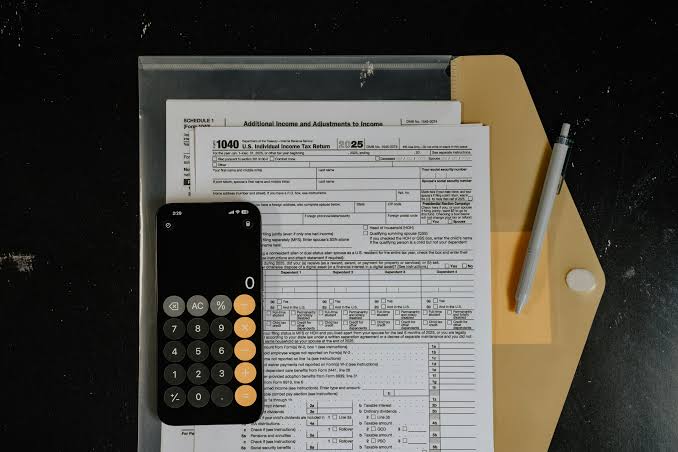
A business that makes no profit still has to file. But the GRA does not let a business declare losses forever without paying something. Here is how the rules work when your business is running at a loss.
Filing When You Make a Loss
Even if your business made no profit, you must still file your annual tax return. The GRA is clear on this point: filing remains a legal obligation regardless of whether you made a profit during the reporting period. Businesses that did not earn any income are still required to submit a return.

The type of return depends on your situation. If your business had no transactions at all during the period, you file a NIL return—a formal declaration that there was no activity. If you had revenue but your expenses exceeded that revenue, you file a return showing the loss.
📢 GET A DETAILED ARTICLES + JOBS
Join ASJ's WhatsApp Channel and never miss a post or opportunity.

Carry Forward of Losses
When a business makes a tax loss, it can generally carry that loss forward to offset against future profits. The rules differ by sector:
-
Priority sectors: Businesses in mining, petroleum, energy, manufacturing, farming, agro-processing, tourism, and ICT can carry losses forward for five years.
-
Other sectors: Businesses outside the priority sectors can carry losses forward for three years.
Losses are deducted in the order they occur—first come, first served.

The Minimum Chargeable Income Rule
Here is where loss-making businesses face a real obligation. Under the Income Tax (Amendment) Act, 2023 (Act 1094), a person who has been in business for over five years and continues to declare losses may be required to pay tax on a Minimum Chargeable Income (MCI) of 5% of turnover, regardless of the actual loss position.
When it applies: The MCI applies from the sixth year of operations if the business has declared losses for the previous five consecutive years. It continues to apply until the business declares a tax profit.
Who is exempt: The MCI does not apply to businesses in their first five years of operation, or to persons engaged in farming.
How it is calculated: MCI is 5% of your turnover—your total revenue before deducting any expenses. The tax payable is then calculated at the applicable corporate rate. For a business with GH¢500,000 in turnover, the MCI would be GH¢25,000, and tax at 25% would be GH¢6,250.
Important: Tax paid under the MCI is not treated as a tax credit to be carried forward or set off against future liabilities. You still carry forward your unrelieved losses under section 17, but the MCI payment is separate.
Filing on the Portal
The filing process for a loss-making business is the same as for any other return. You log in to the GRA Taxpayer’s Portal, select the applicable tax type, and complete the return. The system will guide you through the schedule. If your business is in a NIL position—no revenue and no expenses—you tick the NIL return box and submit.
ASJ Bottom Line
Making a loss does not exempt you from filing. It may exempt you from paying, but only for a limited time. After five consecutive years of losses, the GRA expects you to contribute something based on your turnover, not your profit. The MCI rule is designed to discourage businesses from declaring losses indefinitely while continuing to operate.
Quick Facts
| Topic | Details |
|---|---|
| Filing Obligation | Applies even with no profit |
| NIL Return | Required if no transactions |
| Loss Carry Forward (Priority Sectors) | 5 years |
| Loss Carry Forward (Other Sectors) | 3 years |
| MCI Threshold | 6th year of consecutive losses |
| MCI Rate | 5% of turnover |
| MCI Exemption | First 5 years; farming |
| Filing Channel | GRA Taxpayer’s Portal |
Frequently Asked Questions
1. Does a business making a loss have to file tax returns in Ghana?
Yes. Filing remains a legal obligation regardless of whether you made a profit. Businesses with no income are still required to submit a NIL return.
2. What is a NIL return?
A NIL return is a formal declaration that there was no business activity during the period. You tick the NIL box on the return form and submit it by the due date.

3. Can I carry forward my business losses in Ghana?
Yes. Priority sectors (mining, farming, manufacturing, ICT, tourism, etc.) can carry losses forward for five years. Other sectors can carry losses forward for three years.
4. What is the Minimum Chargeable Income rule?
If a business has declared losses for five consecutive years, it may be required to pay tax on 5% of turnover from the sixth year onward, regardless of actual losses.
5. Who is exempt from the Minimum Chargeable Income?
Businesses in their first five years of operation and persons engaged in farming are exempt.
6. How is MCI calculated?
MCI is 5% of your turnover (total revenue before expenses). The tax payable is then calculated at the applicable corporate rate. For example, GH¢500,000 turnover = GH¢25,000 MCI = GH¢6,250 tax at 25%.
7. Is tax paid under MCI refundable or carried forward?
No. Tax paid under MCI is not treated as a tax credit and cannot be carried forward or set off against future liabilities.
8. How do I file a loss return in Ghana?
Log in to the GRA Taxpayer’s Portal, select the applicable tax type, complete the return showing your revenue and expenses, and submit. The system will calculate the loss position
Source: Accra Street Journal
Last Updated on October 10, 2026 by Samuel Kwame Boadu
Disclaimer: Some content on Accra Street Journal may be aggregated, summarized, or edited from third-party sources for informational purposes. Images and media are used under fair use or royalty-free licenses. Accra Street Journal is a subsidiary of SamBoad Publishing Hub under SamBoad Business Group Ltd, registered in Ghana since 2014.
For concerns or inquiries, please visit our Privacy Policy or Contact Page.

Samuel Kwame Boadu is a Ghanaian media entrepreneur and storyteller with a passion for amplifying urban voices and uncovering everyday truths. He is the Editor-in-Chief and Founder of Accra Street Journal, a dynamic digital platform dedicated to capturing the pulse of Ghana’s capital—its people, culture, challenges, business, sports and innovations.