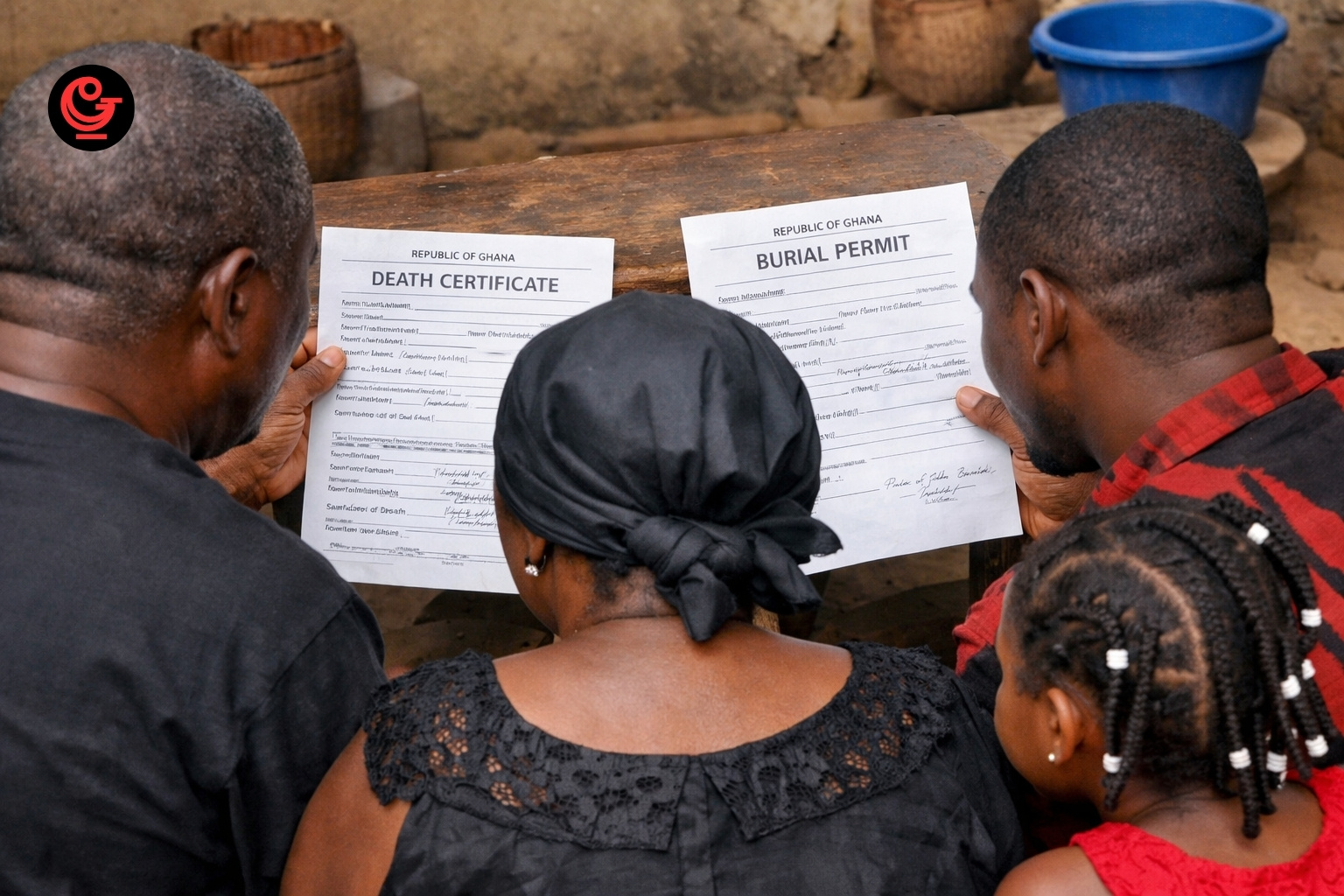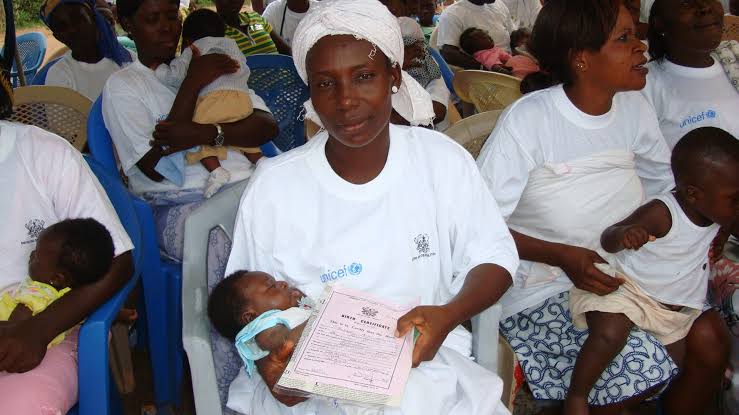
Two issues dominate the conversation around Ghana’s birth registry: the thousands of adults who were never registered at birth, and the difficulty of confirming that a certificate is genuine. The first is a legacy problem of access and awareness. The second is a growing problem of fraud and institutional capacity. Both are being addressed—slowly—through digital tools and procedural reforms.
Part 1: Late Birth Registration
The 12-Month Rule
Birth registration is free for children registered within 12 months of birth . After that period, the law requires the written authority of the Registrar and the payment of a prescribed fee . This is the legal foundation of the late registration process.

The practical consequence is that a person registered at age 30 faces a different procedure, and a different cost, than a parent registering a newborn.
📢 GET A DETAILED ARTICLES + JOBS
Join ASJ's WhatsApp Channel and never miss a post or opportunity.

Who Can Apply
The informant—the person legally responsible for furnishing the information—must apply in person. For a minor, this is the parent. For an adult, it is the applicant themselves .
If both parents are deceased or incapacitated, the law allows other informants: the occupier of the premises where the birth occurred, a person present at the birth, or a person having charge of the child . A child cannot report their own birth, regardless of age .

The Process, Step by Step
The late registration procedure is more involved than newborn registration. It follows a defined sequence :
Step 1: Report to the district office. The informant goes to the Births and Deaths Registry (BDR) office in the district where the birth occurred. This is a legal requirement, not a matter of convenience.
Step 2: Interview and partial completion of forms. A Registration Assistant interviews the informant and partially completes Form A and the Declaration Form .
Step 3: Payment of the prescribed fee. The informant pays the fee before the declaration is sworn .
Step 4: Swearing the declaration. The informant declares the partially completed documents before a Commissioner of Oaths, Court Registrar, or Notary Public. This declaration must be supported by one of the following pieces of evidence :
-
Clinical weighing card or notification of birth card
-
Baptismal certificate
-
Extract from a family records book
-
Affidavit from one of the parents
Step 5: Forwarding for approval. The Registration Assistant attaches a covering letter and sends the declared documents through the District Registration Office to the Regional Registration Officer for approval .
Step 6: Return of approved documents. The Regional Registration Officer returns the approved documents with authority to the Registration Assistant .
Step 7: Entry and finalisation. The Registration Assistant makes the entry in the Register of Births and forwards the completed forms to the Central Registry Office through the District and Regional offices for finalisation and authentication of the certificate .
The process is not instant. It involves multiple levels of review, and the timeline depends on the efficiency of the district and regional offices involved.

Evidence of Birth: What Is Accepted
The BDR accepts several forms of evidence for late registration. The weighing card or maternal health record book is the most common. A baptismal certificate is accepted only if it was issued within five years of the birth . An affidavit from a parent can also serve as supporting evidence, though this is a weaker form of proof.
For adults who have no documentation at all, the process becomes more difficult. The BDR may accept school records, old passports, or other documents that establish identity and age, but the final decision rests with the Registrar.
The Cost
The official fee schedule for late registration is not consistently published on the BDR website. Third-party guides cite figures ranging from GHS 10 for children aged 1–5 to GHS 20 for those aged 5 and above, with an express service adding GHS 50 . These figures should be treated as indicative. The authoritative source is the BDR office where the application is made.
The Scale of the Problem
Ghana’s birth registration system is improving, but the backlog of unregistered adults remains significant. In 2022, the BDR registered 677,140 births. Of these, 257,295 (38%) were registered within the first 90 days, while 419,845 (62%) were registered after 90 days . The average time between delivery and registration was 146 days .
These figures suggest that even for newborns, registration often happens late. For adults who were never registered, the late registration process is the only path to a legal identity—and to the Ghana Card that follows from it.
Part 2: Birth Certificate Verification
The Problem of Authenticity
A Ghanaian birth certificate is a “Certified Copy of Entry in the Register of Births.” It is issued by the BDR and serves as prima facie evidence of the facts it contains . But the document’s security features have evolved over time, and fraud has been a persistent concern.
Historically, the BDR’s system allowed affidavits to serve as the basis for late registration, which meant that anyone could swear an affidavit and obtain a birth certificate . This created a legacy of documents whose authenticity is difficult to verify.
The modern certificate, introduced in 1996, includes security features: a pinkish background with micro-printing, a holographic seal that changes colour when tilted, and a unique serial number . But physical security features can be imitated, and the real test of authenticity is whether the record exists in the BDR’s register.
The Official Verification Process
The BDR offers a formal verification service through the government’s e-Payment portal. The process is designed for organisations and individuals who need to confirm that a birth certificate is genuine .
How it works:
-
The requester submits an application through the e-Payment portal.
-
They upload a scanned copy of the birth certificate and a formal request letter from the requesting organisation.
-
They pay a fee of GHS 6.00 per verification .
-
The BDR checks the certificate against its register and communicates the result via official email.
The processing time is up to 5 days . This is the authoritative method for confirming authenticity. It is not instant, but it is the only method that directly queries the BDR’s records.

What Verification Confirms
The BDR’s verification service confirms that a certificate was issued by the Registry and that the details match the record in the register. It does not confirm that the facts recorded at registration were accurate—only that the document itself is genuine.
This distinction matters. A certificate issued on the basis of an affidavit may be genuine in the sense that the BDR issued it, but the underlying information may not be independently verified. For organisations that need to rely on the certificate for identity or nationality purposes, the BDR’s verification is a necessary first step, but it may not be sufficient on its own.
The Future: Digital Verification
Ghana is building a digital infrastructure that could transform how birth certificates are verified.
The Ghana Electronic Document Wallet (GEDW), being developed by the National Information Technology Agency (NITA), aims to allow citizens to store digitally signed versions of official documents—including birth certificates—on their phones. When an institution needs to verify a document, the system will check the digital signature against the issuing authority’s records, providing instant confirmation of authenticity .
The GEDW will not store copies of documents. Instead, it will hold encrypted references that point back to the original record held by the BDR. Verification will happen in real time, with the user granting temporary, revocable consent . The system is designed to be legally sound under Ghana’s existing Electronic Transactions Act, 2008 .
This would solve two problems at once: it would make verification faster and more reliable, and it would reduce the opportunity for fraud. But the GEDW is still in development, and its rollout depends on the digitisation readiness of institutions like the BDR .
A Note on Duplicate Certificates
Ghanaian law does not permit a person to hold multiple birth certificates. A second or subsequent certificate for the same birth is not valid and must be annulled . If a certificate is lost, the correct procedure is to apply for a search and reprint, not to register the birth again. The BDR’s digital system is designed to detect duplicate registrations and prevent them.
ASJ Bottom Line
Late birth registration is a procedural hurdle for adults who were never registered, but it is not an impossible one. The process exists, the evidence requirements are defined, and the BDR offices are accessible. The main obstacles are the time involved, the need for supporting documents, and the cost—which, while modest, can be a barrier for the poorest applicants.
Birth certificate verification is a different challenge. The BDR’s official verification service is the authoritative method, but it requires a fee and a waiting period. The GEDW promises to make verification instant and secure, but it is not yet operational.
For now, the practical advice is the same for both: keep your documents safe, use the official channels, and avoid anyone who offers to bypass the system for a fee.
Quick Facts
| Topic | Details |
|---|---|
| Free Registration Window | 12 months from birth |
| Late Registration Authority | Written authority of the Registrar |
| Evidence Accepted | Weighing card, baptismal certificate (within 5 years), family records extract, parental affidavit |
| Declaration Sworn Before | Commissioner of Oaths, Court Registrar, or Notary Public |
| Verification Fee (BDR) | GHS 6.00 |
| Verification Processing Time | Up to 5 days |
| 2022 Births Registered | 677,140 |
| Registered After 90 Days | 419,845 (62%) |
| Duplicate Certificates | Not permitted |
Frequently Asked Questions
1. What is late birth registration in Ghana?
Late birth registration is the process of registering a birth that occurred more than 12 months ago. It requires the written authority of the Registrar and payment of a prescribed fee .
2. What evidence do I need for late birth registration?
You need a clinical weighing card, baptismal certificate (issued within 5 years of birth), extract from a family records book, or an affidavit from one of your parents .
3. Where do I go for late birth registration?
You must go to the BDR office in the district where the birth occurred .
4. How much does late birth registration cost?
The exact fee is not consistently published. Third-party guides cite GHS 10–20 depending on age, but confirm the current rate at your local BDR office .
5. How do I verify a Ghana birth certificate?
Use the BDR’s official verification service through the government e-Payment portal. Upload a scanned copy of the certificate and a request letter, and pay GHS 6.00. Processing takes up to 5 days .
6. What does the BDR verification confirm?
It confirms that the certificate was issued by the Registry and that the details match the record in the register. It does not independently verify the accuracy of the information recorded at registration.
7. Can I get a second birth certificate if I lose mine?
No. Ghanaian law does not permit duplicate certificates. If you lose your certificate, apply for a search and reprint. Do not register your birth again .
8. Is there an online system for birth registration in Ghana?
Some services can be started online through the government portal, but late registration and corrections still require in-person visits to a BDR office. The BDR encourages applicants to use district offices rather than the head office .
9. Why is birth registration important?
A birth certificate establishes identity, age, and citizenship. It is required for the Ghana Card, passport, school enrolment, and access to many government services.
10. What percentage of Ghanaian births are registered late?
In 2022, 62% of registered births were recorded more than 90 days after delivery, suggesting that late registration is common even for newborns
Source: Accra Street Journal
Last Updated on October 23, 2026 by Samuel Kwame Boadu
Disclaimer: Some content on Accra Street Journal may be aggregated, summarized, or edited from third-party sources for informational purposes. Images and media are used under fair use or royalty-free licenses. Accra Street Journal is a subsidiary of SamBoad Publishing Hub under SamBoad Business Group Ltd, registered in Ghana since 2014.
For concerns or inquiries, please visit our Privacy Policy or Contact Page.

Samuel Kwame Boadu is a Ghanaian media entrepreneur and storyteller with a passion for amplifying urban voices and uncovering everyday truths. He is the Editor-in-Chief and Founder of Accra Street Journal, a dynamic digital platform dedicated to capturing the pulse of Ghana’s capital—its people, culture, challenges, business, sports and innovations.