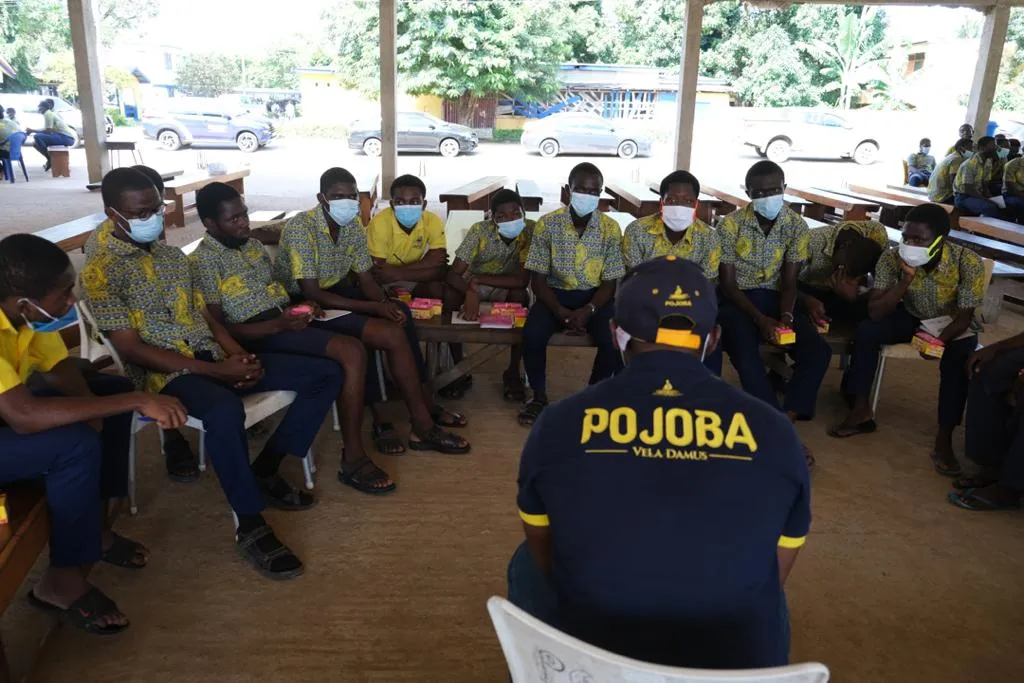
The choice between boarding and day school is one of the most consequential decisions a Ghanaian family makes. It affects cost, academic routine, social development, and the daily rhythm of family life. Yet the decision is often driven by perception rather than evidence—the belief that boarding is inherently superior, or that day school is a compromise. The research tells a more nuanced story. Here is what the data actually shows.
The Cost Reality: Free SHS Does Not Mean Free
The first thing to understand is that the Free SHS policy covers tuition, accommodation, and feeding for boarding students in public schools. On paper, both options are free. In practice, the costs diverge sharply.

Boarding students require a full prospectus: bedding, trunks, toiletries, cleaning supplies, uniforms, and personal items. Estimates suggest boarding parents could spend GH¢3,500 or more on these items before the school term even begins. Day students require a lighter list—a school bag, calculator, sandals, and sneakers—but the cost is still real.
📢 GET A DETAILED ARTICLES + JOBS
Join ASJ's WhatsApp Channel and never miss a post or opportunity.

For private schools, the gap is explicit. A sample fee structure for a private college shows boarding students paying GH¢150 more per term than day students for tuition, plus a GH¢700 monthly feeding fee that day students do not pay. Over a three-year programme, that difference compounds.
The Free SHS policy has also created an unintended incentive. Research published in a peer-reviewed journal found that the policy inadvertently pushed parents toward boarding, leading to “half-empty day schools.” Students who lived near day schools would sign up for boarding schools in faraway districts, which the researchers described as “costly and inefficient” .

The Academic Evidence: Boarding Has an Edge, But Context Matters
The academic research on boarding versus day status in Ghana is not extensive, but the available studies point in a consistent direction.
A University of Ghana study on social capital and educational outcomes found that boarding students consistently exhibited stronger effects of social capital on educational outcomes compared to day students . The structured environment of boarding—where peer networks, teacher relationships, and family support operate within a contained setting—appears to amplify the factors that drive academic success.
A University of Cape Coast thesis comparing residential status in Accra schools was more direct. It found that absenteeism and lateness were better managed at boarding schools than at day schools. The ease of accessing boarding students outside normal school hours made remedial interventions more effective. The study concluded that “being in a boarding school has numerous advantages which enable boarding students to perform better than day students in their academic work” .
But the study also recommended that parents of day students step up supervision and monitoring of studies at home. The implication is clear: the advantage of boarding is not magic. It is the structure. A day student with disciplined home supervision can achieve the same outcomes.
The Day School Reality: A Different Kind of Discipline
Day schools are not inherently weaker. They simply require a different support system.
The same UCC study noted that day students face challenges with absenteeism and lateness that boarding schools manage more easily. But the study did not conclude that day students are incapable of excellence. It recommended that day schools be provided with resourced health posts and that boarding houses be built for day schools—suggesting the gap is infrastructural, not intrinsic.
St. Thomas Aquinas Senior High School, a Category A day school in Accra, is consistently cited as one of the highest-performing schools in Ghana. It has won the National Science and Maths Quiz and ranks among the top five schools nationwide. Its status as a day school has not prevented it from achieving at the highest level.
The lesson is that the school matters more than the residential status. A well-run day school with strong teachers and engaged parents will outperform a poorly run boarding school.
The Policy Debate: Should Boarding Remain Free?
The Free SHS policy’s inclusion of boarding has become a subject of growing debate.

The Ghana National Council of Private Schools has called for boarding education to become fully fee-paying, arguing that it is “unfair to have some students benefit more from the taxes we all pay simply because they are in boarding houses.” The council’s executive director argued that government should maintain free day education while parents who choose boarding bear the cost of accommodation and feeding .
Education policy advocates have made a similar case. One argued that “boarding education is just an add-on. School takes place during the day.” The proposal is to maintain free tuition and day schooling while asking parents who can afford boarding to contribute .
The counterargument is equity. Rural students who live far from any senior high school have no realistic day option. The researchers who studied the policy’s unintended effects noted that reinstating boarding fees would disadvantage “rural and low-income students who do not have the means to pay boarding and who often live too far away from any senior high school to attend as day students.” Their proposed solution was boarding scholarships for students who achieve a minimum BECE score, which would preserve access while addressing the policy’s inefficiencies .
The Practical Decision Framework
So how should a family decide?
Choose boarding if: The student thrives in structured environments, the family lives too far from a suitable day school, the student needs immersion to focus, or the chosen school only offers boarding for the desired programme.
Choose day school if: The family can provide consistent home supervision, the student is self-disciplined, the local day school is strong, or the cost of the boarding prospectus is a genuine financial strain.
The one rule every parent should follow: Do not assume a student can switch from day to boarding after admission. The placement system treats residential status as a fixed choice. A candidate who selects day status cannot simply upgrade to boarding upon arrival.
The GES also requires every candidate to select at least one Category A day school within their district, alongside one Category A boarding school. This ensures that every family considers both options, rather than defaulting to boarding out of habit.
Quick Facts
| Topic | Details |
|---|---|
| Free SHS Coverage | Tuition, accommodation, feeding (boarding) |
| Prospectus Cost (Boarding) | GH¢3,500+ estimated |
| Prospectus Cost (Day) | Lighter list; calculator, sandals, bag |
| Academic Edge (Research) | Boarding students show stronger social capital effects |
| Attendance (Research) | Boarding manages absenteeism better |
| Day School Example | St. Thomas Aquinas SHS (Category A, top-performing) |
| Policy Debate | Calls to make boarding fee-paying, maintain free day |
| Selection Rule | 1 Category A boarding + 1 Category A day (local) |
Frequently Asked Questions
1. Is boarding school better than day school in Ghana?
Research suggests boarding students benefit from stronger social capital effects and better attendance management. But day schools can achieve at the highest level with strong home supervision. The school matters more than the residential status.
2. Is boarding free under Free SHS?
Tuition, accommodation, and feeding are covered. However, parents still pay for the prospectus items, which can cost GH¢3,500 or more for boarding students.
3. Can my child switch from day to boarding after admission?
No. The placement system treats residential status as a fixed choice. A candidate who selects day status cannot switch to boarding upon admission.

4. Why are some people calling for boarding fees?
Critics argue that boarding benefits a subset of students at taxpayers’ expense. They propose maintaining free day education while asking parents who can afford boarding to contribute.
5. What is the main advantage of day school?
Day school is cheaper for families, keeps the student at home, and can be academically strong if the student has disciplined home supervision. St. Thomas Aquinas SHS is a top-performing day school.
6. Do I have to select a day school during placement?
Yes. The GES requires every candidate to select at least one Category A day school within their district, alongside one Category A boarding school.
7. What if I live far from any day school?
Boarding is the practical option for students in remote areas. The researchers who studied the policy’s effects recommended boarding scholarships for students who achieve a minimum BECE score to preserve access.
8. How much does the boarding prospectus cost?
Estimates suggest GH¢3,500 or more for boarding students. The list includes bedding, toiletries, uniforms, cleaning supplies, and personal items.
9. Are private boarding schools more expensive?
Yes. A sample private college fee structure shows boarding students paying GH¢150 more per term in tuition, plus a GH¢700 monthly feeding fee that day students do not pay.
10. What should I consider when choosing between boarding and day?
Consider the student’s self-discipline, the family’s ability to supervise at home, the quality of the local day school, the cost of the prospectus, and the distance to school. Do not default to boarding out of habit.
Source: Accra Street Journal
Last Updated on October 27, 2026 by Samuel Kwame Boadu
Disclaimer: Some content on Accra Street Journal may be aggregated, summarized, or edited from third-party sources for informational purposes. Images and media are used under fair use or royalty-free licenses. Accra Street Journal is a subsidiary of SamBoad Publishing Hub under SamBoad Business Group Ltd, registered in Ghana since 2014.
For concerns or inquiries, please visit our Privacy Policy or Contact Page.

Samuel Kwame Boadu is a Ghanaian media entrepreneur and storyteller with a passion for amplifying urban voices and uncovering everyday truths. He is the Editor-in-Chief and Founder of Accra Street Journal, a dynamic digital platform dedicated to capturing the pulse of Ghana’s capital—its people, culture, challenges, business, sports and innovations.