





Accra’s public transport system is not a single network. It is a patchwork of private minibuses, shared taxis, app-hailed cars, and a struggling state bus service. There is no unified timetable, no single payment card, and no central authority that tells you which vehicle to take. You learn the system by asking, watching, and making a few mistakes. This ASJ guide is designed to shorten that learning curve.
The Trotro: The Backbone of the City
If you use public transport in Accra, you will use a trotro. These are privately owned minibuses, often Toyota Hiace vans, that run fixed routes from terminals and roadside stops. There are roughly 6,000 trotros operating in the city .

How to Find and Board One
Trotros do not have official stop signs. They have terminals—the main ones are at Tema Station, Nkrumah Circle, and 37 Circle—and they have routes that regular commuters learn by repetition .
📢 GET A DETAILED ARTICLES + JOBS
Join ASJ's WhatsApp Channel and never miss a post or opportunity.

If you are standing on a road, you flag one down. The mate (the conductor who hangs out of the sliding door) will be shouting the destination. If you are unsure, ask the people waiting with you. Accra commuters are generally helpful to newcomers.
Locals use hand signals to indicate where they are going. Making a circle with your index finger pointed to the ground signals Nkrumah Circle. Pointing upward or shouting “Accra” signals central Tema Station .

What It Costs
Trotro fares are regulated by the Ghana Private Road Transport Union (GPRTU) and the Ghana Road Transport Coordinating Council (GRTCC), but the approved schedule is a reference point, not a guarantee. Drivers and mates often charge what the market will bear, especially during rush hour or rain.
As of 26 September 2026, fares increased by 8%. A standard intra-city fare of GH¢5 became GH¢5.50. A GH¢10 fare became GH¢11. At the higher end, a GH¢34 fare rose to GH¢36.80 .
The fare you pay depends on distance. Short hops within a neighbourhood may cost GH¢2–3. Cross-city journeys from the periphery to the centre can cost GH¢10–20 or more.
The Realities of Trotro Travel
Trotros are cheap, frequent, and reach almost every corner of the city. They are also crowded, often poorly maintained, and the driving can be aggressive. The OECD notes that trotros sometimes charge extra for passengers with heavy loads or refuse entry to passengers with children, which disproportionately affects women.
If you are carrying a large bag or travelling with a child, expect to negotiate or pay a premium.
The Bus: Formal but Fragmented
Accra has two formal bus services, neither of which is comprehensive.
Metro Mass Transit (MMT)
MMT operates a fleet of buses on major routes, including corridors along Winneba Road, Nsawam Road, and Guggisberg Avenue . The fleet has historically included Huanghai, VDL, Tata, and Ashok Leyland buses. As of the 2018 data, the company had over 1,000 buses in its fleet, though only 442 were operational at the time.
MMT buses are larger and generally safer than trotros, but they are less frequent and their routes are less extensive. They are useful if you happen to be travelling along a major corridor they serve, but they are not a reliable option for every journey.
Aayalolo (Quality Bus System)
Aayalolo was launched in 2016 as Ghana’s Bus Rapid Transit (BRT) pilot. The name means “still moving on” in Ga. It was designed to run on dedicated lanes and provide fast, reliable service on corridors like Adenta–Accra Central, Kasoa–Accra Central, Amasaman–Accra Central, and Accra–Tema .

The reality has fallen short. The dedicated lanes were never fully implemented, and the service operates largely in mixed traffic. The Minister of Local Government, Mahama Ayariga, said in September 2026 that “people will only use the rapid transport system if indeed they are rapid. If you call it rapid and it is moving at the same snail pace as any other vehicle in town, nobody will patronize the facility” .
There are signs of revival. As of September 2026, the operational fleet in Greater Accra had increased from 80 to 128 buses, with 48 additional buses repaired . But Aayalolo remains a niche service, not a city-wide solution.
Taxis: Shared, Dropping, and App-Hailed
Accra’s taxi market is split into three distinct models.
Shared Taxis
Shared taxis run fixed routes for fixed fares, similar to trotros but in a car. They are cheaper than dropping taxis and can be faster if you are on a busy corridor. Fares for shared taxis increased by 8% in September 2026: a journey up to 4 kilometres rose from GH¢2.60 to GH¢2.90, and a 40-kilometre journey rose from GH¢18.70 to GH¢20.20 .
Dropping Taxis
Dropping taxis take you door to door. They do not use meters. You must agree the price before you get in .
Most rides within Accra cost around GH¢7–10, though fares can range from GH¢5 to GH¢15 depending on distance and negotiation. Some drivers will try to charge GH¢20 or more for journeys within the city—be firm, or simply get another taxi. There are plenty of them, and they will beep to get your attention .
Some taxis are in poor condition. Check for a seat belt before you get in .
Ride-Hailing Apps
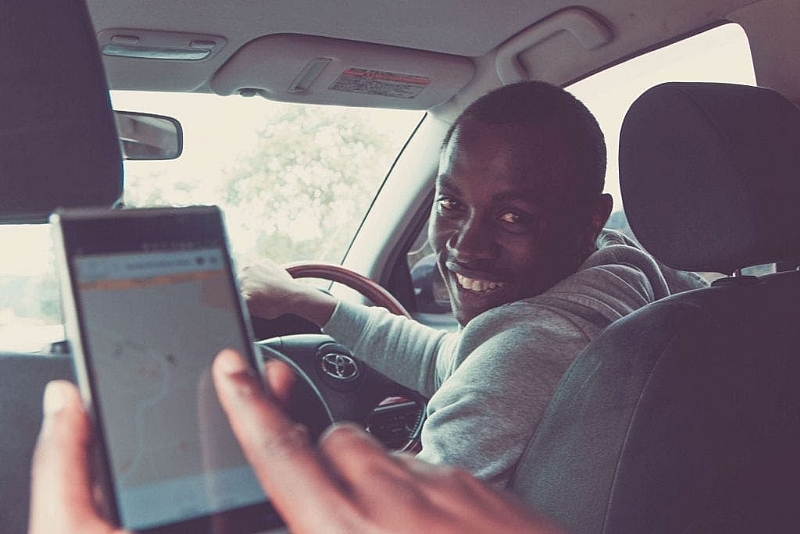
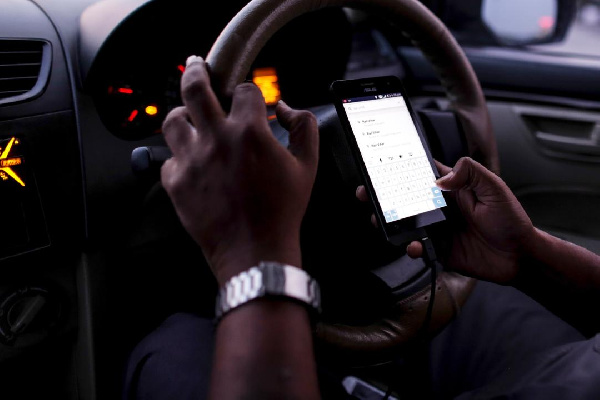
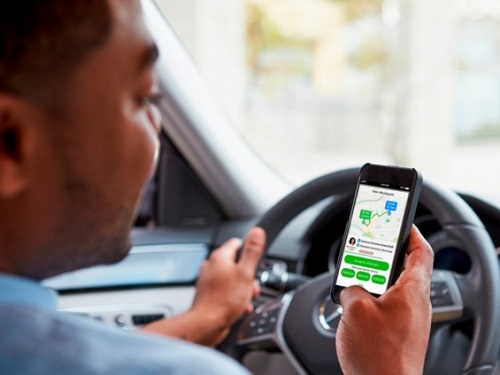
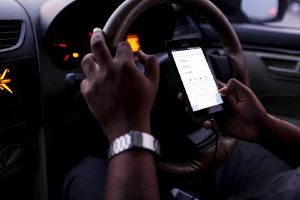
For predictable fares, use Bolt, Uber, or Yango. These apps operate in Accra, Kumasi, and Takoradi. The fare is fixed at the time of booking, the driver and vehicle are identified, and the journey is tracked. This makes them safer and more predictable than dropping taxis .
Bolt charges drivers a 20% commission on completed trips . That cost is built into the fare you pay, but the transparency is worth it for many riders.
The Gaps and the Frustrations
Accra’s transport system works, but it does not work well for everyone.
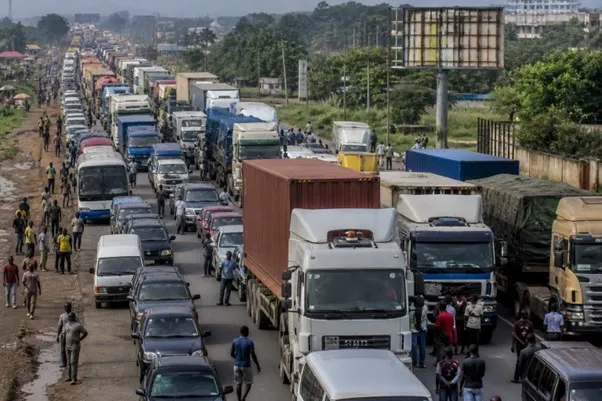
The OECD notes that private vehicles occupy 60% of road space, while taxis take another 15%. Trotros, pedestrians, and motorcycles share the remaining 25%—often without dedicated lanes or sidewalks . This imbalance is a source of daily frustration for anyone who relies on public transport.

Access to markets and essential services via trotro or walking is difficult in many parts of the city. The OECD found that while cars provide access to up to six markets within 30 minutes, trotros offer better access in central areas but access diminishes towards the periphery .
There is also no integrated payment system. You pay each trotro mate in cash. You pay each taxi driver in cash. You pay the app with a card or mobile money. The system is fragmented by design.
Quick Facts
| Mode | Typical Fare | How to Pay | Best For |
|---|---|---|---|
| Trotro | GH¢5.50 – GH¢36.80 (regulated range) | Cash to mate | Cheap, frequent, wide coverage |
| Shared Taxi | GH¢2.90 – GH¢20.20 | Cash | Fixed routes, faster than trotro |
| Dropping Taxi | GH¢7 – GH¢15 (negotiate) | Cash | Door-to-door, late nights |
| Bolt/Uber/Yango | App-calculated | Card/Mobile Money | Predictable fares, safety |
| MMT Bus | Varies | Cash | Major corridors |
| Aayalolo | Varies | Cash/Card | Adenta, Kasoa, Amasaman corridors |
Last Updated on October 31, 2026 by Samuel Kwame Boadu
Disclaimer: Some content on Accra Street Journal may be aggregated, summarized, or edited from third-party sources for informational purposes. Images and media are used under fair use or royalty-free licenses. Accra Street Journal is a subsidiary of SamBoad Publishing Hub under SamBoad Business Group Ltd, registered in Ghana since 2014.
For concerns or inquiries, please visit our Privacy Policy or Contact Page.

Samuel Kwame Boadu is a Ghanaian media entrepreneur and storyteller with a passion for amplifying urban voices and uncovering everyday truths. He is the Editor-in-Chief and Founder of Accra Street Journal, a dynamic digital platform dedicated to capturing the pulse of Ghana’s capital—its people, culture, challenges, business, sports and innovations.