





5 min read
Traders at Accra’s Kantamanto Market say relative price stability has failed to translate into sales, with customers increasingly unable to afford goods — an appeal to Finance Minister Cassiel Ato Forson to put more money in households’ hands ahead of the 2027 Budget.
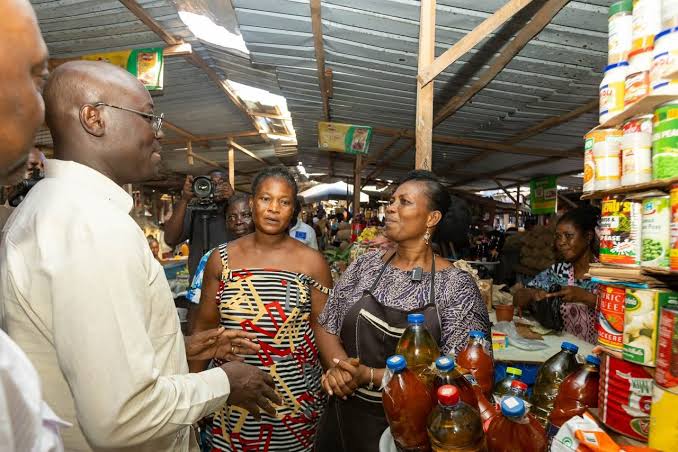
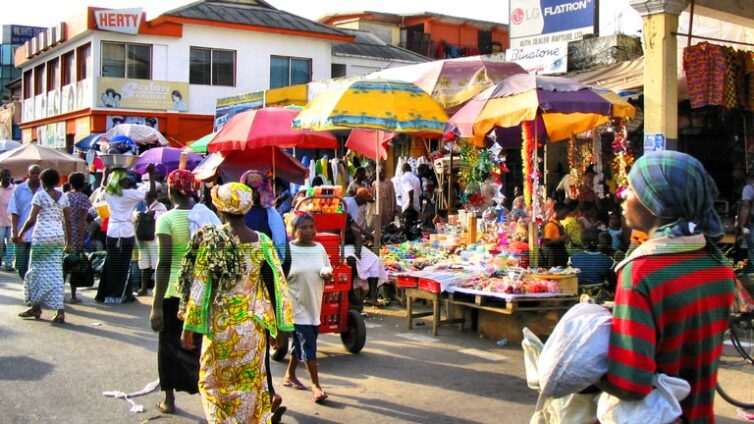
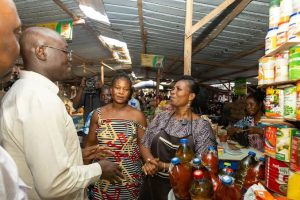
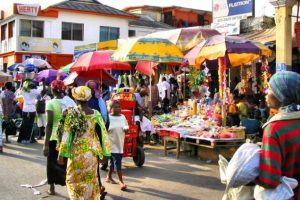
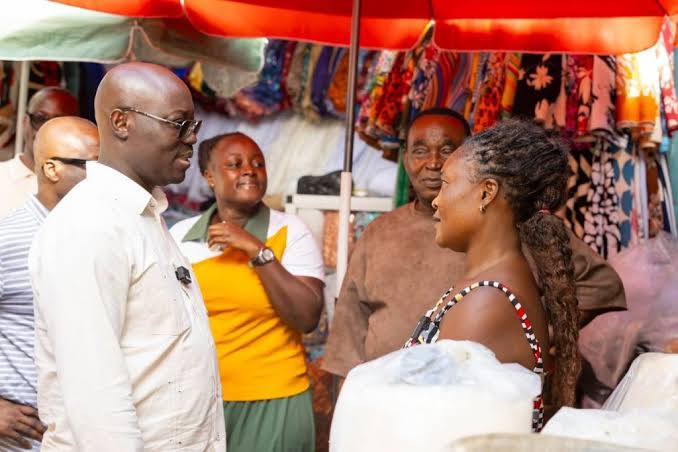
Traders at the Kantamanto Market in Accra are struggling to make sales as customers increasingly complain about a lack of money to buy goods, a situation that is putting pressure on businesses and threatening their ability to remain profitable.
Key Takeaways
- A trader at the market, Susana Asabea, says the slowdown in purchasing has left many sellers spending long hours at their stalls without making enough sales to sustain their businesses.
- She explained that traders who bought goods at relatively high prices were being forced to contend with customers offering substantially lower amounts, sometimes insisting on paying only the original purchase cost.
- Susana Asabea, a trader at Kantamanto Market in Accra, told Joy News' PM Express on November 11, 2026 that traders are struggling because customers lack money, despite relative price stability.
A trader at the market, Susana Asabea, says the slowdown in purchasing has left many sellers spending long hours at their stalls without making enough sales to sustain their businesses.
She has appealed to Finance Minister Dr Cassiel Ato Forson to address the financial difficulties confronting households and traders in the 2027 Budget, which is scheduled to be presented to Parliament on Thursday, November 12.
The Pricing Squeeze
Speaking on the PM Express programme on Joy News on Wednesday, November 11, Ms Asabea said trading at Kantamanto had become increasingly difficult, with customers often unable to pay the prices quoted by sellers.
She explained that traders who bought goods at relatively high prices were being forced to contend with customers offering substantially lower amounts, sometimes insisting on paying only the original purchase cost.
When you go and buy something with a high price and someone is coming to buy it, the amount you call to the person, the person reduces it half,” she said.
According to her, buyers frequently explained that they had no money, making it difficult for traders to sell their goods at prices that would allow them to recover their costs and make a profit.
She said the situation had left sellers virtually stuck, as goods remained unsold while business expenses continued.
When you are selling and someone can’t buy, that means you are standing still. You are not moving forward,” she said.
The Margin Arithmetic
Ms Asabea offered a concrete illustration of the squeeze.

She cited the example of an item bought for GH¢20 and offered for sale at GH¢25, which a customer might insist on purchasing for GH¢10 or GH¢15.
Accepting such an offer, she said, would leave the trader losing not only the expected profit but also part of the money invested in the item.

“Meanwhile, the real amount you bought was 20 cedis, and your profit is maybe five cedis. So, you are losing your profit and losing half of what you used to buy the item,” she said.
The arithmetic exposes a distinction that macroeconomic data does not capture. Inflation stabilisation measures the pace at which prices rise; it does not measure whether households have the income to meet those prices. A trader facing a customer who cannot afford GH¢25 is experiencing a demand shock, not a price problem.
“A Standstill”
Ms Asabea said the situation reflected a wider slowdown in trading activity, despite the relative stability in prices.
It has been a standstill (price stability), but it’s like the trade is not moving on,” she said.
She attributed the difficulty to a shortage of money in circulation, saying customers regularly told traders they could not afford the goods on display.
The Appeal: Release Money Into the System
Ms Asabea urged the Finance Minister to use the 2027 Budget to introduce measures that would improve the financial position of households and stimulate spending in the economy.
The number one thing I would tell the Finance Minister is to release money into the system,” she said.
She said traders needed customers with the means to buy, adding that increased purchasing power would help businesses generate sales, meet their financial obligations and remain operational.
She also pointed to the pressures facing households, saying traders needed income not only to sustain their businesses but also to provide for their children and families.
“They should help us. We need money to take care of our business, our children, and our family, and then to move forward in life. We are really suffering,” she said.

The Broader Context
Her appeal adds to calls from businesses for the 2027 Budget to address not only the cost of doing business but also the ability of consumers to spend.
That combination is awkward for policymakers. The government is preparing a US$10 billion New Economy programme, reducing its primary surplus target from 1.5% to 0.5% of GDP, and managing an ambitious reserve accumulation strategy — all while traders in Accra’s largest second-hand clothing market say their customers have no money.
The tension between fiscal consolidation and household purchasing power is the central political economy question of this budget. A trader who cannot sell stock does not benefit from a lower primary surplus; a government that loosens fiscal policy too far risks the currency stability that has anchored the recovery.
For traders at Kantamanto, the immediate concern is straightforward: without customers who can afford to buy, stock remains on the shelves, sales fall and businesses struggle to move forward.
Quick Facts
Susana Asabea, a trader at Kantamanto Market in Accra, told Joy News’ PM Express on November 11, 2026 that traders are struggling because customers lack money, despite relative price stability. She cited an item bought for GH¢20 and offered at GH¢25 that customers might insist on buying for GH¢10 to GH¢15, leaving traders losing both profit and part of their capital.
She described the market as “a standstill” and attributed the slowdown to a shortage of money in circulation, urging Finance Minister Dr Cassiel Ato Forson ahead of the November 12, 2027 Budget presentation to “release money into the system” and improve household purchasing power.
Her appeal adds to calls for the Budget to address not only the cost of doing business but also consumers’ ability to spend — a tension given the government’s planned US$10 billion New Economy programme and a reduction in the primary surplus target from 1.5% to 0.5% of GDP.
Source: Accra Street Journal
Last Updated on November 12, 2026 by Samuel Kwame Boadu
Disclaimer: Some content on Accra Street Journal may be aggregated, summarized, or edited from third-party sources for informational purposes. Images and media are used under fair use or royalty-free licenses. Accra Street Journal is a subsidiary of SamBoad Publishing Hub under SamBoad Business Group Ltd, registered in Ghana since 2014.
For concerns or inquiries, please visit our Privacy Policy or Contact Page.

Samuel Kwame Boadu is a Ghanaian media entrepreneur and storyteller with a passion for amplifying urban voices and uncovering everyday truths. He is the Editor-in-Chief and Founder of Accra Street Journal, a dynamic digital platform dedicated to capturing the pulse of Ghana’s capital—its people, culture, challenges, business, sports and innovations.
Use the following reference when citing or referencing this article.
Your feedback helps us improve our journalism.
Report an Error
Help us maintain accuracy. Let our editorial team know if you spot an issue in this article.
Report a problem with this article