

13 min read
Introduction
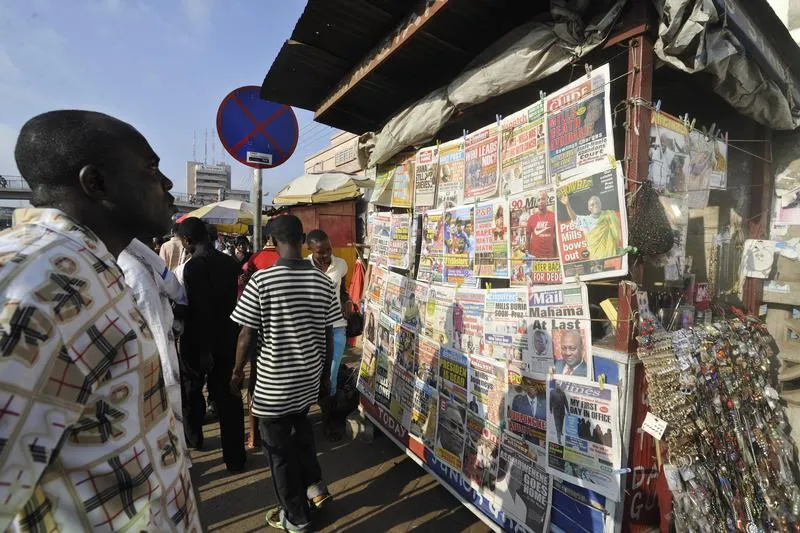
Ghana’s media landscape is one of the most vibrant in West Africa. With over 100 outlets operating without licence restrictions, a constitutional guarantee of press freedom, and a rising generation of digital creators, Ghanaians have more access to information than at any point in the country’s history . In 2026, Ghana climbed to 39th out of 180 countries on the Reporters Without Borders World Press Freedom Index, its strongest performance in five years .
But a free media is not the same as a trusted media. The same environment that allows journalists to hold power accountable also allows politicians to own newspapers, bloggers to spread unverified claims, and content creators to blur the line between commentary and fact. Public opinion in Ghana is shaped by a complex mix of traditional journalism, elite-owned media, citizen reporting, and social media algorithms—and understanding who influences what, and how, matters for anyone who wants to make sense of the country’s public conversation.
Key Takeaways
- In 2026, Ghana climbed to 39th out of 180 countries on the Reporters Without Borders World Press Freedom Index, its strongest performance in five years .
- The same environment that allows journalists to hold power accountable also allows politicians to own newspapers, bloggers to spread unverified claims, and content creators to blur the line between commentary and fact.
- A 2025 study analysing 190 editorials and opinion pieces from the Daily Graphic and Daily Guide between 2010 and 2020 found that poverty discourse intensifies in pre-election years and is frequently weaponised against rival political actors .
This article examines the forces shaping public opinion in Ghana. It covers the editorial pages that frame national debates, the ethical challenges facing journalists in a digital age, the rise of citizen journalism and local blogs, and the structural problems—ownership concentration, financial fragility, and political polarisation—that determine whose voices get heard.
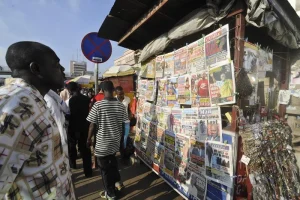
The Editorial Page: Where Elites Talk to Each Other
Editorials and opinion pieces are where Ghanaian newspapers tell readers what to think about the issues of the day. But research suggests they may be doing something narrower than that.
A 2025 study analysing 190 editorials and opinion pieces from the Daily Graphic and Daily Guide between 2010 and 2020 found that poverty discourse intensifies in pre-election years and is frequently weaponised against rival political actors . The study concluded that Ghanaian media functions more as “a platform for elite self-interest than a conduit for transformative engagement” .
In plain terms: when editors write about poverty, they are often not writing about the structural causes of poverty or the responsibilities of the wealthy. They are writing about poverty as a political liability for the party in power or an opportunity for the opposition. The poor themselves rarely appear as agents or as people whose interdependence with the elite matters.
This matters because editorials shape how the reading public—politicians, civil servants, business people, and the educated middle class—understand national problems. If poverty is framed as a political weapon rather than a structural issue, the public conversation shifts away from solutions and toward blame. The editorial page becomes a battlefield for elites, not a forum for citizens.
The Ownership Problem: Who Pays for the Message
The most significant structural influence on Ghanaian media is ownership. Reporters Without Borders estimates that a third of the country’s media outlets are owned by politicians or people with ties to the leading political parties . The content these outlets produce is largely partisan.
This is not a small problem. When a politician owns a radio station or a newspaper, the editorial line is not determined by what serves the public interest. It is determined by what serves the owner’s political career. Journalists working for these outlets may be professional and skilled, but the boundaries of what they can investigate and how they can frame a story are set by the owner’s interests.
The financial fragility of the media sector makes this worse. Most outlets struggle to survive. Salaries are low, job security is weak, and newspapers fold within months of launching . State-owned media receive government advertising contracts, but the allocation of state advertising is described by RSF as non-transparent and unfair. This creates a system where survival depends on political connections rather than journalistic quality, and where editors and reporters are vulnerable to influence.

The Ghana Journalists Association has acknowledged this dynamic. Its General Secretary noted that “the influence of politically connected media ownership structures remained a major concern, subtly affecting editorial independence in parts of the media landscape” .
Ethical Journalism Under Pressure
The ethical standards of Ghanaian journalism are under strain from multiple directions.

Media consultant Gayheart Mensah, speaking at a 2026 symposium, urged journalists to place “ethics, verification and accountability ahead of the race to break news,” warning that the rapid movement of information across social media has created new pressures . Professor Audrey Gadzekpo, former Dean of the School of Information and Communication Studies at the University of Ghana, called on journalists to “go beyond reproducing information already circulating online,” to examine original documents, verify claims, and clearly communicate what has been established and what remains unresolved .
The pressure to publish first, verify later, is not unique to Ghana. But it is sharper here because the consequences of misinformation can be severe. False claims about election results, ethnic tensions, or public health can spread quickly and cause real harm.
Professor Kwame Karikari, former Executive Director of the Media Foundation for West Africa, has called for stronger regulatory enforcement and the urgent passage of a comprehensive broadcasting law that has been pending before Parliament since the late 1990s . He also raised concerns about media outlets prioritising financial gain over public interest, citing instances where outlets appeared to defend corporate interests after investigative reports exposed questionable dealings .
The National Media Commission, which is supposed to regulate the sector, has limited enforcement powers. Its members are chosen by the government, which raises questions about its independence. The GJA and other bodies—the Ghana Independent Broadcasters Association, the Media Foundation for West Africa, and the Private Newspapers and Online News Publishers Association—play advocacy roles, but they cannot compel compliance.
Citizen Journalism: The Phone as Newsroom
The most significant shift in Ghana’s media landscape over the past decade is the rise of citizen journalism. A smartphone, an internet connection, and a social media account can put an ordinary Ghanaian at the centre of a national conversation within minutes.
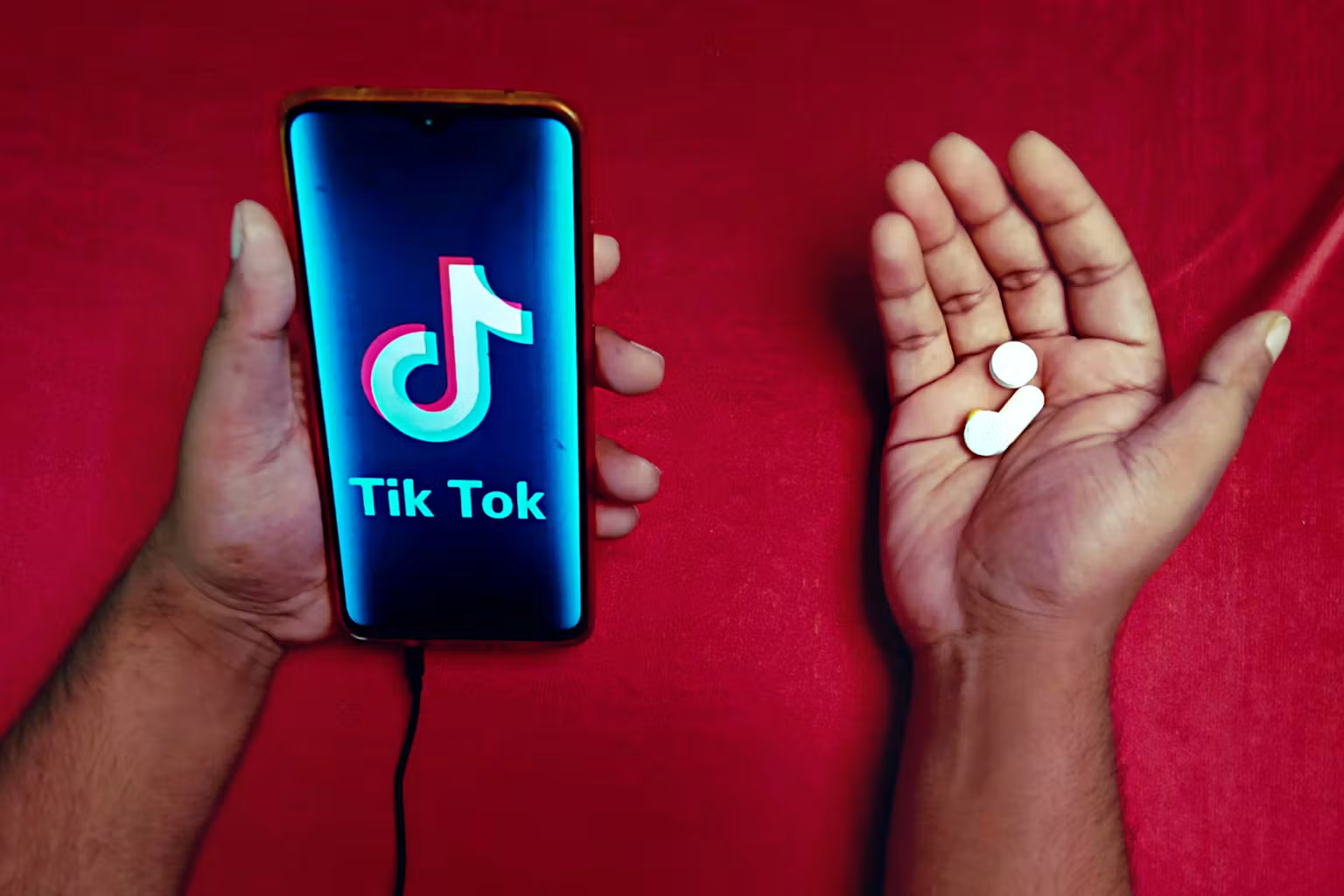
This has changed what public opinion looks like and who gets to shape it. A Facebook Live broadcast can expose a problem. A TikTok video can draw attention to an abandoned project. A blogger’s post can force officials to respond . In April 2026, President Mahama directly addressed social media claims about tricycles distributed under the Free Primary Healthcare Programme, explaining what the vehicles were intended for—an example of how social media has become a place where public officials must sometimes answer .
The contributions are real. Content creators in regions like the Volta Region are documenting local events, culture, tourism, and social issues that mainstream media may not have the resources or interest to cover . They are bridging information gaps in rural areas where mainstream media presence is limited. They are giving visibility to community-level concerns that might otherwise go unreported.
But the rise of citizen journalism has also raised concerns about verification, ethics, and professional standards. An academic in media and communication studies noted that the rapid expansion of citizen journalism has “collapsed the traditional gatekeeping structure of the media,” making it easier for misinformation to circulate . Not everyone holding a smartphone is a journalist. Not every viral video is journalism. Not every accusation is a fact .
Media practitioners argue that social media content creation cannot replace professional journalism, which is guided by principles of accuracy, verification, fairness, and accountability. Prince Botwe, a communication expert at UniMAC, described the two as complementary actors within the media ecosystem rather than competitors . The challenge is to strengthen media literacy and integrate content creators into training frameworks that promote ethical reporting practices.
The Press Freedom Paradox
Ghana’s improved ranking on the Press Freedom Index is a genuine achievement. But it sits alongside persistent concerns.

Journalist safety remains a serious issue. RSF notes that journalists investigating environmental issues—particularly mining and salt extraction—are “particularly targeted by physical attacks, sometimes resulting in serious injuries” . Cases of police violence against journalists are often not penalised, and the same goes for cases of murdered journalists . The GJA has called for a dedicated police focal point for journalist safety and complaints .
The Minister for Communication, Digital Technology and Innovations, Samuel Nartey George, has defended the government’s commitment to press freedom while warning that it will not tolerate “the deliberate spread of false information disguised as journalism” . He rejected suggestions that tighter regulation of misinformation amounts to censorship, arguing that “the regulatory and legal frameworks in this country are not instruments of censorship. They are instruments of order” .
The tension between protecting free expression and addressing harmful misinformation is not unique to Ghana. But how it is resolved will determine whether the media environment remains open enough to hold power accountable, or whether it narrows in ways that benefit those already in power.
Why It Matters to Ordinary Ghanaians
The media shapes what people know, what they believe, and what they expect from their leaders. When media is owned by politicians, the public gets a filtered version of reality. When editors frame poverty as a political weapon, the poor disappear from the conversation. When citizen journalists spread unverified claims, trust in all information erodes.
For ordinary Ghanaians, the stakes are practical. The price of food, the quality of healthcare, the safety of roads, the honesty of officials—all of these are shaped by whether the media is doing its job. A journalist who investigates a corrupt contract can save taxpayers millions. A radio station that gives voice to a rural community can force a stalled project to be completed. A blogger who verifies a claim before publishing can prevent a riot.
But the same media that can inform and protect can also mislead and divide. The responsibility that comes with a free press is not optional. It is the price of the freedom.
Future Outlook
The direction of Ghana’s media will be shaped by three forces: ownership, technology, and regulation.
If current trends continue, politically connected ownership will remain a dominant influence. Citizen journalism will grow, but without structured training or ethical standards, its contribution to public discourse will be mixed. Traditional media will struggle financially, and the quality of journalism will suffer where resources are thinnest.
The opportunities are real. The Right to Information Act has expanded formal access to public information, though bureaucratic delays limit its effectiveness . Digital platforms offer new ways to reach audiences and hold power accountable. And the public conversation about media ethics, misinformation, and press freedom is active and serious.
The most likely scenario is a media landscape that remains vibrant but uneven. Some outlets will do rigorous, independent journalism. Others will serve as propaganda arms for their owners. Citizen journalists will break stories that mainstream media misses, and they will also spread falsehoods that mainstream media has to correct. The public will have more information than ever, and less certainty about what to trust.
The wild card is regulation. If a comprehensive broadcasting law is finally passed, and if the National Media Commission is given real enforcement powers, the environment could improve. If regulation is used to silence criticism, it could deteriorate. The difference will depend on who writes the rules and who enforces them.
ASJ Conclusion
Ghana’s media is free, diverse, and fragile. It is free because the Constitution guarantees it and because journalists and citizens have fought to protect that guarantee. It is diverse because technology has democratised who can speak. And it is fragile because the economics of journalism are broken, ownership is concentrated, and the line between information and propaganda is often blurred.
The role of media in shaping public opinion is not neutral. Every editorial, every broadcast, every viral video is a choice about what to emphasise, what to ignore, and who to blame. In Ghana, those choices are shaped by the interests of owners, the pressures of survival, and the professional standards of journalists who sometimes meet them and sometimes do not.
For ordinary Ghanaians, the challenge is to be discerning. To ask who owns the outlet, who benefits from the framing, and whether the facts have been verified. A free press is only as valuable as the public’s ability to use it wisely.
Quick Facts
Topic: Media and Journalism in Ghana
Press Freedom Ranking (2026): 39th of 180 (RSF), up from 52nd in 2025
Media Outlets: 100+ (radio, TV, online)
Politician-Owned Media: ~1/3 of outlets
Constitutional Guarantee: 1992 Constitution, freedom of the press
Key Regulator: National Media Commission (limited enforcement powers)
Key Associations: GJA, GIBA, MFWA, PRINPAG
Biggest Challenge: Ownership concentration, financial fragility, misinformation
Rising Force: Citizen journalism and social media content creators
Key Law: Right to Information Act (2019), limited by bureaucratic delays
FAQ Section
1. Is Ghana’s media free?
Yes, by most measures. The 1992 Constitution guarantees press freedom, and Ghana ranked 39th out of 180 countries on the 2026 RSF Press Freedom Index. However, ownership concentration and financial fragility limit independence in practice .
2. Who owns Ghana’s media?
About a third of media outlets are owned by politicians or people with ties to political parties. The rest are a mix of private businesses, state-owned outlets like GBC, and community radio stations .
3. What is citizen journalism in Ghana?
Citizen journalism is when ordinary people use smartphones and social media to report on events, share information, and comment on public issues. Platforms like Facebook, TikTok, and YouTube have made this a significant part of Ghana’s information ecosystem .
4. Is citizen journalism reliable?
It varies. Some citizen journalists are careful and accurate. Others spread unverified claims. Media experts recommend that audiences verify information from social media and that content creators receive training in basic journalistic principles .
5. What is the role of editorials in shaping opinion?
Editorials and opinion pieces frame how readers understand issues. Research suggests Ghanaian editorials often treat poverty as a political weapon rather than a structural issue, reflecting elite interests more than public concern .
6. What are the biggest ethical challenges for Ghanaian journalists?
Verification under time pressure, resisting political influence from owners, and maintaining independence when financial survival depends on advertising or political connections .
7. What is the National Media Commission?
The NMC is the body responsible for regulating Ghana’s media. Its members are chosen by the government, and it has limited enforcement powers, which critics say undermines its ability to hold outlets accountable .
8. Are journalists safe in Ghana?
Not always. Journalists investigating environmental issues, corruption, and illegal mining face physical attacks and harassment. Cases of violence against journalists are often not prosecuted .
9. What is the Right to Information Act?
A 2019 law that allows journalists and citizens to request information from public institutions. However, bureaucratic delays and a clause allowing fees for non-English requests limit its effectiveness .
10. How does media polarisation affect public trust?
When media outlets are perceived as politically aligned, audiences trust them less. This erodes the shared factual basis for public debate and makes it harder to hold power accountable
Source: Accra Street Journal
Last Updated on November 27, 2026 by Samuel Kwame Boadu
Disclaimer: Some content on Accra Street Journal may be aggregated, summarized, or edited from third-party sources for informational purposes. Images and media are used under fair use or royalty-free licenses. Accra Street Journal is a subsidiary of SamBoad Publishing Hub under SamBoad Business Group Ltd, registered in Ghana since 2014.
For concerns or inquiries, please visit our Privacy Policy or Contact Page.

Samuel Kwame Boadu is a Ghanaian media entrepreneur and storyteller with a passion for amplifying urban voices and uncovering everyday truths. He is the Editor-in-Chief and Founder of Accra Street Journal, a dynamic digital platform dedicated to capturing the pulse of Ghana’s capital—its people, culture, challenges, business, sports and innovations.
Use the following reference when citing or referencing this article.
Your feedback helps us improve our journalism.
Report an Error
Help us maintain accuracy. Let our editorial team know if you spot an issue in this article.
Report a problem with this article