










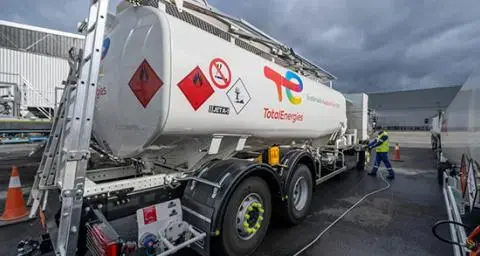
Fuel price volatility — rapid or unpredictable changes in the cost of petroleum products — is a recurring feature of global energy markets. Factors such as crude oil price movements, foreign exchange fluctuations, government policy, and supply-chain disruptions can all push pump prices up or down in Ghana.
For fuel marketers like TotalEnergies Marketing Ghana, volatility presents both challenges and strategic opportunities. How the company responds affects its financial performance, customer retention, competitive position, and long-term sustainability.

Below is a clear ASJ breakdown of how TotalEnergies Marketing Ghana performs and adapts during periods of fuel price volatility.
📢 GET A DETAILED ARTICLES + JOBS
Join ASJ's WhatsApp Channel and never miss a post or opportunity.

1. Understanding the Sources of Volatility
Before examining performance, it’s important to recognize the major drivers of fuel price volatility:
-
Crude oil price changes — global oil prices directly influence import costs.
-
Foreign exchange fluctuations — imported fuel is priced in U.S. dollars; a weaker cedi increases local costs.
-
Government taxes and levies — adjustments to excise duties or VAT affect retail prices.
-
Import and shipping disruptions — logistical bottlenecks or delays can affect supply timing.
-
Global geopolitical instability — regional or global conflicts can disrupt oil supply.
These forces make stability in the petroleum sector difficult to sustain.

2. Pricing Strategy Under Volatility
TotalEnergies Marketing Ghana uses dynamic pricing systems designed to reflect underlying cost changes.
Key Points:
-
Frequent Price Reviews: The company adjusts pump prices periodically — sometimes weekly or biweekly — to reflect changes in cost of supply and currency shifts.
-
Pass-Through Pricing: Rather than absorbing cost increases, the company generally passes relevant cost changes onto consumers. This protects profit margins but also requires careful communication to the public.
-
Competitive Parity: Prices are set in line with major competitors to avoid losing market share. Petrol stations track pricing trends across the sector to remain neither the highest nor the lowest by default.
This pricing flexibility supports revenue stability during price shifts.
3. Supply Chain Flexibility
Supply chain management becomes especially important when prices are volatile.
TotalEnergies Marketing Ghana mitigates risk by:
-
Diversifying Supply Sources: Buying from multiple international suppliers to avoid dependence on a single region.
-
Maintaining Strategic Inventory: Holding stock buffers within reasonable cost limits so that short-term import disruptions have less impact.
-
Efficient Logistics: Coordinating shipping, storage, and inland distribution to minimize delays and reduce demurrage costs.
These practices reduce the risk that volatility translates into stockouts or cost spikes.
4. Managing Foreign Exchange Exposure
Because fuel is priced internationally in U.S. dollars, the local currency (Ghanaian cedi) exchange rate significantly affects costs.
TotalEnergies Marketing Ghana manages forex risk through:
-
Hedging strategies (where feasible) to protect against sudden cedi depreciation.
-
Forward contracts in some cases to lock future purchase prices.
-
Maintaining dollar liquidity to meet import requirements without forced conversion at unfavorable rates.
Effective exchange risk management helps stabilize cost of supply and supports consistent pricing.
5. Profit Margin Management
Fuel marketers generally operate on thin margins per litre. Volatility can compress margins if rapid price increases are not passed on or if taxes rise unexpectedly.

TotalEnergies Marketing Ghana manages this through:
-
Volume optimization: Increasing throughputs to offset lower margin periods.
-
Cost discipline: Reducing operational inefficiencies to maintain net profitability.
-
Retail pricing models: Aligning retail prices with suppliers’ cost indices and regulatory benchmarks.
Even during volatile periods, careful margin handling prevents erosion of core earnings.
6. Retail and Sales Dynamics During Price Changes
Fuel price changes influence consumer buying behaviour:
-
Price Increases: Can reduce short-term demand as motorists delay refills or cut consumption.
-
Price Drops: May stimulate demand as motorists fill before expected increases.
TotalEnergies Marketing Ghana monitors sales patterns and adjusts:
-
Inventory levels
-
Promotional activities
-
Demand forecasting
This helps optimize fuel sales volumes even when consumers react to price swings.
7. Customer Loyalty and Brand Resilience
Brand strength matters during volatility.
TotalEnergies Marketing Ghana maintains performance through:
-
Brand trust: Ghanaian consumers recognize TotalEnergies as a reputable and consistent fuel supplier.
-
Loyalty programs: Reward schemes that incentivize repeat purchases, especially from frequent travellers.
-
Service quality: Clean stations, quick service, and ancillary offerings (air, lubricant sales).
Strong brand equity helps maintain sales even when prices temporarily rise.
8. Retail Network and Market Share
With a widespread retail network across urban and rural Ghana, TotalEnergies Marketing Ghana benefits from:
-
Footprint advantage: Multiple stations within key transport corridors.
-
Network resilience: Ability to redistribute supplies quickly between locations.
-
Market penetration: A broad customer reach that reduces dependence on any single region.
A strong network softens the impact of localized economic downturns or supply delays.
9. Ancillary Sources of Revenue
During periods of fuel price volatility, ancillary revenue streams help stabilize overall performance:
-
Lubricants and quick-service maintenance products
-
Convenience store sales (in selected outlets)
-
Commercial fuel supply contracts
These additional services reduce reliance on fuel sales alone and help smooth revenue fluctuations.
10. Regulatory Interaction and Compliance
Fuel pricing in Ghana is influenced by:
-
Government levies and taxes
-
Import duties
-
Petroleum pricing guidelines
TotalEnergies Marketing Ghana engages with regulatory bodies to ensure compliance, and pricing models often reflect:
-
Duties required by law
-
Petroleum price bands set by authorities
-
Public fuel price announcements
Transparent compliance builds trust and reduces volatility-related risk.
11. How Capital Markets See the Company
For listed subsidiaries or associated investors, performance during volatility can influence:
-
Share price stability
-
Dividend potential
Investors and analysts often evaluate TotalEnergies Marketing Ghana based on:
-
Quarterly revenue growth
-
Operating margins relative to peers
-
Resilience during price spikes
A consistent business model that handles volatility better usually attracts stronger valuation multiples.
12. Lessons from Past Volatility
Historically:
-
Price spikes are absorbed into consumer prices fairly quickly.
-
Currency depreciation often corresponds with upward pass-through to retail pricing.
-
The company’s revenues can grow, but demand elasticity limits overall volume growth when pump prices rise steeply.
Resilience is tied not to avoiding price changes — which is impossible — but to managing them efficiently and maintaining customer confidence.
13. Risks That Remain
Even with strong systems in place, volatility poses ongoing challenges:
-
Demand elasticity: Weak consumer demand when prices rise sharply.
-
Forex shocks: Severe cedi depreciation increases supply costs.
-
Regulatory shifts: Tax increases or pricing controls can squeeze margins.
-
Global oil supply disruptions: Affect benchmark pricing unpredictably.
TotalEnergies Marketing Ghana mitigates these risks, but they cannot be eliminated entirely.
14. How Performance Is Measured
Key performance indicators (KPIs) during volatility include:
| KPI | What It Shows |
|---|---|
| Sales Volume | Consumer demand resilience |
| Net Fuel Margin | Profitability per litre sold |
| Operating Cost Ratios | Efficiency in service delivery |
| Market Share | Competitive positioning |
| Cash Flow Stability | Ability to fund operations |
| Brand Loyalty Metrics | Repeat business levels |
Improvement or stability in these areas suggests robustness in volatile markets.
Frequently Asked Questions (FAQs)
1. Does fuel price volatility hurt TotalEnergies Ghana’s profits?
Volatility itself doesn’t necessarily hurt profits if cost changes are passed through efficiently and demand remains stable.
2. How quickly does the company adjust retail prices?
Adjustments usually occur periodically based on changes in import cost, exchange rate movements, and regulatory benchmarks.
3. Does volatility affect fuel demand?
Yes — demand may soften with price spikes and rise when prices fall.
4. Are ancillary services important?
Yes — non-fuel revenue helps balance overall performance during volatile price periods.
5. Can the company control international price changes?
No — global fuel prices are set on international markets. The company manages how these are reflected locally.
⛽ Ghana Fuel Prices Update
Looking for the latest petrol and diesel prices in Ghana? Get live Ghana fuel price updates, including the latest pump-price information, on Accra Street Journal.
👉 Click here to check the latest Ghana fuel prices today
Source: Accra Street Journal
Last Updated on October 3, 2026 by Samuel Kwame Boadu
Disclaimer: Some content on Accra Street Journal may be aggregated, summarized, or edited from third-party sources for informational purposes. Images and media are used under fair use or royalty-free licenses. Accra Street Journal is a subsidiary of SamBoad Publishing Hub under SamBoad Business Group Ltd, registered in Ghana since 2014.
For concerns or inquiries, please visit our Privacy Policy or Contact Page.

Samuel Kwame Boadu is a Ghanaian media entrepreneur and storyteller with a passion for amplifying urban voices and uncovering everyday truths. He is the Editor-in-Chief and Founder of Accra Street Journal, a dynamic digital platform dedicated to capturing the pulse of Ghana’s capital—its people, culture, challenges, business, sports and innovations.





