






Introduction: A Proactive Response to Global Shocks
The African Export-Import Bank (Afreximbank) has approved a US$10 billion Gulf Crisis Response Programme (GCRP) aimed at cushioning African and Caribbean economies from the ongoing conflict in the Middle East . The programme is intended to sustain critical imports, including fuel, liquefied natural gas, food, fertilisers, and pharmaceuticals, by providing short-term foreign exchange and liquidity support to member states most exposed to the crisis .
The Gulf crisis, which intensified on February 28, 2026, has triggered global economic shocks, particularly for nations reliant on Gulf oil, fertilisers, and shipping corridors . According to Afreximbank, African and Caribbean economies have been among the hardest hit, with rising energy costs, disrupted trade flows, and declining tourism and remittance inflows .

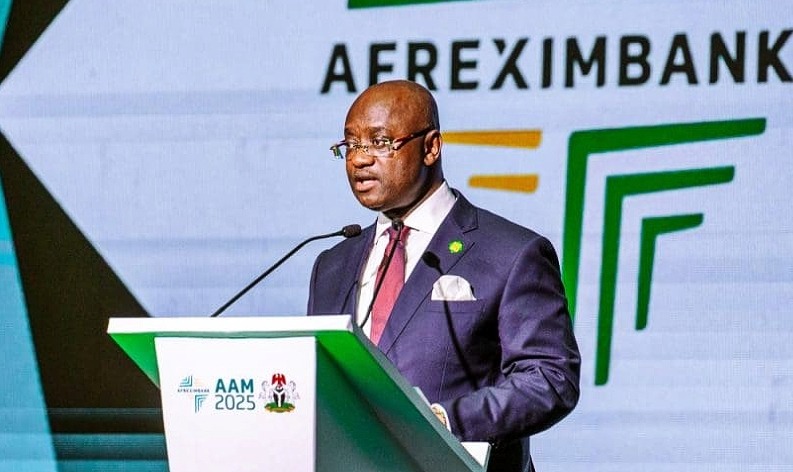
Dr. George Elombi, President and Chairman of Afreximbank, told reporters that the Bank’s proactive intervention reflects its ongoing commitment to helping economies navigate global shocks:
📢 GET A DETAILED ARTICLES + JOBS
Join ASJ's WhatsApp Channel and never miss a post or opportunity.

“This crisis response programme is in tune with our DNA. It will support African countries in adjusting smoothly to the crisis while strengthening their resilience to future shocks” .
What the Gulf Crisis Response Programme (GCRP) Does
Scope and Objectives
The GCRP is designed to provide short-term foreign exchange and liquidity support to member states most exposed to the Gulf crisis. Key objectives include:
| Objective | Description |
|---|---|
| Sustain critical imports | Fuel, LNG, food, fertilisers, pharmaceuticals |
| Support energy and mineral exporters | Leverage elevated prices and re-routed trade flows through pre-export and working capital financing |
| Build long-term resilience | Lay groundwork for structural economic adjustments |
| Mitigate immediate shocks | Address rising energy costs, disrupted trade flows, declining tourism and remittances |
The programme also seeks to empower African energy and mineral exporters to leverage elevated prices and re-routed trade flows through pre-export and working capital financing .
Building on Previous Interventions
The GCRP builds on previous emergency interventions by Afreximbank, including the US$4 billion Ukraine Crisis Adjustment Trade Financing Programme , which, according to the Bank, helped African nations bridge gaps in liquidity and access essential goods during the Ukraine crisis of 2023–2024 .
This track record of rapid, decisive intervention demonstrates Afreximbank’s capacity to mobilise resources when member states face external shocks. The Ukraine programme was widely credited with preventing more severe economic disruptions across the continent .
Coordination with Regional and International Partners
Afreximbank said it has already begun coordinating with banks and corporates to secure fuel, energy supplies, fertilisers, and essential food imports disrupted by the ongoing Gulf conflict . In addition, the Bank is collaborating with:
-
UN Economic Commission for Africa (UNECA)
-
African Union Commission (AUC)
-
AfCFTA Secretariat
-
CARICOM Secretariat
These partnerships are designed to strengthen regional responses on energy security, trade resilience, and supply chain diversification . The inclusion of CARICOM reflects the Caribbean’s vulnerability to the same global shocks affecting African economies, particularly given the region’s dependence on Gulf energy imports and remittances from diaspora populations .
Why This Matters: The Impact of the Gulf Crisis on African and Caribbean Economies
The Trigger: February 28, 2026
The Gulf crisis intensified on February 28, 2026 , triggering global economic shocks that have reverberated across Africa and the Caribbean. The conflict has disrupted critical shipping corridors in the Strait of Hormuz, a chokepoint through which approximately 20 per cent of global oil passes daily .
Key Vulnerabilities
| Vulnerability | Impact on African/Caribbean Economies |
|---|---|
| Rising energy costs | Increased import bills, pressure on foreign exchange reserves, higher transport and production costs |
| Disrupted trade flows | Delays and increased costs for essential imports (fertilisers, grains, pharmaceuticals) |
| Declining tourism | Reduced foreign exchange earnings, particularly for island economies and destinations reliant on Gulf visitors |
| Remittance disruptions | Reduced inflows from diaspora populations in Gulf states |
| Fertiliser shortages | Threat to agricultural productivity and food security |
The Fertiliser Crisis
African agriculture is particularly vulnerable to disruptions in fertiliser supply. The Gulf region, especially Qatar and Saudi Arabia, is a major producer of nitrogen-based fertilisers. Disruptions to shipping routes or production have already begun to affect fertiliser prices and availability across the continent, threatening planting seasons and food security .
Energy Security
Many African nations rely on Gulf oil imports. Rising energy costs increase import bills, pressure foreign exchange reserves, and raise production costs across the economy. For net oil importers, this can trigger inflation, widen trade deficits, and force currency depreciation .
How the GCRP Works: Practical Mechanisms
Short-Term Foreign Exchange and Liquidity Support
The core of the GCRP is the provision of short-term foreign exchange and liquidity support to member states most exposed to the crisis. This will enable countries to:
-
Pay for essential imports when domestic foreign exchange reserves are under pressure
-
Bridge liquidity gaps during periods of market volatility
-
Avoid drawing down critical reserves needed for other priorities
Pre-Export and Working Capital Financing
The programme also provides pre-export and working capital financing to African energy and mineral exporters. This enables them to:
-
Leverage elevated commodity prices
-
Capitalise on re-routed trade flows
-
Maintain production and export volumes despite market disruptions
This dual approach—supporting both importers and exporters—recognises that the crisis affects countries differently depending on their trade profiles.
Coordination with Banks and Corporates
Afreximbank has already begun coordinating with banks and corporates to secure disrupted supply chains. This includes working with:
-
Fuel and energy suppliers to maintain critical imports
-
Fertiliser producers and distributors to prevent agricultural shortages
-
Pharmaceutical companies to ensure continued access to essential medicines
Afreximbank: A Pan-African Financial Powerhouse
Institutional Overview
Afreximbank was established as a Pan-African multilateral financial institution to finance and promote intra-African trade . It has since evolved into a critical pillar of African economic resilience, deploying innovative financing solutions to address crises, support industrialisation, and facilitate trade integration.
| Metric | Value |
|---|---|
| Assets Under Management | Over US$40 billion |
| Shareholder Base | African governments, African and non-African private investors, institutional investors |
| Key Programmes | Adjustment Fund (US$10bn), PAPSS, Ukraine Crisis Programme (US$4bn), GCRP (US$10bn) |
The Adjustment Fund and PAPSS
The Bank also administers a US$10 billion Adjustment Fund to assist countries participating in the African Continental Free Trade Agreement (AfCFTA) . This fund helps member states manage the adjustment costs associated with trade liberalisation, including revenue losses, infrastructure investments, and competitiveness improvements.
Additionally, Afreximbank operates the Pan-African Payment and Settlement System (PAPSS) , which facilitates cross-border trade by enabling payments in local currencies . PAPSS reduces the need for US dollars in intra-African trade, lowering transaction costs and reducing exposure to currency volatility .
The Broader Context: A System Under Stress
The Ukraine Crisis Comparison
The GCRP is modelled on Afreximbank’s successful US$4 billion Ukraine Crisis Adjustment Trade Financing Programme . That programme helped African nations navigate the disruption to grain, fertiliser, and energy markets caused by the Russia-Ukraine war.
The Gulf crisis presents similar challenges—disrupted shipping routes, higher energy costs, and fertiliser shortages—but with a different geographic focus. The GCRP adapts the Ukraine programme’s mechanisms to the specific vulnerabilities of the Gulf crisis.
A Multi-Front Global Crisis
African and Caribbean economies are now navigating multiple, overlapping global shocks:
| Crisis | Primary Impact | Duration |
|---|---|---|
| COVID-19 pandemic | Tourism collapse, supply chain disruptions, debt accumulation | 2020–2022 |
| Ukraine war | Grain, fertiliser, and energy price spikes | 2022–2024 |
| Gulf crisis | Energy price spikes, shipping disruptions, remittance declines | 2026–present |
The cumulative effect of these shocks has eroded fiscal space, depleted reserves, and increased debt vulnerability across the continent. The GCRP is designed to prevent the Gulf crisis from triggering a new wave of economic distress .
What This Means for Ghana
Ghana’s Exposure
Ghana, like many African nations, is exposed to the Gulf crisis through multiple channels:
-
Energy imports: Ghana imports refined petroleum products; higher global oil prices increase the import bill and pressure the cedi
-
Fertiliser imports: Disruptions to fertiliser supply threaten agricultural productivity and food security
-
Trade flows: Disruptions to shipping routes affect both imports and exports
-
Remittances: Ghana receives remittances from diaspora populations in Gulf states; economic downturns there could reduce flows
Accessing GCRP Support
As an Afreximbank member state, Ghana is eligible to access GCRP support. The programme provides:
-
Short-term foreign exchange to pay for essential imports
-
Liquidity support to bridge gaps during market volatility
-
Pre-export financing for Ghana’s commodity exporters (gold, cocoa, oil)
The specific mechanisms and eligibility criteria will be determined through coordination between Afreximbank and the Government of Ghana .
The Path Forward: From Crisis Response to Structural Resilience
Short-Term Mitigation
The immediate priority is to prevent the Gulf crisis from triggering acute economic distress. The GCRP provides the liquidity and foreign exchange needed to sustain critical imports while countries adjust to higher energy costs and disrupted trade flows .
Medium-Term Adjustment
Beyond the immediate crisis, the GCRP aims to support countries in adjusting to the new economic reality. This includes:
-
Diversifying energy sources to reduce dependence on Gulf oil
-
Developing domestic fertiliser production capacity
-
Strengthening regional trade to reduce reliance on extra-continental supply chains
Long-Term Structural Resilience
The ultimate goal is to build long-term structural resilience so that African and Caribbean economies are less vulnerable to future shocks. The GCRP is designed to:
-
Strengthen regional responses on energy security
-
Diversify supply chains
-
Build the infrastructure for intra-African trade through AfCFTA
Key Takeaways
| Aspect | Detail |
|---|---|
| Programme Name | Gulf Crisis Response Programme (GCRP) |
| Total Commitment | US$10 billion |
| Purpose | Cushion African and Caribbean economies from Middle East conflict shocks |
| Key Sectors | Fuel, LNG, food, fertilisers, pharmaceuticals |
| Mechanisms | Short-term FX/liquidity support, pre-export and working capital financing |
| Precedent | US$4 billion Ukraine Crisis Adjustment Trade Financing Programme (2023–2024) |
| Partners | UNECA, AUC, AfCFTA Secretariat, CARICOM Secretariat |
| Crisis Trigger | February 28, 2026 (intensification of Gulf conflict) |
| Afreximbank Assets | Over US$40 billion |
Frequently Asked Questions (FAQs)
1. What is the Gulf Crisis Response Programme (GCRP)?
The GCRP is a US$10 billion emergency financing facility approved by Afreximbank to cushion African and Caribbean economies from the economic shocks caused by the ongoing Middle East conflict .
2. When did the Gulf crisis intensify?
The crisis intensified on February 28, 2026, triggering global economic shocks, particularly for nations reliant on Gulf oil, fertilisers, and shipping corridors .
3. What sectors does the GCRP support?
The programme supports critical imports including fuel, liquefied natural gas, food, fertilisers, and pharmaceuticals .
4. How does the GCRP work?
It provides short-term foreign exchange and liquidity support to member states most exposed to the crisis, as well as pre-export and working capital financing for African energy and mineral exporters .
5. What previous crisis programme did Afreximbank run?
Afreximbank previously ran a US$4 billion Ukraine Crisis Adjustment Trade Financing Programme that helped African nations during the 2023–2024 Ukraine crisis .
6. Who are Afreximbank’s partners in this programme?
Afreximbank is collaborating with UNECA, the African Union Commission, the AfCFTA Secretariat, and the CARICOM Secretariat
7. Why are Caribbean economies included in this programme?
Caribbean economies face similar vulnerabilities to African nations, including dependence on Gulf energy imports, disrupted trade flows, and declining tourism and remittances .
8. How large is Afreximbank?
Afreximbank manages over US$40 billion in assets and is a Pan-African multilateral financial institution .
9. Is Ghana eligible for GCRP support?
Yes, as an Afreximbank member state, Ghana is eligible to access GCRP support .
10. What other programmes does Afreximbank run?
Afreximbank administers a US$10 billion Adjustment Fund for AfCFTA participants and operates the Pan-African Payment and Settlement System (PAPSS) for cross-border trade .
Conclusion: A Testament to African Financial Resilience
The Gulf Crisis Response Programme is a testament to the growing financial resilience of African institutions. Within weeks of the crisis intensifying, Afreximbank mobilised a US$10 billion response—larger than the Ukraine programme that preceded it .
The programme’s design reflects lessons learned from previous crises. It provides both immediate liquidity to sustain critical imports and long-term financing to help exporters capitalise on elevated prices. It coordinates with regional partners to strengthen collective responses. And it includes the Caribbean, recognising that the vulnerabilities of small island states transcend continental boundaries .
For Ghana, the GCRP offers a vital lifeline. As a net importer of refined petroleum products, Ghana is exposed to higher energy costs. As an agricultural nation, Ghana is vulnerable to fertiliser shortages. And as a recipient of remittances from Gulf states, Ghana faces potential declines in diaspora flows.
The GCRP cannot eliminate these vulnerabilities. But it can prevent them from triggering a full-blown economic crisis. It can buy time for structural adjustments. And it can demonstrate that Africa has the institutional capacity to respond to global shocks without waiting for assistance from beyond the continent.
As Dr. Elombi said: “This crisis response programme is in tune with our DNA. It will support African countries in adjusting smoothly to the crisis while strengthening their resilience to future shocks” .
In an era of compounding global crises, that resilience is not just desirable. It is essential.
Frequently Asked Questions (FAQs)
1. What is the Gulf Crisis Response Programme (GCRP)?
A US$10 billion emergency financing facility approved by Afreximbank to cushion African and Caribbean economies from Middle East conflict shocks .
2. When did the Gulf crisis intensify?
February 28, 2026 .
3. What sectors does the GCRP support?
Fuel, LNG, food, fertilisers, and pharmaceuticals .
4. How does the GCRP work?
Short-term FX/liquidity support and pre-export/working capital financing .
5. What previous crisis programme did Afreximbank run?
A US$4 billion Ukraine Crisis Adjustment Trade Financing Programme (2023–2024) .
6. Who are Afreximbank’s partners?
UNECA, AUC, AfCFTA Secretariat, CARICOM Secretariat .
7. Why are Caribbean economies included?
They face similar vulnerabilities to African nations—energy dependence, disrupted trade, and declining tourism .
8. How large is Afreximbank?
Over US$40 billion in assets .
9. Is Ghana eligible for GCRP support?
Yes .
10. What other programmes does Afreximbank run?
AfCFTA Adjustment Fund (US$10bn) and PAPSS .
Last Updated on April 8, 2026 by Samuel Kwame Boadu
Disclaimer: Some content on Accra Street Journal may be aggregated, summarized, or edited from third-party sources for informational purposes. Images and media are used under fair use or royalty-free licenses. Accra Street Journal is a subsidiary of SamBoad Publishing Hub under SamBoad Business Group Ltd, registered in Ghana since 2014.
For concerns or inquiries, please visit our Privacy Policy or Contact Page.

Samuel Kwame Boadu is a Ghanaian media entrepreneur and storyteller with a passion for amplifying urban voices and uncovering everyday truths. He is the Editor-in-Chief and Founder of Accra Street Journal, a dynamic digital platform dedicated to capturing the pulse of Ghana’s capital—its people, culture, challenges, business, sports and innovations.