








How Ghana’s largest bank is leveraging pan-African scale, agricultural finance, and digital innovation to defend its crown against nimble fintechs and multinational rivals.

Executive Introduction
In the fragmented landscape of African banking, scale is a defensive moat—but it is not an impenetrable one. Ecobank Ghana PLC (GHSE: EGH) stands as the undisputed heavyweight of Ghana’s financial sector, consistently ranking as the largest bank by total assets on the Ghana Stock Exchange . Yet, in an era where customer experience is redefining competitive advantage and nimble fintechs are eroding traditional fee income, size alone no longer guarantees supremacy .
As the jewel in the crown of Lome-based Ecobank Transnational Incorporated (ETI), this institution operates less like a local subsidiary and more like a financial fortress. It bridges Anglophone West Africa with the rest of the continent, facilitating trade finance, treasury services, and remittances across 35 African countries.
📢 GET A DETAILED ARTICLES + JOBS
Join ASJ's WhatsApp Channel and never miss a post or opportunity.
For investors and business leaders, Ecobank Ghana represents a paradox: a heritage institution with deep roots (circa 1990) that is currently undergoing a complex “Growth, Transformation, and Returns” (GTR) strategy. This profile dissects how Ecobank Ghana makes its money, its strategic pivot toward the 24-hour economy and green finance, and the very real risks posed by currency volatility and asset quality stress .
Company Overview
Background & Ownership
Ecobank Ghana was incorporated in 1989 and commenced operations as a merchant bank on February 19, 1990 . It acquired a universal banking license in 2003 and listed on the Ghana Stock Exchange in 2006. The bank is a subsidiary of Ecobank Transnational Incorporated (ETI), the leading pan-African banking conglomerate, though it maintains a local listing that requires adherence to stringent corporate governance standards .
Operations & Footprint
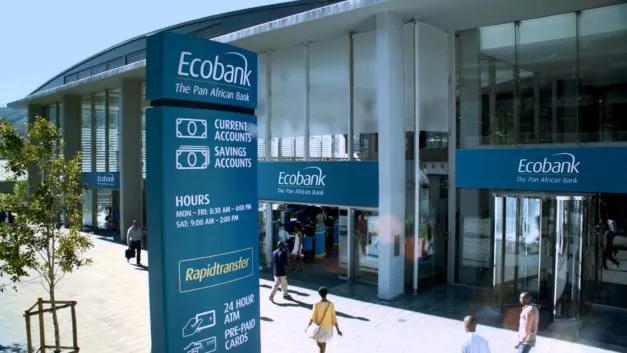
With a strategic shift from a wholesale bank to a universal bank, EGH currently operates 64 branches and over 242 ATMs. However, its most significant physical asset is its network of 3,065 “Xpress Points”—agency banking locations that allow the bank to reach rural and peri-urban customers without the overhead of traditional brick-and-mortar expansion .
Leadership
Under the stewardship of Abena Osei-Poku, the Managing Director and Regional Executive for the Anglophone West Africa Cluster, the bank has pivoted toward aggressive digital acquisition and sector-specific lending. Her tenure has been marked by a push into high-value corporate relationships and a deliberate strategy to capture the agricultural value chain.
Business Model: Beyond the Interest Margin
Ecobank Ghana operates a diversified balance sheet business model, segmented into four core verticals :
-
Consumer Banking: Mass-market deposits, salary advances, auto loans, mortgages, and card services.
-
Commercial Banking: Serving SMEs and Mid-Caps with working capital, overdrafts, and supply chain financing.
-
Corporate & Investment Banking (CIB): This is the engine room. Ecobank Ghana leverages its cross-border network to service multinationals, public sector institutions, and oil and gas giants. Trade finance and cash management dominate this segment.
-
Treasury: Fixed income trading, currencies, and commodities (FICC). Given the volatility of the Ghanaian Cedi, this segment has become a volatile but critical revenue driver.
How They Make Money
Unlike digital-only banks, Ecobank Ghana relies on the “float.” The bank reported total assets of GH¢46.0 billion in 2024, supported by deposits of GH¢32.4 billion . Revenues are generated through:
-
Net Interest Income (NIM): The spread between lending rates and deposit costs.
-
Fees & Commissions: From trade services, digital transfers, and account maintenance.
-
Forex Trading: Buying and selling hard currency for corporate clients.
However, the group-level results for 2025 showed a record cost-to-income ratio of 48.3%, indicating that operational efficiency is finally improving after years of heavy investment in technology .
Market Position & Competition
Market Leadership
Ecobank Ghana is the largest bank in Ghana by total assets . It dominates the corporate banking segment, where its ability to facilitate payments in Nigeria, Kenya, or France (via its Paris branch) gives it a distinct edge over local competitors.
The Competitive Landscape
The battle for the customer is now fought on two fronts :
-
The Experience War: In the 2025 KPMG Customer Experience Survey, Ecobank placed 2nd in Corporate Banking (score 84.5), trailing Stanbic Bank. In Retail Banking, the top spots were dominated by Standard Chartered and Zenith, suggesting that while Ecobank is trusted for business, its retail UX needs continuous refinement .
-
The SME Scramble: Access Bank and Absa Bank are aggressively courting Small and Medium Enterprises (SMEs). Ecobank’s “Commercial Banking” segment is fighting back with digital onboarding tools to capture this higher-yielding risk segment.
Competitive Advantage
The “Ecobank Single Platform” remains its strongest asset. A cocoa exporter in Accra can pay a fertilizer supplier in Lagos instantly using Ecobank’s internal network, bypassing costly correspondent banks.
Digital Strategy & Innovation
Ecobank is walking a fine line between being a tech company and a bank. Recognizing that digital platforms are now a basic expectation, not a differentiator, the bank is pivoting to embedded finance .
Xpress Points & Agency Banking
Rather than building more branches, Ecobank is doubling down on its Xpress Point agent network. This strategy turns small retailers (pharmacies, kiosks) into bank agents, allowing cash-in/cash-out services in remote areas. This is central to capturing the informal sector that contributes significantly to Ghana’s GDP.
Fintech Partnerships
Unlike some legacy banks that view fintechs as threats, Ecobank has historically sought partnerships. The bank is actively collaborating with the Ministry of Communication and Digital Technology to enhance cybersecurity and expand digital infrastructure, signaling a move into government-backed digital public goods .
Green Finance & Agri-Tech
In a sophisticated move, Ecobank is using technology to solve the collateral problem in agriculture. Through the Accelerated Solar Action Program (ASAP) and the AFAWA Green Finance Facility, the bank is offering collateral-free loans for solar irrigation. .
“Most smallholder farmers do not have titled land… 82.4 per cent of land in Ghana lacks documentation.” – Yet, using partnerships with insurance tech firms, Ecobank bundles weather-index insurance with loans, mitigating climate risk digitally .
Challenges & Risks
No analysis of Ecobank Ghana is complete without addressing the headwinds.
1. Asset Quality and Legacy Debt
Group-level data for 2025 revealed that non-performing loans (NPLs) ticked up, specifically linked to legacy exposures in Nigeria and the unwinding of regulatory forbearance . For the Ghana subsidiary, the domestic DDEP (Domestic Debt Exchange Program) restructuring has already squeezed margins, and any sovereign distress flows directly to the bank’s bottom line.
2. The Cedi Depreciation
As a major holder of government treasuries and a facilitator of forex, the depreciation of the Ghanaian Cedi is a double-edged sword. It boosts the Cedi value of repatriated dollars but erodes the real value of local currency depositors’ wealth.
3. The Shareholder vs. Growth Conundrum
For years, Ecobank Group froze dividends to conserve capital . The Group resumed dividends in 2026 with a $40 million payout, but the yield remained conservative . For retail investors holding EGH stock, there is tension between the bank’s need to reinvest in digital transformation and the demand for cash returns.
Economic & Industry Impact
Ecobank Ghana is not just a participant in the economy; it is a foundational utility.
Employment & Ecosystem
The bank employs approximately 1,534 people directly but supports tens of thousands indirectly through its Xpress Point agents and supply chains .
Financial Inclusion
By facilitating the ‘Bridge-In Agriculture’ programme with the Mastercard Foundation, Ecobank has disbursed over GH¢120 million to 8,000 farmers, many of whom had never held a formal bank account .
Government Policy Alignment
The bank is actively aligning with the government’s 24-Hour Economy policy, specifically targeting agro-processing. By financing the machinery and storage facilities that allow agriculture to operate around the clock, Ecobank is moving from passive lending to active industrial policy execution .
Future Outlook
The next three to five years will define whether Ecobank Ghana trades as a mature “value” stock or a “growth” tech stock.
The Bull Case (Optimistic)
If the GTR strategy fully matures, the cost-to-income ratio will drop below 45%. The bank’s investment in AI-driven credit scoring for SMEs will unlock the unbanked segment, and cross-border payments will surge with the implementation of the African Continental Free Trade Area (AfCFTA).
The Bear Case (Caution)
If inflation remains sticky and the Cedi continues to underperform, the bank’s treasury gains will be overshadowed by operational costs. Furthermore, if fintechs like OPay or PalmPay successfully disintermediate Ecobank in the peer-to-peer payment space, the bank risks becoming a “dumb pipe”—holding deposits but earning no fees on transactions.
Verdict
Ecobank Ghana remains a formidable institution. It is too big to fail and too connected to ignore. For corporate clients, it is the essential partner for pan-African trade. For retail customers, the experience is improving but still chasing the agility of fintechs. For investors, it offers stability and exposure to Ghanaian economic growth, albeit with the volatility inherent in frontier markets.
FAQ SECTION
1. Is Ecobank a Ghanaian bank or a foreign bank?
Ecobank is a pan-African bank. Ecobank Ghana PLC is a subsidiary of Ecobank Transnational Incorporated (ETI), which is headquartered in Lome, Togo. However, Ecobank Ghana is locally incorporated, listed on the Ghana Stock Exchange, and licensed by the Bank of Ghana, making it a domestic entity with a regional passport.
2. What is the current share price of Ecobank Ghana (EGH)?
As a publicly traded entity on the Ghana Stock Exchange (GSE), the share price fluctuates daily based on market activity. Investors should consult the official GSE portal or licensed stockbrokers for real-time pricing data. The stock is known for relatively low liquidity but stable dividend prospects compared to junior miners.
3. How does Ecobank Ghana make most of its money?
The bank generates revenue primarily through three streams: Net Interest Income (lending rates minus deposit costs), Fees & Commissions (especially from trade finance and digital transfers), and Treasury/Forex Trading (capitalizing on currency fluctuations and bond yields) .
4. Who is the Managing Director of Ecobank Ghana?
The Managing Director is Mrs. Abena Osei-Poku. She also serves as the Regional Executive for the Anglophone West Africa Cluster, overseeing Ecobank operations in several other English-speaking West African nations .
5. What are Ecobank Xpress Points?
Xpress Points are agency banking outlets. They are typically small shops, pharmacies, or kiosks authorized to perform basic banking functions (deposits, withdrawals, transfers) on behalf of Ecobank. This strategy helps the bank reach rural customers without building expensive physical branches.
6. Is Ecobank involved in Mobile Money?
Yes, but differently from telcos like MTN MoMo. Ecobank offers Rapidtransfer and the Ecobank Mobile App, which allows interoperability between bank accounts and mobile wallets. They focus on “banking the banked” and the formal sector, while also using Xpress Points to capture cash-based transactions .
7. Why did Ecobank freeze dividends in previous years?
The Group (ETI) froze dividends to retain capital for its Growth, Transformation, and Returns (GTR) strategy. This involved investing heavily in digital infrastructure and shoring up balance sheets following currency devaluations and the COVID-19 pandemic. Dividends resumed in 2025/2026 following a strong profit rebound .
8. How does Ecobank support farmers without land title deeds?
Traditionally, farmers without collateral cannot get loans. Ecobank uses Warehouse Receipt Financing (using stored crops as collateral) and partnerships with insurers (weather index insurance) to de-risk lending. They also use cooperatives to facilitate group lending that bypasses individual land title requirements .
9. How does Ecobank Ghana compare to GCB Bank?
While both are giants, Ecobank has a stronger regional (cross-border) and corporate banking advantage. GCB Bank generally has a larger historical branch network in rural Ghana and a massive share of the government/ public sector business. Ecobank tends to lead in innovation, trade finance, and treasury services.
10. Is Ecobank Ghana safe from the risk of collapse?
Yes. It is classified as a Systemically Important Financial Institution (SIFI) by the Bank of Ghana. It holds a comfortable Capital Adequacy Ratio (CAR) of 16.7% (Group level as of 2025), well above the regulatory minimum, and has robust liquidity buffers .
QUICK FACTS BOX
| Item | Details |
|---|---|
| Founded | 1989 (Began operations 1990) |
| Headquarters | Accra, Greater Accra, Ghana |
| Industry | Financial Services / Commercial Banking |
| Services | Corporate Banking, Trade Finance, Retail Banking, Treasury, Wealth Management |
| Parent Company | Ecobank Transnational Incorporated (ETI) |
| CEO (MD) | Abena Osei-Poku |
| Market Position | Largest bank in Ghana by total assets |
| Key Operations | 64 Branches, 242 ATMs, 3,065 Xpress Points (Agency) |
| Listing | Ghana Stock Exchange (Ticker: EGH) |
| Regulator | Bank of Ghana |
| Total Assets (2024) | GH¢ 46.0 Billion |
| Parent Group PBT (2025) | $801 Million (USD) |
Source: Accra Street J0urnal
Last Updated on May 3, 2026 by Samuel Kwame Boadu
Disclaimer: Some content on Accra Street Journal may be aggregated, summarized, or edited from third-party sources for informational purposes. Images and media are used under fair use or royalty-free licenses. Accra Street Journal is a subsidiary of SamBoad Publishing Hub under SamBoad Business Group Ltd, registered in Ghana since 2014.
For concerns or inquiries, please visit our Privacy Policy or Contact Page.

Samuel Kwame Boadu is a Ghanaian media entrepreneur and storyteller with a passion for amplifying urban voices and uncovering everyday truths. He is the Editor-in-Chief and Founder of Accra Street Journal, a dynamic digital platform dedicated to capturing the pulse of Ghana’s capital—its people, culture, challenges, business, sports and innovations.