








27 min read
With a 30-year legacy rooted in the Catholic Church, a distinctive “Go Girl” product that provides courtesy cars for women, a pioneering Weather Index Insurance for farmers, and a deliberate focus on employing youth (average staff age 33), this mid-tier non-life insurer has achieved a rare feat in Ghana’s insurance industry—consistent underwriting profits rather than relying on investment income to stay afloat. Now, as it celebrates three decades, its biggest battle remains the one it can’t control: public mistrust of insurance itself.
Executive Introduction
In Ghana’s insurance industry, most companies report profits because their investment portfolios performed well, not because their core underwriting was profitable. Quality Insurance Company (QIC) PLC is the exception. As Head of Operations Cecil Ribeiro stated at the company‘s 30th anniversary: “Underwriting profit is not something that other insurance companies often post in Ghana… but for us, it means that from the actual process of doing insurance business, we are making money” .
Key Takeaways
- Quality Insurance Company (QIC) PLC is the exception.
- QIC‘s Weather Index Insurance product (launched November 2024) demonstrates the company‘s commitment to serving sectors that traditional insurers ignore.
- Is Quality Insurance Company (QIC) a Ghanaian-owned company?
This is the defining characteristic of QIC. Founded in 1996 (though operating sources indicate 2006 incorporation) , the company has grown from writing GH¢500,000 in premiums to over GH¢130 million annually . It operates as a composite insurer—the parent company under which sit three subsidiaries: Quality Life, Quality Financial Trust, and a fourth in formation .
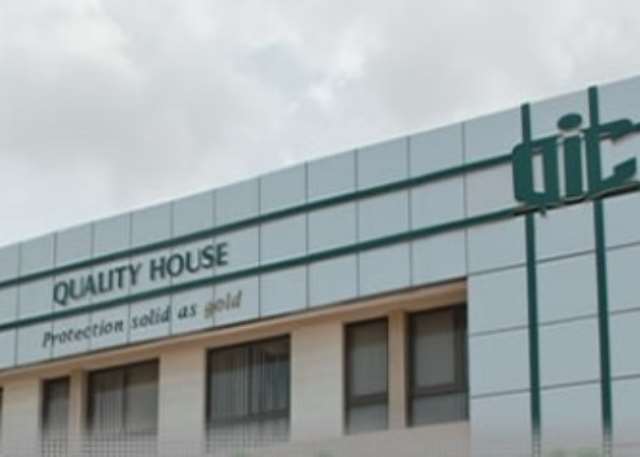
But QIC is not just any insurer. Its ownership structure is distinctive: dividends from the company go directly to support Catholic hospitals and Catholic schools across the country, making it essentially the financial arm of the Church’s charitable and educational mission . The company’s headquarters on Mamprobi in Accra manages a workforce of approximately 70 people .
For corporate risk managers, insurance analysts, and policyholders, QIC represents a case study in disciplined underwriting and niche product innovation. It does not have the claims volume of Activa (GHS 223 million) or the brand recognition of Enterprise. But it has something arguably more valuable: a 30-year track record of underwriting profitability, a reputation for fast claims processing, and products designed specifically for underserved segments—women drivers, the elderly, and smallholder farmers .
This profile examines QIC‘s 30-year journey, its leadership under Managing Director Francis Kobena Addison (a seasoned professional with an MSc in Insurance and Risk Management from City University London) , its portfolio of innovative products including Go Girl and Weather Index Insurance, its status as a Catholic Church-backed institution, and the critical question: Can QIC maintain its underwriting discipline and grow its market share in a sector where mistrust remains the biggest barrier to uptake?
Company Overview
Foundational History: A Catholic Legacy (1996–2006)
The founding date of Quality Insurance Company (QIC) is reported differently across sources. According to multiple director profiles on financial platforms, the company was founded in 1996 . However, operational sources indicate the company was established in 2006 as a composite insurance company . The 2026 anniversary celebration marks 30 years of operations, supporting the 1996 founding date . The discrepancy may reflect the difference between incorporation and operational licensing.
Regardless of the precise date, the company’s raison d‘être is clear: it was established to serve as a financial vehicle supporting the Catholic Church’s institutions in Ghana. To this day, QIC’s dividends go directly to support Catholic hospitals and Catholic schools across the country . This ownership structure is unique in Ghana’s insurance sector—not state-owned (like SIC), not multinational-owned (like Allianz/Sanlam), and not family-owned (like Star/HODA), but Church-owned.
The Subsidiary Group Structure:
| Entity | Focus | Status |
|---|---|---|
| Quality Insurance Company (QIC) PLC | Non-Life / General Insurance (Motor, Fire, Marine, Engineering, Liability, Bonds) | Parent Company |
| Quality Life | Life Assurance | Active Subsidiary |
| Quality Financial Trust | Financial Trust Services | Active Subsidiary |
| Fourth Entity | Not publicly disclosed | In Formation |
Leadership: The Professional Managing Director
Mr. Francis Kobena Addison – Managing Director
Francis Kobena Addison serves as the Managing Director of Quality Insurance Company PLC . He is a seasoned insurance professional with over 25 years of experience in insurance operations, risk management, and corporate governance, gained across the United Kingdom and Ghana .

Academic Credentials:
-
MSc in Insurance and Risk Management – City University London (Bayes Business School, formerly Cass Business School)
-
Bachelor of Arts (Hons) – University of Ghana, Legon
-
Associate of the Chartered Insurance Institute (ACII), UK – the gold standard in global insurance qualifications
Board Experience:
In addition to leading QIC, Mr. Addison serves on the Board of Ghana Reinsurance PLC (Ghana Re), contributing his technical insurance expertise and governance experience to the national reinsurer . He has served on the boards of other insurance institutions, contributing to policy direction and decision-making at the highest level .

Leadership Profile:
Addison brings a blend of technical insurance expertise and governance experience, with a strong understanding of boardroom oversight, regulatory compliance, and strategic risk management . His British-Ghanaian professional experience gives QIC access to international best practices while maintaining local relevance.
Other Board Members:
| Name | Position |
|---|---|
| Kizzita Frances Mensah | Director |
| Raymond Akongburo Atuguba | Director |
Operational Leadership:
Mr. Cecil Ribeiro – Head of Operations (General Manager of Operations)
Cecil Ribeiro serves as the General Manager of Operations and was the public spokesperson for the company‘s 30th anniversary celebrations in May 2026 . He has been instrumental in communicating QIC’s innovative product portfolio and challenging public perceptions about insurance.
Operations and Footprint
Headquarters:
Quality Insurance Company is headquartered in Accra, with its office located at Mamprobi . The postal address is P.O Box MP 1252, Mamprobi, Accra .
Workforce:
| Metric | Value |
|---|---|
| Total Employees | 70 |
| Month-over-Month Headcount Growth | 1.45% |
| Year-over-Year Headcount Growth | 11.09% |
| Average Staff Age | Approximately 32–33 years |
Recruitment Philosophy:
QIC has a deliberate strategy of recruiting young talent directly from institutions like PAX Romana, with the explicit goal of growing the youth. The workforce is notably young, with the average age around 32 or 33 .
Licensing:
QIC is duly licensed by the National Insurance Commission (NIC) to transact general (non-life) insurance business in Ghana . The company also operates a life subsidiary (Quality Life) under a separate license.
Key Operational Metrics:

| Metric | Past Value | Current Value |
|---|---|---|
| Premium Volume | GH¢500,000 – 1,000,000 (historical) | GH¢130+ million (current) |
| Years in Operation | 30 (since 1996) | |
| Employees | 70 |
Business Model: The General Insurer With a Niche Focus
QIC is a general (non-life) insurance company . It offers a comprehensive range of general insurance products, with a particular focus on innovative products targeting underserved segments: women drivers, the elderly, and smallholder farmers.
Product Portfolio
Standard General Insurance Products (Core):
| Category | Specific Products |
|---|---|
| Motor | Comprehensive, Third Party, Third Party Fire & Theft |
| Fire | Commercial and residential property |
| General Accident | Personal and group accident |
| Marine | Cargo and hull |
| Aviation | Hull and liability |
| Engineering | Contractors All Risks, Machinery Breakdown |
| Liability | Public Liability, Product Liability |
| Bonds | Bid Bonds, Performance Bonds |
| Travel | Domestic and international |
Niche and Innovative Products (Differentiators):
1. Go Girl Insurance (Women-Focused Motor Insurance)
Go Girl is QIC‘s flagship product and the cornerstone of its market differentiation. It is designed specifically for women drivers and offers a unique benefit: if a woman insured with QIC is involved in an accident, the company provides her with an alternative vehicle to use while her car is being repaired .
Why This Matters:
-
Women in Ghana often rely heavily on their vehicles for work, school runs, and errands.
-
An accident can disrupt daily life for weeks while repairs are completed.
-
Go Girl eliminates the “how do I get around?“ anxiety by providing a replacement vehicle.
Recognition:
Go Girl has won Insurance Product of the Year twice in the last three years at industry awards, demonstrating that innovation is valued by the sector .
2. Golden Age Policy (Elderly-Focused Health & Medical)
The Golden Age Policy is designed for customers aged 50 years and above . The key benefit is home-based medical laboratory services—QIC pays for medical professionals to come to the policyholder‘s home rather than requiring the elderly customer to travel to a hospital .
Why This Matters:
-
Elderly individuals often have mobility challenges.
-
Travelling to hospitals for routine lab work can be physically taxing.
-
Home-based services preserve dignity and reduce stress.
As Cecil Ribeiro explained: “We don‘t want you, as a 50-year-old, to be going to the hospitals… we pay for them to come to your home“ .
3. Weather Index Insurance (Parametric Agriculture Insurance)
In November 2024, QIC launched a parametric weather index insurance product for farmers, in partnership with insurtech Ibisa .
How It Works:
-
The product provides quick financial relief to farmers affected by drought or excess rainfall.
-
Payouts are based on objective weather data from local meteorological stations, not on individual damage assessments.
-
This eliminates the need for time-consuming (and often contested) on-site claims investigations.
Payout Structure:
-
Minimum Payout: 50% of coverage
-
Maximum Payout: 100% of full loss
Status:
Following a pilot scheme where all policyholders received payouts, the product was formally launched and is now available to farmers across Ghana . It is the first product of its kind on the Ghanaian market .
4. Standard Lines (Motor, Fire, Accident, Marine, Liability):
Beyond the niche products, QIC offers the full suite of general insurance products expected of a licensed non-life insurer .
Distribution Channels
QIC distributes through:
-
Direct Sales – Corporate and individual clients.
-
Broker and Agent Network – Independent intermediaries.
-
Church Network – Given its Catholic Church ownership and dividend structure, QIC likely has preferential access to Church-affiliated institutions (schools, hospitals, parishes).
Revenue Model
QIC‘s most notable financial characteristic is its underwriting profitability. As Ribeiro explained at the 30th anniversary: “Underwriting profit is not something that other insurance companies often post in Ghana. Most profits are from investments, but for us, it means that from the actual process of doing insurance business, we are making money“ .
Key Revenue Streams:
| Revenue Stream | Contribution | QIC‘s Performance |
|---|---|---|
| Net Earned Premiums | Primary | GH¢130+ million |
| Underwriting Profit | High (for the industry) | Consistent |
| Investment Income | Secondary (not relied upon) | Present but not primary |
| Reinsurance Commissions | Supplementary | — |
Premium Growth Trajectory:
| Period | Premium Volume | Growth |
|---|---|---|
| Historical | GH¢500,000 – 1,000,000 | — |
| Current (2025/2026) | GH¢130+ million | 130x+ growth over 30 years |
This growth trajectory—from writing less than GH¢1 million to over GH¢130 million—represents a compound annual growth rate of approximately 18-20% over three decades.
The “Go Girl” Product: A Deep Dive
Go Girl is QIC’s most celebrated product and the clearest expression of its customer-centric innovation philosophy.
The Problem It Solves
In Ghana:
-
Many women are primary drivers for their households (school runs, shopping, work commutes).
-
A car accident can render the vehicle undrivable for weeks.
-
Alternative transport (taxis, ride-hailing) is expensive and not always reliable.
-
Public transport may be inaccessible or unsafe.
The Solution: Courtesy Car
If a woman insured with QIC Go Girl has an accident:
-
She reports the claim.
-
QIC arranges for her vehicle to be repaired.
-
QIC provides an alternative vehicle for her use during the repair period.
-
She pays nothing extra for the courtesy car—it is included in her premium.
Industry Recognition
Go Girl has won Insurance Product of the Year at industry awards on two occasions in the last three years . This recognition validates:
-
The market need for women-focused insurance products
-
QIC‘s ability to execute on that need
-
The product‘s financial viability
Strategic Significance
Go Girl serves multiple strategic functions for QIC:
-
Market Differentiation – No other Ghanaian insurer offers this benefit.
-
Customer Loyalty – Women who experience the courtesy car benefit are unlikely to switch insurers.
-
Brand Building – The product has won awards and generated positive media coverage.
-
Word-of-Mouth Marketing – A woman who receives a courtesy car tells her friends and family.
Expansion Potential
While Go Girl currently targets women drivers, the courtesy car concept could be extended to:
-
Corporate clients (fleet vehicles)
-
Ride-hailing drivers (whose livelihood depends on vehicle availability)
-
Families with multiple drivers
The Weather Index Insurance: A Deep Dive
QIC‘s Weather Index Insurance product (launched November 2024) demonstrates the company‘s commitment to serving sectors that traditional insurers ignore.
The Problem It Solves
Ghana‘s agricultural sector is highly vulnerable to climate change:
-
Approximately 75-80% of farmers practice rain-fed agriculture.
-
Erratic weather patterns – drought or excess rainfall – can destroy crops.
-
Traditional crop insurance requires on-site damage assessments, which are time-consuming, expensive, and often contested.
The Solution: Parametric Payouts
| Feature | Traditional Crop Insurance | QIC Weather Index Insurance |
|---|---|---|
| Claims Trigger | On-site damage assessment | Objective weather data (rainfall, drought indices) |
| Payout Speed | Weeks or months | Days |
| Disputes | Frequent (farmer vs. adjuster) | None (data is objective) |
| Coverage | Drought, flood, pests | Drought, excess rainfall |
Payout Structure
| Weather Event Severity | Payout Percentage |
|---|---|
| Moderate | 50% of coverage |
| Severe | 100% of coverage |
Pilot Success
A pilot scheme was conducted before full launch. All policyholders in the pilot received a payout — proof that the product works and that QIC honors its claims .
Stakeholder Endorsement
Prof. Irene Susana Egyir (Immediate past Dean of the School of Agriculture, University of Ghana) launched the product and encouraged all crop farmers to take advantage of it, stating: “This will be a great benefit for us crop farmers, providing us with a reliable income to support the work we do and sustain our livelihoods“ .
Fentuo Tahiru (Farmer, North East Region) described the product as: “The speed and simplicity of this insurance mean that I can get back to work quickly after a disaster. In the past, I had to wait for months before receiving help. Now, I will get the support I need in just a few days“ .
Strategic Significance
Weather Index Insurance positions QIC as:
-
An insurer serving the agricultural sector (which most insurers avoid due to high risk)
-
An innovator in parametric insurance (a global growth market)
-
A partner in climate resilience
Market Position and Competition
Industry Standing: The Underwriting Profit Champion
QIC does not appear in the top 10 non-life insurers by claims payout—Activa (GHS 223 million), Star (GHS 217 million), and Enterprise (GHS 201 million) dominate that table. However, the company is distinguished not by its scale, but by its profitability model.
| Metric | QIC | Most Insurers in Ghana |
|---|---|---|
| Underwriting Profit | Consistent and positive | Often negative (losses) |
| Investment Income | Secondary | Primary (covers underwriting losses) |
| Premium Volume | GH¢130 million+ | Varies |
| Claims Volume | Lower than top 5 | High |
The Distinction: Underwriting Profit vs. Investment Profit
Most insurers in Ghana can absorb underwriting losses because their investment portfolios (government securities) generate sufficient returns to keep the overall company profitable. This is not sustainable underwriting—it is investment performance masking operational weakness.
QIC, uniquely, generates profit from the core insurance business:
-
Pricing risks accurately
-
Managing claims efficiently
-
Controlling expenses
This is a more sustainable model. When interest rates fall (as they have in Ghana), investment income declines. Insurers relying on investment income face margin pressure. QIC, with its underwriting discipline, is less vulnerable.
QIC vs. Top Non-Life Insurers (Comparative)
| Competitor | Claims Scale | Underwriting Profit | Innovation | QIC‘s Relative Position |
|---|---|---|---|---|
| Activa International | #1 claims payer (GHS 223M) | Unknown | Digital, claims speed | QIC smaller but more focused |
| Star Assurance | #2 claims (GHS 217M); A+ rating | Unknown | AI (Pokuaa), women‘s products | Go Girl competes directly |
| Enterprise Insurance | #3 claims (GHS 201M); AAA rating | Unknown | Heritage, scale | QIC‘s underwriting profit is unique |
| Hollard Insurance | #4 claims (GHS 172M) | Unknown | ChatInsure (WhatsApp) | QIC more specialised |
| Vanguard Assurance | #5 claims (GHS 157M) | Unknown | Mobile app | QIC ‘s Go Girl is differentiated |
| SIC Insurance | #7 claims (GHS 88M) | Unknown | State-backed | QIC‘s underwriting discipline is superior |
| QIC | Lower than top 10 | Positive (rare) | Go Girl, Weather Index | Profitability focus |
Competitive Advantages
1. Consistent Underwriting Profit
This is QIC‘s superpower. In an industry where most companies would be loss-making without investment income, QIC‘s core business is profitable. This is the result of disciplined pricing, efficient claims management, and expense control.
2. Product Innovation (Go Girl and Weather Index)
QIC has introduced products that no other Ghanaian insurer offers:
-
Courtesy car for women (Go Girl)
-
Home-based lab services for seniors (Golden Age)
-
Parametric weather insurance for farmers (Weather Index)
First-mover advantage in these niches builds brand loyalty and creates differentiation.
3. Catholic Church Backing
The company‘s ownership by the Church and its dividend structure (supporting Catholic hospitals and schools) provides:
-
A stable, patient shareholder (not seeking short-term returns)
-
A network of potential customers (Church members, schools, hospitals)
-
Implicit trust (the Church is a respected institution)
4. Youthful Workforce
With an average staff age of 32-33 and a deliberate recruitment pipeline from PAX Romana, QIC has a young, energetic workforce. This contrasts with older, more bureaucratic insurers where the average age is higher .
5. Lean Operations
With 70 employees, QIC operates leanly. This low fixed-cost base contributes to underwriting profitability .
6. Professional Management
MD Francis Kobena Addison brings 25+ years of experience, an MSc from City University London (Bayes Business School), and ACII qualification. This technical depth is rare among mid-tier insurer CEOs.
7. Fast Claims Processing
QIC has prioritized faster claims processing to address the industry‘s biggest reputational problem: the perception that insurers delay or deny claims .
Competitive Disadvantages
1. Lower Claim Volume Than Top 5
For large corporate clients, the volume of claims paid is a proxy for reliability. QIC‘s GH¢130 million premium volume translates into claims volume likely below GH¢100 million—far less than Activa‘s GHS 223 million. This may disqualify QIC from some large corporate tenders.
2. Limited Public Rating Information
QIC does not prominently advertise a GCR rating. For multinational corporations with procurement policies requiring minimum ratings, this absence is a barrier.
3. Smaller Workforce
With 70 employees, QIC has less capacity for direct sales, agent recruitment, and claims handling than larger insurers .
4. Lower Brand Recognition Than Enterprise and Star
Enterprise (102 years) and Star (aggressive marketing) have higher public awareness. Many Ghanaians have never heard of QIC.
5. No Consumer-Facing Digital App or AI Tool
While QIC has innovative products, it has not launched a consumer-facing app comparable to Hollard‘s ChatInsure or Star‘s Pokuaa AI. This may disadvantage it with younger, tech-savvy customers.
6. Church Ownership May Limit Secular Appeal
While the Church connection builds trust with Catholic customers, it may alienate non-Catholic customers who prefer a secular insurer.
7. Public Mistrust of Insurance (External Constraint)
As Ribeiro candidly admitted, rebuilding public trust remains QIC‘s biggest challenge. “A lot of people do not see the importance of insurance until something happens,” he said, highlighting the deep scepticism that continues to affect uptake .
The Catholic Church Connection
QIC is not merely owned by the Church; it is operationally integrated with the Church‘s mission.
Dividend Distribution
Unlike most insurers, where dividends go to private shareholders or institutional investors, QIC‘s dividends go directly to support:
-
Catholic hospitals across Ghana
-
Catholic schools across the country
This means that purchasing a policy from QIC is not just buying insurance; it is indirectly supporting healthcare and education in Ghana.
Implications for Policyholders
| Stakeholder | Benefit |
|---|---|
| Catholic customers | Assurance that their premium supports Church mission |
| Non-Catholic customers | Indirect support for healthcare and education (social good) |
| Catholic institutions | Stable, recurring funding source |
Implications for Strategy
The Church ownership provides:
-
Patient capital – No pressure for short-term profit maximization.
-
Network access – Preferential access to Church-affiliated institutions (schools, hospitals, parishes).
-
Trust – The Church‘s reputation for integrity transfers to QIC.
Public Recognition
At the 30th anniversary, Ribeiro explicitly highlighted these achievements: “Our dividends go straight to support Catholic hospitals and Catholic schools all over the country. These are achievements we are proud of as a company“ .
Youth Employment: QIC‘s Social Impact
QIC has made youth employment a deliberate strategic priority.
The “PAX Romana Pipeline“
PAX Romana is an organization (likely a Catholic educational or youth development institution). QIC recruits directly from PAX Romana, with the explicit goal of hiring and developing young talent .
Workforce Demographics
| Metric | Value |
|---|---|
| Average Staff Age | 32–33 years |
| Total Employees | 70 |
| Growth Rate | 11.09% YoY |
Implications
-
Fresh perspectives – Younger employees bring digital fluency and modern management practices.
-
Lower salary costs – Entry-level salaries are lower than experienced hires, supporting underwriting profitability.
-
Career development – QIC is building a pipeline of future insurance professionals.
-
Social contribution – The company is addressing youth unemployment in Ghana.
Comparison to Industry
Most insurers in Ghana have aging workforces, with senior staff occupying positions for decades. QIC‘s deliberate youth focus is a significant differentiator.
Economic and Industry Impact
Insurance Penetration in Ghana
Ghana‘s insurance penetration remains below 2% of GDP, far lower than the African average of 3% . Low penetration is driven by:
-
Mistrust of claims payment
-
Lack of awareness of insurance benefits
-
Cultural preference for informal risk-sharing mechanisms
QIC‘s Contribution to Penetration
QIC‘s innovative products are explicitly designed to:
-
Address specific customer needs (women, elderly, farmers)
-
Build trust through fast claims processing
-
Make insurance relevant to everyday life
Financial Inclusion
-
Weather Index Insurance brings smallholder farmers into the formal insurance net.
-
Go Girl targets women drivers, a growing segment.
-
Golden Age Policy serves the elderly, often ignored by insurers.
Competition and Consumer Choice
QIC‘s presence in the market provides competitive pressure on larger insurers to innovate. Go Girl has forced competitors to consider women-focused products. Weather Index Insurance has introduced parametric insurance to Ghana, a concept that may be adopted by other insurers.
Employment
QIC directly employs 70 people , with a deliberate focus on youth employment. The company also supports agents and brokers across its distribution network.
Support for Healthcare and Education
Through its dividend structure, QIC provides funding to Catholic hospitals and Catholic schools across Ghana—institutions that serve the general public, not just Catholics. This indirect support is a unique contribution to national development.
Climate Resilience
QIC‘s Weather Index Insurance contributes to climate resilience in Ghana‘s agricultural sector. Farmers who receive payouts after drought or heavy rainfall can:
-
Replant crops
-
Purchase food for their families
-
Avoid selling assets (livestock, land) to survive
As the farmer from North East Region stated: “This is a timely solution to help farmers recover quickly from the negative effects of climate change“ .
Challenges and Risks
No analysis of QIC is complete without acknowledging the headwinds it faces.
Risk 1: Public Mistrust of Insurance (The Biggest Challenge)
Cecil Ribeiro was candid: “A lot of people do not see the importance of insurance until something happens,“ and “low awareness and doubts about claims payments still hold back growth in the sector“ .
Why This Matters:
-
Mistrust is not specific to QIC—it is industry-wide.
-
QIC can be the best insurer in Ghana, but if the public doesn‘t trust insurance generally, QIC will struggle.
Mitigation:
QIC is focusing on faster claims processing and introducing practical, customer-centred products to build trust one policyholder at a time .
Risk 2: Copycat Competition for Go Girl
Go Girl is a successful innovation. Larger competitors (Enterprise, Star, Activa) have the balance sheets and distribution networks to launch similar products quickly.
Risk: If Star Assurance launches “Star Woman“ with a courtesy car, QIC loses its primary differentiator.
Mitigation: QIC must continue innovating. It cannot rest on Go Girl’s success.
Risk 3: Weather Index Basis Risk
Parametric insurance carries “basis risk“—the risk that the weather index (rainfall data) does not perfectly correlate with the farmer’s actual loss. A farmer could receive a payout even if they did not suffer a loss (positive basis risk), or (more concerning) could suffer a loss but not receive a payout (negative basis risk).
Risk: Negative basis risk would destroy trust in the product. If a farmer‘s crops fail due to a localized hailstorm (not captured by the regional rainfall index) and QIC does not pay, that farmer will tell others, and the product‘s reputation will suffer.
Mitigation: QIC has partnered with Ibisa (insurtech) and uses data from local meteorological stations to calibrate the index .
Risk 4: Maintaining Underwriting Profitability
QIC has achieved consistent underwriting profit. Maintaining this as premium volume grows will be challenging.
Risk: As QIC writes more policies, it may be forced to accept riskier clients or price policies less accurately. Underwriting losses could emerge.
Mitigation: MD Francis Addison‘s technical underwriting expertise (ACII, MSc in Insurance and Risk Management) is an asset in maintaining discipline.
Risk 5: Economic Headwinds
-
Inflation – Claims costs (repairs, replacements) rise with inflation; premiums are fixed.
-
Cedi Depreciation – Reinsurance costs in foreign currency increase, compressing margins.
-
Interest Rates – While QIC does not rely on investment income, lower rates reduce investment income that could otherwise supplement underwriting.
Risk 6: Limited Capital Base
With 70 employees and GH¢130 million in premiums, QIC is a mid-tier insurer. For very large risks (e.g., insuring a major industrial facility), its capacity is limited.
Risk: QIC may be unable to quote competitively for large risks, forcing it to remain in the mass-market and SME segments.
Mitigation: Reinsurance can provide capacity, but reinsurance costs reduce profitability.
Risk 7: Succession Risk
While MD Francis Addison is highly qualified, the company does not publicly disclose a succession plan. If Addison were to leave, finding a successor with ACII qualification and London MSc would be challenging.
Risk 8: Church Ownership Perception (Non-Catholic Customers)
While the Church connection builds trust with Catholic customers, it may alienate non-Catholic customers who prefer a secular insurer.
Risk: A Muslim or Pentecostal customer may choose a different insurer out of religious consideration.
Mitigation: QIC’s dividend supports healthcare and education for all Ghanaians, not just Catholics. This should be communicated more clearly.
Future Outlook
As of May 2026, QIC is celebrating 30 years of operations with a solid foundation: consistent underwriting profit, innovative products, a young workforce, and stable Church ownership. The company‘s challenge is not survival—it is growth.
The Immediate Agenda (2026-2027)
-
Scale Go Girl – Expand marketing of the product to capture more women drivers.
-
Expand Weather Index Insurance – Roll out to more farming communities, potentially adding livestock coverage as announced.
-
Launch the Fourth Subsidiary – Complete formation of the new entity mentioned by Ribeiro.
-
Invest in Digital Customer Interface – Develop an app or web portal for policy purchase and claims reporting.
-
Build Trust Through Transparency – Publicize claims payment statistics and settlement times to counter public mistrust.
-
Seek GCR Rating – Obtain a published rating to attract large corporate clients.
The Bull Case (Optimistic)
-
Go Girl becomes the market standard for women‘s motor insurance – QIC captures 30%+ of the women driver segment. Competitors launch copycat products, but Go Girl remains the most recognised brand.
-
Weather Index Insurance expands regionally – QIC partners with agricultural development programmes (e.g., Ministry of Food and Agriculture, World Food Programme) to subsidise premiums for smallholder farmers. Scale grows 5x within two years.
-
Underwriting profit continues – QIC maintains its disciplined pricing as it scales, achieving the rare feat of consistent underwriting profit at GH¢200 million+ premium volume.
-
Church network drives growth – QIC leverages Catholic schools and hospitals as distribution channels, cross-selling insurance to parents, patients, and staff.
-
Youth workforce drives digital innovation – QIC‘s young employees develop a consumer-facing app that rivals Star‘s Pokuaa, attracting younger customers.
The Bear Case (Pessimistic)
-
Competitors clone Go Girl – Enterprise or Star launch women-focused motor products with courtesy cars, backed by larger marketing budgets. QIC loses first-mover advantage.
-
Weather Index suffers basis risk event – A farmer suffers a loss that the index does not trigger, leading to negative publicity. QIC‘s agricultural book contracts.
-
Underwriting discipline slips – In pursuit of premium growth, QIC under-prices risks. Underwriting losses emerge for the first time.
-
Leadership transition disrupts momentum – MD Francis Addison departs; the successor lacks his technical depth (ACII, London MSc). Strategy drifts.
-
Church ownership becomes limiting – The Church requires higher dividend payouts, reducing capital available for growth. QIC cannot compete on marketing spend.
The Verdict
Quality Insurance Company PLC is not the largest insurer in Ghana. It is not the most technologically advanced. It does not have the highest claims volume. But it may be the most disciplined.
For 30 years, QIC has achieved what most Ghanaian insurers cannot: consistent underwriting profit. It does not rely on investment income to mask operational weakness . Its premiums have grown from under GH¢1 million to over GH¢130 million . Its workforce is young, energetic, and deliberately recruited . Its products—Go Girl, Weather Index Insurance, Golden Age Policy—are genuinely innovative, addressing underserved segments that competitors ignore .
The company‘s ownership by the Catholic Church and its dividend structure (supporting hospitals and schools) give it a unique place in the market. It is not state-owned (like SIC), multinational-owned (like Allianz/Sanlam), or family-owned (like Star/HODA). It is Church-owned, and that distinction matters for customers who value social mission .
The risks are real: public mistrust of insurance, copycat competition, basis risk in parametric products, maintaining underwriting discipline as scale grows. But the foundation is solid. QIC has survived 30 years—longer than many of its competitors. It has a professional management team led by a highly qualified ACII with an MSc from City University London .
For the Ghanaian policyholder who values underwriting discipline (meaning the company will be around to pay claims), innovative products tailored to real needs, and a social mission (supporting healthcare and education), QIC is a compelling choice.
QIC is not trying to be the largest insurer in Ghana. It is trying to be the most trustworthy, the most innovative, and the most disciplined. Thirty years in, it has earned the right to make that claim.
FAQ SECTION
1. Is Quality Insurance Company (QIC) a Ghanaian-owned company?
Yes. QIC is a Ghanaian-owned private company, with its ownership structure rooted in the Catholic Church. The company‘s dividends go directly to support Catholic hospitals and Catholic schools across the country .
2. Who is the Managing Director of Quality Insurance Company?
The Managing Director is Mr. Francis Kobena Addison, ACII. He holds an MSc in Insurance and Risk Management from City University London (Bayes Business School) and has over 25 years of experience in insurance operations, risk management, and corporate governance, gained across the United Kingdom and Ghana .
3. When was Quality Insurance Company founded?
QIC was founded in 1996 and celebrated its 30th anniversary in 2026 . The company began operations in 2006 as a composite insurance company .
4. What is QIC‘s premium volume?
QIC has grown from writing approximately GH¢500,000 to GH¢1 million in premiums historically to currently writing over GH¢130 million annually .
5. What is the “Go Girl“ insurance product?
Go Girl is QIC‘s women-focused motor insurance product. It provides an alternative vehicle (courtesy car) for a woman insured with QIC if she is involved in an accident, so she can continue with her daily activities while her car is being repaired . It has won Insurance Product of the Year twice in the last three years .
6. What is QIC‘s Weather Index Insurance?
Launched in November 2024 in partnership with insurtech Ibisa, Weather Index Insurance is a parametric product that provides payouts to farmers based on objective weather data (drought or excess rainfall) rather than on-site damage assessments. Payouts range from 50% to 100% of coverage. All pilot policyholders received payouts .
7. What is the Golden Age Policy?
The Golden Age Policy is designed for customers aged 50 years and above. It provides home-based medical laboratory services—QIC pays for medical professionals to come to the policyholder‘s home, eliminating the need for elderly customers to travel to hospitals .
8. Is QIC profitable?
Yes. Crucially, QIC is profitable from underwriting—the core business of pricing and selling insurance—not just from investment income. Most insurers in Ghana rely on investment returns to cover underwriting losses; QIC consistently posts underwriting profits .
9. How many employees does QIC have?
QIC employs approximately 70 people , with an average staff age of about 32-33 years. The company deliberately recruits young talent, including directly from PAX Romana .
10. Who are the board members of Quality Insurance Company?
Board members include Kizzita Frances Mensah and Raymond Akongburo Atuguba , among others.
11. Where is QIC headquartered?
QIC‘s headquarters is located at Mamprobi, Accra , with postal address P.O Box MP 1252, Mamprobi, Accra .
12. What insurance products does QIC offer?
QIC offers a full range of general (non-life) insurance products including Motor, Fire, General Accident, Marine, Aviation, Engineering, Liability, Bonds, and Travel insurance. Its innovative niche products include Go Girl (women‘s motor), Golden Age Policy (seniors‘ medical), and Weather Index Insurance (agriculture) .
QUICK FACTS BOX
| Item | Details |
|---|---|
| Founded | 1996 (30 years in 2026) |
| Headquarters | Mamprobi, Accra, Ghana |
| Industry | Non-Life / General Insurance |
| Services | Motor, Fire, Accident, Marine, Aviation, Engineering, Liability, Bonds, Travel, Go Girl, Weather Index, Golden Age |
| Ownership | Private (Catholic Church-backed) |
| Managing Director | Francis Kobena Addison, ACII, MSc (City University London) |
| Head of Operations | Cecil Ribeiro |
| Employees | 70 |
| Average Staff Age | 32–33 years |
| Premium Volume (Current) | GH¢130+ million (from under GH¢1 million historically) |
| Underwriting Profit | Consistent (rare in Ghana‘s insurance industry) |
| Key Innovation | Go Girl (courtesy car for women drivers) |
| Key Innovation | Weather Index Insurance (parametric agriculture) |
| Key Innovation | Golden Age Policy (home-based lab services for seniors) |
| Dividend Beneficiaries | Catholic hospitals and Catholic schools nationwide |
| Key Award | Insurance Product of the Year (Go Girl – 2 times in 3 years) |
| Regulator | National Insurance Commission (NIC) |
| Website | http://www.qicghana.com |
Source: Accra Street Journal
Last Updated on May 6, 2026 by Samuel Kwame Boadu
Disclaimer: Some content on Accra Street Journal may be aggregated, summarized, or edited from third-party sources for informational purposes. Images and media are used under fair use or royalty-free licenses. Accra Street Journal is a subsidiary of SamBoad Publishing Hub under SamBoad Business Group Ltd, registered in Ghana since 2014.
For concerns or inquiries, please visit our Privacy Policy or Contact Page.

Samuel Kwame Boadu is a Ghanaian media entrepreneur and storyteller with a passion for amplifying urban voices and uncovering everyday truths. He is the Editor-in-Chief and Founder of Accra Street Journal, a dynamic digital platform dedicated to capturing the pulse of Ghana’s capital—its people, culture, challenges, business, sports and innovations.
Use the following reference when citing or referencing this article.
Your feedback helps us improve our journalism.
Report an Error
Help us maintain accuracy. Let our editorial team know if you spot an issue in this article.
Report a problem with this article