
14 min read
Executive Introduction
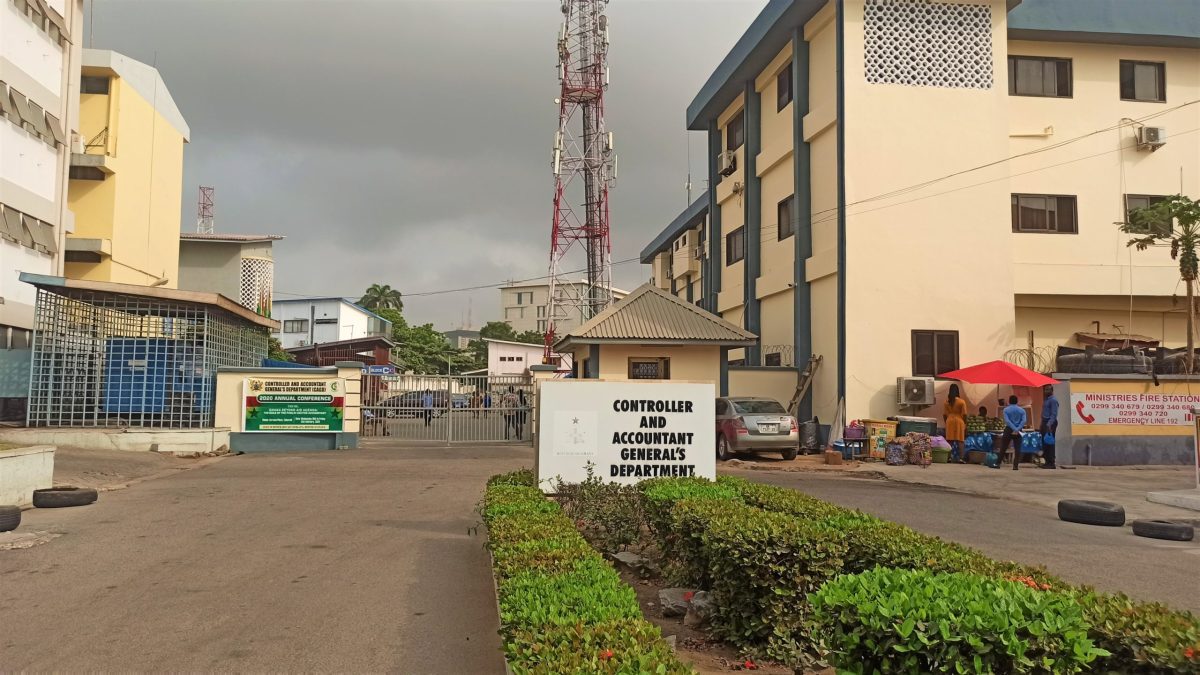
For most public sector workers in Ghana, the Controller and Accountant-General’s Department (CAGD) is a name on a payslip — a distant institution that deducts SSNIT contributions and ensures salaries arrive at month-end. But as retirement approaches, CAGD becomes something far more consequential: the institution that will determine whether your monthly pension arrives on time, in the correct amount, and without frustrating delays.
The gap between expectation and reality for many new pensioners is wide. A retiree who spent thirty years in the Ghana Education Service may assume that because their salary was always paid on time, their pension will be too. But the pension payment process involves steps and institutions that many workers do not fully understand until they are already retired and waiting.
Key Takeaways
- For most public sector workers in Ghana, the Controller and Accountant-General's Department (CAGD) is a name on a payslip — a distant institution that deducts SSNIT contributions and ensures salaries arrive at month-end.
- But as retirement approaches, CAGD becomes something far more consequential: the institution that will determine whether your monthly pension arrives on time, in the correct amount, and without frustrating delays.
- You cannot receive a CAGD pension payment without SSNIT approval .
This ASJ report explains exactly how CAGD pension payments work for retiring public servants — the documents required, the timelines to expect, the common sources of delay, and the specific actions you can take now to ensure your first payment arrives as quickly as possible.
If you are within five years of retirement, or managing the retirement of a family member, read this as a practical roadmap, not abstract policy.
Part 1: The Critical Distinction — SSNIT vs CAGD
The single most important fact for every public sector worker to understand is this: SSNIT determines your pension entitlement. CAGD pays your monthly pension .
This division of responsibility is the source of most confusion. When a pension payment is late, many retirees contact CAGD expecting answers about why their pension amount is wrong — but CAGD cannot change the amount without SSNIT’s direction. Conversely, when SSNIT has approved a pension, SSNIT cannot pay it — only CAGD can disburse the monthly payments .
| Aspect | SSNIT | CAGD |
|---|---|---|
| Primary Role | Determines entitlement, calculates amount, manages contributions | Processes monthly payments, manages pension payroll |
| What They Handle | Eligibility, pension amount, lump sums, survivor benefits | Monthly payments, arrears, adjusted pensions |
| When They Act | Throughout career and at retirement | After SSNIT approval, monthly thereafter |
| Source of Funds | Member contributions + investment returns | Government treasury (tax revenues) |
| Coverage | All formal sector workers (public + private) | Public sector retirees only |
| Monthly Payment | No (except for private sector) | Yes (for public sector) |
The division is not arbitrary. SSNIT is the national social security scheme, funded by contributions from both employers and employees . CAGD, established in 1885, is the government’s financial management institution responsible for processing and executing all government payments including salaries and pensions . CAGD pays pensions after SSNIT approval and validation .
Confusing these roles leads retirees to the wrong office, delays resolution, and creates unnecessary stress. If your payment is delayed, you must first verify that SSNIT has approved your pension. Only then does the issue become CAGD’s responsibility.
Part 2: The Pension Payment Process — Step by Step
The pension payment process follows a clear sequence :
| Step | Action | Responsible Party |
|---|---|---|
| 1 | Retirement approval by employer | Your MDA/Institution |
| 2 | Submission of pension data to CAGD | Your HR/Accounts office |
| 3 | SSNIT approval and validation | SSNIT |
| 4 | Pensioner capture on CAGD payroll | CAGD |
| 5 | Monthly pension disbursement | CAGD |
Any break in this chain delays payment .
Step 1: Retirement Approval
Your employer (the Ministry, Department, or Agency where you work) must formally approve your retirement and notify the relevant authorities. This seems administrative, but delays here ripple through the entire system.

Step 2: Submission to CAGD
Your institution’s HR or accounts office must prepare and submit your pension documentation to CAGD. This includes service records, salary history, and personal identification documents. Errors or omissions at this stage are common causes of delay .
Step 3: SSNIT Approval — The Most Critical Step
SSNIT reviews your contribution history, calculates your pension entitlement using the formula (Best 36 months’ average salary × Pension Percentage), and issues approval . SSNIT determines what you will be paid. CAGD only determines whether the payment is processed correctly.

No SSNIT approval = No CAGD payment.
Step 4: Payroll Capture
Once SSNIT validates your entitlement, CAGD captures you on the government pension payroll. Your name must be removed from the active salary payroll (IPPD) before it can be added to the pension payroll. The IPPD system is designed so that the same individual cannot be paid both salary and pension in the same month .
Step 5: Monthly Disbursement
CAGD processes monthly pension payments directly into your bank account according to government payroll schedules. Payments continue monthly for life .
Part 3: When Will Payments Actually Start?
Ideally, pension payments should begin within 2–4 months after retirement. In reality, timelines vary depending on :
-
Timely submission of retirement documents by your employer
-
Accuracy of SSNIT records and contribution history
-
Payroll validation cycles
-
Completeness of your personal documentation
Delays beyond six months usually indicate documentation or data issues .
The IPPD Transition Constraint
A structural feature of Ghana’s payroll system explains why immediate payment is impossible. The Integrated Personnel Payroll Database (IPPD) system is designed so that an individual cannot be paid twice at the same time — it cannot pay a salary and a pension to the same person in the same month .
This means: your name must be removed from the active salary payroll before it can be added to the pension payroll. The transition typically takes one to two months.
If your institution submits your retirement documents late — after your name has already been removed from the salary payroll — you may face a gap of several months with no payment at all while CAGD processes your pension capture .
Part 4: Required Documentation — What You Must Have Ready
CAGD and SSNIT require specific documents to process your pension. Missing or incomplete documents are among the most common causes of delay .
Essential Documents
| Document | Purpose |
|---|---|
| Ghana Card | Primary identification; must be linked to SSNIT record |
| Pension Advice | SSNIT document confirming your calculated pension amount |
| Pension Form 1 | Initial pension application/registration form |
| Pension ID Card | Alternative identification if Pension Advice/Form 1 unavailable |
| Bank Account Details | For monthly payment deposits |
Important: For CAP 30 pensioners (those under the older pension scheme established under the Pensions Ordinance Number 42 (Cap 30) of 1950), CAGD has conducted biometric data verification exercises to link Ghana Card numbers with the pension database . Failure to complete this verification can result in payment interruptions.

For CAP 30 pensioners residing abroad: You must submit copies of required documents to Ghana’s Foreign Missions in your country of residence. Those without Ghana Cards should submit other documents together with completed life certificates while taking steps to obtain the Ghana Card .
Part 5: Proactive Actions — What You Can Do Before Retirement
Waiting until your retirement date to think about pension processing is the single biggest mistake retiring public servants make .
Action 1: Start Early — Six Months Before Retirement
Regulations require that officers due for retirement be notified six months before the date of retirement by departmental personnel officers . Use this window to:
-
Contact your HR or accounts office to confirm they have begun processing your documents
-
Ensure your service records are complete and accurate
-
Verify that your SSNIT contributions have been consistently remitted
Action 2: Verify Your SSNIT Record
Because CAGD cannot pay until SSNIT approves, you must ensure your SSNIT record is accurate long before retirement.
Check your SSNIT statement via:
-
SSNIT self-service portal (
portal.ssnit.org.gh) -
USSD code
*7119# -
Any SSNIT branch
Verify that:
-
All your years of contributions are recorded
-
Your basic salary is correctly reported for each period
-
Your name and Ghana Card details match exactly
Action 3: Link Your Ghana Card to SSNIT
If you registered with SSNIT before the Ghana Card system, ensure your SSNIT number is linked to your Ghana Card. Use USSD *7119#, the SSNIT portal, or visit a branch.
Action 4: Confirm Your Institution Has Submitted Documents on Time
The Deputy Minister of Finance once noted that “many case files were submitted to the Pension Computation Unit after the date of retirement,” which could take approximately six months to resolve . Do not let this be you.
Request written confirmation from your HR office that your documents have been submitted to CAGD. Keep copies of everything.
Action 5: Update Beneficiary Information
Ensure your beneficiary information is current with both SSNIT and your employer. This ensures your survivors receive benefits if something happens to you before or after retirement.
Part 6: Common Payment Problems and How to Resolve Them
Problem 1: No Payment After 3–4 Months
Possible causes:
-
SSNIT approval not yet issued
-
Documents not submitted on time by your employer
-
Name not yet transferred from salary to pension payroll
-
IPPD transition delays
Resolution steps:
-
First, confirm with SSNIT whether your pension has been approved
-
If approved, contact your institution’s HR to confirm documents were submitted
-
If documents were submitted, escalate to CAGD Pension Payroll Division
Problem 2: Payment Amount Lower Than Expected
Possible causes:
-
Under-declaration of basic salary during working years
-
Fewer contribution years than assumed
-
Calculation error by SSNIT
Resolution steps:
-
Contact SSNIT directly — CAGD cannot change payment amounts without SSNIT direction
-
Request a detailed calculation of your pension entitlement
-
Verify your contribution history and salary records
Problem 3: Payment Interruption After Several Months
Possible causes:
-
Missing or expired life certificate
-
Bank account changes not communicated
-
Ghana Card not linked to pension record (CAP 30 pensioners)
-
Name removed from payroll erroneously
Resolution steps:
-
Check if CAGD has requested updated documentation
-
Submit a current life certificate (usually required annually)
-
Contact CAGD Pension Payroll Division to confirm your status
Problem 4: CAP 30 Verification Issues
For CAP 30 pensioners specifically: CAGD has conducted biometric verification exercises requiring presentation of Ghana Card, Pension Advice, and Pension Form 1 at designated centers . Failure to complete verification can result in payment suspension.
Resolution: If you missed a verification exercise, visit the nearest CAGD regional office or the National Head Office annex (Room 13) with your documents .
Part 7: Where to Go for Help — Contacting CAGD
Knowing which office to contact saves time and frustration.
National Head Office (Accra)
The National Head Office oversees national payroll coordination, IPPD system administration, pension payment supervision, and payroll audits .
Best for: Policy-level matters, escalations when regional offices cannot resolve issues
Address: CAGD Head Office, Accra (near State House)
For CAP 30 pensioners: Verification issues are handled at the Head Office annex, room 13
Regional Offices
CAGD maintains offices in all regional capitals. These handle local payroll matters and pensioner inquiries .
Best for: Routine inquiries, document submissions, payment status checks
CAGD Pension Payroll Division
This dedicated division within the Government Payroll Management Division processes monthly pension payments .
Best for: Specific questions about payment schedules, arrears calculations, and deduction codes
Your Institution’s HR/Accounts Office — The First Stop
Many retirees make the mistake of contacting CAGD directly for every issue. In most cases, your first step should be your employer’s HR or accounts office. They submitted your documents; they are best positioned to know whether submissions were complete and timely .
Start here for: Document status, submission confirmation, basic payment inquiries
Part 8: Special Considerations for Different Public Sector Groups
Teachers (Ghana Education Service)
Teachers are covered by GES-specific occupational pension arrangements in addition to SSNIT . Your contributions are deducted as follows:
| Contribution | Rate | Destination |
|---|---|---|
| Employee contribution | 5.5% of salary | SSNIT (Tier 1) |
| Employer contribution | 13% of salary | Split: 13.5% to SSNIT, 5% to GESOPS (Tier 2) |
The GES Occupational Pension Scheme (GESOPS) provides an additional lump sum at retirement beyond the SSNIT monthly pension. Ensure you understand both entitlements.
Health Service Workers
Similar to teachers, health workers have specific Tier Two occupational pension arrangements. Contact your institution’s HR for scheme-specific information.
CAP 30 Pensioners (Legacy Scheme)
If you are under the older CAP 30 pension scheme (established in 1950 for public servants), you are subject to specific verification requirements . Biometric verification linking your Ghana Card to the pension database is mandatory. Non-compliance can result in payment suspension.
Immediate action: If you have not completed verification, visit the nearest CAGD regional office or the Head Office annex, room 13, with your Ghana Card, Pension Advice, and Pension Form 1 (or Pension ID Card if those are unavailable) .
Part 9: The Bigger Picture — What CAGD Does Beyond Pensions
Understanding CAGD’s broader role helps contextualize why processes can sometimes be slow and why documentation is rigorous.
CAGD is Ghana’s premier Public Financial Management institution, operating under the Public Financial Management Act, 2016 (Act 921). Its core functions include :
-
Receiving all public monies collected by or payable to the Government
-
Ensuring safe custody of all public monies, securities, and financial instruments
-
Processing and executing all government payments including salaries, pensions, grants, and supplier payments
The Government Payroll Management Division runs the national payroll for over 703 Ministries, Departments, and Agencies (MDAs) . This scale means that even small errors affect thousands of workers and require structured, centralized processes to resolve.
ASJ’s Conclusion
For retiring public servants, CAGD is the institution that turns your SSNIT-approved pension into monthly income. But CAGD cannot act until SSNIT approves, and CAGD cannot correct errors that originated with your employer or in your contribution records.
The key to a smooth transition is not waiting until retirement to understand the process. Six months before your retirement date, engage your HR office. Verify your SSNIT record. Ensure your Ghana Card is linked. Keep copies of every document.
Delays happen — often for reasons beyond CAGD’s control. When they do, knowing which office to contact and what information to provide will resolve issues faster. Start with your employer’s HR. Escalate to CAGD regional offices. Only for policy-level or complex cases should you contact the National Head Office.
Your pension is your right, earned through decades of service. But receiving it on time requires active management — not passive waiting. Start now.
Quick Reference Card
| Item | What You Need to Know |
|---|---|
| Who calculates your pension | SSNIT |
| Who pays your monthly pension | CAGD |
| Ideal timeline for first payment | 2–4 months after retirement |
| What delays payment most | Late document submission, SSNIT approval delays |
| When to start preparing | 6 months before retirement |
| How to check SSNIT record | *7119# or portal.ssnit.org.gh |
| CAP 30 verification required | Yes — biometric with Ghana Card |
| First contact for issues | Your institution’s HR/Accounts office |
| CAGD Head Office use | Escalations only — not routine inquiries |
| IPPD transition required | Name must move from salary to pension payroll |
FAQ Section
Q1: What is the difference between SSNIT and CAGD for pension payments?
A: SSNIT determines your pension entitlement — calculating the amount based on your contributions and years of service. CAGD then processes and pays your monthly pension after SSNIT approval. You cannot receive a CAGD pension payment without SSNIT approval .
Q2: How long after retirement will I receive my first CAGD pension payment?
A: Ideally, within 2–4 months after retirement. Delays beyond six months usually indicate documentation or data issues .
Q3: Why can’t I receive my pension immediately after retirement?
A: The IPPD payroll system cannot pay salary and pension to the same person in the same month. Your name must be removed from the active salary payroll before it can be added to the pension payroll. This transition typically takes one to two months .
Q4: What documents do I need for CAGD pension processing?
A: Essential documents include your Ghana Card, SSNIT Pension Advice, Pension Form 1 (or Pension ID Card), and your bank account details. CAP 30 pensioners require biometric verification linking their Ghana Card to the pension database .
Q5: What should I do six months before retirement?
A: Contact your HR/accounts office to confirm they are processing your documents. Verify your SSNIT contribution record. Ensure your Ghana Card is linked to your SSNIT number. Keep copies of all documents .
Q6: Who should I contact first if my pension payment is delayed?
A: Start with your institution’s HR or accounts office — they submitted your documents and can confirm whether submissions were complete and timely. Only escalate to CAGD after verifying with your employer .
Q7: What is CAP 30, and does it affect me?
A: CAP 30 is the older pension scheme established under the Pensions Ordinance Number 42 (Cap 30) in 1950 for public servants. If you are under this scheme, you must complete biometric verification linking your Ghana Card to the pension database to avoid payment interruptions .
Q8: Can CAGD change my pension amount if I think it is wrong?
A: No. CAGD only pays the amount approved by SSNIT. If you believe your pension amount is incorrect, you must contact SSNIT directly to request a review or recalculation .
Q9: What happens to my pension if I move abroad after retirement?
A: CAP 30 pensioners residing abroad must submit required documents to Ghana’s Foreign Missions in their country of residence. Those without Ghana Cards should submit other documents together with completed life certificates while taking steps to obtain the Ghana Card .
Q10: How do I check my SSNIT contribution record before retirement?
A: Use the SSNIT self-service portal (portal.ssnit.org.gh), dial *7119# on your mobile phone, or visit any SSNIT branch. Check at least annually to catch errors early.
Source: Accra Street Journal
Last Updated on May 15, 2026 by Samuel Kwame Boadu
Disclaimer: Some content on Accra Street Journal may be aggregated, summarized, or edited from third-party sources for informational purposes. Images and media are used under fair use or royalty-free licenses. Accra Street Journal is a subsidiary of SamBoad Publishing Hub under SamBoad Business Group Ltd, registered in Ghana since 2014.
For concerns or inquiries, please visit our Privacy Policy or Contact Page.

Samuel Kwame Boadu is a Ghanaian media entrepreneur and storyteller with a passion for amplifying urban voices and uncovering everyday truths. He is the Editor-in-Chief and Founder of Accra Street Journal, a dynamic digital platform dedicated to capturing the pulse of Ghana’s capital—its people, culture, challenges, business, sports and innovations.
Use the following reference when citing or referencing this article.
Your feedback helps us improve our journalism.
Report an Error
Help us maintain accuracy. Let our editorial team know if you spot an issue in this article.
Report a problem with this article