






Introduction: The Question Every Parent Asks
There is a conversation that happens in hushed voices at every school open house in Accra. Parents admire the science lab, nod at the Cambridge curriculum, smile at the uniformed students. Then, when the admissions officer steps away, they turn to each other and ask the real question:
“How are people actually affording this?”

The answer, more often than you think, is scholarships.
📢 GET A DETAILED ARTICLES + JOBS
Join ASJ's WhatsApp Channel and never miss a post or opportunity.

Accra is home to some of the finest schools in West Africa—GIS, Galaxy, SOS-Hermann Gmeiner, Lincoln Community School. Their graduates go on to world-class universities. Their facilities rival those in London or New York. But the fees? For most Ghanaian families, they are a dream deferred.
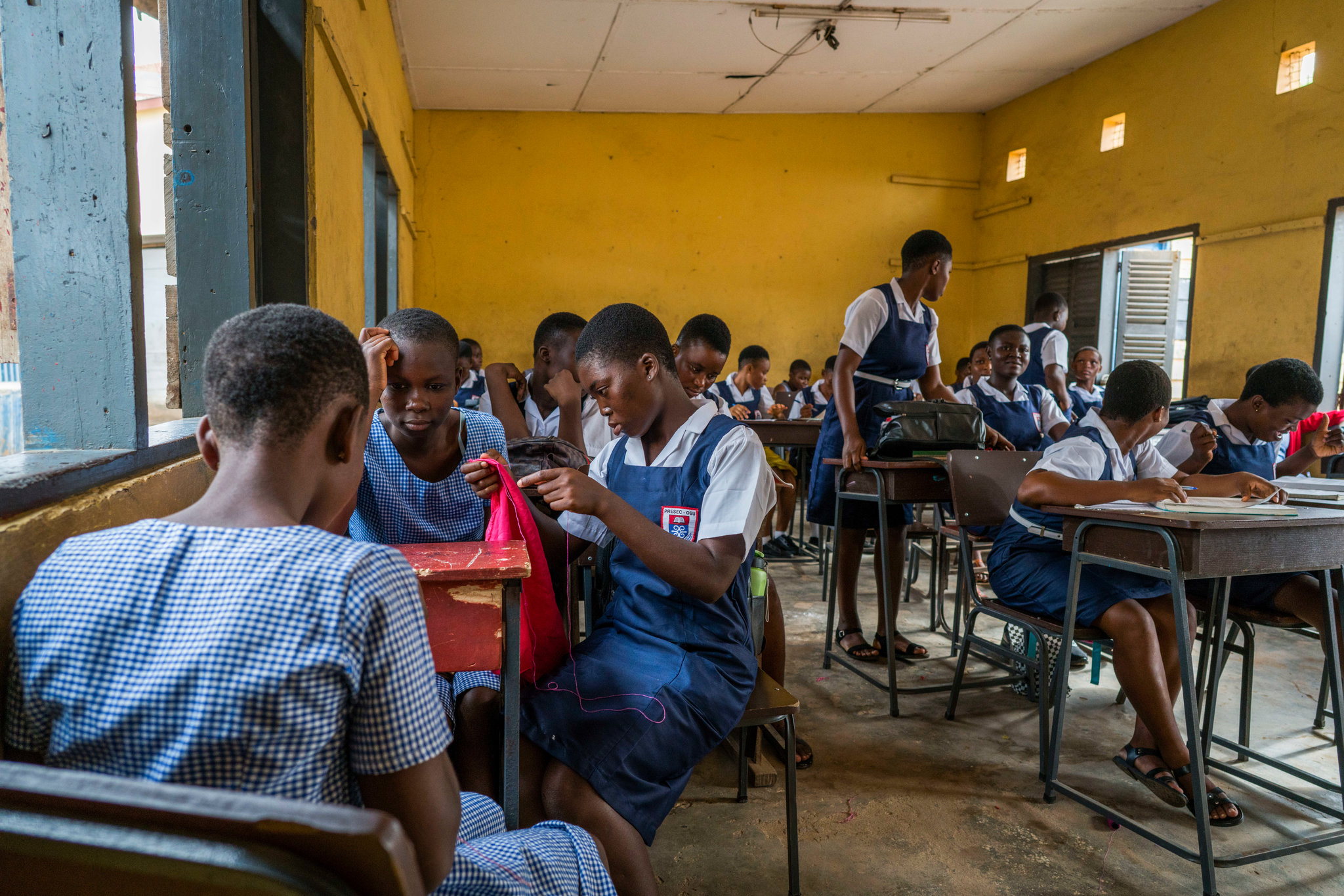
Yet thousands of children attend these schools without their parents paying full freight. They are scholarship students. They sit in the same classrooms, use the same labs, and earn the same qualifications as their fee-paying peers. Their presence is a secret the schools do not hide, but also do not shout.
This feature is an exposé of that secret. We have investigated the scholarship landscape in Accra—which schools offer financial aid, what they cover, how competitive the process is, and how parents can position their children for success. Whether you are aiming for a full ride to SOS-Hermann Gmeiner or a partial bursary at a mid-tier private school, this guide will show you the path.
Because the best school for your child should not be the one you can barely afford. It should be the one where they belong.
Why Scholarships Matter in Accra’s Education Economy
Let us start with the numbers, because the numbers explain everything.
A year at Ghana International School (GIS) or Lincoln Community School can cost upwards of 15,000 for upper secondary, which is more than the annual income of most Ghanaian households. Even mid-tier international schools charge between 5,000 and 8,000 per year—a significant stretch for the average middle-class family.
And yet, parents pay. They sell land. They take loans. They send one child to public school so another can attend private. They make sacrifices that would break lesser ambitions.
But for every parent who scrapes together the full fees, there is another who discovers the scholarship route. Schools have a practical reason to offer financial aid: a diverse student body enriches the learning environment. A scholarship student from a modest background often brings hunger, discipline, and perspective that wealth cannot buy.
The investigative observation: Scholarships are not charity. They are strategic investments by schools in their own reputation and community. A school that produces brilliant graduates—some of whom could not have attended without aid—has a better story to tell than a school that only serves the wealthy.
The Scholarship Landscape: Types, Percentages, and Realities
Before we name specific schools, parents need to understand the different kinds of financial aid available. Not all scholarships are created equal.
Academic Merit Scholarships
These are the most common. Schools offer them to attract top-performing students who will raise the school’s academic profile. The scholarship is typically awarded based on entrance exam scores, previous school results, or a dedicated scholarship examination.
Typical coverage: 10–40% of tuition fees .
Competition level: High. Every academically strong child in Accra wants these slots.
Needs-Based Bursaries
These are awarded based on financial circumstances, not academic performance (though most schools require a baseline level of ability). Parents must submit financial documentation—income statements, business records, sometimes even photos of their home.
Typical coverage: 15–40% of tuition, occasionally more for extreme need .
Competition level: Variable. Fewer families apply for needs-based aid because the documentation requirement is intimidating. But that also means less competition.
Full Scholarships (Rare)
Full coverage—tuition, fees, sometimes even uniforms and laptops—is exceptionally rare. It usually comes from a specific foundation, donor, or school access programme rather than the school’s general budget. SOS-Hermann Gmeiner International College, for example, offers full scholarships to high-achieving students from across Africa through donor-funded programmes .
Sibling and Corporate Discounts
These are not technically scholarships, but they reduce costs. Many schools offer 5–20% off for siblings . Corporate discounts are available for children of employees of major companies that partner with specific schools. Always ask about both during admissions.
Talent Awards
Some schools offer scholarships for exceptional ability in sports, music, or leadership. These are less common in Accra than in Western schools, but they exist, particularly at schools with strong extracurricular programmes.
The Schools: Who Offers What
Now, to the main event. Based on our investigation, here are the top schools in Accra with established scholarship programmes.
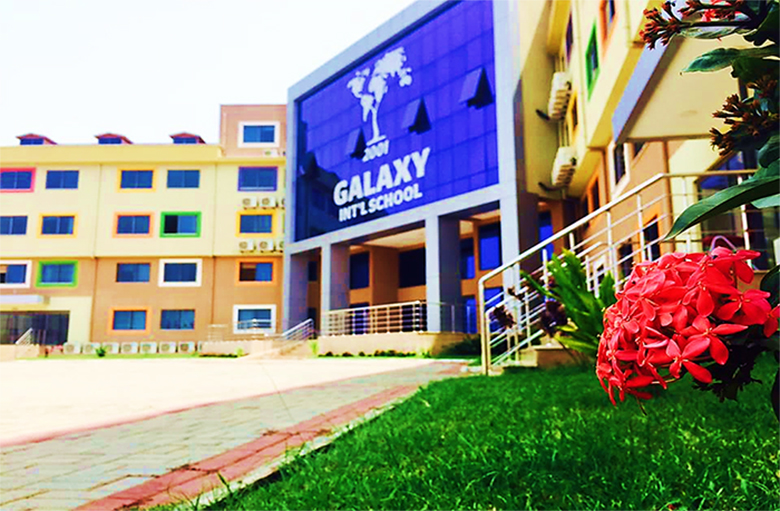
Galaxy International School: The Annual Merit Examination
Galaxy International School runs perhaps the most structured scholarship programme in Accra. Every July, the school holds a dedicated scholarship examination. Students who perform exceptionally well earn full or partial scholarships based on academic excellence .
What parents need to know: The July timeline means you must plan a full year ahead. A child entering Year 7 or Form 4 should sit the exam the July before their intended start date. Late applications are rarely considered.
Coverage: Full and partial. Galaxy does not publish exact percentages, but our sources suggest top performers can receive up to 75% coverage.
The student perspective: One Galaxy scholarship recipient described the experience simply: “Thanks to the scholarship program, I received a high-quality education in one of Ghana’s best learning environments. The staff are supportive, and the school offers exciting international opportunities. There’s truly never a dull moment at Galaxy” .
Ghana International School (GIS): Merit and Need Combined
GIS is the gold standard of Accra international education. Their Upper Secondary School consistently produces students with excellent IGCSE and A-Level results, and their graduates receive “attractive study grants and scholarships” from top universities worldwide .
The school itself offers limited scholarships and fee concessions, based on both academic merit and financial need .
What parents need to know: GIS does not have a mass scholarship programme. Awards are limited and highly competitive. Families should contact the admissions office directly to inquire about current opportunities. Do not wait for a public announcement—by the time they advertise, the slots are usually gone.
The strategic advantage: GIS students excel in international competitions (Math Olympiad, SASMO, Fryer Contest, etc.), which strengthens their scholarship applications for university . A child who attends GIS on partial aid often leaves with full aid for tertiary education.
SOS-Hermann Gmeiner International College (Tema): The Pan-African Opportunity
Located in Tema (but serving the Accra metropolitan area), SOS-Hermann Gmeiner International College is unique in Ghanaian education. It was founded specifically to provide international education to talented students from across Africa, many of whom could not otherwise afford it .
The school provides scholarships and bursaries to high-achieving students, sometimes covering a large share of fees. These awards are often funded by international donors and foundations.
What parents need to know: This is one of the few schools where full scholarships are genuinely available. However, competition is fierce—applicants come from all over West Africa, not just Accra. Academic records must be exceptional, and the interview process is rigorous.
The hidden reality: SOS-Hermann Gmeiner is also a boarding school, which means the scholarship typically covers accommodation as well. For families outside Accra or those who want their child in a structured residential environment, this is a significant advantage.
Lincoln Community School: Needs-Based Financial Aid
Lincoln Community School is an IB World School serving the expatriate and diplomatic community in Accra. Unlike many international schools, Lincoln has a formal needs-based financial aid programme that can cover a significant portion of tuition for qualifying families .
What parents need to know: “Needs-based” means exactly that. You will need to provide comprehensive financial documentation, and the school will verify your circumstances. Lincoln is transparent about this process, but it requires vulnerability. Some families are uncomfortable sharing their financial situation with a school. Those who do are often rewarded.
Coverage: Variable. Lincoln states that aid “can cover a significant portion of tuition for qualifying families” . Expect anywhere from 30–80% depending on demonstrated need.
Sovereign House GH International School: Mission-Driven Access
Sovereign House GH opened its doors in September 2024, and from day one, scholarships have been central to its mission. The school blends the Ghana Education System with IB and Cambridge curricula, but its founding purpose is accessibility .
The school runs a comprehensive scholarship programme that ensures children from their affiliated children’s home can attend at no cost. But these scholarships are not limited to residents of the home—the school has indicated that financial aid is available to other qualifying families as well.
What parents need to know: Sovereign House is new, which means its scholarship programme is still developing. The advantage? Less competition than established schools. The disadvantage? Less track record. Parents willing to take a chance on a new institution may find generous offers.
The mission: “Our core belief that quality education should be accessible to all, regardless of each child’s background or circumstances” . This is not marketing speak. Sovereign House was literally founded to serve disadvantaged children.
Morgan International Community School and Others
Morgan International Community School and other premium private schools in Accra often run merit and bursary schemes in the 10–40% range . These are less publicised than the major international schools, but they exist.
What parents need to know: Do not assume a school does not have scholarships because they are not on the website. Ask. Many schools have discretionary funds for deserving students but do not advertise them because they want fee-paying families to pay full freight.
The rule of thumb: If a school charges more than $5,000 per year and has been operating for more than a decade, they almost certainly have a scholarship budget. Your job is to find out who controls it and how to apply.
Beyond Secondary: Tertiary Scholarship Pathways
While this guide focuses on secondary schools, parents should also understand the scholarship ecosystem for university. A child who attends a top Accra school on partial aid may be positioned for full aid at the tertiary level.
The MTN Bright Scholarship is the most significant local programme. In 2025, 500 students and teachers were selected from over 3,600 applications. Beneficiaries receive full tuition, accommodation, a stipend, and a laptop. Ten students from Accra Technical University were among the winners .
International pathways: Ghana International School students regularly receive “attractive study grants and scholarships” from top US, UK, European, and Ghanaian universities . The school’s track record of placing students in elite institutions means that a GIS scholarship student often leaves with multiple university offers.
Stevens Institute of Technology partnership: Ghanaian students with a GPA of 3.0 or higher aged 21–40 can access educational loans and scholarships through a partnership between Stevens Institute of Technology and Nekotech Center of Excellence. The collaboration secured $100 million in educational loans for Ghanaian students .
The strategy: A secondary school scholarship is not the finish line. It is a stepping stone. Choose a school with a strong university counselling programme, not just good labs. The school that helps you pay for secondary but does nothing for university is half a solution.
How to Apply: A Step-by-Step Parental Guide
Based on interviews with admissions officers and successful scholarship parents, here is the application playbook.
Step One: Start Early—Very Early.
Scholarship decisions are typically made 9–12 months before the academic year begins . If your child is starting Form 1 in September 2027, you should begin researching scholarships in September 2026. Galaxy International holds its scholarship examination every July . Mark that date on your calendar two years in advance.
Step Two: Build a Document Portfolio.
Academic transcripts from the last two years. Standardised test scores if available. Letters of recommendation from current teachers. A personal statement from your child explaining why they deserve the scholarship. Financial documents (pay stubs, tax returns, business accounts) if applying for needs-based aid.
Do not wait until the application deadline to gather these. Keep a digital folder that you update every term.
Step Three: Research School by School.
Do not rely on general guides like this one (though we are thorough). Visit school websites. Call admissions offices. Ask specific questions: “Do you have a scholarship examination? When is it? What percentage of tuition does it typically cover? How many awards did you give last year?”
Some schools will be transparent. Others will be evasive. The evasive ones are either not serious about scholarships or reserve them for connected families. Move on.
Step Four: Prepare Your Child for the Examination.
Most merit scholarships are awarded based on a single examination. That examination is usually more difficult than the standard entrance test. Your child needs to prepare.
Purchase past papers if available. Hire a tutor for weak subjects. Ensure your child is well-rested and fed on examination day. These sound like basic parenting tips, but you would be surprised how many families treat the scholarship exam like any other school day.
Step Five: Apply to Multiple Schools.
Do not put all your hopes on one institution. Apply for scholarships at three to five schools. The application fees add up, but the potential return (tens of thousands of cedis in fee relief) justifies the investment.
Step Six: Follow Up Professionally.
After submitting the application, send a polite follow-up email after two weeks. Not to pester—to demonstrate that you are organised and serious. Scholarship committees notice parents who are professional and persistent.
Step Seven: Have a Backup Plan.
Even with perfect preparation, scholarships are competitive. A school might have 100 qualified applicants for 5 awards. Have a second-choice school that is affordable without aid. Do not mortgage your future on a scholarship that may not come.
The Hidden Truths Schools Won’t Tell You
As an investigative journalist, I have a duty to name the uncomfortable realities.
Truth One: Some Scholarships Are Already Spoken For.
At some schools, “public” scholarship competitions are a formality. The awards are informally reserved for children of board members, major donors, or influential community figures. This is not universal, but it happens. If you suspect a school is not running a fair process, trust your gut and look elsewhere.
Truth Two: Scholarships Can Be Renewed—Or Revoked.
Most scholarships are awarded for one year, with renewal contingent on maintaining grades and conduct . Read the fine print. Some schools require a specific GPA for renewal—if your child misses it by a fraction, the scholarship disappears. Others have a “good standing” clause that is more flexible. Know what you are signing.
Truth Three: Partial Scholarships Are Often Renewable for Years; Full Scholarships Are Often One-Year Only.
Paradoxically, a 30% scholarship may be guaranteed for all four years of secondary school, while a 100% scholarship may be a one-time award that forces you to reapply annually. The logic: schools use full scholarships to recruit top students, then hope those students stay even when the award decreases. Read every renewal condition.
Truth Four: Bursary Applications Are Intrusive—By Design.
Needs-based aid requires proving you cannot afford the fees. That means bank statements, pay stubs, sometimes even photographs of your home. Schools do this to prevent fraud. If you are uncomfortable with this level of disclosure, focus on merit scholarships instead .
A Parental Checklist
Before you invest time and emotional energy in a scholarship application, run through this checklist.
The School’s Scholarship Readiness:
-
Does the school have a published scholarship policy on its website?
-
Is there a clear application deadline?
-
Is there a dedicated scholarship examination or is it based on general entrance results?
-
Does the school publish how many scholarships were awarded last year?
-
Can they name a current scholarship student (without violating privacy)?
Your Family’s Readiness:
-
Is your child academically in the top 5% of their current class?
-
Do you have financial documents organised if applying for needs-based aid?
-
Can you afford the application fee for multiple schools?
-
Do you have a backup school that is affordable without aid?
-
Is your child emotionally prepared for the possibility of rejection?
The Fine Print:
-
What is the renewal GPA requirement?
-
Does the scholarship cover fees only, or also uniforms, books, transport, and laptops?
-
Is the scholarship guaranteed for all years or subject to annual reapplication?
-
What happens if your family’s financial situation improves mid-stream?
FAQ Section: Parents’ Top Questions Answered
1. Which schools in Accra offer full scholarships?
Full scholarships (100% tuition coverage) are rare but exist. SOS-Hermann Gmeiner International College offers full scholarships to high-achieving students from across Africa through donor-funded programmes . Galaxy International School offers full scholarships through their annual July examination, though the number of full awards is limited . Sovereign House GH offers full scholarships to children from their affiliated children’s home and may extend similar offers to other qualifying families .
2. How competitive are international school scholarships in Accra?
Extremely. For every scholarship award, there are dozens—sometimes hundreds—of applicants. The MTN Bright Scholarship for tertiary students received over 3,600 applications for 500 awards, a 14% success rate . For secondary school scholarships, the ratios are often worse because the applicant pool is more geographically concentrated.
3. Can my child apply for a scholarship after already enrolling?
Usually, no. Most schools require scholarship applications to be submitted before admission or during the first term of enrolment. Some schools have annual scholarship examinations that current students can sit, but this is less common. Read each school’s policy carefully.
4. Do scholarships cover boarding fees at boarding schools?
It depends. At SOS-Hermann Gmeiner, scholarships often cover both tuition and boarding because the school is primarily a boarding institution . At other schools, scholarships are typically tuition-only. Always ask for the exact coverage before accepting an award.
5. Are there scholarships for Ghanaian students to study abroad?
Yes, though that is a different topic than this guide. The Stevens Institute of Technology partnership with Nekotech Center of Excellence provides access to educational loans and scholarships for Ghanaian students pursuing STEM, AI, and MBA programmes in the US . Eligibility: degree holders aged 21–40 with a GPA of 3.0 or higher.
6. What is the difference between a scholarship and a bursary?
In Ghanaian school contexts, a scholarship is typically awarded based on academic merit or talent. A bursary is awarded based on financial need. Some schools use the terms interchangeably. Others offer “merit-based scholarships” and “needs-based bursaries” as separate programmes . Always clarify which you are applying for.
7. Do private schools offer sibling discounts instead of scholarships?
Yes, and for many families, sibling discounts are more reliable than competitive scholarships. Typical sibling discounts range from 5–20% off tuition for the second, third, and fourth child . Some schools also offer corporate discounts for employees of partner companies. Always ask about both.
8. How early should I start the scholarship application process?
Start 9–12 months before the intended start date . For Galaxy International’s July examination, that means beginning research the September before. For schools with rolling admissions, start at least 6 months in advance. Scholarship budgets are often exhausted early.
9. Can a child with average grades get a scholarship?
Unlikely for merit-based awards. But for needs-based bursaries, many schools only require a baseline level of academic ability—not necessarily top marks. If your child is solidly average but your financial need is extreme, some bursary programmes will consider you. Be honest with yourself and the school about your child’s academic profile.
10. What happens if my child loses the scholarship mid-year?
This depends entirely on the school’s policy. Some schools allow you to convert to full fee payment. Others require the student to withdraw. The safest approach is to ask for the scholarship terms in writing before accepting and to maintain a financial reserve in case the scholarship is not renewed.
Conclusion: The Scholarship Is a Tool, Not the Goal
There is a risk in writing a guide like this. It can create the impression that the scholarship is the prize—the thing you are chasing, the validation you need.
That is backwards.
The prize is your child’s education. The scholarship is simply a tool to access it.
Some of the most successful Ghanaians I have interviewed for this publication attended schools without a single scholarship to their name. Others attended the finest international schools in Accra on full rides. The common denominator was not the fee receipt. It was the student’s hunger, the parent’s support, and the alignment between school and child.
If you pursue a scholarship, do so with integrity. Do not falsify financial documents. Do not pressure your child into examinations they are not ready for. Do not choose a school solely because they offered aid, if that school is a poor fit for your child’s learning style or aspirations.
But if you find a school that fits, and they offer a scholarship that makes it possible, take it with gratitude and determination. Your child will not be the “charity case.” They will be the student who earned their seat. And in the classrooms of Accra’s top schools, that is a distinction that commands respect.
Start early. Prepare thoroughly. Apply widely. And remember: the best scholarship is the one that puts your child in the environment where they will grow the most—not necessarily the one with the largest percentage discount.
Because in the end, you are not investing in a school. You are investing in a human being.
Do it wisely.
Source: Accra Street Journal
Last Updated on May 21, 2026 by Samuel Kwame Boadu
Disclaimer: Some content on Accra Street Journal may be aggregated, summarized, or edited from third-party sources for informational purposes. Images and media are used under fair use or royalty-free licenses. Accra Street Journal is a subsidiary of SamBoad Publishing Hub under SamBoad Business Group Ltd, registered in Ghana since 2014.
For concerns or inquiries, please visit our Privacy Policy or Contact Page.

Samuel Kwame Boadu is a Ghanaian media entrepreneur and storyteller with a passion for amplifying urban voices and uncovering everyday truths. He is the Editor-in-Chief and Founder of Accra Street Journal, a dynamic digital platform dedicated to capturing the pulse of Ghana’s capital—its people, culture, challenges, business, sports and innovations.