




12 min read
The World Bank Group has announced plans to mobilize nearly $23 billion in private capital for Africa over the next four years through an expanded guarantee financing platform, marking one of its most ambitious efforts yet to address the continent’s growing infrastructure gap, youth unemployment, and energy shortages. Revealed on May 20, 2026, the multibillion-dollar initiative will be driven by the bank’s newly consolidated Guarantee Platform—a financial risk-sharing mechanism designed to draw private investors into sectors many global financiers still view as too risky. The plan includes more than doubling the World Bank’s annual guarantee issuance in Africa to $6.4 billion by 2030.
The Bank estimates that nearly 190 million Africans could directly benefit within the next four years through expanded electricity access (43 million people), financial inclusion (50 million individuals and businesses), broadband connectivity (37 million people), and digitally enabled services (51 million people). Key beneficiaries are expected to include Mission 300—a joint African Development Bank and World Bank effort to connect 300 million Africans to electricity by 2030—and AgriConnect, a program aimed at strengthening smallholder farming systems.
Key Takeaways
- The plan includes more than doubling the World Bank’s annual guarantee issuance in Africa to $6.4 billion by 2030.
- The Guarantee Platform, launched in 2024, consolidates expertise from the World Bank, the International Finance Corporation (IFC), and the Multilateral Investment Guarantee Agency (MIGA) into a "one-stop shop" for investment guarantees.
- The World Bank's guarantee platform is part of a broader trend toward using risk mitigation instruments to mobilize private capital for development.
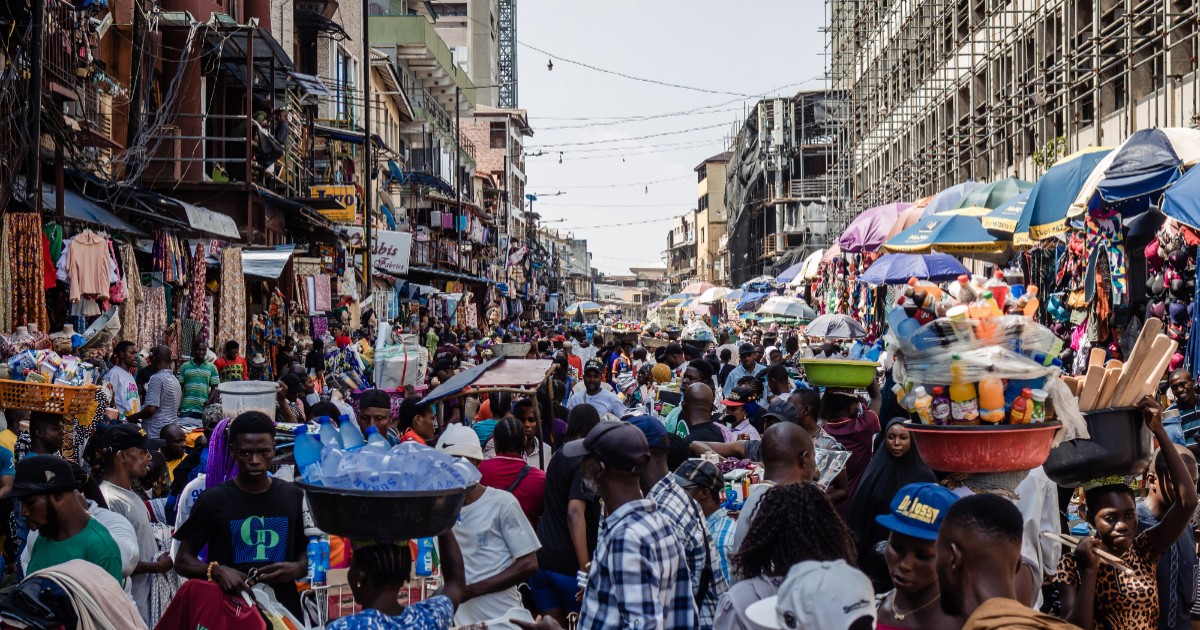
This initiative comes as Africa braces for a demographic boom, with its working-age population projected to rise by about 740 million over the next 30 years, and up to 12 million young people entering the job market annually.
Key Developments: The Guarantee Platform, Sectoral Targets, and Demographic Imperative
The Guarantee Platform, launched in 2024, consolidates expertise from the World Bank, the International Finance Corporation (IFC), and the Multilateral Investment Guarantee Agency (MIGA) into a “one-stop shop” for investment guarantees. Guarantees are financial instruments that protect investors against specific risks—such as non-payment by a government entity, currency inconvertibility, expropriation, or political violence—in exchange for a fee. By reducing perceived risk, guarantees can unlock private capital that would otherwise stay on the sidelines.
The $23 billion mobilization target over four years marks a major boost in the platform’s activity. The World Bank’s annual guarantee issuance in Africa is currently below $3 billion, so reaching $6.4 billion by 2030 would more than double current levels. These guarantees will be directed toward “job-rich sectors” like energy, agribusiness, healthcare, digital services, finance, trade, and transport infrastructure.
The demographic imperative driving the initiative is stark. Africa’s working-age population is the world’s fastest growing. By 2050, the continent will be home to more young people than any other region. If these young people can find productive employment, Africa could reap a demographic dividend—a boost to economic growth from a rising share of workers relative to dependents. If they cannot, the result could be social unrest, political instability, and increased migration pressures.
The World Bank estimates that Africa needs to create 12 million new jobs annually just to absorb new entrants to the labour market. Current job creation is far below that level. The guarantee platform is designed to address the investment gap that underlies the jobs gap. By reducing risk, the World Bank hopes to attract private capital into sectors that can generate large-scale employment.
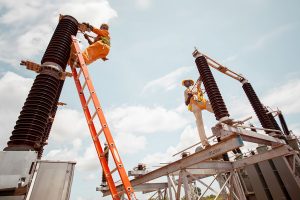
Mission 300 is a flagship recipient. The initiative, launched by the African Development Bank and the World Bank, aims to connect 300 million Africans to electricity by 2030. Currently, approximately 600 million Africans lack access to electricity—more than 80% of the world’s unelectrified population. Achieving Mission 300 would cut that number in half. The guarantee platform can support private investment in renewable energy projects (solar, wind, hydro), transmission infrastructure, and distribution networks.
AgriConnect, the smallholder farming programme, addresses food security. African agriculture is dominated by smallholder farmers who lack access to credit, inputs, technology, and markets. The programme aims to strengthen farming systems, improve productivity, and connect farmers to value chains. Guarantees can be used to de-risk lending to agricultural cooperatives, input suppliers, and food processors.
The broadband connectivity and digital services targets reflect the growing importance of the digital economy. Internet access is no longer a luxury; it is a prerequisite for economic participation. Guarantees can support private investment in fiber-optic networks, data centers, mobile towers, and digital payment systems. The World Bank’s target of extending broadband connectivity to 37 million people and digitally enabled services to 51 million people is ambitious but achievable if private capital is mobilized.

Managing Director of MIGA, Tsutomu Yamamoto, framed the initiative in terms of opportunity: “Africa remains home to the world’s youngest and fastest-growing workforce, and guarantees will play a critical role in attracting the investment to create the jobs needed to secure their future.” The statement captures the essence of the World Bank’s strategy: guarantees are not an end in themselves; they are a means to unlock private investment, which is the engine of job creation.
Analysis & Implications: The Guarantee Instrument, Risk Perception, and Additionality
Guarantees are a form of risk mitigation, not risk elimination. They do not make bad projects good; they make good projects that are blocked by perceived risk financeable. The World Bank’s role is to assess project viability, determine the specific risks that are deterring private investors, and design a guarantee that addresses those risks. The guarantee fee is priced to reflect the residual risk after mitigation.

The challenge is additionality—ensuring that the guarantee is the reason the project happens, rather than simply subsidizing a project that would have happened anyway. The World Bank has internal procedures to assess additionality, but critics argue that guarantees can crowd out private risk-taking by signaling that the project is too risky for commercial insurers. The bank’s response is that guarantees are targeted at markets where commercial risk mitigation is unavailable or prohibitively expensive.
The $23 billion mobilization target represents the amount of private capital that the World Bank expects to catalyze, not the amount the bank will spend. The bank’s own capital is only at risk if a guarantee is called (i.e., if the insured event occurs and the bank must pay out). The guarantee fee income is intended to cover expected losses and administrative costs. If the guarantees are well-priced and the underlying projects are sound, the bank’s net cost could be low or even negative.
The focus on “job-rich sectors” is strategic. Energy projects create direct jobs (construction, operation) and indirect jobs (in businesses that benefit from reliable electricity). Agribusiness projects create jobs across the value chain, from farming to processing to distribution. Digital infrastructure projects create jobs in installation, maintenance, and services. The World Bank’s impact evaluation framework will need to track not only capital mobilized but also jobs created.
The demographic imperative adds urgency. The 12 million young Africans entering the labour market each year are not statistics; they are people with aspirations. If they cannot find jobs, they may migrate, protest, or become radicalized. The guarantee platform is not a solution to the jobs crisis on its own, but it is a part of a broader strategy that includes education, skills training, governance reform, and macroeconomic stability.
The Accra Street Journal notes that Ghana stands to benefit from the guarantee platform. Ghana is a priority country for the World Bank and has a track record of implementing guarantee-supported projects. The energy sector (Sankofa expansion, renewable energy), agribusiness (cocoa, shea, cashew), and digital infrastructure are all potential beneficiaries. The government should engage proactively with the World Bank, IFC, and MIGA to identify guarantee-eligible projects.
What This Means for African Governments, Private Investors, and Citizens
For African governments, the guarantee platform offers a way to attract private capital without increasing public debt. Traditional infrastructure financing—borrowing from commercial banks or issuing sovereign bonds—adds to the public debt stock. Guarantees do not; they are contingent liabilities that only materialize if the project fails. Governments can use guarantees to leverage their limited fiscal space to mobilize multiples of private capital.
However, guarantees are not free. Governments must provide counter-guarantees or indemnities, and they must ensure that the underlying projects are well-structured and implemented. A poorly designed project that fails will trigger the guarantee, costing the government and damaging its credibility with the World Bank.
For private investors, the guarantee platform reduces the risk profile of African investments. Political risk, regulatory risk, and currency risk have historically deterred investment. Guarantees from the World Bank—a highly rated institution—can make African projects comparable in risk to projects in lower-risk jurisdictions. The guarantee fee is a cost, but it is a cost worth paying if it unlocks a project that would otherwise be impossible.
For African citizens, the benefits are indirect but real. More investment means more jobs, better infrastructure, and improved services. The World Bank’s projection that 190 million Africans could benefit from the initiative over four years is a reasonable estimate of the potential reach. But benefits are not automatic; they depend on project selection, implementation quality, and governance.
The focus on women-led enterprises in the financial inclusion target is notable. Women in Africa face disproportionate barriers to accessing credit: lack of collateral, lower financial literacy, and discriminatory lending practices. Guarantees can be structured to encourage lending to women-owned businesses, either through portfolio guarantees (covering a pool of loans) or first-loss guarantees (covering the riskiest portion).

The Accra Street Journal notes that the success of the guarantee platform will depend on the quality of the project pipeline. The World Bank can provide guarantees, but it cannot create projects. African governments, development finance institutions, and private sector partners must develop bankable projects that meet the bank’s criteria. The guarantee platform is a tool; the project pipeline is the raw material. Without a strong pipeline, the tool is useless.
Wider Context: Development Finance Innovation and the Private Capital Gap
The World Bank’s guarantee platform is part of a broader trend toward using risk mitigation instruments to mobilize private capital for development. The IFC, MIGA, the African Development Bank, and bilateral development finance institutions (DFIs) have all expanded their guarantee offerings. The goal is the same: to fill the gap between the amount of private capital seeking investment opportunities in emerging markets and the amount actually deployed.
The gap is large. The World Bank estimates that Africa needs 130billionto170 billion annually in infrastructure investment, but only half that amount is mobilized. Private capital accounts for a small fraction of the total; most infrastructure is financed by governments and DFIs. The guarantee platform aims to change that by reducing the perceived risk that keeps private capital on the sidelines.
The comparison with other regions is instructive. Latin America and Asia have much higher levels of private infrastructure investment, in part because investors perceive lower risk. Africa’s risk perception is not entirely accurate—some African countries have better governance and stronger institutions than some countries in other regions that attract more investment—but perception matters. Guarantees address perception.
The World Bank’s own research shows that guarantees can be effective when well-targeted. A 2024 evaluation of MIGA’s political risk insurance portfolio found that guarantees had a positive impact on investment flows, particularly in fragile and conflict-affected states. However, the evaluation also noted that guarantees are not a panacea; they must be complemented by policy reforms, capacity building, and good governance.
The guarantee platform’s “one-stop shop” approach is an improvement over the previous fragmented system. Previously, investors seeking guarantees had to navigate three separate institutions (World Bank, IFC, MIGA) with different procedures, different risk appetites, and different pricing. The consolidated platform reduces transaction costs and speeds up processing. For time-sensitive projects, the difference between a six-month approval and a 12-month approval can be decisive.
The $23 billion target over four years is ambitious but doable. The World Bank’s annual guarantee issuance in Africa is currently under $3 billion, so hitting that goal means more than doubling to $6.4 billion by 2030. Achieving this will take a big boost in staff capacity, risk appetite, and a stronger project pipeline. The bank’s leadership seems committed to the goal, but the real challenge will be in delivering on it.
Outlook / What Happens Next
The guarantee platform is already operational; the $23 billion target is a scaling-up goal, not a new launch. The World Bank will now work with country teams, DFIs, and private sector partners to identify guarantee-eligible projects, design guarantee structures, and process applications. The next 12 to 24 months will determine whether the target is credible or aspirational.
Mission 300 is a priority. The World Bank and African Development Bank have committed to connecting 300 million Africans to electricity by 2030. The guarantee platform can support private investment in renewable energy mini-grids, off-grid solar systems, and transmission lines. The first wave of guarantee-supported energy projects is expected to be announced by the end of 2026.
AgriConnect and the digital infrastructure targets will follow. These programmes are less mature than Mission 300, but the World Bank is developing pipelines. Guarantees for agricultural lending are more complex than guarantees for energy projects because the underlying assets (crops, livestock) are more volatile. The bank will need to develop specialized guarantee products.
For Ghana, the opportunity is clear. The government should designate a focal point within the Ministry of Finance to engage with the World Bank on the guarantee platform. The Ministry should identify priority projects—energy, agribusiness, digital infrastructure—and prepare them for guarantee support. The Accra Street Journal notes that Ghana’s record of implementing World Bank projects is strong, which should give the bank confidence in providing guarantees.
For the Accra Street Journal’s readers, the guarantee platform is a technical initiative with real-world consequences. If successful, it will bring private capital into sectors that create jobs, provide electricity, and expand internet access. If unsuccessful, the jobs gap will widen, and Africa’s demographic dividend will turn into a demographic burden. The stakes are high. The World Bank has made a bold commitment. The next four years will show whether it can deliver.
Source: Accra Street Journal
Last Updated on May 21, 2026 by Samuel Kwame Boadu
Disclaimer: Some content on Accra Street Journal may be aggregated, summarized, or edited from third-party sources for informational purposes. Images and media are used under fair use or royalty-free licenses. Accra Street Journal is a subsidiary of SamBoad Publishing Hub under SamBoad Business Group Ltd, registered in Ghana since 2014.
For concerns or inquiries, please visit our Privacy Policy or Contact Page.

Samuel Kwame Boadu is a Ghanaian media entrepreneur and storyteller with a passion for amplifying urban voices and uncovering everyday truths. He is the Editor-in-Chief and Founder of Accra Street Journal, a dynamic digital platform dedicated to capturing the pulse of Ghana’s capital—its people, culture, challenges, business, sports and innovations.
Use the following reference when citing or referencing this article.
Your feedback helps us improve our journalism.
Report an Error
Help us maintain accuracy. Let our editorial team know if you spot an issue in this article.
Report a problem with this article