







An Accra Street Journal Finance & Technology Guide
Executive Introduction
In a world increasingly defined by digital payments, Ghana’s financial landscape tells a story of homegrown success that has outpaced expectations. Mobile Money (MoMo) isn’t just a payment method here; it has become the primary financial operating system for the majority of the population. In April 2026 alone, the total value of mobile money transactions reached a staggering GH¢493.2 billion , underscoring the nation’s deep reliance on this digital-first approach.

This dominance is not an accident. It is the result of a deliberate convergence of technology, policy, and market demand that has created an ecosystem deeply embedded in the daily lives of Ghanaians.
📢 GET A DETAILED ARTICLES + JOBS
Join ASJ's WhatsApp Channel and never miss a post or opportunity.

Part 1: The Numbers — Unmatched Scale and Penetration
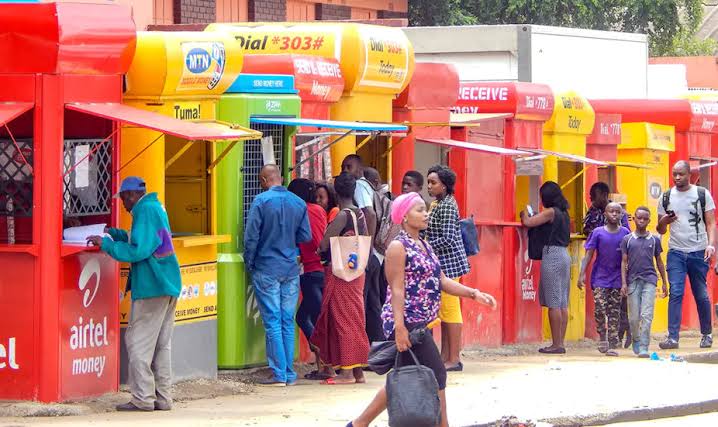
The scale of mobile money usage in Ghana is unparalleled when compared to traditional financial channels. As of April 2026, registered mobile money accounts had reached 83 million—a figure that significantly exceeds the country’s population, reflecting high usage, multiple accounts per person, and its role as a primary financial tool . Active accounts stood at 26 million, with a robust agent network of over 992,000 registered agents, 534,000 of whom are active, ensuring accessibility even in remote areas .
For context, the volume of mobile money transactions dwarfs other formal payment methods. In April 2026, 967 million MoMo transactions were recorded, compared to just 413,000 cheque transactions and 816,000 Automated Clearing House (ACH) direct credit transactions . This makes mobile money the undisputed leader in both retail and peer-to-peer payments. Similarly, the value of mobile money float balances—the trust accounts backing electronic value in circulation—grew to GH¢36.7 billion in April 2026 , highlighting that Ghanaians are storing significant value within the mobile money ecosystem.

MTN MoMo is the dominant player, estimated to control about 89% of the mobile financial services revenue in Ghana . This dominance allows MTN significant influence over the market, as seen in its recent attempt to introduce a fee on wallet-to-bank transfers—a move that was suspended by the Bank of Ghana pending further consultation .
Part 2: The Interoperability Breakthrough
A critical turning point for mobile money was the introduction of mobile money interoperability in 2018 . Interoperability allows users to seamlessly transfer funds across different mobile networks (MTN, Telecel, AT) and between mobile wallets and bank accounts .
This achievement has been a game-changer. Ghana has been recognized as the number one African country with fully interoperable multiple instant payment systems . The impact is evident in the numbers: mobile money interoperability transactions reached GH¢5.8 billion across 31.7 million transactions in April 2026 , nearly doubling from the previous year . This ease of movement between different financial ecosystems has been pivotal in mainstreaming mobile money.
Part 3: Drivers of Dominance — Why Ghanaians Prefer MoMo
Several interconnected factors have fueled the rapid and sustained adoption of mobile money in Ghana .
Convenience and Accessibility
For millions, especially the 60% of Ghanaians who use mobile money compared to the 40% with bank accounts, mobile money offers a level of convenience that traditional banking cannot match . It allows users to transfer money, pay bills, buy airtime, and even access financial services like savings and loans instantly from a mobile phone, 24/7, without the need to visit a bank . A 2025 KPMG survey found that mobile money usage surged to 80%, while ATM usage fell sharply to 16%, confirming the shift towards mobile-first financial services .
Financial Inclusion
Mobile money has been a powerful tool for financial inclusion, bridging the gap for the unbanked and underbanked populations, particularly in rural areas . With a basic phone and a SIM card, anyone can access a mobile wallet, becoming part of the formal financial system. For business owners like Kwabena Asare, a MoMo agent who handles hundreds of transactions a day, mobile money has not only transformed his business but also his entire community by providing essential financial services . For entrepreneurs like Afua, a boutique owner, MoMo and digital lending apps have revolutionized credit access and day-to-day business operations .
Agent Network and Low Barriers to Entry
The extensive network of over 534,000 active MoMo agents across the country serves as the physical infrastructure for cash-in and cash-out services . This makes it easier for people to convert between physical cash and electronic money, a crucial function in a cash-based society. The low entry barrier—requiring only a SIM card—and the user-friendly USSD interface (e.g., *170#) have made it accessible to a broad demographic, including those without smartphones .
Supportive Regulatory Environment
The Bank of Ghana (BoG) has played a pivotal role by establishing a supportive and adaptive regulatory framework. The introduction of electronic money issuers (EMI) guidelines provided a structured foundation for mobile money growth . Furthermore, the removal of the Electronic Transfer Levy (E-Levy) removed a significant cost burden, which the Ghana Chamber of Telecommunications expects will increase both the volume and value of digital transactions . While recent attempts to introduce a fee on MoMo-to-bank transfers were suspended by the BoG due to consumer protection concerns, the central bank’s active oversight demonstrates a commitment to fair practices and sustainable growth .
Part 4: Key Players
| Institution | Role | Impact |
|---|---|---|
| MTN Mobile Money (MoMo) | Market leader, processing the majority of transactions. | Controls an estimated 89% of the mobile financial services revenue in Ghana . |
| Onafriq | Facilitates card-to-wallet and wallet-to-card interoperability. | Bridges the gap between mobile money and card-based systems, offering users greater flexibility . |
| Fintechs (e.g., Zeepay, Hubtel) | Innovators in digital payments, lending, and financial tools. | Expand the utility of mobile money beyond basic transfers to business solutions . |
| Bank of Ghana | Regulator and policy architect. | Provides oversight, ensures stability, and promotes financial inclusion, including exploring the eCedi . |
| Ghana Chamber of Telecommunications | Advocates for the telecommunications industry, including mobile money. | Helps shape the policy environment and promotes the sector’s growth . |
ASJ Conclusion
Mobile money’s dominance in Ghana is not a temporary phenomenon. It is the result of a well-crafted ecosystem that combines technological innovation, strategic policy, and a deep understanding of consumer needs. While challenges like fraud and pricing changes exist , the momentum towards a cash-lite economy is irreversible. The success story of MoMo in Ghana is a compelling model for the rest of Africa and emerging markets globally, demonstrating that the future of finance can be built on a mobile phone.

Last Updated on July 10, 2026 by Samuel Kwame Boadu
Disclaimer: Some content on Accra Street Journal may be aggregated, summarized, or edited from third-party sources for informational purposes. Images and media are used under fair use or royalty-free licenses. Accra Street Journal is a subsidiary of SamBoad Publishing Hub under SamBoad Business Group Ltd, registered in Ghana since 2014.
For concerns or inquiries, please visit our Privacy Policy or Contact Page.

Samuel Kwame Boadu is a Ghanaian media entrepreneur and storyteller with a passion for amplifying urban voices and uncovering everyday truths. He is the Editor-in-Chief and Founder of Accra Street Journal, a dynamic digital platform dedicated to capturing the pulse of Ghana’s capital—its people, culture, challenges, business, sports and innovations.