








EXECUTIVE INTRODUCTION
The narrative of Ghana’s digital revolution is, rightly, a story of triumphant, rapid, and profoundly empowering adoption. The statistics are a source of national pride. Mobile phone penetration has soared to levels unimaginable a generation ago, making Ghana a global leader in digital financial inclusion. Affordable smartphones and laptops have democratised access to information, education, and global markets, creating new livelihoods and connecting millions to the modern economy. We celebrate the arrival of the new device, the unboxing of the sleek, powerful gadget that promises to make life faster, easier, and more connected. This is the bright, visible, and celebrated side of the digital age. But there is a dark, hidden, and rapidly growing shadow cast by every single one of these devices. What happens to them when they die?
The quiet, unglamorous, and deeply troubling answer is that they become electronic waste, or e-waste, the fastest-growing waste stream on the planet, and one of the most complex and dangerous environmental and public health challenges of our time. This Accra Street Journal analysis is a clear-eyed examination of why the management of this e-waste is no longer just an environmental problem, left to the waste collectors and the municipal authorities. It has become, profoundly and urgently, a technology issue, a problem that was created by the relentless, rapid pace of technological innovation, and a problem that will require a new generation of technological, policy, and social innovation to solve. We trace the journey of the dead device, the toxic legacy it leaves in our land, water, and bodies, the informal, hazardous, and yet economically vital recycling economy it sustains, and the emerging, hopeful solutions that are beginning to reframe the entire problem. The digital afterlife of our gadgets is a crisis, but buried within that crisis is a valuable, untapped resource and a unique opportunity for Ghanaian innovation. The challenge is immense, but it is one we must face, not just as a matter of environmental responsibility, but as a critical test of our capacity to build a truly sustainable, intelligent, and just digital future.

THE TOXIC LEGACY: WHAT IS INSIDE YOUR OLD PHONE
The first, and most urgent, reason why e-waste management has become a critical tech issue is the simple, terrifying fact of what these dead devices are made of. A modern smartphone, laptop, or desktop computer is not a simple, inert piece of plastic and metal. It is a highly complex, engineered assembly of over a thousand different materials, a dense, compact cocktail of both immense value and profound danger. Inside the sleek, harmless-looking casing lies a hidden, toxic legacy. The cathode-ray tubes of old televisions and monitors are filled with lead, a potent neurotoxin that devastates the developing brains of children. The circuit boards that are the brains of every digital device contain cadmium, a known carcinogen that accumulates in the kidneys. The lithium-ion batteries that power our mobile world, when crushed, punctured, or exposed to heat, can leak corrosive electrolytes and burst into intense, toxic, and difficult-to-extinguish fires, releasing clouds of harmful gases. The plastic casings are often treated with brominated flame retardants, chemicals that persist in the environment, accumulate in the food chain, and disrupt the delicate hormonal systems of both humans and wildlife.
📢 GET A DETAILED ARTICLES + JOBS
Join ASJ's WhatsApp Channel and never miss a post or opportunity.

The danger is not in the normal, everyday use of these devices. The danger is unleashed when they are disposed of improperly, which, for the vast majority of e-waste in Ghana, is the grim, daily reality. When these toxic materials are dumped in an unlined landfill, the rain slowly leaches the heavy metals and chemical compounds out of the decaying electronics and carries them deep into the soil, where they can contaminate the vital, underground aquifers that supply drinking water to entire communities. When the devices are burned in the open air, a crude, dangerous, but common method used by informal recyclers to extract valuable metals, they release a thick, acrid cloud of highly toxic fumes, a noxious cocktail of dioxins, furans, and heavy metal particles that is inhaled directly into the lungs of the workers and the residents of nearby communities, causing a catastrophic, and entirely preventable, public health disaster. This toxic legacy is not a distant, future threat. It is a present, measurable, and profoundly unjust reality, a direct, physical cost of our digital consumption that is being paid, daily, by the most vulnerable and the most powerless citizens, in their own bodies.
THE INFORMAL ECONOMY OF VALUE AND HAZARD: THE AGBOGBLOSHIE PARADOX
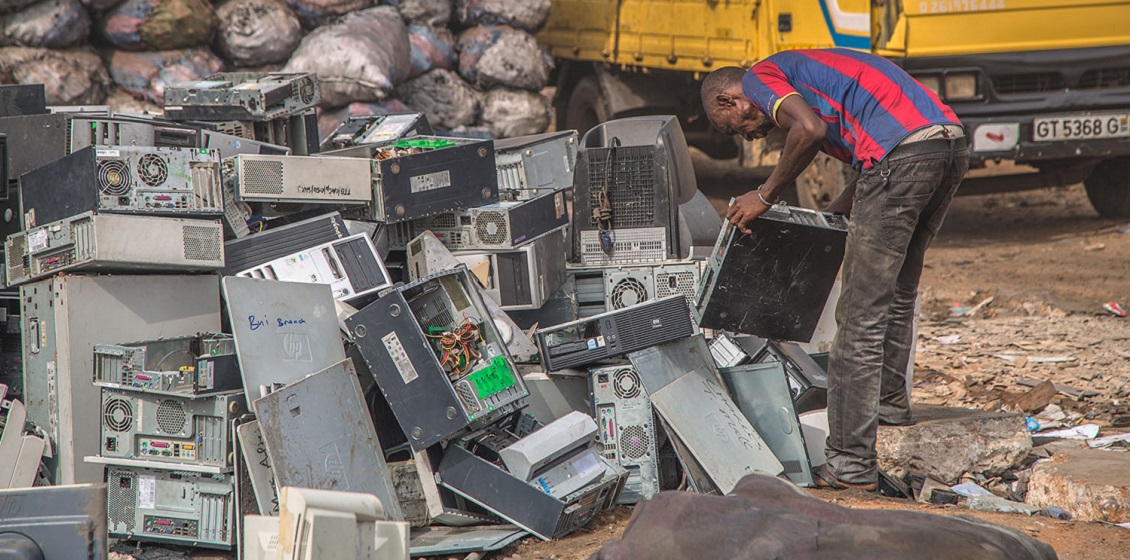
The second, and equally critical, reason why e-waste management has become a tech issue is the complex, morally ambiguous, and deeply entrenched informal economy that has grown up around it. The global, and Ghanaian, conversation about e-waste is dominated by a single, powerful, and disturbing image: the sprawling, smoky landscape of the Agbogbloshie scrapyard in Accra, where young men, often migrants from the poorer northern regions, risk their long-term health daily by manually dismantling and burning old electronics to extract tiny amounts of valuable copper, aluminium, and steel. This is the dark, visible face of the crisis, and it is a humanitarian and environmental catastrophe. The toxic exposure suffered by these informal workers, and the contamination of the surrounding land, water, and air, is a profound and urgent injustice that demands immediate, sustained, and compassionate action.
However, a purely simplistic, punitive, and prohibitionist response—to simply shut down the scrapyard and criminalise the workers—is not only morally callous but also strategically blind and practically impossible. Agbogbloshie is not just a dump; it is a functioning, albeit deeply flawed and dangerous, economy. It provides a fragile but vital livelihood for thousands of young men who have few other options. It is a powerful, living demonstration of the immense economic value that is locked inside our dead electronics, a value that the formal, legal economy is currently failing to capture. The scrap that is recovered, the copper, the aluminium, and the steel, is sold into a vast, global, and efficient informal supply chain, eventually making its way back to industrial smelters, often in Asia, to be reborn as new products. The true, fundamental solution is not to destroy this economy, but to transform it. The technology challenge is to design a system that can capture the immense value of the e-waste stream in a way that is safe, formal, efficient, and just. This is the challenge of moving from a hazardous, exploitative, and environmentally devastating scavenging model to a professional, safe, and economically productive recycling industry. The goal is not to put the informal recyclers out of work; it is to give them the technology, the protective equipment, the training, and the formal, dignified employment to do the same essential work safely, efficiently, and with far greater financial reward for themselves and their communities.
THE HIDDEN URBAN MINE: WHY E-WASTE IS MORE VALUABLE THAN ORE
The third, and most strategically exciting, reason why e-waste is a tech issue is the profound, and often completely misunderstood, economic opportunity it represents. We have been culturally conditioned to see the dead, broken, and obsolete device as a worthless piece of rubbish, a problem to be disposed of, a cost to be managed. This is a catastrophic and costly misunderstanding. Your old, discarded smartphone is not a piece of trash; it is an incredibly rich, concentrated, and valuable urban ore. A single tonne of discarded mobile phones contains a higher concentration of gold, silver, palladium, and other precious and rare earth metals than a tonne of raw ore mined from the deepest, most environmentally destructive pit on the planet. We are, quite literally, burying a goldmine in our landfills and burning it in our scrapyards.
The critical, value-unlocking challenge is a technological one. The old, informal methods of extraction, the open-air burning of plastics to get to the metals, are not just toxic and dangerous; they are also profoundly inefficient and wasteful. The technology does exist, in the form of sophisticated, large-scale, formal e-waste recycling facilities that use a sequence of safe, enclosed mechanical and chemical processes—precision shredding, magnetic separation, eddy current separation, and electrolytic refining—to capture over 95% of the valuable materials in a dead device, cleanly and efficiently. The challenge in Ghana is not the existence of the technology; it is the immense capital cost of these advanced facilities, the complex logistics of collecting and aggregating a sufficient, reliable volume of e-waste to feed such a plant, and the absence of a robust, enforced regulatory framework that makes the formal, clean, and safe recycling economically competitive with the cheap, unregulated, and hazardous informal alternative. The concept of an “urban mine” is not a futuristic fantasy. It is a present, tangible, and immensely valuable economic asset that we are currently, through a failure of policy, technology, and imagination, throwing away.
THE CIRCULAR SOLUTION: DESIGNING OUT THE WASTE FROM THE START
The long-term, strategic, and genuinely sustainable answer to the e-waste crisis does not lie solely in better recycling, no matter how clean and efficient. It lies in a fundamental, upstream rethinking of the entire life cycle of the electronic device. This is the philosophy of the circular economy, a radical and necessary departure from the current, linear, and suicidal “take, make, use, and dispose” model that has defined the electronics industry since its inception. The circular model demands that we design waste out of the system from the very beginning. It challenges the fundamental design principles of the modern gadget: the sealed, glued-shut case that makes repair impossible for the ordinary user; the battery that is soldered in place and cannot be replaced, turning a perfectly functional, two-year-old device into a paperweight; the proprietary, non-standard screw that requires a special, expensive tool; and the manufacturer who refuses to make spare parts and repair manuals available to independent repair shops.
This is the emerging, and potentially revolutionary, concept of the “right to repair,” a growing global movement that is demanding, through legislation and consumer pressure, that technology manufacturers design their products for longevity, for repairability, and for eventual, safe, and efficient disassembly and material recovery. The circular approach also opens up immense, exciting opportunities for Ghanaian tech innovation. The growth of a formal, professional, and locally-owned refurbishment and repair industry, which extends the life of electronic devices and keeps them out of the waste stream for years, creates skilled, dignified, and much-needed local jobs. The emergence of creative, Ghanaian tech startups that are designing innovative, low-cost products from locally recovered and recycled e-waste materials—turning the plastic from old computers into durable, affordable roofing tiles, or creating beautiful, functional consumer products from reclaimed metals—is a direct, practical, and commercially viable expression of the circular economy. The ultimate technology solution to the e-waste crisis is not a better way to destroy the evidence of our consumption; it is to build a system where the very concept of waste is engineered out of existence, where a dead phone is not a problem, but a valuable, carefully managed, and endlessly re-used stock of materials for the next generation of innovation.
QUICK FACTS BOX: E-WASTE AS A TECH ISSUE IN GHANA
-
The Toxic Composition: Modern electronics contain a cocktail of hazardous materials (lead, mercury, cadmium, toxic flame retardants) that, when improperly dumped or burned, cause severe, long-term contamination of soil, water, and human health.
-
The Agbogbloshie Paradox: The informal recycling sector is a hazardous, exploitative, and polluting economy, but it also provides a critical livelihood and demonstrates the immense, untapped economic value locked inside dead devices.
-
The Urban Mine: Discarded electronics are a far richer source of precious metals (gold, silver, palladium) than raw ore, but capturing this value safely and efficiently requires advanced, capital-intensive recycling technology.
-
The Circular Solution: The long-term fix is a fundamental shift in design philosophy, towards modular, repairable, and easily recyclable devices, creating local opportunities in professional refurbishment and the creative reuse of recovered materials.
-
The Core Insight: E-waste is not just an environmental problem to be cleaned up. It is a technology challenge that demands innovation in device design, recycling processes, and the building of a formal, safe, and profitable circular economy.
FAQ SECTION
1. Why can I not just throw my old, broken phone into the normal rubbish bin?
Because it is not normal rubbish. It contains toxic materials like lead and mercury that can leak out of a landfill and poison the soil and drinking water. It also contains tiny amounts of valuable gold and other metals that should be recovered and reused, not buried in a hole.
2. Is the famous Agbogbloshie scrapyard really one of the most polluted places on Earth?
The severe, ongoing contamination of the soil, water, and air with heavy metals and toxic chemicals at the site is extensively documented and poses a very serious and direct health risk to the workers and the surrounding communities. It is a deeply urgent environmental and humanitarian crisis.
3. Is it true that there is more gold in a pile of old phones than in a pile of gold ore from a mine?
Yes, often dramatically more. This is the concept of the “urban mine.” A tonne of discarded mobile phones can contain over a hundred times more gold than a tonne of mined ore. The precious, valuable metals are concentrated in the devices we throw away.
4. What is the “right to repair,” and why should I care about it as a Ghanaian consumer?
It is a global movement demanding that manufacturers stop deliberately designing devices that are impossible to fix. It means you should have the right to open your own phone, replace a dying battery, and access spare parts and repair manuals, so your expensive gadget lasts longer and does not become instant, toxic waste.
5. Can my old electronic waste be turned into something new and useful here in Ghana?
Yes, and this is the exciting future. Local innovators and startups are already experimenting with shredding clean, non-toxic e-waste plastics and turning them into durable products like roofing tiles and building blocks, creating value and jobs from a waste stream.
6. What is the single most important thing I should do before I get rid of any old phone or laptop?
You must securely and permanently erase all your personal data. A simple “factory reset” is often not enough to stop a determined criminal. Search online for the instructions for your specific device on how to perform a secure, irreversible wipe of the storage drive.
7. Is there a formal, safe, and government-approved way to recycle my e-waste in Ghana?
The formal, nationwide infrastructure is still being developed and is not yet as accessible as it needs to be. However, there are growing initiatives. You can check with your device’s original retailer, as some now offer take-back schemes, or search online for a reputable, certified e-waste recycler operating in Accra.
8. Why are the informal recyclers at Agbogbloshie burning the wires and plastics?
They do it because it is the quickest, cheapest, and most accessible way for them to get to the valuable copper and aluminium metal inside. They are not doing it to be destructive; they are doing it to survive. The solution is to provide them with the safe, formal technology and employment that makes this dangerous burning unnecessary.
9. How does the constant upgrading of phones and laptops contribute to the e-waste crisis?
It is a major driver. The relentless marketing of new models, combined with the practice of designing devices that are difficult or impossible to repair or upgrade, creates a culture of disposability. It artificially shortens the useful life of a perfectly functional device, forcing it into the waste stream far too soon.
10. What should the Ghanaian government be doing to turn this e-waste crisis into an economic opportunity?
The government must enforce strict laws against the open burning of e-waste and the illegal import of broken, unusable devices disguised as charitable donations. At the same time, it must invest in and partner with the private sector to build the formal, safe, and professional recycling infrastructure that can create dignified jobs and recover the immense, hidden wealth in our digital afterlife.
Last Updated on August 10, 2026 by Samuel Kwame Boadu
Disclaimer: Some content on Accra Street Journal may be aggregated, summarized, or edited from third-party sources for informational purposes. Images and media are used under fair use or royalty-free licenses. Accra Street Journal is a subsidiary of SamBoad Publishing Hub under SamBoad Business Group Ltd, registered in Ghana since 2014.
For concerns or inquiries, please visit our Privacy Policy or Contact Page.

Samuel Kwame Boadu is a Ghanaian media entrepreneur and storyteller with a passion for amplifying urban voices and uncovering everyday truths. He is the Editor-in-Chief and Founder of Accra Street Journal, a dynamic digital platform dedicated to capturing the pulse of Ghana’s capital—its people, culture, challenges, business, sports and innovations.