










11 min read
From the containers stacked at Tema Harbour to the goods crossing Ghana’s land borders, almost everything that comes into the country carries risk. Marine insurance is the safety net that protects businesses when things go wrong. And with new rules now in force, it is more important than ever.
Introduction
Think about what happens when a ship carrying thousands of containers arrives at Tema Harbour. Each container holds goods worth thousands or even millions of cedis. Electronic equipment. Food. Machinery. Clothes. Medicine.
Key Takeaways
- Marine insurance covers what are called "commercial imports" – that is, goods brought into Ghana for business purposes .
- Section 222 of the Insurance Act, 2021 (Act 1061) requires all commercial imports into Ghana to be insured locally.
- An estimated US$100 million in insurance premiums leaves Ghana every year to foreign insurers .
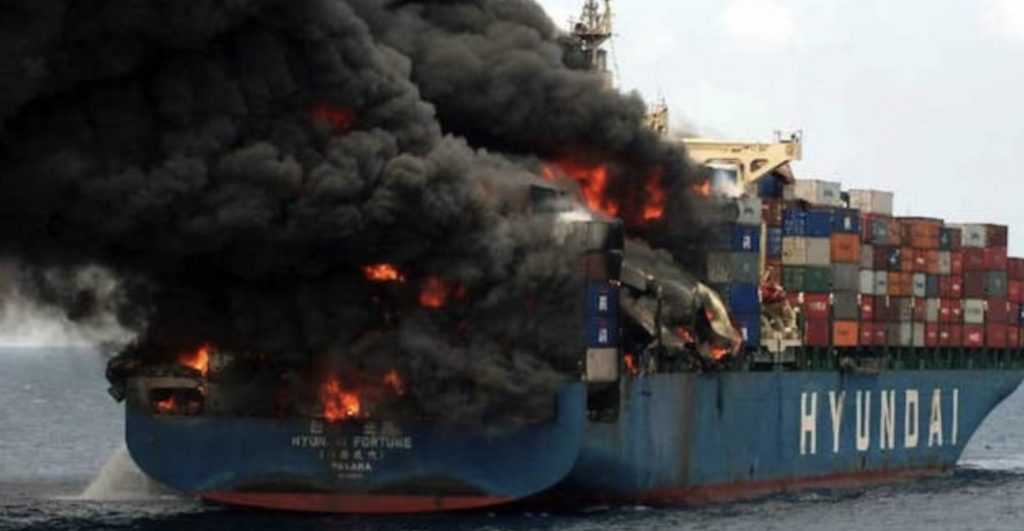
Now imagine that ship hits rough seas. Some containers are damaged. Others fall overboard. Or think about a truck carrying goods from the port to Kumasi. An accident happens. The goods are destroyed.
Who pays for that loss?
That is where marine insurance comes in. It is the insurance that protects goods while they are being transported, whether by sea, air, or land. And for a country like Ghana that depends heavily on imports, it is essential.
Ghana generated $6.2 billion in export earnings in just the first two months of 2026 . About 90% of Ghana’s international trade moves by sea . Millions of tonnes of goods pass through Ghana’s ports every year. All of it needs protection.
This ASJ article explains what marine insurance is, why it matters for Ghana’s trade economy, and what is happening with new rules that require all commercial imports to be insured locally.
What Is Marine Insurance?
Marine insurance is a type of insurance that covers loss or damage to goods while they are being transported. It can cover cargo moving by sea, air, or land.
The insurance protects businesses against risks like:
-
Theft – goods stolen during transit
-
Damage – goods broken, crushed, or spoiled
-
Delays – goods arriving late because of shipping problems
-
Loss – goods lost at sea or destroyed in an accident
Marine insurance covers what are called “commercial imports” – that is, goods brought into Ghana for business purposes . It can also be extended beyond the port to cover goods all the way to a business’s warehouse .
There are different levels of coverage. The widest protection is called “Clause A,” which covers all risks except those specifically excluded. “Clause B” and “Clause C” offer more limited cover .

Why Marine Insurance Matters for Ghana
1. Protecting Businesses from Financial Loss
The most obvious reason marine insurance matters is that it protects businesses from financial loss.
Imagine you are an importer who brings in a container of goods worth GH¢500,000. You have paid for the goods, paid for shipping, and paid customs duties. If the goods are damaged or lost, you lose all that money.

Marine insurance compensates you for that loss. It cushions businesses against the financial shock of damaged or lost cargo .
As one expert put it, the cost of marine insurance is small compared to the value of what is being protected. It is an investment in business continuity, not just an additional cost .
2. Protecting Cash Flow and Access to Finance
Beyond just covering losses, marine insurance helps businesses in other ways.
When goods are insured, businesses can get trade finance more easily. Banks are more willing to lend money to businesses that have insured their goods. This is because the bank knows that the goods are protected if something goes wrong .
Marine insurance also protects cash flow. If goods are damaged and there is no insurance, a business may not have the money to replace them. If there is insurance, the business can recover quickly and keep operating .
3. Giving Buyers and Sellers Confidence
International trade depends on trust. A seller in China wants to know they will be paid. A buyer in Ghana wants to know they will receive their goods.
Marine insurance gives both sides confidence. When goods are insured, buyers and sellers know that even if something goes wrong, there is a system in place to compensate for losses. This makes it easier to do business across borders .
4. Keeping Premiums in Ghana
This is an important point. For years, most of Ghana’s cargo insurance was placed with foreign insurers. This meant that insurance premiums – sometimes hundreds of millions of dollars – were leaving the country .
Estimates suggest that currently only about six percent of Ghana’s imports are insured locally, despite a legal requirement that has existed since 2006 . An estimated US$100 million in premiums is paid annually to foreign insurers .
When premiums leave the country, Ghana loses out. That money could otherwise be used to strengthen the local insurance industry, create jobs, and support the economy .

The New Rules: Local Insurance Is Now Mandatory
What Has Changed?
On February 1, 2026, the government began enforcing a policy that requires all commercial imports into Ghana to be insured locally .
This requirement has actually been in the law for years. Section 222 of the Insurance Act, 2021 (Act 1061) requires commercial imports to be insured locally . But enforcement was weak. Many importers ignored the requirement and insured their cargo with foreign companies.
The new enforcement means that the Ghana Revenue Authority and the Bank of Ghana are now actively checking compliance . If you import goods for commercial purposes, you must show proof of local insurance.
Why Is This Being Enforced Now?
The government has several reasons for enforcing this policy.
Keeping Money in Ghana: The most important reason is to stop capital flight. An estimated US$100 million leaves Ghana every year through offshore insurance placements . The government wants that money to stay in the country.
Strengthening the Insurance Industry: The policy is expected to generate close to GH¢300 million annually for the local insurance industry . This will help insurers grow, create jobs, and build capacity.
Protecting Importers: When importers insure cargo overseas, they often face challenges: delays in claims, language barriers, and difficulty resolving disputes . Local insurance offers better regulatory oversight, faster claims settlement, and easier access to redress if things go wrong .
Positioning Ghana as a Trade Hub: Under the African Continental Free Trade Area (AfCFTA), Ghana wants to become a gateway for regional commerce. A strong, well-regulated marine insurance market is part of that vision .
What Are the Challenges?
The new policy is not without its critics.
Some business associations, including the Ashanti Business Owners Association (ABOA), have called for the policy to be suspended . They argue that:
-
The mandatory insurance adds to the cost of imports, which will increase prices for consumers .
-
The policy could conflict with international trade agreements and be seen as a non-tariff barrier
-
Most goods are already insured at the country of origin. Requiring additional local insurance creates double insurance and complicates claims .
-
The policy could cause delays at the ports, hurting trade facilitation efforts .
The Ghana Chamber of Shipping has also raised concerns. Some foreign suppliers extend credit to Ghanaian importers, and those arrangements often require insurance to be placed offshore .
Does Ghana Have the Capacity?
A key question is whether local insurers can handle the increased business.
The Ghana Insurers Association says yes. Industry leaders have pointed out that marine insurance is not new to Ghana. Local insurers have been underwriting marine cargo for decades and have “excess or unused capacity” .
The CEO of Serene Insurance, Mercy Naa Koshie Boampong, who is also Second Vice-President of the Ghana Insurers Association, has said:
Marine cargo insurance is a mature class of business in Ghana. At Serene Insurance, we have the structures, systems and expertise to handle high-value cargo risks, just as the industry has done for decades” .
She also explained that risks underwritten locally are backed by international reinsurance, so even very large losses can be paid .
What Importers Should Do
If you import goods into Ghana, here are some things to keep in mind.
1. Know the Law
All commercial imports into Ghana must be insured locally. The law has been enforced since February 1, 2026 . This is not optional.
2. Understand Your Coverage
When you buy marine insurance, make sure you understand what is covered. Different policies offer different levels of protection. Clause A offers the widest protection; Clauses B and C offer more limited cover .
3. Provide Accurate Information
When you buy insurance, be honest about the value of your goods and the details of your shipment. If you undervalue your cargo to reduce premiums, you may receive less compensation if there is a loss .
4. Talk to Licensed Insurers
Deal only with licensed insurers or brokers. The National Insurance Commission publishes a list of licensed companies
5. See Insurance as an Investment
Marine insurance is not just a cost. It is protection for your business. As one expert said, the cost of insurance is small compared to the potential loss .
ASJ Conclusion
Marine insurance might not be the most exciting topic, but it is one of the most important for Ghana’s trade economy.
Every day, goods worth millions of cedis enter Ghana through our ports. Every day, those goods face risks: theft, damage, delays, loss. Without marine insurance, businesses could be wiped out by a single incident.
The government’s new enforcement of local marine insurance is a big step. It will keep premiums in Ghana, strengthen the local insurance industry, and protect importers. But it also creates challenges. Businesses are worried about costs and disruption.
The key will be how the policy is implemented. The National Insurance Commission has said it is tightening claims settlement standards and working with other agencies to ensure the system works . The goal is to build confidence in the system, not just enforce the law.
As the regulator said: “There is no better way to increase insurance penetration than making insurance work” . If local insurers provide good service and pay claims promptly, more businesses will buy insurance willingly. That is how marine insurance will truly matter for Ghana’s trade economy.
Quick Facts
| Topic | Details |
|---|---|
| Ghana’s Export Earnings (Jan–Feb 2026) | $6.2 billion |
| Share of Trade by Sea | 90% |
| Current Local Insurance Rate | Only 6% of imports insured locally |
| Annual Premiums Lost Overseas | Estimated US$100 million |
| Projected Annual Revenue from Enforcement | Nearly GH¢300 million |
| Legal Requirement | Section 222, Insurance Act, 2021 (Act 1061) |
| New Enforcement Date | February 1, 2026 |
| Key Regulator | National Insurance Commission |
Frequently Asked Questions
1. What is marine insurance?
Marine insurance is a type of insurance that protects goods against loss or damage while they are being transported by sea, air, or land.
2. Why is marine insurance important for Ghana?
Ghana depends heavily on imports. Marine insurance protects businesses from financial losses when goods are damaged or lost in transit. It also keeps insurance premiums in the local economy .
3. Is marine insurance mandatory in Ghana?
Yes. Section 222 of the Insurance Act, 2021 (Act 1061) requires all commercial imports into Ghana to be insured locally. This has been actively enforced since February 1, 2026 .
4. What happens if I do not have local marine insurance?
If you are an importer and you do not comply, you may face enforcement action from the Ghana Revenue Authority and Bank of Ghana. The policy requires proof of local insurance for customs clearance .
5. How much cargo is currently insured locally?
Only about six percent of Ghana’s imports are insured locally, despite the legal requirement .
6. How much money leaves Ghana through offshore insurance?
An estimated US$100 million in insurance premiums leaves Ghana every year to foreign insurers .
7. Do local insurers have the capacity to handle all imports?
The Ghana Insurers Association says yes. Local insurers have decades of experience and access to international reinsurance to cover large losses .
8. What does marine insurance cover?
It covers theft, damage, delays, and loss of goods during transport. Policies can be extended to cover goods from the supplier’s warehouse to the importer’s warehouse in Ghana .
9. What are the different types of marine insurance coverage?
Clause A provides the widest protection, covering all risks except specific exclusions. Clauses B and C offer more limited cover .
10. Why are some business groups opposed to the mandatory policy?
Some business owners say the policy increases costs, could cause port delays, conflicts with international trade agreements, and creates double insurance .
11. What is the National Insurance Commission doing about marine insurance?
The NIC is pushing reforms including faster claims settlement, digital verification systems, and a marine and aviation insurance database to improve transparency and reduce fraud .
12. Does marine insurance cover goods beyond the port?
Yes. Marine cargo insurance can be extended to cover goods transported from the port to warehouses across Ghana
Source: Accra Street Journal
Last Updated on August 17, 2026 by Samuel Kwame Boadu
Disclaimer: Some content on Accra Street Journal may be aggregated, summarized, or edited from third-party sources for informational purposes. Images and media are used under fair use or royalty-free licenses. Accra Street Journal is a subsidiary of SamBoad Publishing Hub under SamBoad Business Group Ltd, registered in Ghana since 2014.
For concerns or inquiries, please visit our Privacy Policy or Contact Page.

Samuel Kwame Boadu is a Ghanaian media entrepreneur and storyteller with a passion for amplifying urban voices and uncovering everyday truths. He is the Editor-in-Chief and Founder of Accra Street Journal, a dynamic digital platform dedicated to capturing the pulse of Ghana’s capital—its people, culture, challenges, business, sports and innovations.
Use the following reference when citing or referencing this article.
Your feedback helps us improve our journalism.
Report an Error
Help us maintain accuracy. Let our editorial team know if you spot an issue in this article.
Report a problem with this article




