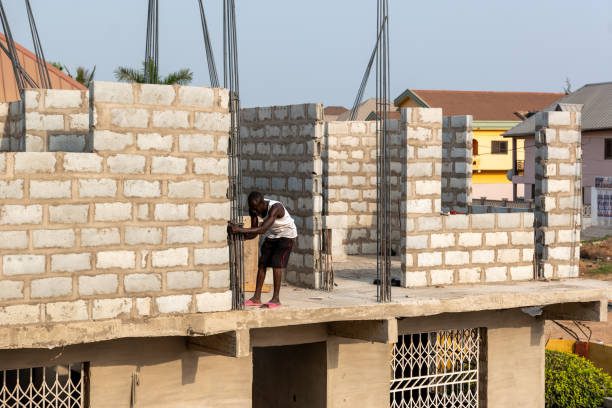
Accra’s housing market is often described in extremes—either as a booming real estate success story or as an unaffordable crisis for ordinary residents. In reality, it is both. Beneath the headlines lies a complex system shaped by urbanisation, income disparities, land tenure arrangements, informal practices, and deep structural imbalances between supply and demand.
To understand how Accra’s housing market really works, one must move beyond surface explanations and examine the forces that drive prices, determine access, and influence where and how people live in Ghana’s capital.

The Demand Pressure Shaping Accra
Accra’s population continues to grow rapidly, driven by rural-to-urban migration, economic opportunity, and the city’s role as Ghana’s political and commercial centre. Every year, thousands of people move into the city seeking employment, education, and better access to services.
📢 GET A DETAILED ARTICLES + JOBS
Join ASJ's WhatsApp Channel and never miss a post or opportunity.

This constant influx creates sustained demand for housing across all income levels. Unlike cities where population growth fluctuates, Accra’s demand pressure is structural and ongoing. The result is a market where demand consistently outpaces supply.
This imbalance gives landlords significant pricing power and reduces negotiating leverage for tenants.

Why Supply Lags Behind Demand
Housing supply in Accra struggles to keep pace for several reasons. Land acquisition remains complex, expensive, and legally uncertain. Multiple ownership claims, traditional land tenure systems, and lengthy registration processes discourage large-scale, affordable housing development.
Developers who manage to acquire land often focus on high-end housing to recover costs quickly. As a result, new supply tends to target upper-income earners rather than middle- and lower-income residents who form the bulk of demand.
This mismatch reinforces affordability challenges and limits housing options for most Accra residents.
The Role of Informal Housing
A significant portion of Accra’s housing stock exists outside formal real estate systems. Informal settlements, compound houses, and unregulated rentals provide shelter for many residents who cannot afford formal housing.
While informal housing fills a critical gap, it also reflects systemic failure. These arrangements often lack security of tenure, adequate infrastructure, and regulatory oversight. Yet they remain central to how the housing market actually functions.
Informality, rather than being an exception, is a defining feature of Accra’s housing ecosystem.
Rental Dominance Over Home Ownership
Unlike some cities where home ownership is the dominant aspiration, Accra remains a rental-driven market. High land costs, limited access to long-term mortgage financing, and income instability make ownership unattainable for many residents.
Renting becomes the default option, increasing competition for available units. This dynamic intensifies price pressures, particularly in well-connected neighbourhoods close to employment hubs.
The lack of affordable financing options keeps ownership rates low and rental demand persistently high.

Advance Rent: A Market Reality
One of the most controversial aspects of Accra’s housing market is the requirement for advance rent payments, often spanning one to two years. While legally restricted, this practice remains widespread.
Advance rent reflects deeper structural issues:
-
Weak enforcement of housing regulations
-
Limited trust between landlords and tenants
-
Absence of effective rent insurance systems
For landlords, advance rent mitigates risk. For tenants, it creates a significant financial barrier to entry, locking many out of better housing options.
This practice illustrates how informal norms often override formal regulations in the housing market.
Location as a Primary Price Driver
In Accra, location is everything. Proximity to business districts, major roads, schools, and hospitals heavily influences pricing. Areas with better infrastructure command significantly higher rents, regardless of housing quality.
Traffic congestion further amplifies location premiums. The closer a residence is to employment centres, the more valuable it becomes. Time, rather than space, increasingly defines housing value in the city.
As infrastructure development remains uneven, these location-based disparities persist.
The Influence of Foreign and Diaspora Demand
Foreign nationals and diaspora Ghanaians play a notable role in Accra’s upper housing market. Their purchasing power often exceeds local income levels, particularly in prime areas.
This segment drives demand for high-end apartments and gated communities, indirectly influencing broader market pricing by setting higher benchmarks.
While not the primary driver of the housing crisis, this demand contributes to market segmentation and reinforces inequality.
Housing as an Investment Asset
In Accra, housing is widely viewed as a store of value rather than merely a place to live. Property ownership is seen as a hedge against inflation and currency depreciation.

This investment mindset encourages speculative holding of properties, sometimes leaving units vacant while prices appreciate. Reduced effective supply further tightens the market and sustains high rents.
The housing market, therefore, functions as both a shelter system and a financial instrument.
Infrastructure and Service Gaps
Housing value in Accra is closely tied to access to basic services such as water, electricity, drainage, and waste management. Areas with reliable services command higher prices, even when structures are modest.
Infrastructure gaps limit the livability of peripheral areas, discouraging decentralisation and keeping demand concentrated in already congested zones.
Until service delivery improves citywide, housing pressure will remain unevenly distributed.
Regulation Versus Reality
Although Ghana has housing regulations governing rent, enforcement remains weak. Informal agreements dominate the market, and dispute resolution mechanisms are slow or inaccessible.
This regulatory gap creates uncertainty for tenants and allows exploitative practices to persist. The housing market operates largely on power dynamics rather than legal frameworks.
Understanding this reality is key to navigating Accra’s housing landscape.
Income Inequality and Housing Access
Housing affordability in Accra mirrors broader income inequality. A small segment of the population can access high-quality housing, while the majority make compromises on space, location, or services.
This stratification shapes urban form, reinforcing socio-economic divides and influencing commuting patterns, family structures, and quality of life.
Why Prices Rarely Fall
Unlike volatile markets, Accra’s housing prices rarely decline significantly. Persistent demand, limited supply, and inflationary pressures create a floor beneath prices.
Even during economic downturns, rents tend to stagnate rather than fall, reflecting the inelastic nature of housing demand in the city.
The Bigger Picture
Accra’s housing market works not because it is efficient, but because people adapt. Informal arrangements, shared living, long commutes, and financial sacrifice are survival strategies in a constrained system.
Understanding how the market really works requires accepting these realities rather than relying on textbook models.
Final Reflection
Accra’s housing market is shaped by pressure, adaptation, and inequality. It reflects the city’s growth, aspirations, and structural challenges.
For residents, navigating this market requires realism, resilience, and informed decision-making. For policymakers, it demands long-term planning, enforcement, and investment.
Until supply, financing, and infrastructure align with demand, Accra’s housing market will continue to work—just not in the way many would hope.
FAQs
Why is housing expensive in Accra?
High demand, limited supply, and infrastructure concentration drive prices.
Why do landlords demand advance rent?
Weak enforcement and risk mitigation encourage the practice.
Is home ownership realistic for most residents?
For many, renting remains the only viable option.
Do housing prices ever fall in Accra?
Prices rarely decline significantly due to persistent demand.
Is informal housing common?
Yes, it plays a major role in accommodating residents.
Source: Accra Street Journal
Last Updated on June 19, 2026 by Samuel Kwame Boadu
Disclaimer: Some content on Accra Street Journal may be aggregated, summarized, or edited from third-party sources for informational purposes. Images and media are used under fair use or royalty-free licenses. Accra Street Journal is a subsidiary of SamBoad Publishing Hub under SamBoad Business Group Ltd, registered in Ghana since 2014.
For concerns or inquiries, please visit our Privacy Policy or Contact Page.

Samuel Kwame Boadu is a Ghanaian media entrepreneur and storyteller with a passion for amplifying urban voices and uncovering everyday truths. He is the Editor-in-Chief and Founder of Accra Street Journal, a dynamic digital platform dedicated to capturing the pulse of Ghana’s capital—its people, culture, challenges, business, sports and innovations.