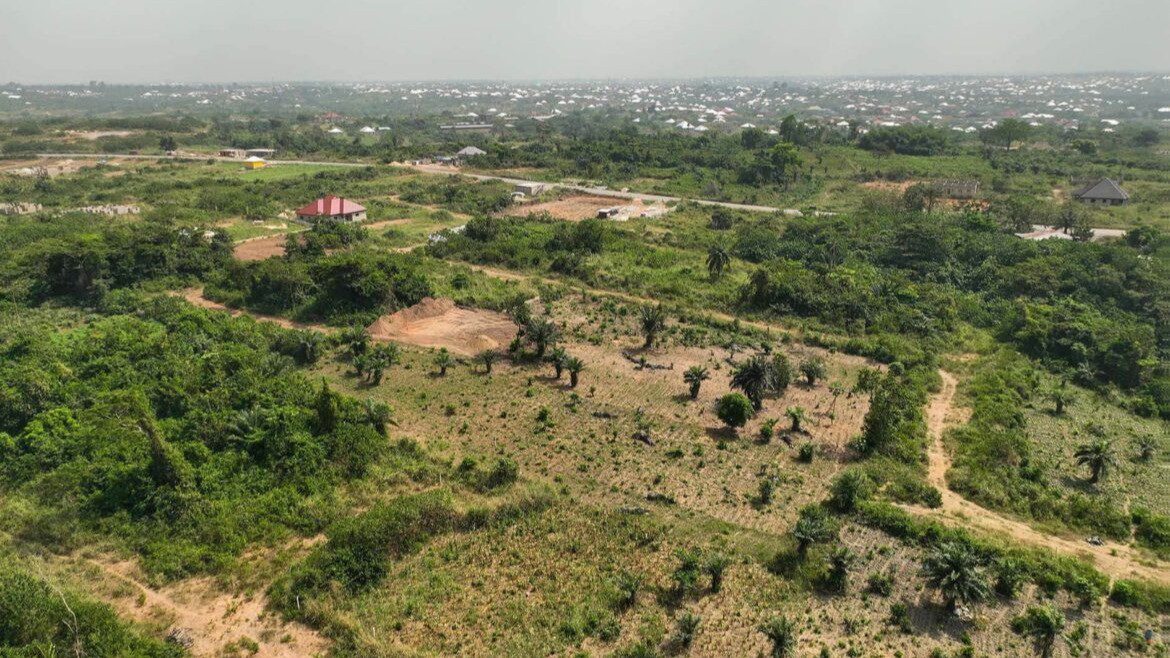
Introduction: The Most Complex Land Transaction in Ghana
Stool land—land owned by a traditional stool (chieftaincy) on behalf of the community—represents the most common yet most complex land transaction in Ghana. With approximately 80% of land in Ghana held under customary law by stools, skins, clans, or families, the odds are high that any land you buy in Ghana will be stool land .
Yet stool land transactions are also the most litigation-prone. The Ghana News Agency reported that there were 60,000 land cases in the superior courts alone, with lower courts so overwhelmed they could not provide statistical data . The cause is almost always the same: buyers paid money to the wrong people.

This Accra Street Journal guide explains everything you must know before paying for stool land—the legal requirements, the hidden risks, and the steps you must take to protect your investment.
📢 GET A DETAILED ARTICLES + JOBS
Join ASJ's WhatsApp Channel and never miss a post or opportunity.

Part 1: Understanding Stool Land Ownership
What Is Stool Land?
Stool land is land owned by a traditional stool (chieftaincy) and held in trust for the community. The stool is named after the ceremonial stool—the physical and spiritual symbol of authority . Despite the term “stool land,” ownership does not rest solely with the individual occupying the throne. Instead, stool lands are collective assets owned by the royal family, with the chief serving as a custodian entrusted with their administration .
The chief’s role is to manage the land on behalf of the entire community, ensuring its preservation and utilization align with the collective interests and values of the people .

The Critical Distinction: Stool vs. Family Land
| Type of Land | Owner | Authorised Seller | Key Risk |
|---|---|---|---|
| Stool Land | Stool (chieftaincy) in trust for community | Chief with consent of elders | Transaction void if chief acts alone |
| Family Land | Family as collective | Head of family with consent of principal members | Multiple factions claiming authority |
Understanding this distinction is essential because the legal requirements differ. This guide focuses on stool land, but many of the principles apply to family land as well.
Part 2: The Golden Rule – Never Buy from the Chief Alone
The Law Is Clear
Under Ghanaian customary law, the position is unambiguous: the chief cannot sell stool land alone. He must act with the consent and concurrence of the elders of the stool .
This rule was established in the case of Awuku v. Tettey, where a caretaker (an agent of the Osu stool) sold Maamobi land without the consent of the elders. The Supreme Court held that “a grant by the caretaker without the consent and concurrence of the Osu Manche, or even a grant by the Osu Manche without the consent of his elders was null and void or in other words unenforceable” .
The court’s reasoning was clear: the chief is a fiduciary, not an owner. He cannot act alone because the land does not belong to him—it belongs to the stool and the community it represents.
What Happens If You Buy from the Chief Alone?
If you pay money to a chief who purports to sell stool land without the consent of the elders, the transaction is void ab initio—void from the beginning . It is as if you never bought anything at all. You have no interest in the land, and no amount of money paid can change that.
The Supreme Court reaffirmed this principle in Dotwaah v. Afriyie [1965] GLR 257 SC, holding that:
“The head of the family or the successor is an indispensable person in the alienation of family land; and alienation of family property made by the head of the family or a successor purporting to be with the consent and concurrence of the principal members of the family is voidable at the instance of the family if they act timeously; but a conveyance made by any other member without the indispensable person, the head of the family or the successor as the case may be, is void ab initio and confers no interest or title in the land on the purchaser or mortgagee” .
Who Must Sign?
For a stool land transaction to be valid, the following must be involved :
| Required Party | Role |
|---|---|
| The Chief (Stool occupant) | The indispensable person who must execute the grant |
| The Elders of the Stool | Must give consent and concurrence |
| The Traditional Council | Consent required to make the grant unimpeachable |
| Regional Lands Commission | Must certify consistency with development plan (Article 267(3) of the Constitution) |
Failure to involve any of these parties can render the transaction voidable or, in the case of the chief’s absence, void ab initio .
Part 3: Legal Requirements Before Buying Stool Land
Requirement 1: Conduct Thorough Searches
Before paying any money, you must conduct searches at multiple institutions :

-
Lands Commission – To verify ownership and whether the land has been previously sold or registered
-
Customary Land Secretariat – To understand customary rights and restrictions
-
National House of Chiefs – To confirm the stool’s authority and that you are dealing with authorised persons
The Greater Accra Regional Lands Officer, Timothy Anyidoho, has advised: “No matter what you think about the company’s credibility you must first obtain a site plan from it and conduct a search at the Lands Commission to validate the interest in the land you intend to purchase before making any payment .
Requirement 2: Ensure the Stool Land Is Registered
The Land Act, 2020 (Act 1036) requires that stool land be registered before it is sold . The allodial title holders (the stool) must be registered as proprietors of the land, and they cannot dispose of an interest in a portion of the land unless the whole land is registered.
Selling unregistered stool land is a criminal offence, punishable upon summary conviction by a fine of not less than GHS 60,000 or imprisonment of not less than five years and not more than ten years, or both .
Requirement 3: Obtain Planning Comments
Under the Local Governance Act, 2016 (Act 936), an allocation of land is null and void if the purpose or use of the alienation is contrary to an approved Development Plan .
You must conduct a zoning search to confirm:
-
Whether the area is planned
-
What purpose the land is designated for
-
Whether your intended use is consistent with the development plan
The Regional Lands Commission should not process your application for registration without planning comments .
Requirement 4: Obtain Consent of the Regional Lands Commission
Article 267(3) of the Constitution provides that:
“There shall be no disposition or development of any stool land unless the Regional Lands Commission of the region in which the land is situated has certified that the disposition or development is consistent with the development plan drawn up or approved by the planning authority for the area concerned” .
This consent is not optional. It is a constitutional requirement.
Requirement 5: Obtain Consent of the Stool (Chief and Elders)
The stool’s consent to the grant is mandated by the Land Act, 2020 (Act 1036). Specifically, section 142 provides that a lessee cannot transfer, sublet, mortgage, or assign a lease without the written consent of the lessor. Any such transaction executed without the lessor’s consent cannot be registered .
How to document consent:
The law requires that a conveyance of stool land must be executed by all individuals whose consent is under customary law a necessary condition for the conveyance to bind the stool . This means:
-
The Chief (stool occupant) must sign
-
The elders of the stool must sign
-
Ideally, procure as many signatures as possible from relevant stool authorities
These signatures should ideally be contained in a document such as a family resolution authorising the transaction. The rationale is that “the ultimate beneficiaries of Stool, Clan and Family land is the community, and a transaction which deprives the community of its use and enjoyment of the land should not appear to involve a few individuals” .
Part 4: What You Cannot Buy – The Freehold Prohibition
No Freehold Interest in Stool Land
Section 9(2) of the Land Act, 2020 (Act 1036) states: “A person shall not create an interest in or right over any stool, skin, clan or family land that vest in that person, another person or body of persons a freehold interest in that land, howsoever described” .
This means: you cannot buy stool land outright. You cannot own stool land in freehold. The maximum interest you can acquire is a leasehold interest .
For Ghanaians, the maximum lease term is typically 99 years. For non-Ghanaians, the constitutional restriction is 50 years .
The Lands Commission has issued a notice indicating that it will not accept any land instrument for processing and registration which vests a freehold interest in the grantee .
Penalty for Granting Freehold
Anyone who attempts to grant a freehold interest in stool land is committing an offence. The penalty is severe: a fine of not less than GHS 60,000 or imprisonment of not less than five years and not more than ten years, or both .
Part 5: The Registration Process for Stool Land
Step 1: Obtain a Site Plan from a Licensed Surveyor
You must obtain a site plan prepared by a licensed surveyor. Do not rely on a site plan provided by the seller. Your surveyor will ensure the plan has the required barcode from the Survey and Mapping Division .
Site Plan Requirements :
-
Prepared by a licensed surveyor
-
Barcode affixed by the Survey and Mapping Division
-
Signed by the Director, Survey and Mapping Division
-
Back of the site plan signed by the parties and witnesses
Step 2: Pay Stamp Duty
Stamp duty is a mandatory tax on land transactions, assessed by the Land Valuation Division of the Lands Commission. The rate is calculated between 0.25% and 1% of property value .
If the application for registration is made within one year of the sale, the value is determined by the purchase price. If more than one year has elapsed, the Land Valuation Board will conduct a new assessment .
Step 3: Obtain Planning Comments
For stool lands, you must obtain planning comments/approval from the Town and Country Planning Department with extracts from the layout .
Step 4: Lodge Documents at the Lands Commission
Submit your complete application package to the Client Service and Access Unit (CSAU). Required documents include :
| Document | Status |
|---|---|
| Completed application form (Form 1A) | ☐ |
| Stamped indenture or transfer document | ☐ |
| Site plan with barcode | ☐ |
| Search report from Lands Commission | ☐ |
| Tax clearance certificate | ☐ |
| Valid identification (Ghana Card/Passport) | ☐ |
| Two passport-size photographs | ☐ |
| Payment receipt for applicable fees | ☐ |
| For Stool Lands (Additional) | |
| Evidence of concurrence/consent from Public and Vested Lands Management Division (PVLMD) | ☐ |
| Planning comments/approval from Town and Country Planning Department | ☐ |
Step 5: Pay Registration Fees
Registration fees are approximately GHS 1,148 – 1,178 per acre . Budget approximately 5-8% of your property’s value for complete registration, including all fees and professional services .
Step 6: Receive Your Leasehold Interest
After due diligence and payment of all fees, the Land Registrar will issue documentation of your leasehold interest. You do not receive freehold ownership—you receive a leasehold interest, typically for 50 or 99 years .
Part 6: Red Flags When Buying Stool Land
| Red Flag | Why It’s Dangerous |
|---|---|
| Chief selling alone without elders | Transaction is void ab initio |
| Seller cannot produce site plan with barcode | Land may not be properly surveyed |
| No evidence of consent from elders | You cannot prove the transaction was authorised |
| Seller pressures you to pay cash | Cash leaves no traceable evidence |
| Land is unusually cheap | May indicate the seller lacks authority |
| Seller claims to offer “freehold” interest | Freehold in stool land is prohibited by law |
| No planning comments from Assembly | Allocation may be null and void |
| Stool land is not registered | Selling unregistered stool land is a criminal offence |
Part 7: Your Action Plan for Buying Stool Land
Step 1: Conduct Searches Before You Pay
Do not pay any money until you have conducted searches at the Lands Commission, Customary Land Secretariat, and National House of Chiefs. Verify that the stool is legitimate and that you are dealing with authorised persons .
Step 2: Engage a Lawyer Before You Pay
Engage a real estate lawyer experienced in stool land transactions. The law is complex, and the consequences of error are severe. A lawyer will:
-
Verify the seller’s authority to sell
-
Ensure all required consents are obtained
-
Draft or review the sale agreement
-
Guide you through the registration process
Step 3: Verify the Chief’s Authority
Confirm that the person claiming to be the chief is the legitimate occupant of the stool. Inquire within the community. Speak to multiple elders. If there is a dispute over who is the rightful chief, do not proceed until it is resolved .
Step 4: Obtain Written Evidence of Elders’ Consent
Request documentation that the elders of the stool consented to the sale. This should be in writing, ideally in the form of minutes of a stool meeting signed by attendees .
Step 5: Ensure the Land Is Registered
Verify that the stool land is registered. If it is not, do not proceed. Selling unregistered stool land is a criminal offence, and the transaction may be set aside .
Step 6: Obtain Planning Comments
Before finalising the transaction, obtain planning comments from the relevant District Assembly. Confirm that your intended use is consistent with the approved development plan .
Step 7: Sign a Proper Sale and Purchase Agreement
The Contract for Sale serves as an agreement between you and the seller, giving you time to conduct due diligence. It legally binds both parties, preventing the seller from backing out or selling to another buyer .
Step 8: Complete Registration Immediately
After purchase, register your leasehold interest at the Lands Commission immediately. Unregistered interests offer no legal protection against competing claims .
Part 8: Ongoing Obligations After Purchase
Annual Ground Rent
For stool lands, you must pay annual ground rent to the Office of the Administrator of Stool Lands or the Lands Commission . The rate is approximately GHS 0.01 per square foot. Non-payment constitutes breach of lease and can lead to forfeiture of your interest .
Property Taxes
Property taxes (0.5% – 3% of assessed value annually) are collected by Metropolitan, Municipal, and District Assemblies (MMDAs). Late payment penalties compound at 10-20% monthly .
Frequently Asked Questions (FAQs)
1. Can I buy stool land directly from the chief?
No. The chief cannot sell stool land alone. He must act with the consent and concurrence of the elders of the stool. A transaction with the chief alone is void ab initio .
2. Can I own stool land in freehold?
No. Section 9(2) of the Land Act, 2020 (Act 1036) prohibits the creation of freehold interests in stool land. You can only acquire a leasehold interest—typically 99 years for Ghanaians, 50 years for foreigners .
3. What documents prove that the stool sold the land?
The conveyance must be executed by the chief and his elders. Ideally, you should also have minutes of a stool meeting authorising the transaction, a site plan with barcode, and evidence of consent from the Regional Lands Commission .
4. Is it safe to buy stool land?
Stool land can be safe if you follow the proper process: conduct searches, verify the chief’s authority, obtain elders’ consent, ensure the land is registered, obtain planning comments, and complete registration. Never rely on the chief alone .
5. What happens if I buy stool land without elders’ consent?
The transaction is voidable at the instance of the stool. If the stool acts within a reasonable time to set it aside, you could lose your investment. In some cases, if the chief acted without any consent, the transaction may be void ab initio .
6. Do I need a lawyer to buy stool land?
Yes. The legal requirements for stool land transactions are complex, and the consequences of error are severe. Engage a real estate lawyer before you pay any money .
7. How long does stool land registration take?
In Greater Accra, registration typically takes 4-6 months. In other regions, 8-12 months. The government has set a target of 30 days, but this has not yet been consistently achieved .
8. What is the penalty for selling unregistered stool land?
Selling unregistered stool land is a criminal offence punishable by a fine of not less than GHS 60,000 or imprisonment of not less than five years and not more than ten years, or both .
9. Can a foreigner buy stool land?
Foreigners can only obtain a leasehold interest (maximum 50 years) in stool land. Freehold is prohibited. Foreigners must also register with the Ghana Investment Promotion Centre (GIPC) .
10. What is the 30-day registration target?
The government has directed the Lands Commission to complete land-related applications within 30 days. This target has not yet been consistently achieved .
Conclusion: Buy Stool Land the Right Way
Stool land is not inherently dangerous. Millions of Ghanaians own stool land without dispute. The danger is not the land—it is buying the land without understanding the rules.
The chief cannot sell alone. The elders must consent. The land must be registered. The planning comments must be obtained. The transaction must be registered. And you must never, ever pay before you have verified that all of these requirements have been met.
The stool is a fiduciary. It holds the land in trust for the community. When you buy stool land the right way—with the chief, the elders, the planning authorities, and the Lands Commission all involved—you acquire a valid leasehold interest that can last for generations.
When you buy stool land the wrong way—from the chief alone, with cash, without documents—you acquire nothing but a future court date.
The choice is yours. But the law is clear.
Frequently Asked Questions (FAQs)
1. Can I buy stool land directly from the chief?
No. The chief cannot sell stool land alone. He must act with the consent and concurrence of the elders. A transaction with the chief alone is void ab initio .
2. Can I own stool land in freehold?
No. Section 9(2) of the Land Act, 2020 (Act 1036) prohibits freehold interests in stool land. You can only acquire a leasehold interest .
3. What documents prove that the stool sold the land?
The conveyance must be executed by the chief and his elders, with evidence of consent from the Regional Lands Commission and planning comments .
4. Is it safe to buy stool land?
Yes, if you follow the proper process: searches, verification of authority, elders’ consent, registration, planning comments, and legal assistance .
5. What happens if I buy stool land without elders’ consent?
The transaction is voidable at the instance of the stool and may be set aside .
6. Do I need a lawyer to buy stool land?
Yes. The legal requirements are complex, and the consequences of error are severe. Engage a real estate lawyer before paying .
7. How long does stool land registration take?
4-6 months in Greater Accra; 8-12 months in other regions .
8. What is the penalty for selling unregistered stool land?
Fine of not less than GHS 60,000 or imprisonment of 5-10 years, or both .
9. Can a foreigner buy stool land?
Yes, but only leasehold (maximum 50 years), not freehold. GIPC registration required .
10. What is the 30-day registration target?
A government directive to the Lands Commission that has not yet been consistently achieved
Source: Accra Street Journal
Last Updated on June 14, 2026 by Samuel Kwame Boadu
Disclaimer: Some content on Accra Street Journal may be aggregated, summarized, or edited from third-party sources for informational purposes. Images and media are used under fair use or royalty-free licenses. Accra Street Journal is a subsidiary of SamBoad Publishing Hub under SamBoad Business Group Ltd, registered in Ghana since 2014.
For concerns or inquiries, please visit our Privacy Policy or Contact Page.

Samuel Kwame Boadu is a Ghanaian media entrepreneur and storyteller with a passion for amplifying urban voices and uncovering everyday truths. He is the Editor-in-Chief and Founder of Accra Street Journal, a dynamic digital platform dedicated to capturing the pulse of Ghana’s capital—its people, culture, challenges, business, sports and innovations.