







12 min read
A devastating crop disease has crippled ginger production across Ghana’s farming belts over the past two years, transforming a once-affordable household commodity into a scarce and expensive product that is pushing consumers, food vendors, and herbal medicine producers to rely increasingly on imports from China and neighboring countries.
Across major trading centers in Accra, Kumasi, and Sunyani, traders report that ginger has become one of the most difficult spices to source in recent months, with prices for a full bag ranging between GH¢4,000 and GH¢6,500 in some areas—a cost that some consumers now compare to that of a bag of rice. Deputy Minister for Food and Agriculture, John Dumelo, acknowledged the severity of the crisis, attributing the shortage largely to a “strange ginger disease” that has devastated farms over the past two years. “So that’s how ginger has become so expensive,” he said.
Key Takeaways
- Deputy Minister for Food and Agriculture, John Dumelo, acknowledged the severity of the crisis, attributing the shortage largely to a "strange ginger disease" that has devastated farms over the past two years.
- Trade analysts believe the policy could reduce the cost of importing Chinese agricultural products into Ghana, potentially making imported ginger more competitive on the local market despite rising global prices.
- The government should also consider temporary tariff relief on ginger imports to ease price pressure, while simultaneously investing in long-term solutions: disease-resistant ginger varieties, farmer training, and crop insurance.
The disease has significantly reduced yields in several farming communities known for ginger cultivation, creating supply gaps that local traders say have become increasingly difficult to fill. In response, traders are sourcing supplies not only from China but also from Côte d’Ivoire, Nigeria, and Togo. A Facebook advertisement offering 25 kilograms of imported Chinese ginger for GH¢2,000 on a pre-order basis—with limited stock and same-day delivery—has drawn attention as a sign of the growing scarcity. For Ghana, a nation that has long promoted agricultural self-sufficiency under programs such as Planting for Food and Jobs, the ginger crisis is a microcosm of deeper structural vulnerabilities: limited investment in disease control, weak agricultural extension services, post-harvest management gaps, and a persistent struggle to reduce import dependence even for crops traditionally cultivated locally.
Key Developments: The Disease, the Price Surge, and the Import Response
The ginger crisis has been building for two years. According to the Ministry of Food and Agriculture, an unidentified disease—described by officials as a “strange ginger disease”—has affected most ginger farmers across key producing regions. The disease attacks the rhizome, causing rot and significantly reducing marketable yields. In some farming communities, entire harvests have been lost.
The supply shock has translated directly into price spikes at the retail and wholesale levels. Traders in Sunyani, a major ginger-producing area, told the Ghana News Agency that the shortage has disrupted normal market activities. Some herbal medicine manufacturers, who rely on ginger for traditional remedies, have begun purchasing ginger directly from farms before the produce even reaches market centers. Mrs. Ataa Henewaa, a trader in Sunyani, told the agency: “The price of ginger is quite expensive because we don’t even get the stuff to buy.”
The shortage has led to increased imports, with traders bringing in ginger from China, Côte d’Ivoire, Nigeria, and Togo. Historical trade data shows Ghana has occasionally relied on imports to address local shortages even before the current crisis. UN COMTRADE data indicates that in 2022, Ghana imported about 284 kilograms of ginger from China, valued at nearly 2,000. Imports had already risen significantly in 2021, with over 11,600 kilograms coming from China. In 2023, Ghana imported roughly 39,740 worth of ginger, turmeric, saffron, thyme, and other related spice products from China.
While these figures represent a relatively small fraction of Ghana’s overall import bill, the symbolism carries weight. Ginger is a widely cultivated crop in Ghana and forms an important part of local diets, traditional medicine, and food processing. That a locally grown commodity is now being imported in significant quantities—and that the price of domestically available ginger has risen to parity with rice—signals a systemic failure in agricultural disease management.
The import response has been amplified by China’s recent trade policy shift. Effective May 1, 2026, China extended 100% zero tariff treatment to all African diplomatic partners, including Ghana. Trade analysts believe the policy could reduce the cost of importing Chinese agricultural products into Ghana, potentially making imported ginger more competitive on the local market despite rising global prices. For Ghanaian importers, Chinese ginger may now be cheaper than it was before the tariff elimination, even as domestic production collapses.
The timing is awkward. Ghana’s imports from China hit record highs in late 2025. Data from CEIC and the Ghana Statistical Service shows that monthly imports peaked in the fourth quarter, with November 2025 reaching about 437 million. By the end of the year, China had firmly established itself as Ghana’s largest trading partner, accounting for over 14.1 billion in total imports. While ginger makes up only a small part of that figure, it reflects a bigger trend: Ghana’s growing reliance on Chinese supply chains for goods that could—and ideally should—be made locally.
Analysis & Implications: Agricultural Vulnerabilities and the Import Substitution Failure
The ginger crisis is not an isolated incident. Ghana has experienced similar supply shocks in other commodities: tomato shortages leading to imports from Burkina Faso; poultry production unable to compete with frozen imports from the US and Brazil; rice imports consistently exceeding local production despite Planting for Food and Jobs. The pattern is consistent: a disease outbreak, weather shock, or price fluctuation disrupts local production; traders turn to imports; local farmers lose market share; and the cycle repeats.

The root cause is underinvestment in agricultural research, extension services, and disease surveillance. Ghana’s Ministry of Food and Agriculture has limited capacity to identify emerging crop diseases quickly, develop resistant varieties, and disseminate management practices to farmers. The “strange ginger disease” remains unidentified two years after it appeared—a diagnostic failure that has cost farmers millions of cedis in lost income.
Even if the disease were identified tomorrow, the path to recovery would be long. Farmers whose fields are infested cannot plant ginger again for several years, as the pathogen persists in the soil. They would need alternative income sources or financial support to rotate to other crops. The Ministry has not announced any compensation or assistance program for affected farmers.

The import response is rational from the perspective of traders and consumers. If local ginger is unavailable or prohibitively expensive, they will seek alternative sources. China, with its massive agricultural production capacity and now zero tariffs, is an obvious supplier. The Facebook advertisement offering 25 kilograms of Chinese ginger for GH¢2,000 on pre-order reflects this market logic. But the long-term consequence is that Ghana’s ginger farming sector may shrink permanently. Farmers who cannot compete with cheap imports may abandon ginger cultivation altogether, increasing import dependence even after the disease is controlled.
The Accra Street Journal notes that the ginger shortage coincides with broader food security concerns. Inflation, while moderating to 5.4%, remains a political issue. Food prices are the most visible component of inflation for most households. A sharp increase in ginger prices—even for a spice that is a small share of household spending—adds to the perception that the cost of living is rising. For herbal medicine producers and food vendors, the impact is direct and painful.
Economists argue that the situation reflects wider structural weaknesses within Ghana’s agricultural system, particularly the limited investment in disease control, post-harvest management, and climate resilience. The Ministry’s admission that it does not even know the name of the disease affecting ginger farms is damning. Without basic diagnostic capacity, Ghana will remain vulnerable to similar shocks in other crops—cassava, plantain, maize, and vegetables.
What This Means for Ghanaian Consumers, Farmers, and Policymakers
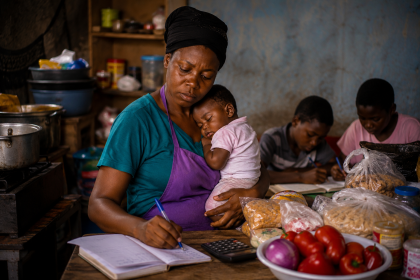
For consumers, the immediate concern is affordability. Rising ginger prices are already affecting food vendors, local restaurants, spice retailers, and households, many of whom rely on ginger daily for cooking and traditional remedies. The price of a full bag of ginger nearing GH¢6,500 is not merely inflationary; it is exclusionary. Households that once used ginger liberally are now rationing or substituting with other spices.
For farmers, the crisis is existential. Ginger farming was a reliable source of income for thousands of smallholders in the Bono, Ashanti, and Eastern regions. Many have lost their entire harvests to the disease. Without disease-resistant planting material, compensation for losses, or access to alternative crops, these farmers face destitution. The Ministry has not announced any support program. Some farmers are switching to cassava or maize, but those crops have different market dynamics and lower profit margins.
For herbal medicine producers, the shortage is a supply chain crisis. Ginger is a key ingredient in many traditional remedies. Producers are now competing with food vendors and households for limited supplies, driving prices higher. Some manufacturers are purchasing ginger directly from farms—a practice that bypasses market centers but does not increase total supply. If the shortage persists, some remedies may become unavailable or unaffordable.
For policymakers, the ginger crisis is a wake-up call. The Ministry of Food and Agriculture must urgently identify the ginger disease and develop management recommendations. The Plant Protection and Regulatory Services Directorate (PPRSD) should be empowered to conduct rapid diagnostics and deploy field teams to affected areas. The government should also consider temporary tariff relief on ginger imports to ease price pressure, while simultaneously investing in long-term solutions: disease-resistant ginger varieties, farmer training, and crop insurance.
The broader lesson is that import substitution requires not just policy rhetoric but sustained investment in productivity. The Planting for Food and Jobs program has focused on subsidizing inputs (fertilizer, seeds) but has been less successful in addressing pest and disease management, post-harvest handling, and market access. The ginger crisis shows that even with input subsidies, production can collapse if disease surveillance and response are weak.
The zero-tariff policy from China adds complexity. While the policy is intended to boost African exports to China, it also makes Chinese imports cheaper for African consumers. In the case of ginger, the policy may accelerate import dependence, as Chinese ginger becomes cheaper relative to local ginger. Ghana needs a coherent trade policy that protects domestic agriculture without raising consumer prices. This is difficult, but not impossible. Temporary safeguard measures—such as variable import duties that rise when local production is healthy and fall when it is stressed—could provide flexibility.
Wider Context: Africa’s Agricultural Import Dependence and the China Factor
Ghana’s ginger imports are a tiny part of a much larger story. Africa imports approximately $80 billion worth of food annually, a figure projected to double by 2030 if current trends continue. The continent is a net food importer despite having 60% of the world’s uncultivated arable land. The reasons are well-known: low productivity, poor infrastructure, limited access to finance, and trade policies that favor imports over local production.

China’s role in Africa’s food trade is growing. Chinese agricultural exports to Africa—rice, vegetables, processed foods, and now ginger—are increasing as the zero-tariff policy takes effect. China has also invested in African agriculture, but mostly in large-scale commercial farming (e.g., rice in Mozambique, cotton in Mali) rather than smallholder support. The net effect is that China is both a competitor (exporting food to Africa) and a partner (investing in production). African governments must navigate this duality carefully.
Ghana’s situation is not unique. Nigeria imports significant quantities of rice, despite being a major producer; its domestic production has been hampered by high costs and quality issues. Kenya imports wheat from Russia and Ukraine, despite having suitable growing areas. Senegal imports onions from the Netherlands, even though local production could meet demand. The common thread is that trade is easier than domestic policy reform. It is easier to import than to fix extension services, build storage facilities, and provide affordable credit to farmers.
The ginger crisis should be a catalyst for change. It is a small commodity, but it is a canary in the coal mine. If Ghana cannot protect its ginger farmers from a disease outbreak, what chance do rice, maize, or vegetable farmers have against more complex challenges? The Ministry of Food and Agriculture needs a fundamental upgrade: better diagnostics, faster response times, and stronger linkages between research and extension.
Outlook / What Happens Next
The 2026 ginger harvest is already lost. The disease will likely persist in the soil for several years, meaning that even if farmers plant ginger again, they risk re-infection. The Ministry must urgently identify the pathogen and recommend rotations or treatments. This is a scientific and logistical challenge, but not an insurmountable one. Other countries have managed similar outbreaks; Ghana can too.
In the short term, imports will fill the gap. Chinese ginger, now cheaper due to zero tariffs, will become more common in Accra, Kumasi, and Sunyani markets. The price may moderate from current highs, but it will not return to pre-crisis levels until local production recovers—which could take three to five years.
The government should consider a three-part response. First, emergency support for affected farmers: grants or low-interest loans to cover the cost of switching to alternative crops. Second, investment in disease diagnostics and resistant varieties: the Crops Research Institute at Fumesua should be funded to lead this effort. Third, a temporary import management system that allows ginger imports to meet consumer demand while protecting local farmers from being permanently displaced.
For consumers, the advice is to be patient. Ginger prices will remain high for at least another year. Substitutes—such as dried ginger powder from other regions—may offer partial relief. For farmers, the advice is to avoid planting ginger in infested fields for at least two years, and to seek advice from extension agents about rotation options.
The ginger shortage is a warning. Ghana’s agricultural system is more fragile than its leaders like to admit. The next shock could be larger—maize, the country’s staple grain, is vulnerable to fall armyworm; cassava is vulnerable to mosaic disease; poultry is vulnerable to avian influenza. The investments needed to protect against these shocks are not massive, but they are overdue. The ginger crisis should prompt action, not just commentary.
Source: Accra Street Journal
Last Updated on May 12, 2026 by Samuel Kwame Boadu
Disclaimer: Some content on Accra Street Journal may be aggregated, summarized, or edited from third-party sources for informational purposes. Images and media are used under fair use or royalty-free licenses. Accra Street Journal is a subsidiary of SamBoad Publishing Hub under SamBoad Business Group Ltd, registered in Ghana since 2014.
For concerns or inquiries, please visit our Privacy Policy or Contact Page.

Samuel Kwame Boadu is a Ghanaian media entrepreneur and storyteller with a passion for amplifying urban voices and uncovering everyday truths. He is the Editor-in-Chief and Founder of Accra Street Journal, a dynamic digital platform dedicated to capturing the pulse of Ghana’s capital—its people, culture, challenges, business, sports and innovations.
Use the following reference when citing or referencing this article.
Your feedback helps us improve our journalism.
Report an Error
Help us maintain accuracy. Let our editorial team know if you spot an issue in this article.
Report a problem with this article