









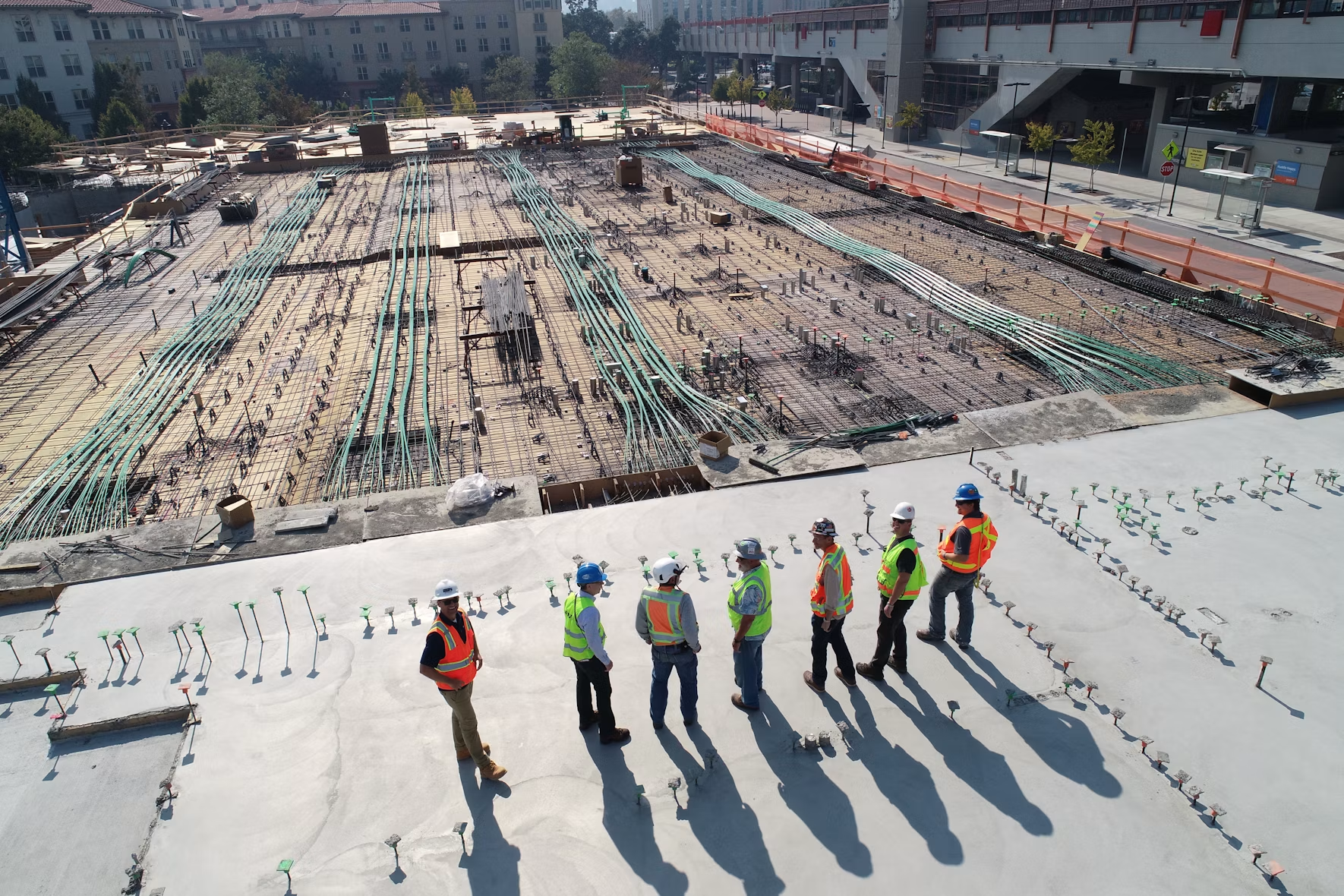

The finishing stage is where dreams take shape—and where budgets often collapse. Here’s what you’ll actually pay.
Executive Introduction
The structural shell of your house—foundation, walls, roof—is a significant investment. But it is only half the story. The finishing stage—plastering, tiling, painting, ceilings, doors, windows, and electrical and plumbing fittings—often costs as much as the entire structure itself[citation:?]. Many builders run out of money at this stage because the original budget omitted the full cost of finishing.

For a standard 3-bedroom house in Ghana, the finishing phase alone can cost between GHS 140,000 and GHS 250,000, depending on material quality, design complexity, and the scope of work[citation:?]. This report provides a comprehensive breakdown of finishing costs, covering plastering (rendering), tiling, painting, ceilings, doors and windows, and the hidden extras that catch first-time builders off guard.
Part 1: Plastering (Rendering) — The Foundation of Your Finishes
Plastering, or rendering, is the application of a smooth cement-sand mix over your blockwork walls. It serves two essential purposes: it protects the walls from weather and provides a flat, smooth surface for painting or tiling. Skipping plastering, or accepting poor plasterwork, is one of the most common mistakes in Ghanaian construction[citation:?].
📢 GET A DETAILED ARTICLES + JOBS
Join ASJ's WhatsApp Channel and never miss a post or opportunity.
What You Are Paying For
Plastering costs are driven by the total surface area of your walls (internal and external), the thickness of the plaster, the labour rates, and the quality of the cement and sand used.
The total cost to plaster a standard 3-bedroom house in Ghana is estimated to be between GHS 30,000 and GHS 55,000 when included as part of the overall plastering and tiling phase. This range covers both internal and external wall rendering, material and labour, and assumes a standard finish.
A common mistake: Many builders use contractors who plaster only the exterior, leaving the interior blockwork exposed. Plastering is not optional for interior walls—unless you are using face brick or a specialised finish, unpainted blockwork will absorb moisture, collect dust, and eventually degrade.
Labour and Material Breakdown
| Component | Estimated Cost Range (GHS) | Notes |
|---|---|---|
| Sand | 5,000 – 10,000 | Multiple trips; quality matters |
| Cement | 10,000 – 15,000 | Plastering is cement-intensive |
| Labour (Masons) | 10,000 – 25,000 | Skilled plasterers are in high demand |
| Estimated Total Plastering | 30,000 – 55,000 | When included in phase total |
Sources: Adapted from industry estimates and Master Builders & Contractors breakdown
Part 2: Painting — The Final Layer
Painting is the last step before you move in. It protects your walls, defines your interior style, and makes the house feel like a home. But if the plasterwork is poor, painting will not fix it—bumps, holes, and uneven patches will show through the paint.
Cost Breakdown for a 3-Bedroom House
For a standard 3-bedroom house, the painting and ceiling phase typically costs between GHS 30,000 and GHS 50,000. This covers both internal and external painting, including primers, undercoats, finishing coats, and labour.
| Component | Estimated Cost Range (GHS) |
|---|---|
| Interior Paint (walls and ceilings) | 15,000 – 25,000 |
| Exterior Paint (weather-resistant) | 8,000 – 15,000 |
| Primers and Sealers | 2,000 – 5,000 |
| Labour | 5,000 – 10,000 |
| Estimated Total Painting | 30,000 – 50,000 |
Source: Master Builders & Contractors
Key considerations:
-
Exterior paint must be weather-resistant. Ghana’s intense sun and rain will fade cheap paint within months.
-
Ceilings are often painted with white emulsion. This is cheaper and reflects light well.
-
The painting contractor should be different from the plastering contractor. Poor plasterwork is not the painter’s fault, but you must fix the wall before painting.
Part 3: Ceilings — The Overlooked Expense
Ceilings are often grouped with painting in the budget, but they are a significant cost driver in their own right. For a 3-bedroom house, ceiling installation is included in the GHS 30,000 to GHS 50,000 budget for the painting and ceiling phase.
| Ceiling Type | Estimated Cost (GHS) | Notes |
|---|---|---|
| PVC Ceiling | 5,000 – 15,000 | Affordable, moisture-resistant, popular |
| Gypsum/POP Ceiling | 20,000 – 35,000 | Premium finish, needs more labour |
The hidden cost: Access panels, lighting troughs, cutouts for ventilation, and trims are often priced as “extras.” Ensure your contractor includes these in the quote, or you will face a series of small but expensive surprises.
Part 4: Doors, Windows, and Glazing — The Most Underestimated Category
Glazing (glass for windows) is the fastest-rising cost component in Ghana, with inflation at 16.2 percent year-on-year in April 2026[citation:?]. For a standard 3-bedroom house, doors, windows, and glazing can add between GHS 38,000 and GHS 95,000 to your finishing budget.
| Component | Estimated Cost Range (GHS) |
|---|---|
| External Doors (metal or wood) | 10,000 – 25,000 |
| Internal Doors | 6,000 – 15,000 |
| Window Frames | 12,000 – 30,000 |
| Glass (Glazing) | 10,000 – 25,000 |
| Estimated Total | 38,000 – 95,000 |
Source: Accra Street Journal analysis
Key advice: Glazing costs are rising rapidly. If you are budgeting for 2026, allocate extra for this category. Also, consider using double-glazed or toughened glass for security and insulation—the initial cost is higher, but the long-term protection is significant.
Part 5: The Total Finishing Package — What to Expect
For a standard 3-bedroom house, the finishing phase (plastering, painting, ceilings, doors, windows, flooring, and sanitary ware) is a major financial commitment. The total cost is often double or triple what the structural phase cost.
| Category | Estimated Cost Range (GHS) |
|---|---|
| Plastering | 30,000 – 55,000 |
| Flooring and Tiling | 25,000 – 55,000 |
| Painting and Ceilings | 30,000 – 50,000 |
| Doors, Windows, Glazing | 38,000 – 95,000 |
| Plumbing and Sanitary Ware | 44,000 – 97,000 |
| Electrical Installation | 48,000 – 98,000 |
| Finishing Subtotal | 215,000 – 450,000 |
Note: These figures exclude furniture, landscaping, and external works.
ASJ Conclusion
The finishing stage is where the true cost of building a house becomes clear. Plastering, painting, ceilings, doors, windows, and fixtures often cost as much as the structural shell. And within this phase, glazing (16.2% inflation) and plumbing (14.5%) are driving costs higher every month.
The Government Statistician has advised homeowners to “carefully budget for high-cost items including glazing, plumbing and roofing sheets”[citation:?]. The “completeness gap” — the systematic omission of finishing costs from contractor quotes — is the most common reason projects stall at the finishing stage[citation:?].
Your next step: Before you start finishing, get an itemised Bill of Quantities (BoQ) from a quantity surveyor. Demand a breakdown of every line item—plastering by square metre, glazing by type, tiles by quality. Build with confidence that your finishing budget matches the real cost of a completed, code-compliant home.
Quick Reference: Finishing Costs for a 3-Bedroom House
| Category | Estimated Range (GHS) |
|---|---|
| Plastering | 30,000 – 55,000 |
| Painting and Ceilings | 30,000 – 50,000 |
| Doors, Windows, Glazing | 38,000 – 95,000 |
| Finishing Subtotal | 215,000 – 450,000 |
Source: Accra Street Journal
Last Updated on June 19, 2026 by Samuel Kwame Boadu
Disclaimer: Some content on Accra Street Journal may be aggregated, summarized, or edited from third-party sources for informational purposes. Images and media are used under fair use or royalty-free licenses. Accra Street Journal is a subsidiary of SamBoad Publishing Hub under SamBoad Business Group Ltd, registered in Ghana since 2014.
For concerns or inquiries, please visit our Privacy Policy or Contact Page.

Samuel Kwame Boadu is a Ghanaian media entrepreneur and storyteller with a passion for amplifying urban voices and uncovering everyday truths. He is the Editor-in-Chief and Founder of Accra Street Journal, a dynamic digital platform dedicated to capturing the pulse of Ghana’s capital—its people, culture, challenges, business, sports and innovations.