EXECUTIVE INTRODUCTION
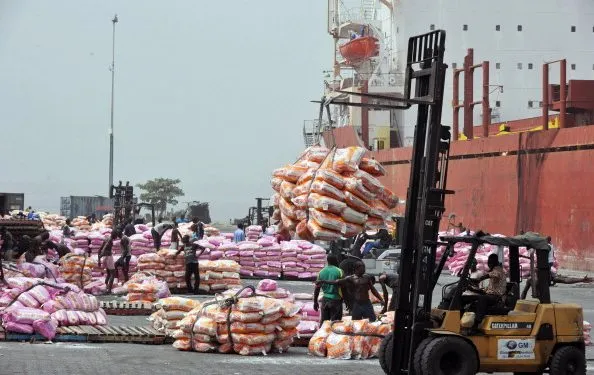
For decades, the dominant commercial reflex of the Ghanaian business owner, from the Makola importer to the high-end Accra retailer, has been to look outwards. The container from China, the shipping line from Europe, the wholesale buying trip to Dubai or Istanbul—these were the established, unquestioned arteries of the Accra supply chain. The imported good carried a powerful, automatic prestige. It was often, though not always, cheaper at the point of manufacture. And the local alternative, where it existed at all, was frequently dismissed as unreliable in quality, inconsistent in supply, and uncompetitive on price. The import addiction was a rational response to a set of structural realities.
This logic is being rewritten. A quiet but profound strategic reorientation is underway across a broad spectrum of Accra businesses. The local sourcing of raw materials, intermediate goods, packaging, and even finished products is no longer a niche concern of the “Buy Ghanaian” activist or the small-scale organic farmer’s market. It is being driven by a powerful new convergence of hard-headed commercial factors: the sustained, punishing depreciation of the cedi against the dollar; the post-COVID global supply chain fragility that has turned the predictable container shipping schedule into an expensive gamble; a genuine, measurable improvement in the quality and professionalism of a new generation of Ghanaian suppliers; a powerful consumer-led demand for products with a transparent, local, and ethical provenance; and a growing recognition that a shorter, more controllable, and more responsive supply chain is a fundamental source of competitive advantage in a volatile market. This Accra Street Journal analysis is a deep, dispassionate examination of the structural drivers, the emerging successes, and the persistent bottlenecks of the local sourcing revolution in Accra. It is not a patriotic exhortation. It is a business case.

THE CEDI AND THE CONTAINER: CURRENCY VOLATILITY AS A SOURCING STRATEGY
The single most powerful and relentless driver of the shift towards local sourcing is the brutal mathematics of the Ghanaian cedi’s long-term depreciation against the US dollar. The importer who prices their goods in cedis but restocks in dollars is engaged in a recurring, high-stakes gamble on the exchange rate, and the house—the foreign supplier—almost always wins. Every cycle of cedi depreciation wipes out the importer’s margin, forces an agonising price increase onto the resistant Ghanaian consumer, and injects a lethal dose of uncertainty into the basic economics of the business. The importer is not just a merchant; they are an unwilling, and usually losing, currency speculator.
📢 GET A DETAILED ARTICLES + JOBS
Join ASJ's WhatsApp Channel and never miss a post or opportunity.

The local supplier, by contrast, transacts in cedis. The price of the locally sourced raw material, the locally manufactured packaging, or the locally grown agricultural input is negotiated, invoiced, and settled in the domestic currency. This single fact eliminates the single largest and most uncontrollable risk in the Accra business’s cost structure. The margin is no longer a bet on the exchange rate; it is a function of the entrepreneur’s ability to manage a domestic supply chain relationship. This is a structural, permanent de-risking of the business model. The locally sourced product may, in some cases, carry a nominally higher unit price at the factory gate than the imported equivalent. But when the full cost of the foreign exchange risk, the import duties, the clearing agent fees, the port demurrage charges, and the extended, capital-hungry shipping lead times are fully and honestly accounted for, the total landed cost of the locally sourced alternative is increasingly competitive, and the predictability of that cost is infinitely superior. The smart Accra business owner is not switching to local sourcing out of patriotism; they are switching because the full cost and risk accounting now, in many categories, favours the domestic supply chain.
THE BROKEN GLOBAL PIPELINE: POST-COVID RESILIENCE AND LEAD TIMES
The COVID-19 pandemic and its aftermath provided a brutal, real-world stress test of the globalised, just-in-time supply chain model, and the Accra business community felt the full force of the failure. The predictable container voyage from Shanghai to Tema, once a reliable 45 to 60 days, became a chaotic, unpredictable, and ruinously expensive odyssey of port closures, container shortages, and astronomical freight rate spikes. Businesses that had built their entire model on the reliable, cheap arrival of the imported container found themselves with empty shelves, furious customers, and a cash flow crisis that no amount of entrepreneurial ingenuity could solve. The global pipeline, once a source of cost advantage, had become the single greatest strategic vulnerability.

This experience has left a deep and enduring scar on the collective psychology of the Accra business community. It has fundamentally recalibrated the value placed on supply chain resilience, predictability, and control. The local supplier, located a truck drive away in the Volta Region, the Ashanti Region, or even a nearby industrial zone in Accra itself, offers a fundamentally different risk profile. The lead time is days, not months. The order can be adjusted, expedited, or modified in response to real-time demand signals. The business owner can visit the supplier’s facility, inspect the quality of the production run, and build a face-to-face relationship with the producer. The working capital tied up in a vast, slow-moving pipeline of inventory can be dramatically reduced. The local supply chain is not just a source of goods; it is a strategic asset of agility and resilience in a world where the global shipping schedule can no longer be trusted. The businesses that have shifted to local sourcing are not just buying materials; they are buying an insurance policy against the next global supply chain shock.
THE RISE OF THE PROFESSIONAL LOCAL SUPPLIER: QUALITY AND THE NEW GHANAIAN PRODUCER
The historical and entirely justified complaint of the Accra business owner about local sourcing was a simple one: the quality was inconsistent, the packaging was unprofessional, the supply was unreliable, and the business professionalism was often lacking. The local supplier, frequently an under-capitalised smallholder or a poorly managed parastatal remnant, could not meet the demanding specifications of a serious commercial enterprise. This complaint, while rooted in a painful reality, is becoming dangerously outdated. A new generation of Ghanaian producers and manufacturers has emerged, and they are fundamentally changing the quality proposition of local sourcing.
These are businesses that have invested in modern production equipment, in professional quality control systems, in aesthetically sophisticated packaging design, and in the basic, but previously rare, disciplines of meeting a delivery deadline and responding to a customer email. The organic vegetable grower who can supply a consistent, graded, and reliably delivered product to the restaurant chain. The packaging manufacturer who can produce a custom-printed box that matches the quality of an imported alternative. The shea butter cooperative that has invested in the processing equipment and the quality certification to sell a consistent, export-grade ingredient to the local cosmetics brand. The textile producer who can deliver a consistent, colour-fast, well-finished fabric to the fashion designer on time and on spec. This emerging class of professional, quality-obsessed, and commercially responsive local suppliers is the single most important supply-side enabler of the local sourcing shift. They have made “Made in Ghana” a credible commercial proposition, not just a slogan. The businesses that are still dismissing local sourcing based on a decade-old experience of poor quality are actively disadvantaging themselves against competitors who have discovered this new, capable, and improving domestic supplier base.
THE CONSUMER AS LOCALIST: THE BIRRA THAT ASKS FOR GHANAIAN
The shift to local sourcing is not solely a supply-side or a cost-driven phenomenon. It is being powerfully pulled by a profound and commercially significant shift in consumer demand. The Ghanaian consumer, particularly the influential, high-spending urban middle class, is no longer a passive recipient of whatever the global supply chain delivers. They are actively, consciously, and vocally demanding products with a transparent, local, and ethically sound provenance. The question “Where is this made?” is being asked with increasing frequency, and the answer “Made in Ghana, with Ghanaian ingredients” is, for a growing and valuable segment of the market, the preferred answer.
This is the “Buy Naija” effect, the global trend towards localism and ethical consumption, expressed in a distinctively Ghanaian idiom. The consumer is actively seeking out the skincare brand that uses Ghanaian shea butter and black soap, not imported mineral oil. They are choosing the chocolate bar that proudly states its single-origin Ghanaian cocoa and its local manufacture. They are patronising the fashion brand that weaves its own cloth in the Volta Region, telling the story of the weaver and the community. This is not a mass-market phenomenon yet, but it is the premium, high-margin, trend-setting segment of the market. The businesses that are capturing this consumer—the discerning, the influential, the price-insensitive—are those that have made the strategic commitment to local sourcing and are communicating that commitment with transparency and sophistication. The local supply chain is not just a cost centre; it is becoming a powerful marketing asset, a source of brand differentiation and consumer loyalty in a crowded market. The imported, anonymous, opaque product is losing its automatic cultural premium, while the locally sourced, transparent, story-rich product is steadily gaining it.
THE HORTICULTURAL CASE STUDY: THE RESTAURANT AND THE GHANAIAN LETTUCE
No sector illustrates the potential and the peril of the local sourcing shift better than the relationship between Accra’s premium hospitality sector and the local horticultural industry. For years, the high-end restaurant, the hotel, and the airline caterer operated with an automatic import reflex for their fresh produce. The lettuce, the herbs, the cherry tomatoes, the rocket leaves—these were flown in, at great expense, from Europe or South Africa. The local alternative was dismissed as seasonal, inconsistently sized, and unreliably supplied.
Today, a quiet revolution has taken place in the fields outside Accra. A small but growing number of commercially astute, technically proficient Ghanaian horticultural enterprises, often leveraging greenhouse technology and drip irrigation, are now producing fresh produce that meets the exacting specifications of the premium hospitality buyer. The lettuce is crisp, consistent, and delivered within hours of harvest. The herbs are fragrant and packaged professionally. The supply is negotiated on a seasonal contract, providing price and volume certainty for both the farmer and the chef. The restaurant that has made the switch does not just benefit from a potentially lower and more stable cost; it gains a powerful menu story. “The organic mixed leaf salad, with greens sourced this morning from our partner farm in the Aburi hills” is a dish that commands a higher price and a deeper customer appreciation than “the imported salad.” This horticultural case study is a microcosm of the broader potential. The local sourcing of high-quality inputs is possible, it is commercially viable, and it adds a layer of brand value that the anonymous imported input can never match. But it requires the business buyer to invest time and effort in identifying, vetting, and building a long-term relationship with the supplier, a different set of skills from simply calling the importer and placing an order.
THE PERSISTENT BOTTLENECK: SCALE, FINANCE, AND THE RELIABILITY GAP
It would be analytically dishonest to present the local sourcing shift as an unqualified success story or a frictionless panacea. Profound and persistent structural bottlenecks continue to constrain the domestic supply side and frustrate the ambitions of businesses seeking to source locally. The most significant of these is the question of scale and consistency. A small food processing business in Accra may find a local farmer who can produce an excellent batch of mangoes, but can that same farmer reliably supply five tonnes of uniformly high-quality fruit, every week, for the duration of the processing season? The gap between the promising sample and the consistent, large-scale commercial supply is the chasm into which many well-intentioned local sourcing initiatives have fallen.
This scale gap is intimately connected to a financing gap. The small Ghanaian producer often lacks the capital to invest in the equipment, the storage facilities, and the working capital required to fulfil a large, regular commercial order. The bank is often unwilling to lend against such an uncertain proposition. The business buyer, for their part, is often reluctant to provide the pre-financing or the long-term contract that would enable the supplier to invest. This is a classic chicken-and-egg problem of market development. The final bottleneck is the lingering, and in some sectors still entirely justified, reliability gap. The broken promise, the missed delivery deadline, the batch that does not meet the agreed specification—these breaches of basic commercial trust are still too common in the local supply market. Every such failure pushes a frustrated business owner back into the waiting arms of the reliable, if expensive, importer. The local sourcing revolution is real, but it is incomplete. It requires a patient, long-term, and mutually committed partnership between the business buyer and the local supplier to bridge these gaps of scale, finance, and trust.

CONCLUSION: THE SHORT, TOUGH, AND NECESSARY ROAD
The shift towards local sourcing among Accra businesses is not a temporary fad, a government slogan, or a charitable act of economic patriotism. It is the logical, strategic, and increasingly necessary response of a business community confronted with the permanent structural risks of a volatile global currency, a fragile global supply chain, and a consumer who is actively demanding a more transparent and locally rooted product. The import addiction, born of a set of historical conditions, is being slowly and painfully broken, not by rhetoric, but by the cold, hard mathematics of risk, cost, and market demand.
The road is neither short nor easy. It requires the Ghanaian supplier to invest, to professionalise, and to honour their commitments with a rigour that has not always been present. It requires the Accra business owner to abandon the passive, transactional relationship with a distant container and to invest the time, the patience, and the relationship-building effort to develop a proximate, collaborative, and sometimes difficult partnership with a local producer. The rewards of that difficult journey, however, are substantial: a business that is structurally de-risked from the tyranny of the foreign exchange auction, a supply chain that is resilient and responsive rather than fragile and remote, and a brand that carries the authentic, compelling, and increasingly valuable story of Ghanaian authorship. The future of the competitive Accra business is not in the container arriving from across the ocean. It is on the farm, in the workshop, and in the factory up the road, and the businesses that have already started making that journey are building a moat that their import-dependent competitors will find increasingly impossible to cross.
QUICK FACTS BOX: LOCAL SOURCING IN ACCRA
-
Primary Drivers: Cedi depreciation and the elimination of foreign exchange risk; post-COVID global supply chain fragility; the emergence of a professional, quality-focused Ghanaian supplier class; premium consumer demand for transparent, locally rooted products.
-
Key Sectors: Hospitality and horticulture, cosmetics and personal care, fashion and textiles, food and beverage processing, packaging, and construction materials.
-
The Core Business Case: When the full, honest total landed cost (including FX risk, duties, port delays, and working capital tie-up) is calculated, local sourcing is increasingly price-competitive, with vastly superior predictability, agility, and risk profile.
-
The Consumer Pull: A valuable, high-spending segment actively seeks “Made in Ghana” stories, transforming the local supply chain from a pure cost centre into a brand asset and a source of premium pricing and loyalty.
-
Persistent Bottlenecks: The scale and consistency gap (can the supplier deliver volume reliably?); the financing gap (can the supplier afford the working capital?); and the lingering trust and reliability gap (does the supplier meet the spec, on time?).
-
Strategic Requirement: Successful local sourcing is not a simple transactional switch but a patient, long-term, relationship-intensive partnership between the buyer and the local supplier, often requiring collaborative problem-solving around scale, quality, and finance.

Last Updated on July 28, 2026 by Samuel Kwame Boadu
Disclaimer: Some content on Accra Street Journal may be aggregated, summarized, or edited from third-party sources for informational purposes. Images and media are used under fair use or royalty-free licenses. Accra Street Journal is a subsidiary of SamBoad Publishing Hub under SamBoad Business Group Ltd, registered in Ghana since 2014.
For concerns or inquiries, please visit our Privacy Policy or Contact Page.

Samuel Kwame Boadu is a Ghanaian media entrepreneur and storyteller with a passion for amplifying urban voices and uncovering everyday truths. He is the Editor-in-Chief and Founder of Accra Street Journal, a dynamic digital platform dedicated to capturing the pulse of Ghana’s capital—its people, culture, challenges, business, sports and innovations.