EXECUTIVE INTRODUCTION
In an era of obsessive focus on digital marketing, with its precision targeting, its granular analytics, and its screen-bound consumer, a casual observer might assume that the giant billboard, the painted wall mural, and the bus shelter poster are relics of a bygone advertising age. This assumption, frequently made in the boardrooms of multinationals and the strategy sessions of digital agencies, is profoundly wrong in the specific context of Accra. Outdoor advertising is not merely surviving in the Ghanaian capital; it is thriving, commanding significant brand budgets, and delivering a form of commercial impact that the fragmented, ad-blocked, and easily scrolled-past digital screen fundamentally cannot replicate.
This Accra Street Journal analysis is a clear-eyed defence of the outdoor advertising medium in the Accra market. It is not a nostalgic plea for the old ways. It is a structural analysis of the specific, durable, and economically rational reasons why the physical, unmissable ad in the public realm continues to be a cornerstone of brand strategy. We argue that the power of outdoor advertising in Accra is rooted in the city’s unique, and for the advertiser, highly advantageous, urban conditions: the infamous, hours-long traffic jam; the forced, communal viewing environment of the trotro and the bus stop; the unique architecture of social trust that a physical billboard confers on a brand; the daily, repetitive frequency of the commuter’s fixed route; and the deep cultural resonance of a large, bold, aspirational visual statement in a city where public visual culture is a primary language of status and desire. The outdoor ad is not dead. It is, in Accra, one of the most effective and unavoidable media channels that a business can deploy.

THE TRAFFIC JAM AS A MEDIA OPPORTUNITY: THE FORCED CAPTIVE AUDIENCE
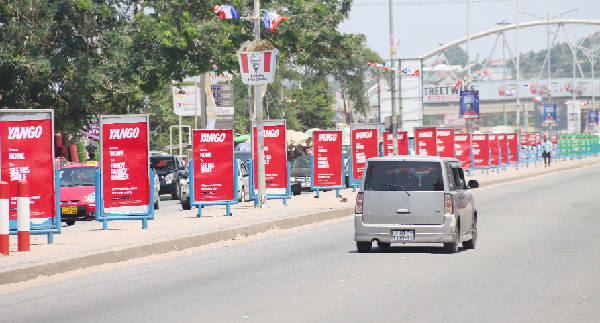
The single most powerful structural advantage of outdoor advertising in Accra is the city’s infamous, grinding, and seemingly permanent traffic congestion. For the average commuter on the Tema Motorway, the Spintex Road, or the Liberation Road corridor during peak hours, the daily journey is not a smooth, swift transit. It is a long, slow, stop-start crawl, often stretching into hours. In this enforced, frustrating, and visually starved captivity, the commuter is not scrolling through their phone with the same distracted intensity as they might in a freely flowing vehicle. They are looking up, looking around, searching for any stimulus to break the monotony of the jam. The outdoor billboard, strategically positioned at the precise point of maximum congestion, steps into this void of attention and commands it absolutely.
📢 GET A DETAILED ARTICLES + JOBS
Join ASJ's WhatsApp Channel and never miss a post or opportunity.

This is a level of forced, unavoidable, and repetitive audience attention that no digital platform can buy. A user can scroll past a sponsored Instagram post in a fraction of a second. They can install an ad-blocker on their browser. They can skip a YouTube pre-roll after five seconds. But the commuter stuck in traffic on the Kwame Nkrumah interchange cannot skip the massive, illuminated billboard that dominates their field of vision for the fifteen minutes it takes to clear the intersection. They see it, day after day, journey after journey. The repetition is not algorithmically retargeted; it is structurally enforced by the geography of their commute. The billboard becomes a familiar, if sometimes irritating, landmark. And when the consumer is finally in the market for the product—a new bank account, a brand of cement, a mobile data package—that enforced, repetitive brand exposure has already carved a deep, subconscious channel. The traffic jam, the great productivity drain of the Accra economy, is, perversely, the outdoor advertiser’s most powerful and cost-effective media asset.
THE TROTRO AND THE BUS STOP: THE COMMUNAL VIEWING ENVIRONMENT
The unique nature of Accra’s public transport infrastructure creates a second powerful structural advantage for the outdoor medium. The trotro, the iconic minibus that moves the vast majority of the city’s population, is not a private, sealed, air-conditioned pod. It is a physically open, visually porous, and intensely communal space. Passengers are looking out of the open windows. They are standing at the crowded, chaotic bus stops, waiting for long, unpredictable periods. They are walking through the dense commercial strips of the city centre on their way to and from the terminal. These moments—the wait at the station, the gaze out of the trotro window, the walk through the market—are the prime attention real estate for the outdoor ad.

This is also the environment of the communal reception of the ad message. A striking, clever, or provocative billboard at a busy bus terminal is not consumed in the isolated, private manner of a digital ad on a personal phone. It is seen by a crowd, and it becomes a topic of immediate, face-to-face conversation. “Ah, have you seen the new one from the telco?” “That paint colour, eii, it’s fine o!” The ad becomes a social object, a spark for word-of-mouth discussion. The peer effect amplifies the message. The concrete block becomes a brief, shared cultural moment for a diverse cross-section of the city’s population who are, in that moment, all part of the same waiting, watching crowd. This communal reception, which is completely absent from the siloed, individualistic consumption of digital media, adds a layer of social proof and cultural resonance to the outdoor ad that is profoundly valuable for brands seeking mass-market penetration and social relevance.
THE BILLBOARD AS TRUST INFRASTRUCTURE: THE PHYSICAL PROOF OF SERIOUSNESS
In the Ghanaian market, where the digital economy is still plagued by the activities of fraudsters, fly-by-night operators, and unscrupulous online vendors, the physical, public, and undeniably expensive outdoor advertisement performs a critical, non-obvious function. It is a public, material demonstration of a brand’s solidity, permanence, and financial substance. The billboard is a costly commitment; its rental, its printing, and its maintenance are significant and visible expenditures. A business that can afford a prominent billboard on the Ring Road is not a faceless entity operating from a rented room with a laptop and a mobile money account. It is a “real” company, one that has invested in a permanent, public marker of its existence.
This function of the outdoor ad as a trust infrastructure is particularly critical for brands in the financial services, real estate, insurance, and FMCG sectors, where the consumer is making a significant financial commitment or a long-term trust decision. The consumer may see the bank’s digital ad on their phone and be intrigued, but they are not fully assured. When they then drive past the same bank’s massive, impressive billboard at the airport intersection, a cognitive shift occurs. The physical presence validates the digital message. The brand has “shown itself” in the most public, unmissable, and expensive way possible. It has paid the rent for a piece of the city’s skyline. This act of public, financial commitment is a powerful, non-verbal signal of trustworthiness and permanence in a market hungry for signals of reliability. The outdoor ad is not just generating awareness; it is manufacturing trust, at scale, in a low-trust environment.
FREQUENCY, REACH, AND THE UNSEGMENTED MASS AUDIENCE
The economic logic of outdoor advertising is built on a simple, brutal, and highly effective metric: raw, undifferentiated, and repetitive reach at a low cost per thousand impressions (CPM). Unlike the digitally targeted ad, which must pay to find a specific demographic slice within a fragmented ocean of users, the billboard broadcasts to every single person who passes that point, regardless of their age, income, gender, or digital sophistication. For a mass-market product—a new sachet of detergent, a widely consumed beer, a mobile money service, a presidential campaign message—this unsegmented reach is not a flaw; it is precisely the objective.
The billboard delivers a frequency of impression that is unmatched. The commuter sees it twice a day, five or six days a week, for the duration of the campaign, which often runs for months. This frequency, achieved not through a complex digital retargeting algorithm but through the simple, physical fact of a fixed structure on a fixed commute route, builds brand memory with a force that the ephemeral, one-second digital impression simply cannot match. And for the premium, well-executed large-format billboard on a prime arterial road, the absolute reach numbers—the sheer volume of human eyeballs passing that point daily—are in the hundreds of thousands. When the cost of the rental and the production is amortised over that vast, repeated audience, the effective CPM is often shockingly competitive with, or even superior to, the cost of achieving comparable reach and frequency through the cluttered, competitive, and fraud-prone digital advertising auction markets. The outdoor ad is the last true mass medium in a fragmenting media landscape, and for the brand with a mass-market message, it remains an indispensable tool.
THE CREATIVE CANVAS: THE ART OF THE UNSCROLLABLE STATEMENT
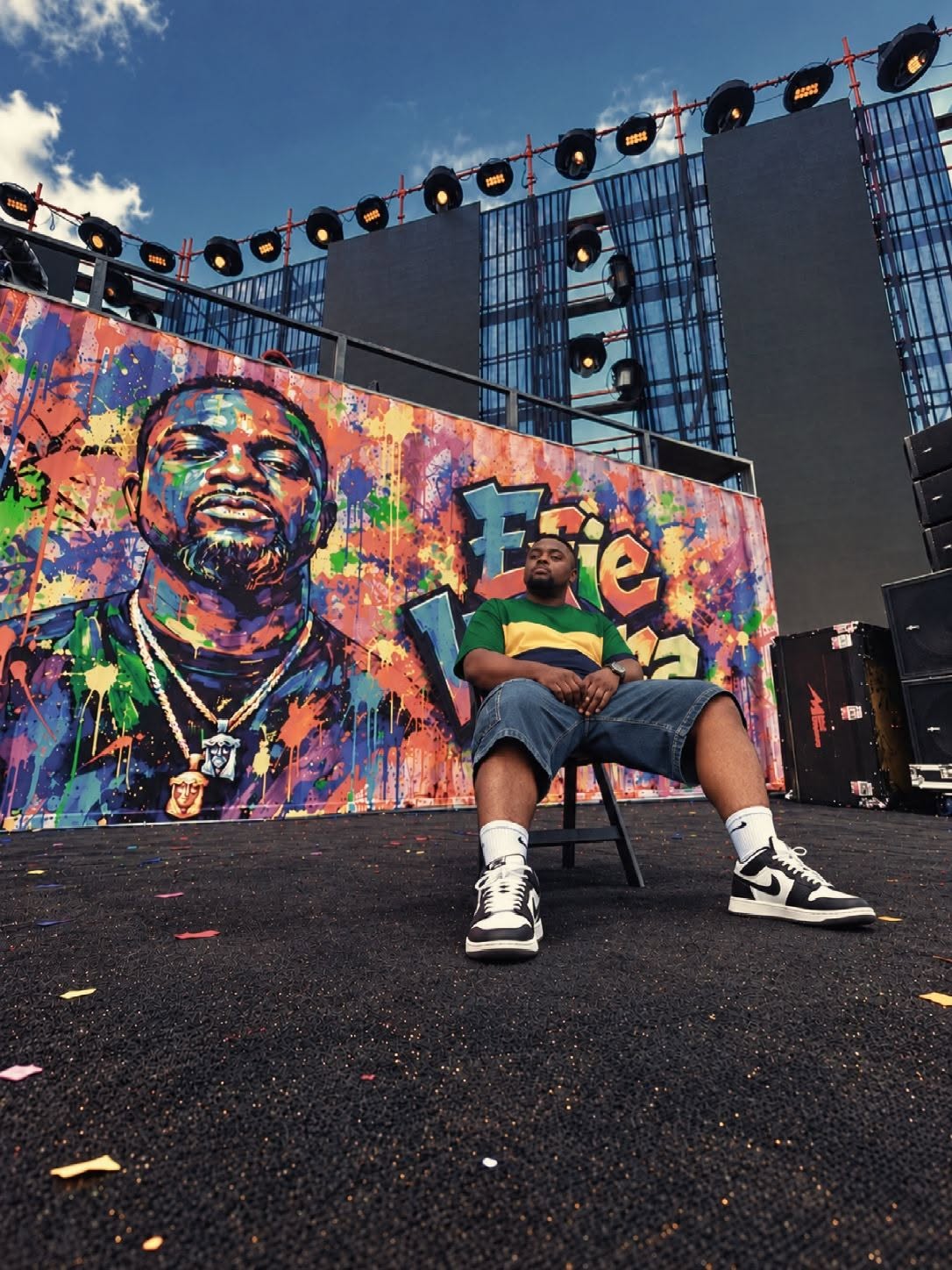
There is a final, aesthetic dimension to the enduring power of outdoor advertising in Accra, and it is intimately connected to the city’s visual culture. Accra is a city that communicates status, aspiration, and identity through bold, public visual displays: the architecture of the mansion, the fashion at a wedding, the branding of the luxury car, the pasted poster of the funeral announcement. The large-format, professionally designed, and dramatically illuminated billboard fits naturally into this public visual language. It is the commercial equivalent of the grand public gesture.
A brilliantly executed billboard—one with a single, arresting image, a minimalist and witty line of copy, and a bold, confident use of colour—is more than an ad. It can become a landmark, a talking point, and a piece of the city’s visual identity for the duration of its run. It is an unscrollable, unblockable statement of intent. It conveys a sense of brand scale, confidence, and cultural centrality that is almost impossible to achieve in the small, compressed, and easily ignored formats of the mobile screen. In a city where making a visible, public statement is a fundamental mode of social communication, the creative, ambitious billboard is not an intrusion; it is a respected participant in the visual conversation of the metropolis.
CONCLUSION: THE PERMANENT PHYSICAL IMPRESSION
Outdoor advertising in Accra persists and thrives because it is not a single medium but a suite of distinct media, each exploiting a specific, durable feature of the city’s physical and social infrastructure. The billboard exploits the captive audience of the traffic jam. The bus shelter poster exploits the communal waiting crowd. The branded trotro exploits the mobile, neighbourhood-level penetration of the public transport network. Together, they form a physical, unavoidable, and structurally resilient advertising ecosystem that is immune to ad-blockers, immune to scrolling, and immune to the whims of a platform algorithm.
The strategic marketer in Accra understands that the optimal campaign is not a choice between the digital and the physical, but a deliberate orchestration of both. The social media post generates the intimate, personal engagement; the billboard provides the massive, public, and trust-building statement of permanence. The outdoor ad is the anchor of the integrated campaign, the physical proof of the brand’s substance in a crowded and often ephemeral market. As long as Accra’s traffic crawls, as long as its trotro stops are crowded, and as long as its consumers seek public signals of trust and status, the unmissable skyline will continue to be one of the smartest investments a serious brand can make.

QUICK FACTS BOX: OUTDOOR ADVERTISING IN ACCRA
-
Primary Structural Advantage: The city’s extreme traffic congestion creates a massive, daily, forced captive audience with limited alternative stimuli, delivering unavoidable, repetitive brand exposure.
-
Key Formats: Large-format billboards (illuminated and non-illuminated), bus shelter and street furniture advertising, branded trotro and bus wraps, large-scale wall murals and building wraps, and mobile digital LED screens.
-
The Trust Function: The high cost and physical permanence of a major billboard functions as a powerful, non-verbal signal of a brand’s financial solidity and trustworthiness in a low-trust market.
-
The Communal Effect: Ads at bus stops and trotro stations are consumed in a communal setting, sparking immediate, face-to-face word-of-mouth conversation and amplifying the message through peer effect.
-
Core Economic Metrics: Delivers a very low cost per thousand impressions (CPM) for mass-market reach, with an unmatched frequency of exposure driven by the fixed daily commute.
-
Creative Power: A bold, well-executed billboard becomes an unscrollable, unblockable public landmark and a significant element of the city’s visual culture, conveying a sense of scale and confidence.
-
Strategic Role: Most effective when integrated with digital campaigns, serving as the mass-reach, trust-building physical anchor for the more targeted, personal, and interactive digital channels.
FAQ SECTION
1. Is outdoor advertising in Accra still effective in the age of smartphones?
Yes, critically so. Its effectiveness is rooted in the city’s unique traffic congestion, which creates a forced, captive audience that cannot skip, scroll past, or block the ad. It delivers an unparalleled frequency of unavoidable physical impressions.
2. What makes a billboard location “prime” in Accra?
A location with extreme, slow-moving, peak-hour traffic congestion is the most valuable. Key intersections on the Tema Motorway, Liberation Road, Spintex Road, and the Ring Road corridors are considered the prime, high-impact inventory.
3. How does a billboard build trust for a brand in Ghana?
In a low-trust market, the sheer expense and physical permanence of a large billboard signal that the company is financially solid and “serious,” not a fly-by-night operator. It is a public, material demonstration of commitment.
4. Is it only for big companies, or can SMEs use outdoor advertising?
While large-format billboards are expensive, SMEs can creatively use smaller, more localised formats. A branded trotro on a busy route, a well-placed wall mural in a commercial neighbourhood, or a poster at a popular bus stop are all accessible outdoor tactics.
5. How do you measure the effectiveness of a billboard campaign in Accra?
Direct attribution is difficult, which is the medium’s primary weakness. Effectiveness is measured through brand lift studies, pre- and post-campaign surveys, spikes in direct website search traffic for the brand name during the campaign period, and correlation with sales uplift in the covered geographic zones.
6. What kind of products are best suited for outdoor advertising in Accra?
Mass-market, fast-moving consumer goods (FMCGs), telecommunications, financial services, real estate, and any brand that needs to build broad, undifferentiated awareness and convey a sense of scale, permanence, and public trust.
7. Why is advertising inside and on trotros effective?
Trotro advertising reaches a captive, mass-market audience in a communal, conversation-sparking environment. It’s a cost-effective way to achieve high-frequency, neighbourhood-level penetration among the majority of the city’s population.
8. How long does a typical billboard campaign run in Accra?
Campaigns are typically booked for a minimum of one month, but the most effective brand-building campaigns run for three to six months or longer, to achieve the deep, repetitive frequency of impression that gives the medium its power.
9. What are the regulations governing outdoor advertising in Accra?
The space is regulated by the Accra Metropolitan Assembly (AMA) and the district assemblies, which issue permits and have the authority to remove illegal or unauthorised structures. There are also specific rules about the content, size, and placement of billboards.
10. Is the cost of a billboard in Accra worth the return on investment?
For a mass-market brand, the effective cost per thousand impressions (CPM) is often highly competitive with digital. The true value, however, includes the unmeasurable benefits of enforced reach, the trust-signalling effect, and the communal word-of-mouth that the physical, public presence of a billboard uniquely generates.
Source: Accra Street Journal

Last Updated on July 28, 2026 by Samuel Kwame Boadu
Disclaimer: Some content on Accra Street Journal may be aggregated, summarized, or edited from third-party sources for informational purposes. Images and media are used under fair use or royalty-free licenses. Accra Street Journal is a subsidiary of SamBoad Publishing Hub under SamBoad Business Group Ltd, registered in Ghana since 2014.
For concerns or inquiries, please visit our Privacy Policy or Contact Page.

Samuel Kwame Boadu is a Ghanaian media entrepreneur and storyteller with a passion for amplifying urban voices and uncovering everyday truths. He is the Editor-in-Chief and Founder of Accra Street Journal, a dynamic digital platform dedicated to capturing the pulse of Ghana’s capital—its people, culture, challenges, business, sports and innovations.