
9 min read
From devastating market fires to residential blazes, Accra is Ghana’s fire hotspot. Yet most residents and business owners remain unprotected. Here is why that needs to change.
Introduction
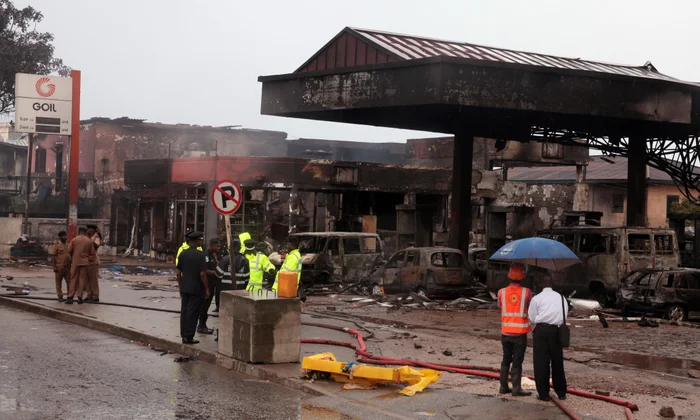
In May 2026, a midnight fire swept through sections of Nima Market in Accra, destroying goods and property worth thousands of cedis . Traders gathered the next morning, sifting through debris, trying to salvage whatever they could. One victim told journalists: “The fire outbreak has destroyed everything. This business was what we used to take care of the family” .
Key Takeaways
- In May 2026, a midnight fire swept through sections of Nima Market in Accra, destroying goods and property worth thousands of cedis .
- Under Ghana's Insurance Act, 2021 (Act 1061), Sections 218 and 219 require all owners or occupiers of commercial organisations to obtain compulsory fire insurance .
- Under Ghana's Insurance Act, 2021 (Act 1061), fire insurance is compulsory for commercial buildings, including schools, hospitals, and markets .
Just a few months earlier, in January 2025, a catastrophic fire at Kantamanto Market destroyed more than 7,000 shops, with one wholesale trader alone losing bales of clothes valued at $1.7 million . The government donated GH¢1 million to support victims , but for thousands of traders, that was a drop in the ocean compared to what they lost.
These stories are not isolated incidents. They are part of a pattern that makes Accra the most fire-prone region in Ghana. And the painful truth is that most victims have no insurance to fall back on.
This ASJ article explains why Accra residents need fire insurance more than ever, what it costs, and why the small premium is worth paying.
Accra Is Ghana’s Fire Capital
The numbers are clear. According to the Ghana National Fire Service (GNFS), Greater Accra recorded the highest number of fire outbreaks in the first quarter of 2026, with 377 incidents . This was followed by the Ashanti Region with 337 cases .
Domestic fires are the most common type, accounting for 42.9% of all fire incidents nationally in early 2026, up from 770 cases in 2025 to 881 in 2026 . In Accra, domestic fires are particularly prevalent, affecting homes across the city.
The cost is staggering. In the first half of 2025 alone, property destruction from fires across Ghana surged to an alarming GH¢188 million—more than triple the losses recorded in early 2024 . Commercial fires, electrical fires, and market blazes all contribute to this enormous toll .
The GNFS has noted that common causes of these fires include electrical faults from poor wiring and substandard cables, gas leakages, unattended cooking, and lit candles or mosquito coils . In many cases, these are preventable problems—but they keep happening.
The Human Cost: Real Stories from Accra
The statistics are one thing. The human stories are another.

At Nima Market in May 2026, a midnight fire destroyed wooden structures used by traders as shops and storage facilities . Preliminary investigations suggested the fire may have been caused by an electrical fault . The Member of Parliament for Ayawaso East, Baba Jamal, visited the scene and pledged GH¢5,000 each to affected traders to help them revive their businesses .
But for traders who had invested years of savings into their businesses, GH¢5,000 is nowhere near enough.

At Kantamanto Market in January 2025, the disaster was even worse. More than 7,000 shops were completely destroyed . One wholesale trader whose business had never been affected before lost $1.7 million worth of clothing . The Chairman of the Kantamanto Traders Association noted that over half of the market was razed .
These traders had built their livelihoods over years, sometimes decades. In a single night, everything was gone.
The Law Says You Should Have Fire Insurance
Many people do not know this, but fire insurance is not optional for certain properties in Ghana.
Under Ghana’s Insurance Act, 2021 (Act 1061), Sections 218 and 219 require all owners or occupiers of commercial organisations to obtain compulsory fire insurance . This applies to completed buildings or those under construction where members of the public visit for educational, medical, commercial, recreational, or business transactions .
In other words, if you run a shop, a school, a hospital, a restaurant, or any commercial facility, the law says you must have fire insurance .
The National Insurance Commission (NIC) has emphasised that the premium is only about 0.25% of the value of the property . The Commission is encouraging business owners to make it a part of their budgets to have compulsory fire policies for all properties in which they operate .
However, enforcement of this law remains weak. Many property owners either do not know about the requirement or simply ignore it . This leaves them dangerously exposed when disaster strikes.
How Much Does Fire Insurance Cost?
Here is the thing about fire insurance: it is not as expensive as most people think.
For residential property, fire insurance premiums can be as low as GH¢300 to GH¢1,000 annually, depending on the value of the property . For commercial property, premiums are typically 0.2% to 0.5% of the insured property’s value .
The NIC has noted that with a premium of only about 0.25% of the value of their properties, business owners should make fire insurance a part of their budgets .

To put this in perspective: a property worth GH¢500,000 would cost around GH¢1,250 to GH¢2,500 per year to insure. That is a few hundred cedis a month—much less than the cost of losing the entire property.
Why You Might Not Get a Government Bailout
After the Kantamanto fire, the government donated GH¢1 million to victims . After the Nima Market fire, an MP pledged GH¢5,000 to each affected trader .
These gestures are helpful, but they are not replacements for insurance.
Government support is unpredictable and never covers the full cost of losses. When 7,000 shops are destroyed, GH¢1 million does not go very far. When traders lose $1.7 million worth of goods, GH¢5,000 is a fraction of what they need to rebuild.
The truth is that insurance is the only reliable way to recover from a major fire. Waiting for government or political donations is gambling with your livelihood.
Overcoming the Barriers
Despite the clear need, fire insurance penetration in Ghana remains low, especially among small businesses and homeowners . Why?
Lack of Awareness
Many people do not know that fire insurance is compulsory for commercial buildings . Others simply do not understand how it works or why it matters.
Perception of High Cost
Some people believe insurance is expensive . But as we have seen, the premium is small compared to the value of what is being protected.
Distrust of Insurance Companies
Past experiences with slow claims have made some Ghanaians distrust insurers . However, the National Insurance Commission has been working to strengthen regulation and ensure that claims are paid promptly.
Weak Enforcement
The law requires fire insurance for commercial buildings, but enforcement is weak . Many property owners simply take the risk.
What Accra Residents Should Do
If you live or run a business in Accra, here is what you should do:
1. Check if You Are Insured
Many people assume their landlord has insurance, or that their business is covered. Do not assume. Check your policy or talk to your insurance provider.
2. Understand What Is Covered
Fire insurance typically covers the building and its contents. But policies vary. Ask your insurer what is included and what is not.
3. Get a Quote
Contact insurers like Priority Insurance, Enterprise Insurance, SIC, Hollard, or Star Assurance . Ask for a quote. You might be surprised at how affordable it is.
4. Consider the Cost of Not Having It
The premium for fire insurance is small compared to the cost of losing everything. Ask yourself: can you afford to rebuild if a fire destroys your home or business?
5. Improve Fire Safety
Insurance is important, but prevention is better. Check your electrical wiring. Be careful with gas appliances. Have fire extinguishers in your home or business.
ASJ Conclusion
Accra is Ghana’s fire hotspot. The numbers from the Ghana National Fire Service are clear: Greater Accra records more fire incidents than any other region .
Market fires at Kantamanto and Nima have destroyed thousands of shops and livelihoods . Domestic fires are on the rise . The cost of property destruction is reaching hundreds of millions of cedis .
Yet most property owners remain uninsured.
Fire insurance is not expensive. The law requires it for commercial buildings. And it is the only reliable way to recover from a fire disaster.
The National Insurance Commission has put it simply: “Fire insurance premium is not expensive. What is expensive is ignoring this fact” .
The question for Accra residents is simple. Will you pay a small premium to protect what you have built, or will you risk losing everything?
Quick Facts
| Topic | Details |
|---|---|
| Accra Fire Incidents (Q1 2026) | 377—highest in Ghana |
| Domestic Fires (Q1 2026) | 881 cases—42.9% of total |
| Property Losses (H1 2025) | GH¢188 million |
| Kantamanto Fire (Jan 2025) | 7,000+ shops destroyed |
| Nima Market Fire (May 2026) | Countless traders lost livelihoods |
| Residential Premium | GH¢300–GH¢1,000 annually |
| Commercial Premium | 0.2%–0.5% of property value |
| Legal Requirement | Insurance Act, 2021 (Act 1061)—compulsory for commercial buildings |
Frequently Asked Questions
1. Is fire insurance compulsory in Ghana?
Yes. Under Ghana’s Insurance Act, 2021 (Act 1061), fire insurance is compulsory for commercial buildings, including schools, hospitals, and markets .
2. How much does fire insurance cost in Accra?
For residential property, premiums range from GH¢300 to GH¢1,000 annually. For commercial property, premiums are typically 0.2% to 0.5% of the insured property’s value . The NIC notes the premium is about 0.25% of property value .
3. Which areas in Ghana have the most fires?
Greater Accra records the highest number of fire outbreaks, followed by the Ashanti and Central Regions .
4. What causes most fires in Ghana?
Common causes include electrical faults from poor wiring and substandard cables, gas leakages, unattended cooking, lit candles, mosquito coils, and careless disposal of cigarette butts .
5. What happened at Kantamanto Market?
In January 2025, a catastrophic fire destroyed more than 7,000 shops at Kantamanto Market in Accra. One trader lost $1.7 million worth of clothing .
6. What happened at Nima Market?
In May 2026, a midnight fire swept through sections of Nima Market, destroying goods and property. Preliminary investigations suggested an electrical fault caused the blaze .
7. Does fire insurance cover market traders?
Yes, commercial property insurance covers business inventory and structures. However, many traders in markets like Kantamanto and Nima are uninsured .
8. Why do so few Ghanaians have fire insurance?
The main reasons are lack of awareness, perception that premiums are expensive, distrust of insurers due to past slow claims, and weak enforcement of compulsory insurance laws .
9. Which insurance companies offer fire insurance in Ghana?
Major insurers include Priority Insurance, Enterprise Insurance, SIC, Hollard, and Star Assurance .
10. What does the National Insurance Commission say about fire insurance?
The NIC has emphasised that the premium is only about 0.25% of property value and encourages business owners to make it a part of their budgets . The Commission also reminds the public that fire insurance is compulsory for commercial buildings under the Insurance Act, 2021 .
11. What should I do if I experience a fire?
Contact the Ghana National Fire Service immediately on 191 or 112 . If you have insurance, notify your insurer as soon as possible and document the damage.
12. How can I prevent fires in my home or business?
Check electrical wiring regularly, avoid substandard cables, be careful with gas appliances, never leave cooking unattended, and keep fire extinguishers accessible
Source: Accra Street Journal
Last Updated on August 15, 2026 by Samuel Kwame Boadu
Disclaimer: Some content on Accra Street Journal may be aggregated, summarized, or edited from third-party sources for informational purposes. Images and media are used under fair use or royalty-free licenses. Accra Street Journal is a subsidiary of SamBoad Publishing Hub under SamBoad Business Group Ltd, registered in Ghana since 2014.
For concerns or inquiries, please visit our Privacy Policy or Contact Page.

Samuel Kwame Boadu is a Ghanaian media entrepreneur and storyteller with a passion for amplifying urban voices and uncovering everyday truths. He is the Editor-in-Chief and Founder of Accra Street Journal, a dynamic digital platform dedicated to capturing the pulse of Ghana’s capital—its people, culture, challenges, business, sports and innovations.
Use the following reference when citing or referencing this article.
Your feedback helps us improve our journalism.
Report an Error
Help us maintain accuracy. Let our editorial team know if you spot an issue in this article.
Report a problem with this article