








9 min read
The National Health Insurance Scheme (NHIS) is one of Ghana’s most important social interventions. It aims to remove the financial barrier to healthcare for millions of Ghanaians. But with recent major reforms, including the introduction of free primary healthcare and significant tariff increases for providers, the scheme is undergoing its biggest transformation since its establishment in 2003.
What is the NHIS?
The National Health Insurance Scheme is a government-funded programme established in 2003 under Act 650. It was later replaced by the National Health Insurance Act, 2012 (Act 852). The scheme is managed by the National Health Insurance Authority (NHIA) under the Ministry of Health.
Key Takeaways
- The National Health Insurance Scheme (NHIS) is one of Ghana's most important social interventions.
- The National Health Insurance Scheme is a government-funded programme established in 2003 under Act 650.
- This policy, introduced in 2026, allows every Ghanaian to access essential primary health services free of charge at CHPS compounds, health centres, and polyclinics—regardless of insurance status.
The NHIS provides financial coverage for basic healthcare services to residents of Ghana. It is designed to protect Ghanaians from the financial hardship that comes with paying for healthcare out of pocket.
For many Ghanaians, the NHIS is a lifeline. It removes the burden of paying for basic healthcare when you are sick or need medical attention.
Recent Major Developments (2025-2026)
The NHIS has seen significant changes in 2025 and 2026. These are the most important ones:
1. Government Uncaps the NHIS
In April 2026, the government announced it had “uncapped” the NHIS. This means the scheme is no longer limited to a fixed budget. More fiscal space has been created to support an expanded scope of services.
Health Minister Kwabena Mintah Akandoh said: “What we are building is a complete system, from prevention to treatment to specialised care”.
2. Free Primary Health Care Policy
The government has integrated the budget for the Free Primary Health Care policy into the NHIS allocation.
What this means for you: Every Ghanaian can access essential primary health services free of charge at CHPS compounds, health centres, and polyclinics across the country. You only need a valid National ID at the point of care.
This policy is designed to bring more Ghanaians into the scheme. While the free package is available to everyone regardless of insurance status, those without NHIS cover are encouraged to enrol so they can access care at district, regional, and tertiary hospitals.

A key reason for this policy is to address out-of-pocket payments. These currently account for roughly one-third of Ghana’s total health expenditure, leaving many families exposed to financial hardship before they can access care.
3. Major Tariff Increases for Healthcare Providers
The government has announced significant increases in tariffs paid to healthcare providers under the NHIS.

In December 2025, Health Minister Akandoh announced a planned 120% tariff increase for 2026. This followed persistent complaints from healthcare providers that current tariffs were unrealistic and did not match the cost of services.
In August 2026, the NHIA began partial implementation of revised tariffs with a 50% increase. Full implementation is expected by October 2026.
Why this matters: The tariff increases should mean better services for NHIS members. Healthcare providers will receive more realistic payments, which should improve the quality and availability of care.
4. Digital Controls to Reduce Leakages
The NHIA is introducing a digital system called the One-Time Attendance Code (OTAC) to prevent fraud and ensure funds are used properly.
NHIA CEO Dr Victor Asare Bampoe explained that anecdotal evidence suggests not less than 15% of claims currently paid may be ineligible, representing approximately GH¢400 million in potential losses annually.
The OTAC system provides an additional layer of validation. It confirms that patients actually attended appointments and received services before claims are processed.
The system is being piloted in regions including Ahafo, Western North, Oti, and Northeast before nationwide rollout.
What Does the NHIS Cover?
With a valid NHIS card, you can access both outpatient and inpatient services at accredited health facilities.
Outpatient Services:
-
Consultations with doctors
-
Laboratory tests
-
Ultrasound scans
-
Prescribed medicines listed under the scheme’s approved drug list
-
Minor surgeries done without overnight stays (e.g., hernia repairs, drainage of abscesses)
Inpatient Services:

-
General and specialist care
-
Surgeries
-
Medications during admission
-
Physiotherapy
-
Feeding (where available)
Maternity Services:
-
Antenatal care
-
Normal delivery
-
Caesarean sections
-
Postnatal visits
Other Covered Services:
-
Clinical family planning
-
Treatment for certain types of cancers, including four major childhood cancers
-
Eye care services (e.g., cataract removal, visual testing)
-
Some mental health treatments (depression, anxiety, schizophrenia)
-
Emergency care (road accidents, medical crises, surgical emergencies)
-
CT scans and MRIs in emergency trauma cases
What Is Not Covered?
The NHIS does not cover everything. Excluded services include:
-
Cosmetic surgery
-
Organ transplants
-
HIV retroviral drugs
-
Some advanced heart and brain surgeries
-
Care abroad
-
Hearing aids
-
Dentures
Who Can Register?
All Ghanaians and legal residents are eligible to register for the NHIS.
Free Registration Categories
The following people do not pay any premium:
-
Children under 18 years
-
Pregnant women
-
Persons aged 70 years and above
-
Indigents (extremely poor persons)
-
Active SSNIT contributors (formal sector workers whose 2.5% SSNIT contribution covers their NHIS)
-
SSNIT pensioners under 70 years
-
LEAP (Livelihood Empowerment Against Poverty) beneficiaries
-
Persons with mental disorders
-
Certain categories of differently-abled persons
Who Pays?
All others, primarily informal sector workers, pay an annual premium. The cost is generally between GHS 30 and GHS 50 annually.
How to Register
There are three ways to register for the NHIS:
1. In Person at a District Office
Step 1: Locate your nearest NHIS district office.
Step 2: Bring the required documents:
-
Adults: Ghana Card (now the primary accepted ID)
-
Children: Birth certificate or a parent’s NHIS card
For exempt categories, bring proof:
-
Pregnant women: Current antenatal card
-
SSNIT contributors: Proof of active SSNIT membership
-
SSNIT pensioners: SSNIT number
Step 3: Provide your personal details to the enrolment officer.
Step 4: Pay any applicable fee.
Step 5: Your photograph and biometric information (fingerprints) will be captured.
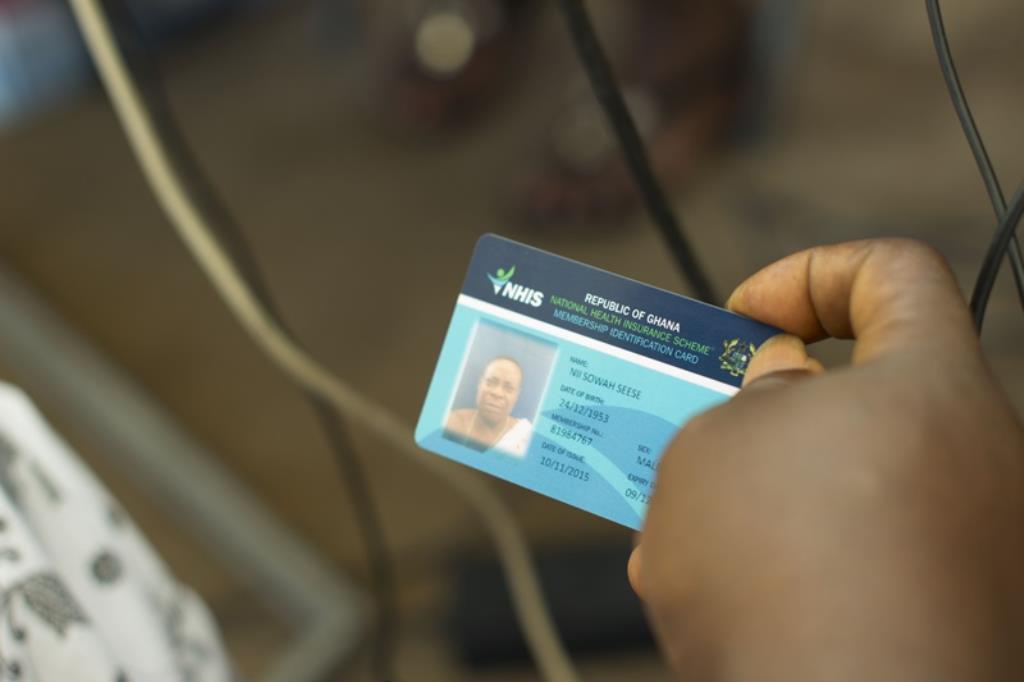
Step 6: You will receive your NHIS card.
2. Via the MyNHIS App (Digital Registration)
Download the MyNHIS app from the Google Play Store or Apple App Store. Register using your Ghana Card by following the in-app steps.
Important: Pregnant women and indigents should not use this platform for new registration, as they will be charged even though they qualify for free registration. These groups must register in person at a district office.
3. Community Outreach Exercises
The NHIA regularly conducts free registration drives in communities. Watch local radio, community notice boards, and announcements from assembly members for updates in your area.
How to Renew Your NHIS Membership
Membership lasts 12 months and must be renewed annually.
Renewal can be done via:
-
Any NHIS district office
-
USSD code *929# on any network
-
The MyNHIS app
Important Notes on Renewal:
-
Renew within three months of expiry to avoid defaulter status
-
Defaulters must wait one month before accessing care again (except pregnant women, children under five, and persons aged 70 and above)
-
Lost or damaged cards can be replaced at a cost
The NHIS and the Ghana Card
Since 2022, the NHIS has been integrated with the Ghana Card. Members are encouraged to link their NHIS to their Ghana Card for faster access.
Once linked, you can use your Ghana Card as your NHIS ID at health facilities.
Challenges Facing the Scheme
Despite its achievements, the NHIS faces challenges:
Coverage Gaps: While the scheme covers 95% of disease conditions, it reaches only about 40% of Ghana’s population. Rural populations, informal sector workers, and vulnerable groups remain underserved.
Financial Sustainability: The scheme faces financial pressure from cost escalation, fraud, broad exemption categories, and limited revenue diversification.
Illegal Co-Payments: Some health facilities still charge patients illegal payments (copayments), which erodes trust in the scheme.
Provider Distribution: There is geographic maldistribution of healthcare providers, with some areas having limited access to accredited facilities.
ASJ Conclusion
The NHIS remains one of Ghana’s most important social interventions. It has helped millions of Ghanaians access healthcare without facing financial ruin.
The recent reforms—uncapping the scheme, introducing free primary healthcare, and increasing tariffs for providers—are significant steps toward strengthening the system. The goal is Universal Health Coverage (UHC) by 2030.
But challenges remain. Coverage is still low, sustainability is a concern, and fraud needs to be tackled. The introduction of digital systems like OTAC is part of the solution.
For ordinary Ghanaians, the message is clear: register for the NHIS if you haven’t already. Renew your membership regularly. And use the free primary healthcare services that are now available to everyone. Your health is your wealth.
Quick Facts
| Topic | Details |
|---|---|
| Established | 2003 (Act 650), reformed 2012 (Act 852) |
| Regulator | National Health Insurance Authority (NHIA) |
| Coverage | 95% of disease conditions |
| Population Covered | Approximately 40% |
| Free Categories | Children under 18, pregnant women, elderly (70+), indigents, SSNIT contributors |
| Premium | GHS 30-50 for most adults |
| Renewal Code | *929# |
| Digital App | MyNHIS App |
| Integration | Ghana Card now primary ID |
| Key Reform | Free Primary Health Care (2026) |
Frequently Asked Questions
1. What is the National Health Insurance Scheme (NHIS)?
The NHIS is a government-funded programme that provides financial coverage for basic healthcare services to residents of Ghana. It was established in 2003 to reduce out-of-pocket payments for healthcare.
2. Who can register for the NHIS?
All Ghanaians and legal residents are eligible to register.
3. How much does it cost to register for the NHIS?
For most adults, the annual premium is between GHS 30 and GHS 50. Children under 18, pregnant women, the elderly (70+), and SSNIT contributors are exempt from paying.
4. How do I register for the NHIS?
You can register in person at any NHIS district office, via the MyNHIS app, or through community outreach exercises.
5. What does the NHIS cover?
It covers outpatient consultations, laboratory tests, medicines, minor surgeries, inpatient care, maternity services, eye care, some mental health treatments, and emergency care.
6. What does the NHIS not cover?
It does not cover cosmetic surgery, organ transplants, HIV retroviral drugs, some advanced surgeries, care abroad, hearing aids, or dentures.
7. How do I renew my NHIS membership?
You can renew via USSD code *929#, the MyNHIS app, or at any NHIS district office. Membership lasts 12 months.
8. Can I use my Ghana Card for NHIS?
Yes. Since 2022, the NHIS has been integrated with the Ghana Card. You can use your Ghana Card as your NHIS ID once linked.
9. What is the Free Primary Health Care policy?
This policy, introduced in 2026, allows every Ghanaian to access essential primary health services free of charge at CHPS compounds, health centres, and polyclinics—regardless of insurance status.
10. Why did NHIS tariffs increase in 2026?
Tariffs were increased to better reflect the cost of delivering healthcare services and to improve provider reimbursement. This followed complaints from healthcare providers that current tariffs were unrealistic.
11. What is the One-Time Attendance Code (OTAC)?
It is a digital system introduced to verify patient attendance and ensure that healthcare services were delivered before claims are processed. It aims to reduce fraud and protect the scheme’s financial integrity.
12. Is the NHIS sustainable?
The scheme faces sustainability challenges, including cost escalation, fraud, and limited revenue diversification. The government has introduced reforms—including uncapping the scheme and digital controls—to address these issues
Source: Accra Street Journal
Last Updated on August 18, 2026 by Samuel Kwame Boadu
Disclaimer: Some content on Accra Street Journal may be aggregated, summarized, or edited from third-party sources for informational purposes. Images and media are used under fair use or royalty-free licenses. Accra Street Journal is a subsidiary of SamBoad Publishing Hub under SamBoad Business Group Ltd, registered in Ghana since 2014.
For concerns or inquiries, please visit our Privacy Policy or Contact Page.

Samuel Kwame Boadu is a Ghanaian media entrepreneur and storyteller with a passion for amplifying urban voices and uncovering everyday truths. He is the Editor-in-Chief and Founder of Accra Street Journal, a dynamic digital platform dedicated to capturing the pulse of Ghana’s capital—its people, culture, challenges, business, sports and innovations.
Use the following reference when citing or referencing this article.
Your feedback helps us improve our journalism.
Report an Error
Help us maintain accuracy. Let our editorial team know if you spot an issue in this article.
Report a problem with this article