


13 min read
Introduction
Ghana’s development story is often told through the actions of government and the private sector. But there is a third force that shapes outcomes in ways that are just as significant, and often less visible: civil society.
It is the NGO that trains a community to demand better schools. The grassroots movement that mobilises against illegal mining. The think tank that produces the research that forces a policy debate. The women’s group that teaches girls to speak up in districts where their voices have been silenced. These are not peripheral actors. They are part of the infrastructure of accountability and development.
Key Takeaways
- Civil society includes NGOs, community-based organisations, faith-based groups, think tanks, professional associations, youth and women's groups, and trade unions.
- Financial sustainability (declining donor funding, no government core support), shrinking civic space (anti-LGBTQ+ bill, protest restrictions), legitimacy questions, and short-term project cycles that undermine long-term programming .
- The term "civil society organisation" is broader and includes community groups, faith-based organisations, trade unions, and think tanks.
President Mahama acknowledged this in March 2026 when he described civil society as “indispensable to nation-building, accountability, and the enhancement of democracy,” adding that it is “recognized as a partner in nation-building rather than an adversary” . That framing matters. It signals a relationship that is meant to be collaborative, even when it is critical.
But the sector is also under strain. Funding is shrinking. Civic space is contested. And the relationship between civil society and the state is not always as cooperative as the rhetoric suggests. This ASJ article examines what civil society, NGOs, and community movements actually do in Ghana, what they have achieved, and the barriers that limit their impact.
What Civil Society Actually Does
The functions of civil society in Ghana can be grouped into three broad categories: service delivery, advocacy, and community mobilisation.
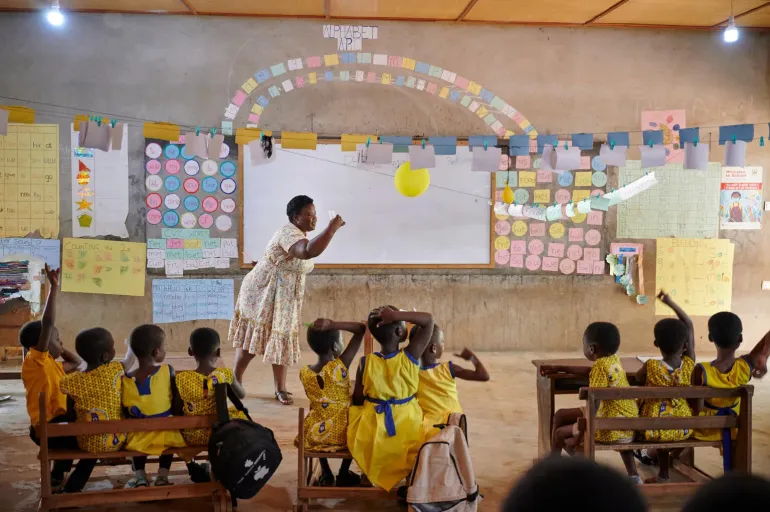
Service delivery is the most visible. NGOs run programmes in education, health, water and sanitation, and social protection. World Vision’s Citizen Voice and Action programme, for example, trained community members in advocacy skills that led to the Sampson community in the Ashanti Region achieving Open Defecation Free status. Community members used local materials to build toilets after a CVA-trained leader convinced the chief to lead by example. This is development happening at the household level, driven by skills transferred through an NGO.
Advocacy is where civil society exercises its watchdog function. Organisations like the Ghana Integrity Initiative, CDD-Ghana, IMANI Africa, and the Media Foundation for West Africa produce research, track corruption, monitor budgets, and push for policy change. Parliament has formally engaged with these groups, with Speaker Bagbin describing CSOs as “a fundamental pillar of Ghana’s democratic architecture” and acknowledging their contributions to anti-corruption efforts and local government reforms . The Open Government Partnership process, in which Parliament has participated, is one mechanism through which this engagement happens.
Community mobilisation is the least visible but often the most transformative. The CLEAR project, implemented by School for Life with partners YEFL-Ghana and the Ghana Developing Communities Association, works with communities in northern Ghana to form citizen groups—youth parliaments, girls’ caucuses, PTAs—that identify problems and engage duty bearers directly. In Siiru village, after the community realised the school feeding programme had not started and children were leaving at midday to eat, they took action. The chief allocated land for a school farm, parents cultivated it together, and women volunteered to cook. Enrollment rose from 41 to 171 between 2024 and 2025 .
The Girls’ Caucus model, part of the same project, has given young women in rural communities a platform to challenge early marriage, teenage pregnancy, and barriers to education. Millicent Jeln Nwiebam, who left school early for marriage, retook her exams and is now studying nursing. “The Girls’ Caucus showed me that it wasn’t too late to go back and reclaim what I had given up on,” she said . Across six districts, the caucuses have around 240 members who now engage district directors of education, assembly members, and even regional ministers. As one member put it: “Whenever we tried to reach them before, they were never available. Now they listen” .
The Funding Crisis
The most serious threat to civil society in Ghana is financial. The sector has historically relied heavily on external donors, and that model is under pressure.

The USAID cuts in January 2025 sent shockwaves through the sector, which was already facing declining donor interest as Ghana’s middle-income status reduced traditional grant opportunities . Ghana’s “Beyond Aid” agenda, while framed as a development strategy, has also contributed to a reduction in donor funding. Much of the available funding is short-term and project-tied, which limits operational stability and makes long-term programming difficult .
The government does not provide direct core funding to CSOs. There is no existing legal or policy framework to incentivise domestic corporate support . This leaves organisations dependent on a small pool of international donors and competing fiercely for limited resources.

The consequences are practical. The Peasant Farmers Association of Ghana formed a Multi-Stakeholder Platform in Nkoranza South with funding from STAR Ghana Foundation, but the Municipal Director of Agriculture noted that “several platforms had been instituted in the past years to promote similar agenda, however they became non-functional after the closure of the projects” . Sustainability beyond project cycles is a persistent problem.
There is also a legitimacy dimension. As one academic study noted, local CSOs face a “legitimacy crisis” alongside shrinking civic space and limited access to information and funding. These constraints undermine their ability to contribute meaningfully to national development .
The Civic Space Question
The environment in which civil society operates is contested.
On one hand, there are institutional mechanisms for engagement. The RTI Act gives citizens and CSOs the legal right to request information, and the RTI Commission has imposed penalties on institutions that fail to comply, including a GH¢10,000 fine on the Ghana Education Service in January 2026. By May 2026, the Commission had raised complaints regarding over 50 court cases against non-compliant institutions. The Governance Advisory Bill, mentioned by President Mahama, is intended to create a formal structure for continuous citizen and stakeholder input into decision-making .
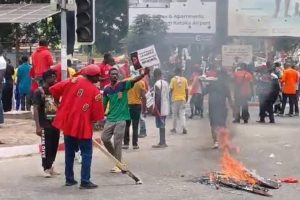
On the other hand, there are constraints. The reintroduction of the anti-LGBTQ+ bill raises concerns about self-censorship and deterrence of coalition-building, with organisations becoming more cautious about public education and advocacy for fear that activities could be interpreted as unlawful “promotion” . Concerns around restrictions on protests and the use of violence by illegal mining networks against journalists and communities also create insecurity for civic actors .
The relationship between CSOs and government is not uniformly cooperative. The academic literature distinguishes between “cooperation” and “confrontation” relationships. In the cooperative mode, CSOs play educational, information-sharing, and watchdog roles. In the confrontational mode, they act as policy entrepreneurs, influencing government policies and advocating for social justice. Both modes are necessary. But the confrontational mode carries risks, particularly when civic space is perceived to be shrinking.
The Government’s Stated Position
The government’s public position is supportive. President Mahama’s engagement with CSOs in March 2026 was framed as a practical dialogue to “listen to viewpoints, share ideas on national priorities, and deepen collaboration” . He encouraged CSOs to “engage actively with legislative processes, support public awareness, monitor public projects, oversee budget execution, and strengthen social accountability to rebuild public trust in institutions” .
The Ministry of Gender, Children and Social Protection has similarly emphasised partnership. The Gender Minister described CSOs as critical to “amplifying the voices of women and children, promoting accountability, strengthening community structures, and providing evidence that informs national policies” . STAR Ghana Foundation’s Civil Society Strengthening Programme was launched with government endorsement, described as a “renewed regional commitment to strengthening local leadership, building organisational resilience, and deepening partnerships” .
This rhetoric matters. A government that publicly recognises civil society as a partner creates space for engagement that would not exist if the official stance were hostile. But rhetoric is not the same as resources or protection. The government does not fund CSOs directly. It has not intervened to reverse the funding crisis. And the legislative environment, particularly around the anti-LGBTQ+ bill, sends signals that some forms of advocacy are not welcome.
Why It Matters to Ordinary Ghanaians
Civil society is not an abstract sector for people who work in air-conditioned offices in Accra. It is the mechanism through which ordinary Ghanaians access services, claim rights, and hold power accountable.

When a community in Siiru gets its children fed at school because a citizen group mobilised, that is civil society working . When a girl in Gbintiri returns to school after early marriage because a Girls’ Caucus gave her the confidence and support to retry her exams, that is civil society working . When a farmer in Nkoranza South gets a platform to engage the municipal assembly about input costs and market access, that is civil society working .
These are small-scale interventions. They do not transform the national economy or fix the health system. But they change lives in specific, measurable ways. And they build the habits of participation and accountability that a functioning democracy depends on.
The stakes are particularly high for the most vulnerable. Women, youth, persons with disabilities, and rural communities are often poorly served by formal institutions. Civil society organisations are frequently the only actors who reach them with information, training, and advocacy support. When the sector is underfunded, those communities are the first to feel it.
Future Outlook
The direction of civil society in Ghana depends on three factors: funding, civic space, and the sector’s own capacity to adapt.
If current trends continue, the funding crisis will deepen. International donors will continue to withdraw or reduce support. The government will not fill the gap. Some organisations will close. Others will merge or downsize. The sector will become smaller and more concentrated in Accra, leaving rural communities with less support.
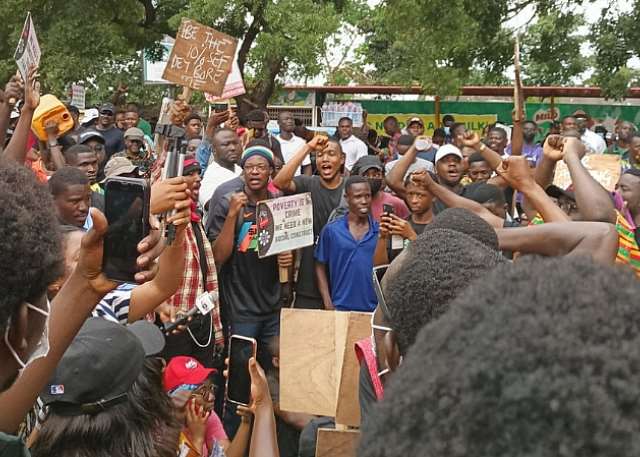
The opportunities are real. The shift toward domestic resource mobilisation, while slow, is necessary. The government’s stated commitment to partnership creates a framework for engagement. Digital tools offer new ways to mobilise, advocate, and deliver services. And the energy and creativity of youth-led movements, from the Girls’ Caucuses to the #FixTheCountry protests, show that the desire for change is not diminishing.
The most likely scenario is a sector that survives but struggles. The strongest organisations—those with diversified funding, strong governance, and deep community roots—will continue. The weakest will disappear. The government-CSO relationship will remain a mix of cooperation and tension, shaped by the issue and the political moment.
The wild card is whether the government moves from rhetoric to resource. If it establishes a framework for domestic philanthropy, provides even modest core funding, or creates tax incentives for corporate giving, the sector could stabilise. If it does not, civil society will continue to depend on the goodwill of international donors whose priorities are shifting away from Ghana.
ASJ Conclusion
Ghana’s civil society is a vital part of the country’s development infrastructure. It delivers services that government cannot reach, advocates for policies that government might not otherwise adopt, and mobilises communities that might otherwise be ignored. It is not perfect. It faces legitimacy questions, funding constraints, and capacity gaps. But it is indispensable.
The government says it recognises this. President Mahama’s words about partnership, the Gender Ministry’s engagement with CSOs, and Parliament’s dialogue with think tanks all suggest an awareness that development is a shared responsibility. But words are not enough. The sector needs resources, protection, and space to operate. It needs a funding model that does not collapse when a single donor changes its priorities. It needs a civic space that is open enough for criticism and advocacy, not just for service delivery.
For ordinary Ghanaians, the health of civil society is not an abstract concern. It determines whether a community gets a school feeding programme, whether a girl returns to school after marriage, whether a farmer has a voice in local governance. When civil society is strong, those things happen. When it is weak, they do not.
The task for the next few years is to build a civil society sector that is sustainable, legitimate, and effective. That is not just the responsibility of CSOs themselves. It is a national project, and it requires the government, the private sector, and international partners to see civil society not as a cost or a critic, but as an investment in Ghana’s future.
Quick Facts
Topic: Civil Society, NGOs and Community Movements in Ghana
Government Position: CSOs described as “indispensable to nation-building” by President Mahama (March 2026)
Parliament Position: CSOs are “a fundamental pillar of Ghana’s democratic architecture”
Key Funding Shock: USAID cuts (January 2025) and declining donor interest
Government Core Funding: None provided directly to CSOs
RTI Enforcement: GH¢10,000 fine on GES (Jan 2026); 50+ court cases by May 2026
CLEAR Project Reach: Girls’ Caucuses in 6 districts, ~240 members
Siiru School Enrollment: Rose from 41 to 171 (2024–2025) after community action
Key CSO Networks: STAR Ghana Foundation, CDD-Ghana, GII, IMANI Africa, MFWA
Main Challenge: Financial sustainability, shrinking civic space, legitimacy questions
Key Opportunity: Domestic resource mobilisation, government partnership rhetoric
FAQ Section
1. What is civil society in Ghana?
Civil society includes NGOs, community-based organisations, faith-based groups, think tanks, professional associations, youth and women’s groups, and trade unions. These are voluntary organisations that operate outside government and the market to promote social, political, and economic change.
2. What do NGOs do in Ghana?
They deliver services (education, health, water, sanitation), advocate for policy change, monitor government accountability, and mobilise communities. Examples include World Vision’s sanitation work, CLEAR’s education accountability projects, and the advocacy of groups like CDD-Ghana and IMANI Africa.
3. How is civil society funded in Ghana?
Mainly through international donors, with some support from philanthropic foundations like STAR Ghana Foundation. The government does not provide direct core funding. The USAID cuts in 2025 and declining donor interest have created a funding crisis .
4. What is the Girls’ Caucus?
A platform under the CLEAR project for young women and girls in rural northern Ghana to identify barriers to education and engage duty bearers. Caucuses operate in six districts with about 240 members. They have helped girls return to school and influenced district-level decision-making .
5. What is the CLEAR project?
Citizen-Led Action for Educational Accountability and Responsiveness, funded by Education Out Loud and implemented by School for Life with YEFL-Ghana and GDCA. It works with communities to form citizen groups that hold schools and local government accountable for education quality .
6. How does the government view civil society?
President Mahama has described CSOs as “indispensable to nation-building” and a “partner rather than an adversary.” Parliament has engaged CSOs on governance reform. However, the government does not fund CSOs directly, and some advocacy areas face constraints .
7. What are the biggest challenges facing civil society in Ghana?
Financial sustainability (declining donor funding, no government core support), shrinking civic space (anti-LGBTQ+ bill, protest restrictions), legitimacy questions, and short-term project cycles that undermine long-term programming .
8. What is the RTI Act and how does it affect CSOs?
The Right to Information Act (2019) gives citizens and CSOs the legal right to request information from public institutions. The RTI Commission has imposed penalties on non-compliant institutions, but implementation challenges remain, including delays and refusals .
9. Can I support civil society in Ghana?
Yes. You can donate to credible local organisations, volunteer your skills, amplify their advocacy on social media, and demand transparency from both government and NGOs. Domestic philanthropy is underdeveloped but growing.
10. What is the difference between an NGO and a CSO?
NGOs (non-governmental organisations) are a type of CSO. The term “civil society organisation” is broader and includes community groups, faith-based organisations, trade unions, and think tanks. In Ghana, the terms are often used interchangeably.
Source: Accra Street Journal
Last Updated on November 28, 2026 by Samuel Kwame Boadu
Disclaimer: Some content on Accra Street Journal may be aggregated, summarized, or edited from third-party sources for informational purposes. Images and media are used under fair use or royalty-free licenses. Accra Street Journal is a subsidiary of SamBoad Publishing Hub under SamBoad Business Group Ltd, registered in Ghana since 2014.
For concerns or inquiries, please visit our Privacy Policy or Contact Page.

Samuel Kwame Boadu is a Ghanaian media entrepreneur and storyteller with a passion for amplifying urban voices and uncovering everyday truths. He is the Editor-in-Chief and Founder of Accra Street Journal, a dynamic digital platform dedicated to capturing the pulse of Ghana’s capital—its people, culture, challenges, business, sports and innovations.
Use the following reference when citing or referencing this article.
Your feedback helps us improve our journalism.
Report an Error
Help us maintain accuracy. Let our editorial team know if you spot an issue in this article.
Report a problem with this article