




12 min read
Introduction
Ghana has a paradox at its heart. The country ranks first in the world for women’s economic participation, according to the World Economic Forum’s 2026 Global Gender Gap Report, with a score of 85.9 percent . Nearly 44 percent of businesses in Ghana are owned by women, and women’s enterprises contribute roughly 20 percent of GDP . By those measures, Ghanaian women are economic powerhouses.
Yet women hold only 24 percent of board seats in listed companies, and 14 percent of firms still operate with all-male boards . Only about 15 percent of Parliament is female . And when it comes to access to credit, collateral, and financial education, women face barriers that their male counterparts do not.
Key Takeaways
- The country ranks first in the world for women's economic participation, according to the World Economic Forum's 2026 Global Gender Gap Report, with a score of 85.9 percent .
- The Affirmative Action (Gender Equity) Act, 2024 (Act 1121) requires a minimum of 30% female representation in decision-making roles by December 2026, with a pathway to full parity by 2034.
- A 2025–2034 policy framework launched in March 2026, covering women's empowerment, access to justice, leadership, economic opportunities, and safeguards for vulnerable groups .
This is the gap that matters for national development. Ghana cannot achieve its full economic ambitions while a significant portion of its population remains underutilised. The evidence from Ghana’s own institutions, from the World Bank to the UN, is clear: when women are empowered, families are lifted out of poverty, communities develop, and national economies grow .
This ASJ article examines the state of women’s empowerment and gender equality in Ghana. It covers the legal frameworks that have been put in place, the economic interventions underway, the persistent barriers that remain, and why all of this matters to every Ghanaian.
The Legal and Policy Framework
Ghana has built a substantial legal architecture for gender equality. The 1992 Constitution guarantees equality and non-discrimination. International commitments, including CEDAW and the Sustainable Development Goals, reinforce these principles .
The most significant recent development is the Affirmative Action (Gender Equity) Act, 2024 (Act 1121). Passed in July 2024 and assented to in September 2024, the law requires a minimum of 30 percent female representation in decision-making roles by 2026, with a pathway to full gender parity by 2034. It also mandates gender-responsive budgeting in public institutions and provides legal remedies for victims of gender-based discrimination .
The Revised National Gender Policy (2025–2034) was launched in March 2026. It outlines six broad objectives: women’s empowerment and livelihoods, access to justice, women’s leadership and accountable governance, expanded economic opportunities, transformation of inequitable gender relations, and safeguards for women and vulnerable groups during emergencies .
Other laws provide specific protections. The Domestic Violence Act, the Human Trafficking Act, and the Children’s Act offer legal safeguards for women and girls. The Domestic Violence and Victim Support Unit of the Ghana Police Service and the Legal Aid Commission provide assistance to survivors.
This is a strong framework on paper. The challenge, as always, is implementation.
The Economic Empowerment Push
The government has made women’s economic empowerment a centrepiece of its development agenda.

The Ghana Women’s Development Bank is the flagship intervention. The 2026 budget allocated GH¢401 million for its establishment and operationalisation . The bank is designed to address the financing gap that has long constrained women-owned businesses, providing affordable credit and financial resources that traditional banks have not .
The rationale is straightforward. Women’s businesses contribute about 20 percent of GDP, but many women cannot access financing due to lack of collateral, high interest rates, and limited financial education . The Women’s Development Bank is meant to change that, following models like India’s self-help groups, Bangladesh’s Grameen Bank, and Rwanda’s Women’s Guarantee Fund, which have successfully increased women’s access to credit .

Beyond the bank, the government has introduced the 24-Hour Economy Authority Act, 2026, which provides incentives and financing mechanisms for women-led enterprises in agro-processing, retail, manufacturing, and hospitality . The Trade Ministry has also delivered export training and promotional assistance to more than 1,300 entrepreneurs in partnership with TradeMark Africa, helping women-owned businesses access markets under the African Continental Free Trade Area .
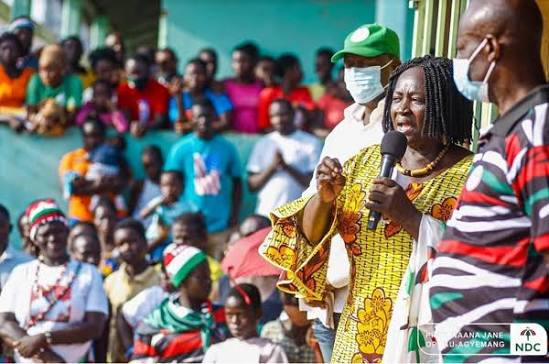
The Vice President, Professor Jane Naana Opoku-Agyemang, has stressed that access to finance alone is not enough. She has called for targeted business development support, technical skills, quality assurance, packaging, safety compliance, and access to viable markets to enable women-led enterprises to compete effectively .
The Representation Gap
Despite progress, women remain significantly under-represented in political leadership.
Out of 273 seats in Parliament, only 49 are occupied by women—about 14.9 percent . The Affirmative Action Act’s 30 percent target for decision-making roles by December 2026 applies to public and private institutions, but the political sphere remains far from parity.
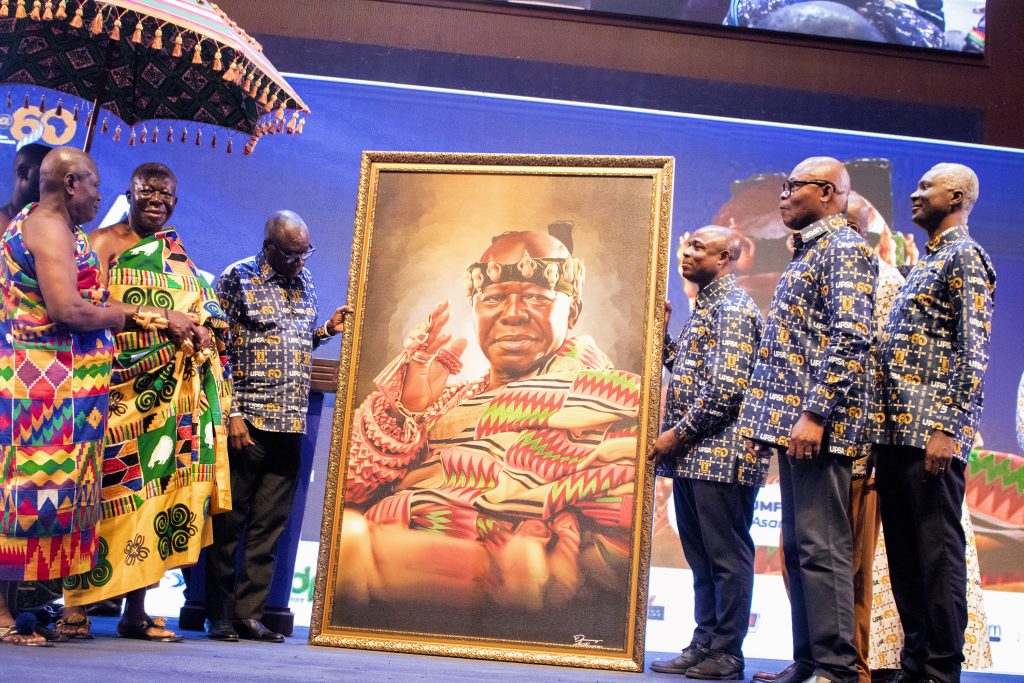
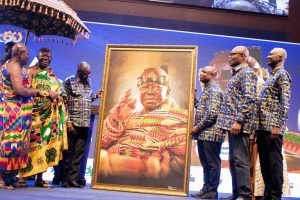
There are signs of change. Ghana elected its first female Vice President, Professor Jane Naana Opoku-Agyemang, in 2024. Several women hold key government positions, including the Chief of Staff, the Auditor-General, the Chief Fire Officer, and the Director-General of the Criminal Investigation Department . When a delegation of female government officials visited the Asantehemaa in September 2026, they described this concentration of female leadership as “more than coincidence” and “a call from the ancestors for close partnership and unity among the female leadership of our nation” .
But individual appointments do not substitute for structural representation. The Salaga South MP, Zuwera Mohammed Ibrahimah, has spoken candidly about the weight of being one of few women in Parliament. “I am striving to make sure that the next woman who comes after me will build on my legacy,” she said. “I do not want a situation where people say a woman was given the chance and she failed, so they will not trust another woman again” .
The Private Sector Response
The Affirmative Action Act has shifted gender equality from a voluntary corporate responsibility issue to a legal requirement. With the December 2026 deadline for 30 percent female representation in management approaching, the private sector is under pressure to act.
The UN Global Compact Network Ghana convened a policy dialogue in June 2026 to assess readiness. The findings were sobering: women hold only 24 percent of board seats in listed companies, and 14 percent of firms have all-male boards .
Some companies are making progress. Fidelity Bank Ghana has implemented mentorship programmes, talent development initiatives, and succession planning to increase women’s representation in leadership. Ghana Manganese Company is expanding opportunities for women in a traditionally male-dominated sector through targeted recruitment and skills development. Cyberteq Falcon Ltd. is working to improve gender balance in technology and cybersecurity .
The Deputy Representative of UNFPA in Ghana, Dr Emmily Naphambo, put the challenge plainly: “The private sector must transition from being a passive observer of gender legislation to becoming an active driver of it. True sustainability requires corporate leadership that intentionally dismantles systemic barriers, designs supportive work-life infrastructure, and actively promotes women to decision-making boards” .

The Barriers That Remain
Despite the frameworks and the funding, significant barriers persist.
Access to finance. Nearly 44 percent of businesses are women-owned, but they struggle to access credit due to lack of collateral, high interest rates, and limited financial education . The Women’s Development Bank is meant to address this, but its capitalisation—GH¢401 million—has been questioned. One MP noted that GH¢51 million, the initial allocation in the 2025 budget, “will not even meet the capital requirements of a bank in Ghana” .
Access to justice. The Gender Minister acknowledged in March 2026 that “limited awareness of legal rights, financial constraints and socio-cultural norms continue to discourage many women and girls from seeking justice, particularly in cases of violence and discrimination” . Legal literacy programmes and paralegal services are helping, but the gap between formal systems and communities remains wide.
Harmful cultural practices and violence. The delegation of female officials who visited the Asantehemaa described “modern wars our women, children and the aged wage daily—domestic violence, harmful cultural practices, and the injustices that come with modern technology” . These are not abstract concerns. They affect women’s safety, health, and ability to participate fully in public life.
Political representation. At 14.9 percent female in Parliament, Ghana is far from the 30 percent target. The Affirmative Action Act sets the goal, but achieving it requires political parties to field more women candidates and voters to elect them .
Why It Matters to Ordinary Ghanaians
Gender equality is not a women’s issue. It is a development issue.
Economic growth. Women’s businesses contribute roughly 20 percent of GDP . If women had equal access to finance, markets, and leadership opportunities, that contribution would grow. The World Economic Forum ranks Ghana first globally for women’s economic participation, which means the foundation is already there. The barriers are what hold it back .
Poverty reduction. When women thrive economically, families are lifted out of poverty. A woman who can access credit to expand her business, or who can get a loan without collateral, can send her children to school, pay for healthcare, and invest in her community. The evidence from other countries—India, Bangladesh, Rwanda—shows that investing in women yields returns that ripple through society .
Governance. Women’s participation in leadership changes what gets prioritised. Research consistently shows that women leaders prioritise health, education, and social protection. When women are at the table, decisions reflect the needs of the whole population, not just half of it.
The next generation. The Henry Djaba Memorial Foundation noted in its International Women’s Day statement that “a girl in Tamale can imagine herself a minister of state, an engineer or a member of parliament. A young woman in Somanya can see leadership as her right, not her rebellion” . That shift in aspiration matters. It changes what girls believe is possible, and it changes what they do with their lives.
Future Outlook
The direction of gender equality in Ghana is shaped by two forces: the legal framework that now exists, and the cultural and economic barriers that still hold women back.
If current trends continue, the Affirmative Action Act will push companies and institutions toward the 30 percent target, though compliance will be uneven. The Women’s Development Bank will provide some relief for women entrepreneurs, but it will not reach everyone. Political representation will improve slowly, driven by individual women who break through rather than by systemic change.
The risks are that the law becomes symbolic rather than transformative. As Otiko Afisah Djaba put it: “Laws alone do not transform societies” . If the Affirmative Action Act is not enforced, if the Women’s Development Bank is undercapitalised, and if cultural barriers are not addressed, the gap between Ghana’s ranking on economic participation and its reality on representation will remain.
The most likely scenario is uneven progress. Some sectors—banking, telecoms, government appointments—will move faster. Others—parliamentary representation, rural access to finance, justice for survivors of violence—will lag. Ghana will continue to be praised for its economic participation ranking while being criticised for its representation gap.
The wild card is the next generation. Ghana’s population is young, and young women are more educated and more assertive than any generation before them. The Salaga South MP’s words capture the spirit: “We are coming for the seats. Women must not be seen as exceptions in parliament. We want it to become normal” . Whether that energy translates into systemic change depends on whether the institutions are ready to receive it.
ASJ Conclusion
Ghana has the laws, the policies, and the rankings to suggest that gender equality is within reach. It ranks first in the world for women’s economic participation. It has an Affirmative Action Act with clear targets. It has a Women’s Development Bank with dedicated funding. It has a National Gender Policy that covers everything from justice to livelihoods.
What it does not yet have is the full translation of those commitments into the daily lives of women across the country. The market woman in Kumasi who cannot get a loan. The young woman in Tamale who wants to run for office but cannot raise the money. The survivor of violence who cannot access legal aid. The woman in a rural district who has never heard of the Affirmative Action Act.
For those women, the frameworks matter only if they deliver. The task for the next few years is to close the gap between what Ghana has promised and what Ghana has delivered. That is not just a matter of justice. It is a matter of national development. When women are empowered, Ghana rises. The evidence is clear. The question is whether the implementation will follow.
Quick Facts
Topic: Women’s Empowerment and Gender Equality in Ghana
WEF Gender Gap Rank (2026): 56th globally (up 32 places)
Economic Participation Rank: 1st of 145 economies (score: 85.9%)
Women-Owned Businesses: ~44% of all businesses
Women’s Contribution to GDP: ~20%
Female Parliamentarians: 49 of 273 seats (~14.9%)
Women on Boards (Listed Companies): 24%
All-Male Boards: 14% of firms
Affirmative Action Act Target: 30% female representation by Dec 2026, parity by 2034
Women’s Development Bank Allocation: GH¢401 million (2026 budget)
National Gender Policy: 2025–2034, launched March 2026
FAQ Section
1. How does Ghana rank globally on gender equality?
Ghana ranked 56th out of 145 economies in the World Economic Forum’s 2026 Global Gender Gap Index, climbing 32 places. It ranked first globally for economic participation and opportunity .
2. What is the Affirmative Action Act?
The Affirmative Action (Gender Equity) Act, 2024 (Act 1121) requires a minimum of 30% female representation in decision-making roles by December 2026, with a pathway to full parity by 2034. It also mandates gender-responsive budgeting and provides legal remedies for discrimination .
3. What is the Women’s Development Bank?
A government initiative allocated GH¢401 million in the 2026 budget to provide affordable financing for women-owned businesses, addressing the collateral and credit barriers that traditional banks impose .
4. How many women are in Ghana’s Parliament?
Only 49 of 273 seats are held by women, about 14.9% of Parliament .
5. What barriers do Ghanaian women entrepreneurs face?
Lack of collateral, high interest rates, limited financial education, and cash-flow constraints. Many women cannot access the credit they need to expand their businesses .
6. What is the Revised National Gender Policy?
A 2025–2034 policy framework launched in March 2026, covering women’s empowerment, access to justice, leadership, economic opportunities, and safeguards for vulnerable groups .
7. How does women’s empowerment affect national development?
When women thrive economically, families are lifted out of poverty, communities develop, and GDP grows. Women’s businesses already contribute about 20% of Ghana’s GDP .
8. What is the 24-Hour Economy Act’s impact on women?
It provides incentives, financing mechanisms, and expanded business opportunities for women-led enterprises in agro-processing, retail, manufacturing, and hospitality.
9. Are there support systems for survivors of gender-based violence?
Yes. The Domestic Violence and Victim Support Unit of the Ghana Police Service and the Legal Aid Commission provide assistance. The Domestic Violence Act provides legal protections .
10. What can be done to increase women’s political representation?
Enforcing the Affirmative Action Act’s targets, encouraging political parties to field more women candidates, and supporting women’s leadership development from a young age are all essential. As MP Zuwera Ibrahimah said: “We are coming for the seats”
Source: Accra Street Journal
Last Updated on November 28, 2026 by Samuel Kwame Boadu
Disclaimer: Some content on Accra Street Journal may be aggregated, summarized, or edited from third-party sources for informational purposes. Images and media are used under fair use or royalty-free licenses. Accra Street Journal is a subsidiary of SamBoad Publishing Hub under SamBoad Business Group Ltd, registered in Ghana since 2014.
For concerns or inquiries, please visit our Privacy Policy or Contact Page.

Samuel Kwame Boadu is a Ghanaian media entrepreneur and storyteller with a passion for amplifying urban voices and uncovering everyday truths. He is the Editor-in-Chief and Founder of Accra Street Journal, a dynamic digital platform dedicated to capturing the pulse of Ghana’s capital—its people, culture, challenges, business, sports and innovations.
Use the following reference when citing or referencing this article.
Your feedback helps us improve our journalism.
Report an Error
Help us maintain accuracy. Let our editorial team know if you spot an issue in this article.
Report a problem with this article