







10 min read
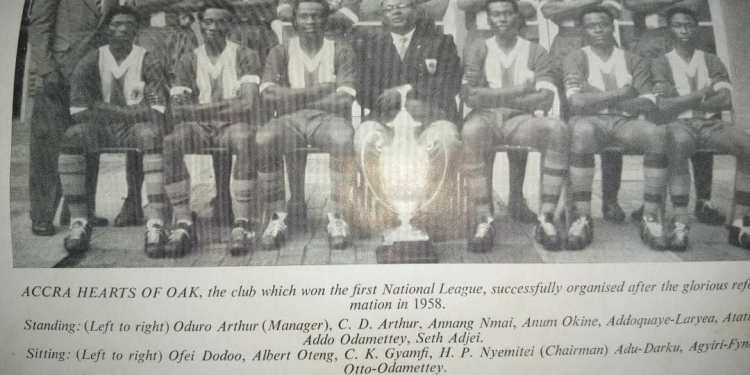
Before the trophies, before the continental nights, before the name became synonymous with survival, there was a meeting in Accra in 1911. A group of young Ga men decided that football would no longer be a game played only by their colonial masters. They founded a club, chose an oak tree as its symbol, and wrote a motto that would outlive the empire that tried to diminish them. This is the origin story of Accra Hearts of Oak.
The Colonial Struggle: Football as Resistance
By 1911, Accra was growing rapidly under British colonial administration. The colonial authorities had introduced modern football to West Africa, but the game was heavily segregated. British officers, civil servants, and European merchants played in exclusive clubs, using the sport to project an image of imperial superiority. Local Ghanaians were largely excluded, or at best treated as second-class participants.
Key Takeaways
- Accra Hearts of Oak was founded on 11 November 1911 by a group of young Ga men led by Christopher Brandford Nettey.
- The motto, "Never Say Die Until the Bones Are Rotten," was born in those early matches and became the club's defining spirit.
- Accra Hearts of Oak was founded on 11 November 1911.
On 11 November 1911—the date remembered as 11-11-11—a group of ambitious, educated young men from the Ga community in Accra decided to challenge this status quo. They were led by visionaries including Christopher Brandford Nettey, who would later become a chief and an influential political leader.
They founded Hearts of Oak not as a recreational team, but as a deliberate symbol of local identity and self-determination. Defeating European teams on the pitch became a peaceful but powerful way to dismantle the myth of white colonial supremacy.
The club won its first match against a local side called The Invincibles, and it grew from there. Today, Hearts of Oak stands as the oldest surviving football club in Ghana and one of the oldest on the entire African continent.
The Mythos: The Symbols of the Phobians
Every element of Hearts of Oak’s branding is steeped in deliberate metaphor, designed to inspire fear in opponents and unyielding loyalty in fans.
The Rainbow Colours
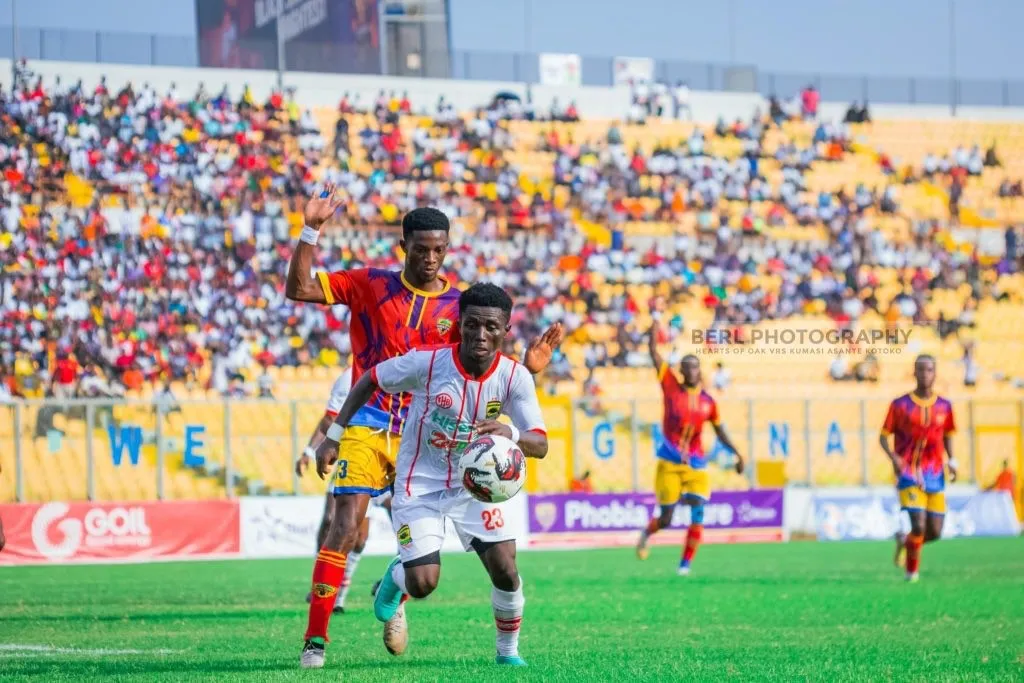
The club adopted the striking combination of red, yellow, and blue. Red symbolised the blood and sacrifices of the founding fathers. Yellow represented the mineral wealth of the Gold Coast. Blue signified the coastal waters of Accra. Together, they formed the “Rainbow,” a symbol of divine promise and unity. It earned them the nickname The Phobians, evoking phobia or fear in their rivals.
The Oak Tree Logo
In 1911, the founders chose the oak tree because of its legendary deep roots, massive stature, and ability to withstand the most violent storms. It was a direct message to the colonial authorities and rival clubs: Hearts of Oak could not be shaken or uprooted.
The Immortal Motto
Their war cry, “Never Say Die Until the Bones Are Rotten,” is the ultimate expression of the club’s psychological DNA. It was born out of early, gruelling matches where the team routinely staged dramatic, late-game comebacks. It came to mean that a Phobian does not concede defeat while there is still breath in their body. That spirit would directly produce the Miracle of El-Wak sixty-six years later.
The Prologue: The Night the Roots Were Planted
The November wind blowing off the Gulf of Guinea carried the bitter scent of colonial smoke and sea salt into the crowded alleys of Jamestown.
It was 11 November 1911, a day the British Empire observed with rigid, somber formality. In the grand bungalows of the Victoriaborg district, colonial officers poured gin, adjusted their crisp linen uniforms, and looked out over Accra with the serene confidence of men who believed they owned the future. To them, the Gold Coast was a ledger of cocoa, gold, and submissive subjects. Even the games they brought with them—the leather footballs kicked across manicured lawns—were tools of empire, structured to show the native youth the beauty of British order and the futility of challenging it.

But down in the beating heart of Accra, away from the manicured lawns, a different kind of order was being born.
In a dimly lit room, a group of young Ga men gathered in absolute secrecy. Among them sat Christopher Brandford Nettey, a man whose eyes held the quiet fire of a reformer. They were young, educated, and deeply tired of being spectators in their own land. They watched the white men play their exclusive matches, heard the dismissive laughter of colonial administrators, and understood a fundamental truth: if you want to defeat an empire, you must first beat them at their own game.

On the table between them lay a sheet of paper and a dream. They were founding a football club, but they all knew it was something much larger. It was a vehicle for dignity.
“We need a name,” someone whispered against the low hum of the Accra night. “Something that cannot be broken.”
Nettey looked out toward the horizon. They chose the oak tree. Not because it was native to the coastal sands of Accra, but because of what it represented across the world—a machine of deep roots and immovable wood, a tree that grew stronger the harder the storm blew against it.
For their colours, they took the tricolour of the earth they walked upon. Red for the blood of their ancestors and the sacrifices yet to come. Yellow for the rich, untamed gold sleeping beneath the soil. Blue for the vast, untamed ocean that connected their shores to the rest of the world. A rainbow forged in the shadows of colonial oppression.
When the ink dried on their pact, they stepped out into the humid night air. They had no grass pitch, no leather boots, and no backing from the colonial sports office. Their first ball was made of wrapped rags; their first pitch was the unforgiving, dusty earth of Accra. The British looked down from their verandahs and laughed at the barefoot boys kicking dirt.
But the boys did not stop. They ran until their lungs burned, they tackled until their knees bled, and they developed a stubborn, fanatical refusal to lose. When the matches grew long and their limbs grew heavy, a chant began to rise from the dust—a fierce, unyielding vow passed from player to player like a sacred oath:
“Never say die. Never say die until the bones are rotten.”
The British Empire in Accra would eventually pack its bags and fade into history, but the roots planted on that November night would stretch across the entire continent. They did not just build a football club. They built the soul of a nation, waiting for the day the world would finally learn to fear the Phobians.
The Legacy: A Club Built on Resistance
The founding of Hearts of Oak was not an isolated act of sporting enthusiasm. It was a statement. In a colonial society that excluded Ghanaians from the institutions of power, football became a space where local identity could be asserted, and where the myth of European superiority could be challenged on equal terms.
The choice of the oak tree was symbolic. The oak is not native to Ghana. It was chosen because of what it represented in the European imagination: strength, permanence, and the ability to withstand any storm. By adopting it, the founders were speaking to their colonial masters in a language they would understand.

The colours were equally deliberate. Red, yellow, and blue tied the club to the land, the mineral wealth, and the coast of Accra. The rainbow became a symbol of unity and promise, and the name “Phobians” turned that promise into a threat.
The motto captured the spirit that would define the club for more than a century. “Never Say Die Until the Bones Are Rotten” was not a slogan invented by a marketing department. It was born in matches where Hearts had no advantage, no resources, and no reason to win—except that they refused to lose.
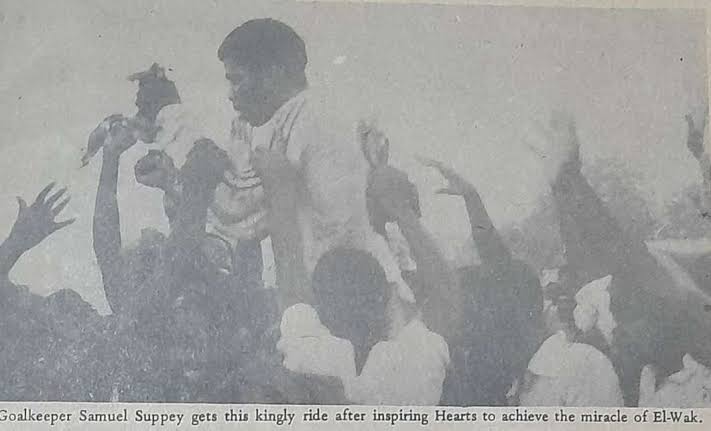
That spirit produced the Miracle of El-Wak in 1977, when Hearts overturned a 5–2 deficit to reach the African Cup of Champions Clubs final. It produced the 64 Warfare squad of 2000, who went through the CAF Champions League unbeaten. And it produced the 2004 Confederation Cup triumph, won on penalties in Kumasi.
ASJ Bottom Line
Accra Hearts of Oak was founded on 11 November 1911 by a group of young Ga men led by Christopher Brandford Nettey. It was created as a symbol of local identity and self-determination in the face of colonial exclusion. The club chose the oak tree as a symbol of unshakeable strength, and the red, yellow, and blue as a rainbow of unity and promise. The motto, “Never Say Die Until the Bones Are Rotten,” was born in those early matches and became the club’s defining spirit.
Today, Hearts of Oak is the oldest surviving football club in Ghana and one of the oldest on the African continent. But more than that, it is a living monument to the idea that sport can be a form of resistance, and that a group of determined young men can plant roots that outlast an empire.
Quick Facts
Accra Hearts of Oak was founded on 11 November 1911. The founding date is remembered as 11-11-11. The club was created by young Ga men led by Christopher Brandford Nettey, who later became a chief and political leader. It is the oldest surviving football club in Ghana and one of the oldest in Africa. The club colours are red, yellow, and blue, symbolising blood, gold, and the sea. The oak tree was chosen as a symbol of unshakeable strength. The motto is “Never Say Die Until the Bones Are Rotten.” The club’s first match was against a side called The Invincibles. The nickname The Phobians evokes fear in opponents. The founding spirit produced the Miracle of El-Wak in 1977 and the unbeaten CAF Champions League run in 2000.
Last Updated on November 8, 2026 by Samuel Kwame Boadu
🏟️ Discover More Sports Stories
Looking for more in-depth sports news, interviews, and features? Visit Accra Sports News — your go-to for exclusive sports content in Ghana and beyond.
Disclaimer: Some content on Accra Street Journal may be aggregated, summarized, or edited from third-party sources for informational purposes. Images and media are used under fair use or royalty-free licenses. Accra Street Journal is a subsidiary of SamBoad Publishing Hub under SamBoad Business Group Ltd, registered in Ghana since 2014.
For concerns or inquiries, please visit our Privacy Policy or Contact Page.

Samuel Kwame Boadu is a Ghanaian media entrepreneur and storyteller with a passion for amplifying urban voices and uncovering everyday truths. He is the Editor-in-Chief and Founder of Accra Street Journal, a dynamic digital platform dedicated to capturing the pulse of Ghana’s capital—its people, culture, challenges, business, sports and innovations.
Use the following reference when citing or referencing this article.
Your feedback helps us improve our journalism.
Report an Error
Help us maintain accuracy. Let our editorial team know if you spot an issue in this article.
Report a problem with this article